
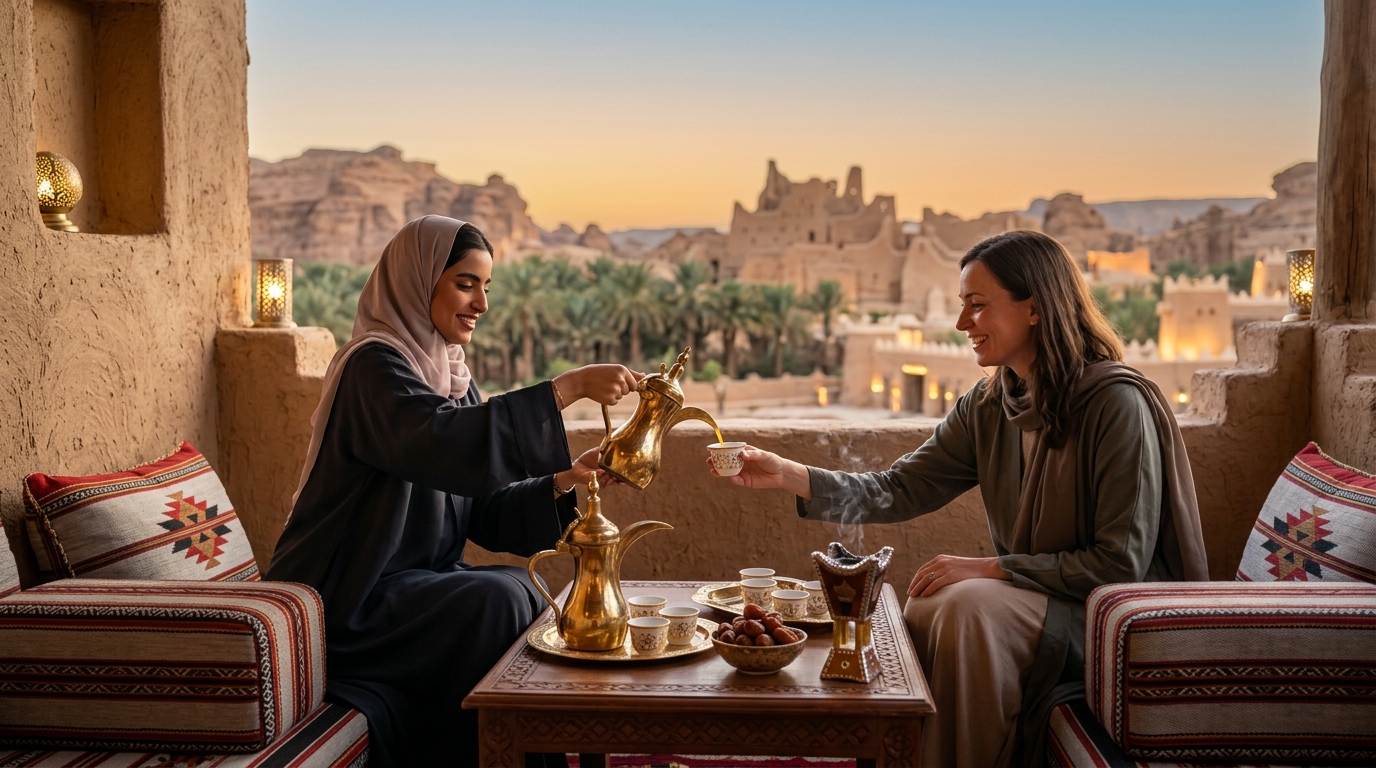
You’re sitting in a traditional majlis in Riyadh when your host offers you a small cup of aromatic coffee. You accept with your right hand, take a sip, and then freeze. Should you finish it? Ask for more? Hand it back? The room goes quiet. Everyone’s watching. This moment happens to nearly every first-time visitor to Saudi Arabia, and how you handle it speaks volumes about your respect for local customs.
Saudi coffee traditions form the backbone of Arabian hospitality, with specific rules governing everything from how you accept a cup to signaling you’ve had enough. Understanding these ten essential customs will help you navigate social situations with confidence, avoid unintentional offense, and genuinely connect with Saudi hosts who view coffee service as a sacred expression of welcome and respect.
Understanding Qahwa and Its Cultural Significance
Saudi coffee, or qahwa, is nothing like the espresso or latte you grab at Starbucks. It’s a lightly roasted Arabic coffee brewed with cardamom and sometimes saffron, served in tiny handleless cups called finjan.
The coffee itself tastes earthy, slightly bitter, and wonderfully aromatic. But the beverage is secondary to what it represents.
In Saudi culture, serving coffee is a ritual that dates back centuries. Bedouin tribes used it to welcome travelers, seal agreements, and demonstrate generosity. Today, whether you’re visiting a corporate office in Jeddah or a family home in Al-Ula, the coffee ceremony remains central to Saudi hospitality.
Refusing coffee without proper etiquette can accidentally signal disrespect or distrust. That’s why understanding these traditions matters, especially if you’re planning to spend time in the Kingdom beyond typical tourist activities.
The Right Hand Rule
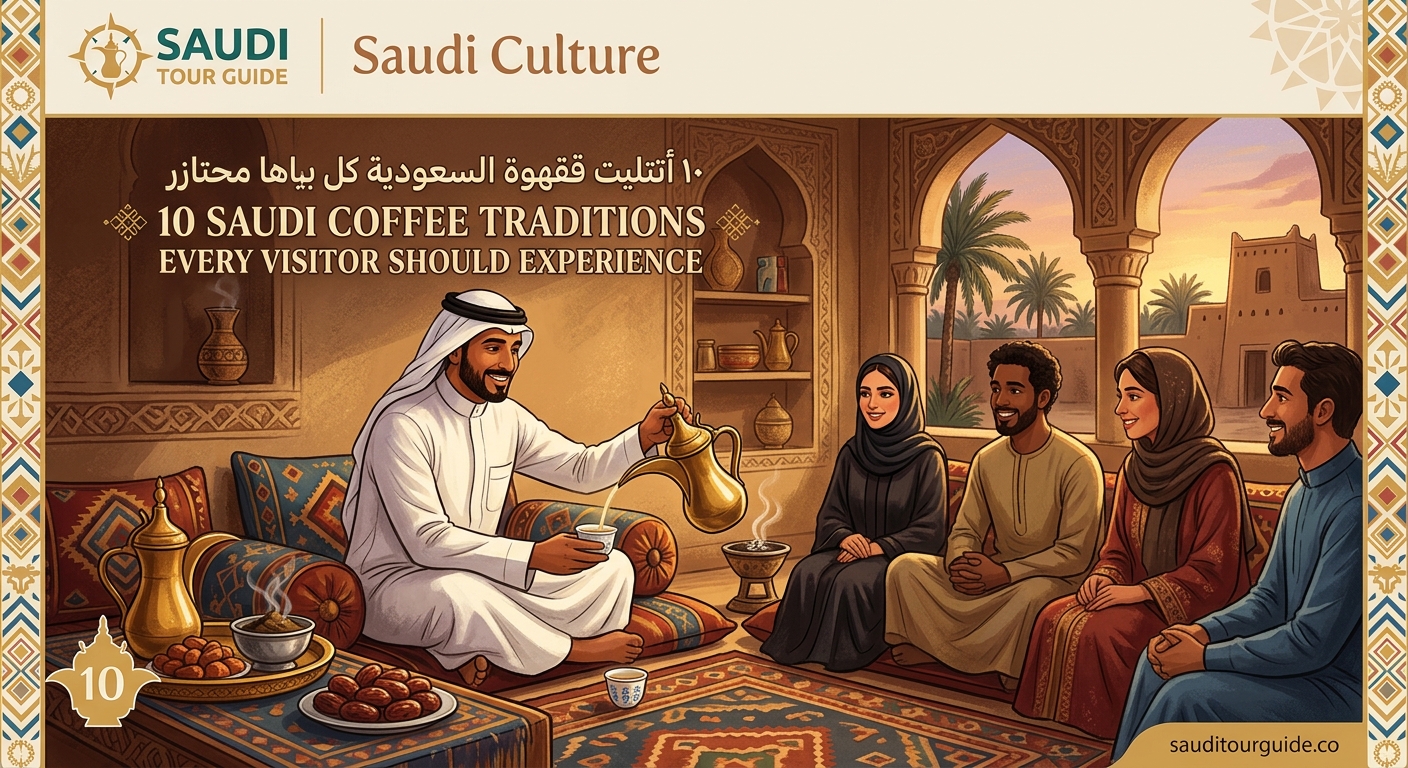
Always accept and hold your coffee cup with your right hand. Always.
This isn’t just about coffee. In Saudi Arabia and throughout the Arab world, the right hand is used for clean, respectful actions like eating, greeting, and accepting gifts. The left hand is reserved for personal hygiene.
Even if you’re left-handed, make the effort. Saudi hosts understand that foreigners may not know every custom, but using your right hand shows you’ve done your homework and care about showing respect.
If you accidentally reach with your left hand, don’t panic. Simply switch hands smoothly and continue. Most Saudis will appreciate that you corrected yourself.
The Three Cup Maximum
Here’s a rule that surprises many visitors. You’ll typically be offered coffee three times, and accepting all three servings is considered polite.
The serving pattern usually goes like this:
- First cup: The welcome. Accept this unless you have a genuine reason to decline.
- Second cup: Shows you’re enjoying the hospitality. Most guests accept.
- Third cup: Demonstrates full appreciation. After this, you can politely decline.
Your host will continue refilling your cup until you signal you’re done. This leads directly to the next tradition.
The Cup Shake Signal
When you’ve had enough coffee, don’t just say “no thanks” and hand back the cup. That’s not how it works.
Instead, gently shake or tilt your empty cup side to side two or three times while handing it back. This small gesture tells your host you’re satisfied and don’t want a refill.
Some visitors also cover the top of the cup with their palm while returning it, which sends the same message. Both methods work perfectly.
Without this signal, your host will assume you want more and keep refilling. You could end up drinking eight tiny cups while trying to be polite, which defeats the purpose of the three cup tradition.
Never Refuse the First Cup
Unless you have a medical condition, pregnancy, or religious restriction, refusing the first cup of coffee is considered quite rude in Saudi culture.
The initial offering represents your host’s welcome and their desire to share hospitality with you. Declining it can be interpreted as rejecting their friendship or questioning their intentions.
If you genuinely cannot drink coffee, explain your reason politely. Most Saudi hosts will understand and often offer an alternative like tea or juice. The key is acknowledging the gesture and providing context for your refusal.
“Coffee in Saudi Arabia is never just coffee. It’s a conversation starter, a peace offering, and a symbol of trust all in one small cup. When someone offers you qahwa, they’re offering you a piece of their culture.” — Traditional Saudi proverb
Standing When Coffee Is Served
In formal settings, particularly in business environments or when meeting elders, stand when coffee is being served to you and others in the room.
This shows respect for the coffee server, who is often performing an honored role, and for the ritual itself. You’ll notice Saudi nationals doing this automatically.
Once everyone has been served, you can sit back down. If you’re in a more casual setting like a friend’s home, watch what others do and follow their lead.
The coffee server typically starts with the most senior person in the room and works their way through guests by rank or age. Never grab your cup before it’s offered to you.
The Dallah and Finjan Relationship
The dallah is the iconic long-spouted brass or silver coffee pot you’ll see throughout Saudi Arabia. It’s not just decorative.
The finjan (small cup) holds only a few sips of coffee by design. This keeps the coffee hot and fresh, and it allows for the refilling ritual that’s central to Saudi hospitality.
| Item | Purpose | Cultural Meaning |
|---|---|---|
| Dallah | Brewing and serving vessel | Symbol of generosity and Arabian heritage |
| Finjan | Small handleless cup | Encourages conversation through multiple servings |
| Mehmas | Roasting pan | Represents the host’s effort and care |
| Cardamom | Primary spice | Adds fragrance and aids digestion |
When you see a dallah displayed in a Saudi home or office, it’s often a family heirloom or a gift representing trust and respect. Complimenting a beautiful dallah is always appreciated.
Coffee Comes Before Business
If you’re visiting Saudi Arabia for work, understand this fundamental rule. Coffee service happens before any serious discussion begins.
Trying to jump straight into business topics before the coffee ritual is complete will make you look impatient and culturally tone-deaf. Your Saudi counterparts may smile and nod, but you’ll have started the relationship on the wrong foot.
The coffee time serves multiple purposes. It allows everyone to settle in, establishes a hospitable atmosphere, and gives both parties a chance to read each other’s body language and mood.
Wait until the coffee has been served, sipped, and the cups collected before transitioning to business matters. Your Saudi hosts will usually signal when it’s time by asking an opening question or shifting their posture.
This same principle applies to social visits. Let the coffee ritual run its natural course before getting into deeper conversations.
Regional Variations You’ll Encounter
Saudi coffee traditions aren’t identical across the entire Kingdom. You’ll notice subtle differences depending on where you travel.
In the northern regions near Jordan, the coffee tends to be slightly stronger and may include more cardamom. Hosts in these areas sometimes serve dates or dried fruit alongside the coffee.
Southern regions, particularly near Yemen, often add ginger or cloves to their coffee blend. The serving style remains similar, but the flavor profile shifts noticeably.
In the Asir region, you might encounter coffee served with local honey or traditional sweets that complement the bitter notes.
Urban centers like Riyadh and Jeddah tend to follow more standardized practices, but family traditions still create variation. Don’t be surprised if the coffee tastes different from one home to the next.
These regional differences make experiencing Saudi coffee traditions across the Kingdom even more rewarding. Each cup tells you something about the local culture and history.
What to Avoid During Coffee Service
Certain behaviors will mark you as culturally unaware during Saudi coffee service. Here’s what not to do:
- Don’t blow on your coffee to cool it. Wait for it to reach drinking temperature naturally.
- Don’t add sugar or milk. Saudi coffee is served as intended by the host.
- Don’t drink it in one gulp like a shot. Sip slowly and appreciate the flavor.
- Don’t place your cup on the floor. Hold it or place it on a provided surface.
- Don’t engage in loud conversation while others are being served.
- Don’t check your phone during the coffee ritual. Give the moment your full attention.
- Don’t ask for a larger cup. The small serving size is traditional and intentional.
These might seem like minor details, but they matter to your Saudi hosts. The coffee ceremony is a moment of mindfulness and connection in a busy world.
Many first-time visitors worry excessively about making mistakes. Most Saudis are gracious with foreigners who are clearly trying to be respectful. A genuine effort counts for more than perfect execution.
That said, knowing these traditions before you arrive shows cultural intelligence that Saudis genuinely appreciate. It transforms you from a typical tourist into someone who values their heritage.
Practicing Coffee Etiquette Before Your Visit
You can prepare for Saudi coffee traditions before you even book your flight. Here’s how:
Find Arabic coffee at home. Many Middle Eastern grocery stores sell Arabic coffee with cardamom. Buy some and practice the cup shake signal at home until it feels natural.
Watch videos of traditional Saudi coffee ceremonies. YouTube has excellent examples of proper etiquette in action. Seeing the ritual helps more than just reading about it.
Practice right-handed movements. If you’re left-handed, spend a few weeks consciously using your right hand for accepting items and greeting people.
Understanding what to wear in Saudi Arabia pairs naturally with learning coffee customs. Both show respect for local culture and help you blend in rather than stand out as an uninformed visitor.
Before you travel, make sure you’ve sorted your Saudi Arabia e-visa so you can focus on cultural preparation rather than last-minute paperwork stress.
When Coffee Meets Modern Saudi Life
Saudi Arabia is changing rapidly. Coffee shops serving international styles have exploded across major cities. Young Saudis drink cappuccinos and cold brews just like people everywhere else.
But traditional qahwa hasn’t disappeared. It coexists with modern coffee culture.
You’ll find both worlds in Saudi Arabia today. A young Saudi professional might grab a vanilla latte on the way to work, then serve traditional Arabic coffee to guests at home that evening.
This blend of old and new defines modern Saudi culture. The coffee traditions persist because they represent values that transcend trends: hospitality, respect, generosity, and human connection.
Even in cutting-edge developments, traditional coffee service remains important. The cultural significance hasn’t diminished even as the Kingdom opens to international tourism and business.
Coffee as a Gateway to Deeper Connections
Mastering Saudi coffee traditions opens doors that remain closed to culturally unaware visitors.
When you demonstrate knowledge of these customs, Saudis recognize that you’ve invested time in understanding their culture. This recognition leads to warmer welcomes, more authentic conversations, and invitations to experiences that typical tourists never access.
The business executive who handles coffee service properly gets taken more seriously in negotiations. The tourist who knows the cup shake signal gets invited to family gatherings. The expat who appreciates qahwa builds stronger relationships with Saudi colleagues.
These ten traditions form the foundation of Saudi social interaction. They’re your entry point into a culture that values hospitality above almost everything else.
Coffee might seem like a small detail in planning your Saudi visit. But small details often matter most when building cross-cultural understanding and respect.
Making Every Cup Count
The next time someone offers you a small cup of cardamom-scented coffee in Saudi Arabia, you’ll know exactly what to do. Accept with your right hand. Sip slowly. Appreciate the moment. Shake the cup gently when you’re done.
These simple actions communicate respect, cultural awareness, and genuine interest in Saudi traditions. They transform you from an outsider looking in to a welcomed guest participating in something meaningful.
Saudi coffee traditions have survived centuries because they serve a purpose beyond caffeine delivery. They create space for human connection in a world that increasingly rushes past such moments.
Whether you’re visiting for business, tourism, or relocation, taking the time to understand and practice these customs will enrich your experience immeasurably. The Kingdom has so much to offer beyond its hidden gems, and proper coffee etiquette is your key to accessing the warmth and generosity that define Saudi hospitality.
So accept that first cup with confidence. You’re ready.