
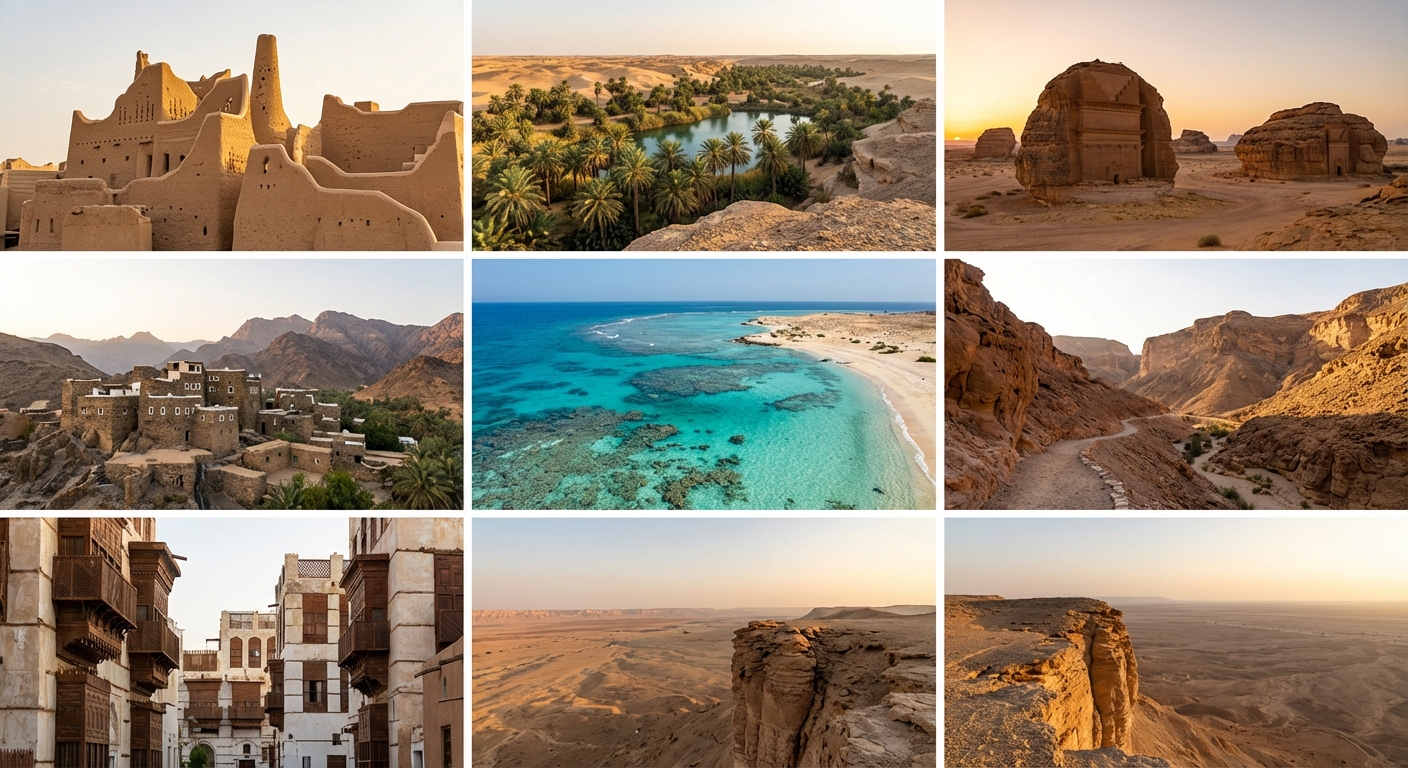
Completing Umrah fills your heart with peace and gratitude. But your spiritual journey doesn’t have to end when you leave the holy mosques. Saudi Arabia holds countless sites that deepen your connection to Islamic history and culture. Many pilgrims rush home without realizing what treasures await just beyond Makkah and Madinah.
Saudi Arabia offers pilgrims meaningful destinations beyond the two holy cities. Sites like Taif, Jeddah, AlUla, and Tabuk combine Islamic heritage with natural beauty. Most locations sit within a few hours of Makkah or Madinah, making them perfect additions to your pilgrimage. Plan three to five extra days to visit these spiritually significant and historically rich places without rushing.
Why Extend Your Stay Beyond the Holy Cities
Most pilgrims book flights that leave immediately after completing their rituals. This approach misses an incredible opportunity. Saudi Arabia has invested billions in preserving Islamic heritage sites and opening them to visitors. The country now welcomes religious tourists who want to walk where the Prophet Muhammad (peace be upon him) walked and see where pivotal moments in Islamic history unfolded.
Your Umrah visa typically allows stays of up to 30 days. Using just a fraction of that time lets you visit places that textbooks mention but few people actually see. These sites aren’t tourist traps. They’re genuine historical locations that scholars have authenticated and governments have protected.
The infrastructure has improved dramatically. Roads connect major sites smoothly. Hotels cater to Muslim travelers with prayer facilities and halal dining. English signage appears at most historical locations. You won’t feel lost or culturally adrift.
Taif: The City of Roses and Prophetic History
Taif sits about 90 minutes southeast of Makkah in the mountains. The climate feels noticeably cooler than the plains below. This city holds deep significance in the Prophet’s life. When Makkah’s leaders rejected his message, he traveled to Taif seeking support. The people there treated him harshly, throwing stones until his feet bled. Angel Jibreel appeared, offering to destroy the city, but the Prophet refused and prayed for their guidance instead.
You can visit the area where this event occurred. A small mosque marks the spot where he sought refuge in a garden. Standing there, you feel the weight of his mercy and patience. The experience transforms an abstract story into something tangible.
Taif also offers:
- Al Rudaf Park, where families gather in pleasant weather
- Traditional souks selling rose products and honey
- Shubra Palace, showcasing regional architecture
- Fruit farms producing pomegranates, grapes, and figs
The rose water produced here gets used in Zamzam distribution and mosque cleaning. Buying some connects you to ongoing acts of worship at the holy sites.
Planning Your Taif Visit
Rent a car or hire a driver from Makkah. The mountain road offers stunning views but requires careful driving. Budget a full day to see the main sites without rushing. Stay overnight if you want to experience the evening climate, which drops significantly compared to Makkah.
Hotels range from budget to luxury. Book ahead during peak Umrah seasons (Ramadan and summer holidays). Most properties include breakfast and have restaurants serving traditional Saudi cuisine.
Jeddah: Gateway City with Layers of History
Jeddah serves as the main entry point for pilgrims arriving by air. Most people pass through quickly on their way to Makkah. That’s a mistake. This coastal city blends ancient Islamic heritage with modern Saudi culture.
The historic district, Al Balad, earned UNESCO World Heritage status. Coral stone buildings with intricate wooden balconies line narrow alleys. These structures date back centuries, built by merchants who traded across the Red Sea. Walking these streets, you see how Muslim traders connected continents and spread Islamic culture through commerce.
The Jeddah Corniche stretches along the coast for miles. Families gather here in the evenings. The King Fahd Fountain shoots water 260 meters into the air, visible from across the city. Watching sunset prayers at one of the corniche mosques, with the sea breeze and fountain backdrop, creates a memorable experience.
“Jeddah taught me that Islamic civilization wasn’t just about worship. It was about building communities, facilitating trade, and creating beauty that honored Allah.” (Pilgrim reflection shared at a heritage center)
What Makes Jeddah Worth Your Time
The city offers experiences you won’t find in Makkah or Madinah:
- Visit museums showcasing Islamic art and regional history
- Eat at restaurants representing cuisines from across the Muslim world
- Shop in traditional souks where bargaining remains an art form
- See how modern Saudis balance tradition with contemporary life
Jeddah also serves as a base for Red Sea activities. Some pilgrims enjoy boat tours or coastal walks after the intensity of Umrah rituals. The ocean provides a different kind of reflection space.
AlUla: Where Prophetic Stories Came Alive
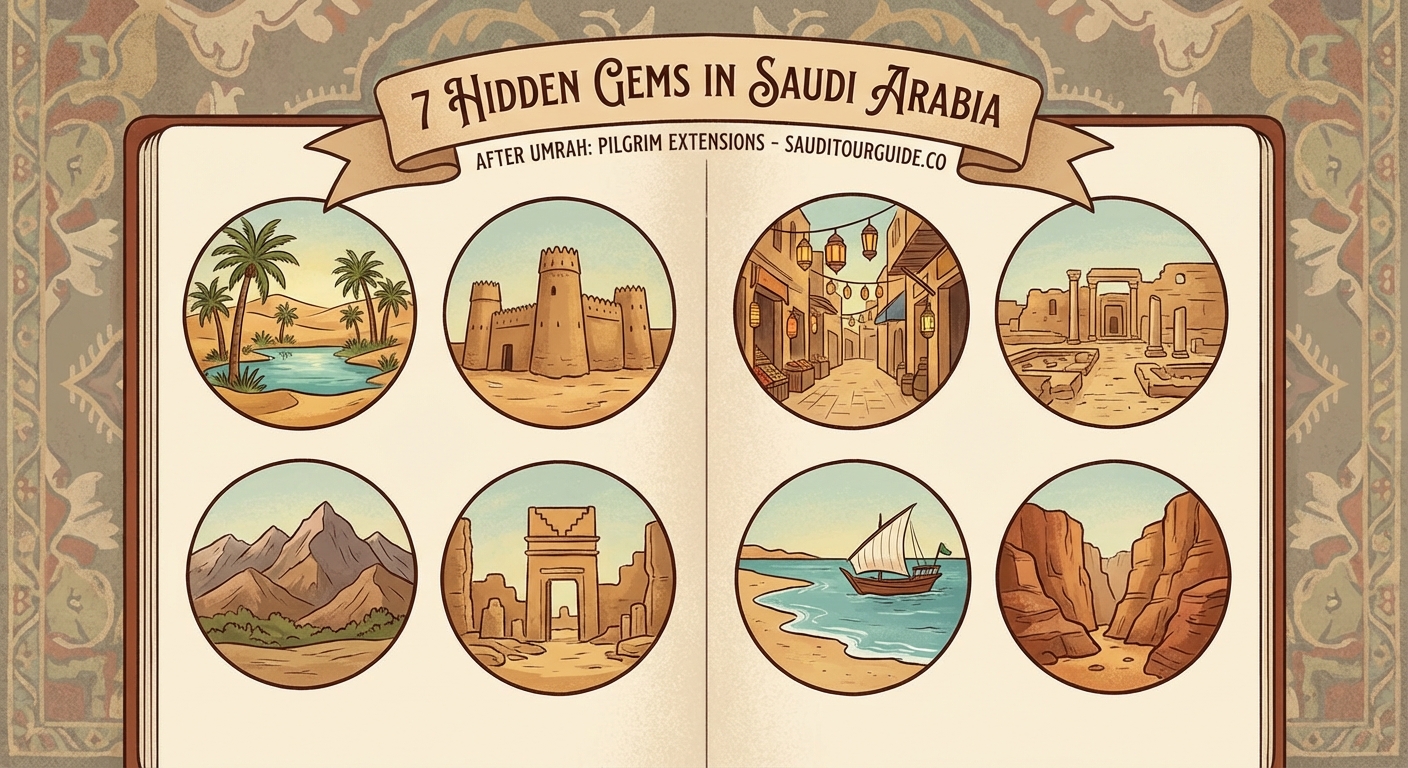
AlUla sits in northwestern Saudi Arabia, about 300 kilometers from Madinah. This region appears in the Quran as the land of Thamud, the people of Prophet Salih (peace be upon him). They carved elaborate homes into rock faces but rejected Allah’s message despite clear signs. Their story serves as a warning about arrogance and disbelief.
The archaeological site of Hegra (Mada’in Salih) preserves these ancient dwellings. Walking among the tombs and structures, you see the technical skill these people possessed. Yet all their abilities couldn’t save them from the consequences of rejecting truth. The Quran tells us not to enter these ruins except in a state of weeping and reflection. Visitors report feeling humbled by the physical evidence of divine judgment.
Beyond the Thamud sites, AlUla contains:
- Ancient trading post ruins from the incense route
- Rock formations that inspire awe at Allah’s creation
- Traditional mud brick villages showing how people lived for centuries
- Museums explaining the region’s role in Islamic history
The Saudi government has developed AlUla carefully, balancing tourism with preservation. Guides trained in Islamic history lead tours. They explain the religious significance alongside archaeological details.
Visiting AlUla Responsibly
This site requires respectful behavior. Remember you’re visiting a place Allah mentions as an example for believers. Some scholars recommend reciting specific duas when viewing ruins of destroyed nations. Check with your local imam before traveling if you have concerns about the permissibility of visiting such sites.
Flights connect AlUla to Jeddah and Riyadh. You can also drive from Madinah, though the journey takes several hours. Plan at least two days to see the main sites properly. The desert climate means extreme heat in summer and cold nights in winter. Spring and fall offer the most comfortable conditions.
Tabuk: Following the Prophet’s Footsteps
Tabuk holds significance as the site of the Prophet’s final military expedition. In the ninth year after Hijrah, he led a large force north to confront Roman threats. The journey tested the companions’ faith, as they traveled during intense heat with limited resources. Those who made excuses to avoid the expedition faced severe criticism in Quranic verses.
The city today preserves several sites connected to this expedition:
- The mosque where the Prophet led prayers
- The well from which his army drank
- Nearby valleys mentioned in hadith collections
Visiting these locations helps you appreciate the physical challenges the early Muslims faced. The desert landscape hasn’t changed much. You understand why the hypocrites hesitated and why those who persevered earned such high status.
Tabuk also offers natural beauty. The region receives more rain than central Arabia, supporting date palm groves and agricultural areas. In winter, nearby mountains sometimes see snow, a rare sight in Saudi Arabia.
Practical Comparison of Post-Umrah Destinations
| Destination | Distance from Makkah | Best Season | Days Needed | Key Attraction Type |
|---|---|---|---|---|
| Taif | 90 km | Year-round | 1-2 | Prophetic history, nature |
| Jeddah | 75 km | October-April | 2-3 | Islamic heritage, culture |
| AlUla | 750 km | October-March | 2-3 | Quranic sites, archaeology |
| Tabuk | 850 km | October-April | 2-3 | Prophetic expedition sites |
| Madinah | 450 km | Year-round | 3-7 | Second holiest city |
Madinah: The Luminous City
While not hidden, Madinah deserves more time than many pilgrims allocate. Most spend just a day or two, rushing between Makkah obligations and flights home. The city rewards longer stays with deeper spiritual experiences.
The Prophet’s Mosque expands constantly to accommodate growing numbers of visitors. Yet finding peaceful moments remains possible. Early morning hours before Fajr offer quiet time for personal reflection. The Rawdah, the garden area between the Prophet’s house and pulpit, provides a special place for dua. Praying there requires patience and planning, but pilgrims describe it as a highlight of their journey.
Beyond the main mosque, Madinah contains numerous sites:
- Quba Mosque, the first mosque built in Islam
- Uhud Mountain, site of the famous battle
- The Seven Mosques area near the Battle of the Trench location
- Jannat al-Baqi cemetery, where many companions rest
Each location connects to specific events in Islamic history. Visiting with knowledge transforms sightseeing into spiritual education. Consider hiring a knowledgeable guide or joining group tours that explain the significance of each site.
Making the Most of Madinah
The city has a gentler pace than Makkah. You can walk comfortably between many sites. The weather feels slightly cooler due to the higher elevation. Date palm groves surrounding the city create a beautiful landscape, fulfilling the Prophet’s description of Madinah’s natural setting.
Accommodation ranges from simple hotels to luxury properties. Staying close to the Prophet’s Mosque lets you attend multiple prayer times easily. Many pilgrims find the Tahajjud prayers in Madinah particularly moving. The recitation quality and the knowledge that you’re praying where the Prophet prayed creates powerful moments.
Organizing Your Extended Pilgrimage
Planning visits to multiple sites requires some strategy. Here’s a logical approach:
- Complete your Umrah rituals in Makkah first, fulfilling your primary obligation
- Visit Taif for a day trip or overnight stay while still based in Makkah
- Travel to Jeddah for 2-3 days, using it as a cultural break
- Fly or drive to Madinah for the spiritual centerpiece of your extension
- Add AlUla or Tabuk if you have additional time and interest
This sequence minimizes backtracking and groups geographically close destinations. It also builds from lighter cultural experiences to deeper spiritual ones, ending with Madinah as your final stop before returning home.
Budgeting for Extended Travel
Costs vary significantly based on your choices. Budget travelers can manage on $50-75 per day outside the holy cities by choosing modest hotels and eating at local restaurants. Mid-range travelers should budget $100-150 daily. Luxury experiences, especially in AlUla, can exceed $300 per day.
Transportation represents a major expense. Domestic flights save time but cost more than buses or shared taxis. Renting a car offers flexibility but requires confidence driving in Saudi Arabia. Many pilgrims find hiring a driver for multi-day trips offers the best balance of cost and convenience.
Common Concerns About Extending Your Stay
Will I face visa issues? Your Umrah visa typically allows 30 days. Confirm the exact duration when you receive your visa. Overstaying results in fines and potential future travel restrictions.
Is it safe to travel beyond the main cities? Saudi Arabia has low crime rates. The government prioritizes pilgrim safety. Standard travel precautions apply. Keep valuables secure, stay aware of your surroundings, and follow local guidance.
Can women travel to these sites? Yes. Women should maintain modest dress throughout Saudi Arabia. Having a mahram (male guardian) makes logistics easier but isn’t always legally required for every location. Check current regulations, as rules evolve.
Will I find halal food easily? Saudi Arabia is an Islamic country. All public restaurants serve halal food. Prayer facilities exist at most tourist sites, hotels, and shopping areas.
Do I need Arabic language skills? English works in major tourist areas and hotels. Learning basic Arabic phrases enhances your experience and shows respect. Translation apps help with menus and signs.
Mistakes to Avoid When Planning Extended Travel
| Mistake | Why It Happens | Better Approach |
|---|---|---|
| Overpacking the schedule | Excitement about seeing everything | Choose 2-3 destinations and see them properly |
| Skipping research | Assuming all sites are similar | Read about each location’s specific significance |
| Traveling during extreme weather | Limited vacation time | Check seasonal climate patterns before booking |
| Not booking accommodation ahead | Expecting availability like home | Reserve hotels during peak Umrah periods |
| Ignoring prayer times in planning | Secular travel habits | Build schedule around five daily prayers |
Building Spiritual Benefit Into Your Travels
Visiting Islamic heritage sites differs from ordinary tourism. Your intention shapes the experience. Approach each location as an opportunity to strengthen your faith and understanding.
Before visiting historical sites, read the relevant Quranic passages or hadith. Knowing the stories makes the physical locations meaningful. When you stand where the Prophet stood or see landscapes mentioned in revelation, the connection deepens your appreciation for Islamic history.
Maintain your worship routine. Traveling shouldn’t reduce your commitment to five daily prayers, Quran recitation, and dhikr. In fact, visiting blessed lands should increase your devotion. Many pilgrims report that maintaining discipline while traveling requires effort but yields spiritual rewards.
Travel with good companions when possible. Shared experiences create bonds and provide mutual encouragement in worship. Group discussions about what you’ve seen and learned enhance everyone’s understanding.
Your Journey Continues After Umrah
The rituals of Umrah mark a high point in any Muslim’s life. But the lessons and spiritual growth don’t have to end when you exit the haram. Saudi Arabia’s landscape holds centuries of Islamic heritage waiting to deepen your connection to your faith.
Whether you spend three extra days in Taif and Jeddah or two weeks visiting multiple regions, you’ll return home changed. You’ll have walked where prophets walked, seen physical evidence of Quranic stories, and experienced the diversity of Muslim culture across different Saudi regions. These memories and lessons stay with you, enriching your understanding long after you’ve returned to daily life.
Start planning your extended pilgrimage today. Research the sites that resonate most with your interests. Check flight options and accommodation. Most importantly, make the intention to use this travel as an act of worship and learning. Your post-Umrah journey can become as transformative as the pilgrimage itself.