
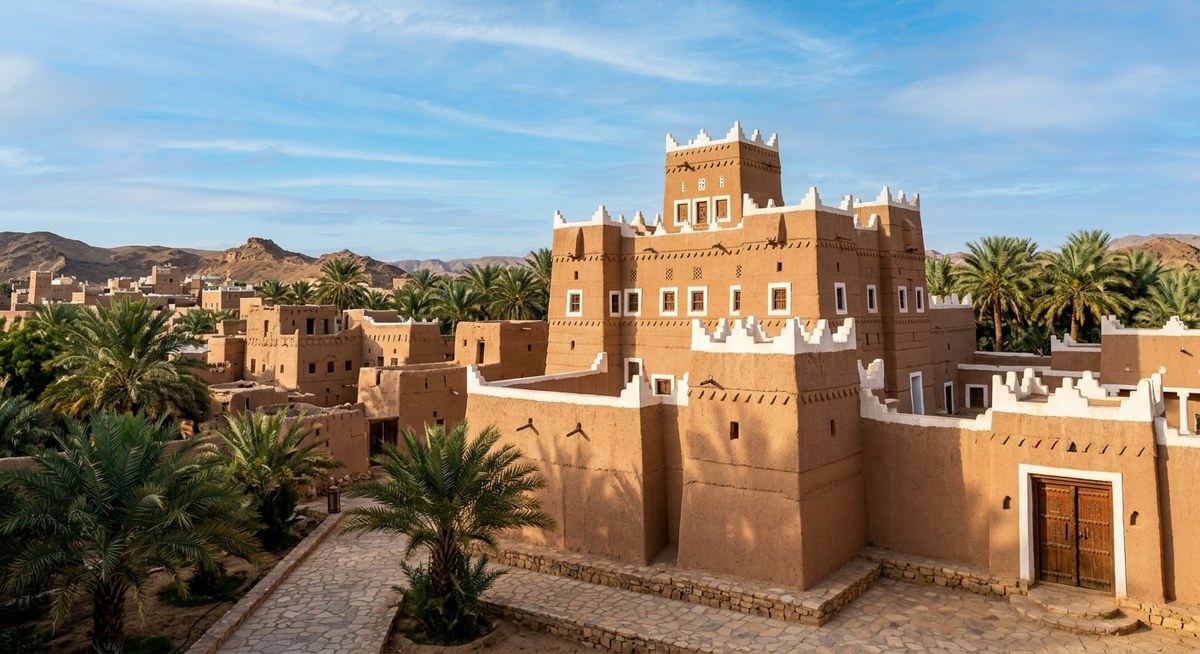
Najran is one of Saudi Arabia’s oldest continuously inhabited cities, with roots stretching back over 2,000 years. Its crown jewel, the Al-Ukhdud archaeological site, reveals layers of pre-Islamic kingdoms, early Christian communities, and ancient trade routes. For travelers who want to see a side of Saudi Arabia most tourists miss, Najran delivers a raw, uncrowded, and deeply historic experience.
Most travelers heading to Saudi Arabia make a beeline for AlUla, Riyadh, or the Red Sea coast. That makes sense. Those places are spectacular. But there is a quieter corner of the kingdom, tucked against the Yemeni border in the southwest, that holds stories just as old and just as powerful. It is a place where mudbrick fortresses rise from the desert, where ancient inscriptions cover canyon walls, and where a 2,000-year-old massacre site still echoes through the archaeological record. That place is Najran, and it is one of the most fascinating ancient cities in Saudi Arabia.
For history enthusiasts and cultural travelers who crave something beyond the glossy brochures, Najran offers something rare: a chance to stand in the middle of a living timeline. The city has been inhabited continuously for millennia. You can walk the same ground that Sabaean traders, Christian martyrs, and Ottoman soldiers once walked. And in 2026, with Saudi Arabia’s tourism doors wide open, there has never been a better moment to visit.
## Why Najran Deserves a Spot on Your Saudi Itinerary
Najran sits in a valley surrounded by the Sarawat Mountains, close to the edge of the Rub’ al Khali, the Empty Quarter. Its location made it a natural crossroads for ancient trade routes carrying frankincense, myrrh, and spices from Yemen up to the Mediterranean. That strategic position brought wealth, but it also brought conflict. The city’s history is written in layers of conquest, resistance, and resilience.
For the visitor, this translates into an incredible density of historical sites packed into a relatively small area. You can see ruins from the Sabaean kingdom, Himyarite inscriptions, early Christian artifacts, and Islamic-era fortresses all within a day’s drive. And you will see them without the crowds. Najran is still off the beaten path for most international tourists.
### Al-Ukhdud: The Soul of Najran Ancient City
The single most important archaeological site in Najran is Al-Ukhdud, known locally as the “Place of the Trenches.” This site holds a story that is both fascinating and haunting.
In the 5th century CE, a Himyarite king named Dhu Nuwas, who had converted to Judaism, launched a brutal campaign against the Christian community of Najran. According to historical accounts, he ordered massive trenches to be dug in the ground, filled them with fire, and threw hundreds of Christians into the flames. The event is referenced in the Quran in Surah Al-Buruj, and it is remembered by Christian communities in the Middle East to this day.
When you visit Al-Ukhdud, you can see the excavated remains of the ancient city. Archaeologists have uncovered foundations of houses, a market square, a palace, and several churches. You can walk through the narrow streets and imagine life in a thriving pre-Islamic trading hub. The site is surprisingly large, and you can easily spend two hours wandering among the ruins.
The site also features a small museum where you can see pottery shards, inscriptions, and tools that have been unearthed. Entry is affordable, and the site is well marked with informational boards in both Arabic and English.
> “Al-Ukhdud is not just an archaeological site; it is a monument to human resilience. The story of the persecution here is central to understanding early Christianity in Arabia and the complex religious landscape of the pre-Islamic period.” – Dr. Saad Al-Rashid, Saudi archaeologist
## Other Unmissable Ancient Sites in and Around Najran
Al-Ukhdud is the headliner, but Najran’s ancient city credentials go much deeper. Here are the other sites that should be on your list.
### The Najran Fortress and Palace Complex
This massive mudbrick fortress sits right in the center of the modern city. It was built in its current form during the Ottoman period, but the foundations are much older. The fortress served as the seat of local governors for centuries and also functioned as a defensive stronghold.
Inside the fortress complex, you will find:
– The Emir’s Palace, a beautifully restored multi-story mudbrick building with traditional Yemeni-style decorative elements
– A small museum dedicated to Najrani culture and history
– A mosque that dates back to the early Islamic period
– Stunning panoramic views of the city from the rooftop
The fortress is open to visitors every day except Friday mornings. Plan for about an hour to walk through the entire complex.
### Al-An Palace
About 30 kilometers outside the city, this 17th-century palace was built by the Yam tribe, one of Najran’s most prominent families. The palace sits on a hilltop overlooking a lush valley of date palms and farms. It is a four-story mudbrick structure with watchtowers, living quarters, and storage rooms. The restoration work here has been done with care, preserving the original materials and construction techniques.
### The Cave of Abu Sakhr
For something completely different, drive out to the Cave of Abu Sakhr, a natural limestone cave that was used as a shelter by ancient peoples. Inside, you can see prehistoric drawings and inscriptions that date back thousands of years. The cave is not heavily promoted, so you will likely have the place to yourself. Bring a flashlight and wear sturdy shoes.
## What to Expect When You Visit Najran
Najran is different from other Saudi cities. The local culture has strong Yemeni influences, which you will notice in the architecture, the food, and the way people dress. The men often wear the futa, a wraparound skirt, rather than the traditional thobe. The women’s colorful dresses and intricate face coverings are distinct from what you see in Riyadh or Jeddah.
The climate is hot and dry for most of the year. The best months to visit are October through March, when daytime temperatures are pleasant and evenings are cool. Summer months can be brutally hot, with temperatures regularly exceeding 110 degrees Fahrenheit.
You will need a rental car or a hired driver to get around. Public transportation within Najran is limited, and many of the best sites are outside the city center. If you are comfortable driving, renting a car gives you the most flexibility. Roads in the area are generally well maintained.
### A Practical Guide to Getting There
Here is a step-by-step process for planning your trip to Najran.
1. **Get your visa sorted first.** Most nationalities can apply for a Saudi tourist e-visa online. The process takes about 10 minutes. Check the [how to apply for your Saudi Arabia e-visa in under 10 minutes](https://sauditourguide.co/how-to-apply-for-your-saudi-arabia-e-visa-in-under-10-minutes/) guide for step-by-step instructions.
2. **Book a flight to Najran Domestic Airport (EAM).** There are direct flights from Riyadh, Jeddah, and Dammam. Flight time from Riyadh is about 90 minutes.
3. **Arrange accommodation.** Najran has a handful of solid mid-range hotels and a few luxury options. Book ahead during peak travel seasons.
4. **Plan at least two full days.** This gives you time to see Al-Ukhdud, the fortress, and at least one or two outlying sites without rushing.
5. **Download offline maps.** Cell service can be spotty once you leave the city center.
## What to Pack and How to Dress
Saudi Arabia has a modest dress code, and Najran is more conservative than cities like Jeddah or Riyadh. For women, this means covering your shoulders, chest, and legs down to the ankles. A headscarf is not strictly required for foreign women, but carrying one is respectful and useful when visiting religious sites. For men, long pants and shirts with sleeves are the norm. Avoid shorts and sleeveless tops in public.
Here is a quick checklist:
– Lightweight long-sleeved shirts and long pants (natural fabrics like cotton and linen)
– A wide-brimmed sun hat
– Sunscreen with high SPF
– Comfortable walking shoes for uneven terrain
– A reusable water bottle (stay hydrated)
– A flashlight for cave visits
– A scarf or shawl for sun protection and modesty
### Best Sites for Photography
| Site | Best Time for Photos | Key Subject | Difficulty |
|——|———————|————-|————|
| Al-Ukhdud | Early morning (7-9 AM) | Trenches and city ruins | Easy, flat paths |
| Najran Fortress | Late afternoon (4-5 PM) | Mudbrick architecture | Easy, paved walkways |
| Al-An Palace | Golden hour (5-6 PM) | Hilltop panorama | Moderate, some stairs |
| Cave of Abu Sakhr | Midday (for light inside) | Prehistoric drawings | Moderate, uneven ground |
## The Food You Should Not Miss
Najrani cuisine is distinct from the rest of Saudi Arabia. The influence of Yemeni cooking is everywhere. You will find dishes like:
– **Aseedah** – A doughy porridge made from wheat flour, served with spiced meat or chicken broth. It is hearty and deeply flavorful.
– **Maraq** – A thin, aromatic soup typically eaten for breakfast with fresh bread.
– **Shafut** – A cold yogurt dish with shredded flatbread and herbs, similar to a savory pudding.
– **Fresh dates** – Najran is famous for its date palms. The dates here are large, sweet, and absolutely worth bringing home as souvenirs.
For a proper local meal, head to a traditional restaurant in the old quarter of the city. The portions are generous, and the hospitality is genuine. You will likely be offered Saudi coffee and dates before your meal arrives. Accept. That is part of the experience.
## Why Najran Matters for the History Enthusiast
For someone who loves history, Najran is a gift. Unlike the polished, curated experience of AlUla’s Hegra, Najran feels raw and undiscovered. The sites are not overrun with tour groups. You can stand at Al-Ukhdud and hear nothing but the wind. You can touch walls that have stood for 1,500 years. You can piece together the story of a city that connected Africa, Arabia, and the Mediterranean.
Najran also offers something that few other Saudi ancient cities can: a sense of living continuity. The tribes that live in Najran today trace their ancestry back to the same people who built the fortresses and traded along the incense routes. You are not just visiting a dead civilization. You are stepping into a culture that has carried its history forward into the present.
If you are building a broader Saudi itinerary, Najran pairs well with a visit to the Asir region, which is just a few hours to the north. The [mountain adventures in Asir: where to hike, camp, and explore Saudi Arabia’s green highlands](https://sauditourguide.co/mountain-adventures-in-asir-where-to-hike-camp-and-explore-saudi-arabia-s-green-highlands/) guide can help you connect those dots.
## How to Make the Most of Your Time in Najran
You can see the main highlights in two days, but three days gives you breathing room to soak in the atmosphere and explore some of the lesser known corners.
**Day one:** Arrive in the morning, check into your hotel, and head straight to Al-Ukhdud. Spend two to three hours at the site. Have lunch at a local restaurant. In the afternoon, visit the Najran Fortress and its museum. End the day with a stroll through the old souq, where you can buy traditional pottery, woven textiles, and local honey.
**Day two:** Drive out to Al-An Palace in the morning. Spend an hour exploring the palace and another hour walking through the surrounding farmland. In the afternoon, visit the Cave of Abu Sakhr. Pack a picnic lunch and eat at the cave site. Return to the city in the late afternoon and relax.
**Day three:** If you have a third day, consider a drive east toward the Empty Quarter. You do not need to go far. Just an hour outside the city, the landscape opens into vast sand dunes. It is a stunning contrast to the green valleys and mudbrick architecture of the city.
## What Nobody Tells You About Visiting Najran
A few honest notes to set expectations:
The city is conservative. You will notice this in the way people interact. Public displays of affection are not appropriate. Loud or boisterous behavior will draw stares. That said, the locals are genuinely warm and curious about foreign visitors. If you show respect, you will receive warmth in return.
English is not widely spoken outside of hotels and major tourist sites. Learn a few basic Arabic phrases. Even a simple “Shukran” (thank you) will be met with smiles. The [15 Arabic phrases that will transform your Saudi Arabia travel experience](https://sauditourguide.co/15-arabic-phrases-that-will-transform-your-saudi-arabia-travel-experience/) list is a good starting point.
Prayer times affect opening hours. Most sites close briefly during each of the five daily prayers. Plan your visits around these breaks. The midday prayer closure is usually the longest, lasting about 45 minutes to an hour.
The driving in Najran is… spirited. Saudi drivers have their own logic on the road. Stay alert, use your horn generously as a warning, and avoid driving at dusk when visibility is low.
## A Final Word on Visiting Najran Ancient City
Najran does not have the glitz of NEOM or the brand recognition of AlUla. That is precisely its charm. It is a place for the traveler who wants to go beyond the headlines and find the real, layered, messy, beautiful history of the Arabian Peninsula. The Najran ancient city experience is not about luxury resorts or Instagram backdrops. It is about standing in a 2,000-year-old trench and feeling the weight of human history beneath your feet.
If you are planning a trip to Saudi Arabia in 2026, make room for Najran. Book your flights, pack your walking shoes, and prepare to be surprised. This ancient city will stay with you long after you have left its dusty streets behind.
And when you return home, you will have the satisfaction of knowing you saw the Saudi Arabia that most tourists still do not know exists. That alone makes the trip worth every mile.