
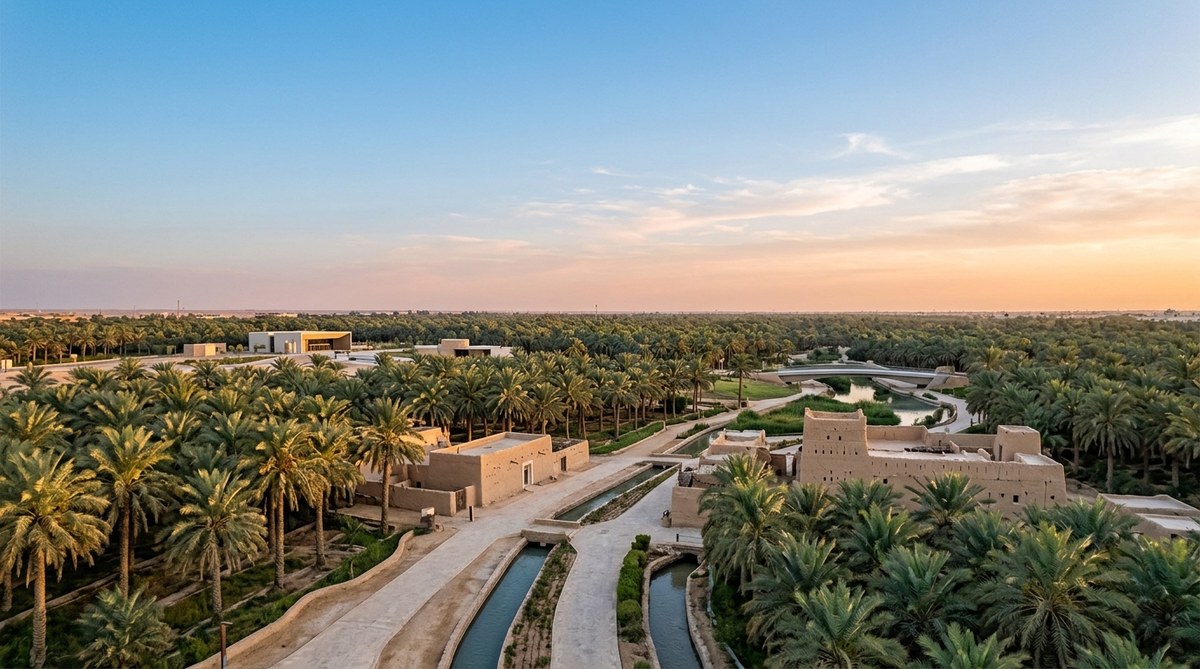
You’ve heard about the futuristic towers of Riyadh and the Red Sea resorts of Jeddah. But there’s a place in Saudi Arabia’s Eastern Province that most travelers overlook. Al-Ahsa is that place. It’s the world’s largest oasis, a UNESCO World Heritage site, and home to over 2.5 million palm trees. Yet it remains one of the most underrated destinations in the kingdom. Let me show you why you should add it to your 2026 itinerary.
Al-Ahsa is Saudi Arabia’s most underrated destination because it offers a rare blend of natural wonder, ancient history, and authentic local culture without the crowds. You can walk through a UNESCO-listed oasis with millions of date palms, swim in natural springs, explore a 200-year-old souq, and taste some of the world’s best dates. It’s an easy day trip from Dammam or an overnight stop on your Eastern Province road trip.
Why Al-Ahsa Gets Overlooked (But Shouldn’t)
When people plan a trip to Saudi Arabia, they usually head to Riyadh for the museums and malls, or to Jeddah for the corniche and historic Al-Balad. The Eastern Province cities of Dammam, Khobar, and Dhahran get some attention for their beaches and expat lifestyle. But Al-Ahsa sits quietly inland, about 70 kilometers from the coast. It doesn’t have a massive skyline or a flashy entertainment district. What it does have is something far more rare: a landscape shaped by water and time that feels completely different from the rest of the country.
Most visitors assume Saudi is all desert and skyscrapers. Al-Ahsa shatters that assumption. The oasis creates a microclimate that supports lush farmland, natural springs, and even lakes. It’s a slice of green that feels almost tropical in the middle of the Arabian Peninsula.
“When my tour group stepped out of the van and saw the endless palm groves stretching across the horizon, everyone’s jaw dropped. Most said they had no idea such a place existed in Saudi. It’s easily the most underrated spot in the whole kingdom.” Feedback from a tour operator based in Dammam, 2026
The World’s Largest Oasis: A UNESCO Superstar
Al-Ahsa Oasis is recognized by the Guinness Book of Records as the largest self-contained oasis on the planet. It covers about 85 square kilometers and contains more than 2.5 million date palms. In 2018, UNESCO added it to the World Heritage list as an “evolving cultural landscape.” That means it’s not just a natural wonder; it’s a living, working landscape that has been farmed for thousands of years.
The oasis is fed by a massive underground aquifer that surfaces through 280 natural springs. These springs are the reason Al-Ahsa has been continuously inhabited since the Stone Age. You can still see ancient irrigation channels called “qanats” that were built over 2,000 years ago.
Must-See Attractions in Al-Ahsa
If you’re ready to visit, here are the five things you absolutely cannot miss:
- Souq Al Qaisariya – One of the oldest markets in the Arabian Peninsula. It dates back to 1822. You’ll find everything from spices and perfumes to handmade pottery and traditional clothing. The architecture is stunning with its mud-brick walls and wooden doors.
- Al-Qarah Mountain and its caves – A small limestone mountain that rises 200 meters above the oasis. Inside you’ll find cool caves with natural air conditioning. The caves have been used as shelters and storage spaces for centuries.
- Asfar Lake – A large seasonal lake that appears after winter rains. It attracts migratory birds and is a popular spot for picnics and camping. The water is shallow and calm, perfect for a sunset walk.
- Ibrahim Palace – A historic palace and mosque built in the 16th century. It served as the seat of Ottoman and later Saudi governors. The complex includes a castle, a traditional water well, and a museum.
- Jawatha Mosque – Believed to date back to the 7th century, it is one of the oldest mosques in the Islamic world. The original structure is simple and moving, built from local stone and mud.
Natural Springs and Lakes: A Surprise in the Desert
The natural springs are the heart of Al-Ahsa’s charm. Many of them are public and free to enter. You can wade into the warm, mineral-rich water or just sit by the edge and watch the bubbling. Some of the most popular springs include:
- Umm Sabaa – a large pool with a small waterfall
- Al-Hadba – surrounded by picnic areas
- Al-Jawharah – lined with palm trees and reeds
Winter rains also create temporary lakes like Asfar and Al-Hayr. These are shallow, warm, and surrounded by reeds. Birdwatchers love them for spotting herons, flamingos, and eagles.
A Food Lover’s Paradise: Dates and Beyond
Al-Ahsa is famous for its dates. The region produces over 200 varieties, with names like Khalas, Reziz, and Shishi being the most prized. Local farmers still dry them in traditional mud-brick storage rooms called “Dar Al-Tamr.” You can buy fresh dates directly from the souq or visit a date processing factory.
But the food scene goes beyond sweets. Al-Ahsa has a unique cuisine built around rice and lamb dishes cooked in underground ovens. A local specialty is “Kabsa Al-Ahsa,” which uses a blend of spices and local dates for sweetness. Another must-try is “Madgameh,” a slow-cooked meat stew served with flatbread.
For a full culinary experience, book a dinner at a traditional “istiraha” (a farm resthouse). Many farms welcome visitors for evening meals under the palms. You’ll sit on carpets, eat with your hands, and listen to Saudi folk music.
When to Visit Al-Ahsa
The best time to visit is from November to March. That’s when temperatures range from 15 to 25 degrees Celsius. Summers are scorching, with highs regularly hitting 48 degrees Celsius, but if you come in summer, plan your activities for early morning and evening.
| Season | Temperature Range | Crowd Level | Best For |
|---|---|---|---|
| November – March | 15-25°C | Low to moderate | Walking, sightseeing, springs, outdoor dining |
| April – October | 30-48°C | Low | Early morning springs, shuttered souqs for shopping |
Getting There and Getting Around
Al-Ahsa is easy to reach. The nearest international airport is King Fahd International Airport (DMM) near Dammam. From there it’s a one-hour drive west. You can also fly into Al-Ahsa’s own domestic airport (Al-Ahsa International Airport), which has flights from Riyadh and Jeddah.
A rental car is the best way to see the oasis. The roads are well maintained and signposted. If you’d rather not drive, taxi services like Uber and Careem operate in the city, but you’ll pay more for longer trips to the springs and lake.
Here are three simple steps to plan your trip:
- Get your visa. Most nationalities can apply for an e-visa online. The process takes about 10 minutes. See our guide on how to apply for your Saudi Arabia e-visa in under 10 minutes.
- Book a hotel. There are several mid-range and budget options in Al-Hofuf, the main city. For a unique experience, stay at a traditional farmhouse resort.
- Plan your route. A two-day itinerary allows you to see all the major sites without rushing. Day one: Souq Al Qaisariya, Ibrahim Palace, and Al-Qarah caves. Day two: Asfar Lake, a spring visit, and a date farm tour.
Packing Essentials for Al-Ahsa
- Comfortable walking shoes for the souq and caves
- Lightweight, long-sleeved clothing (modest dress is expected)
- A wide-brimmed hat and sunglasses
- Sunscreen (even in winter)
- A reusable water bottle (many springs have drinkable water)
- A camera for the palm groves and lake
- A sarong or shawl for covering your head when visiting mosques
Why Al-Ahsa Deserves Your Attention
Al-Ahsa offers something that crowded tourist hubs can’t: genuine peace. You can walk through date palm tunnels with no one else around. You can sit beside a warm spring and watch the sun set over the oasis. You can haggle for spices in a souq that hasn’t changed much in two centuries. It’s a chance to see a side of Saudi Arabia that hasn’t been polished for Instagram.
If you’re the kind of traveler who loves finding hidden gems, Al-Ahsa is your spot. It’s underrated because most people don’t know it exists. But once you go, you’ll understand why those who have been there say it’s one of the most memorable places in the kingdom.
For more ideas on where to go next, check out our list of 15 hidden gems in Saudi Arabia that most tourists never discover. And if you’re passing through the Eastern Province, don’t miss the 10 things nobody tells you about visiting Dammam and the Eastern Province.
So go ahead. Book that flight, apply for your visa, and get ready to experience the most underrated destination in Saudi Arabia. The palms are waiting.