
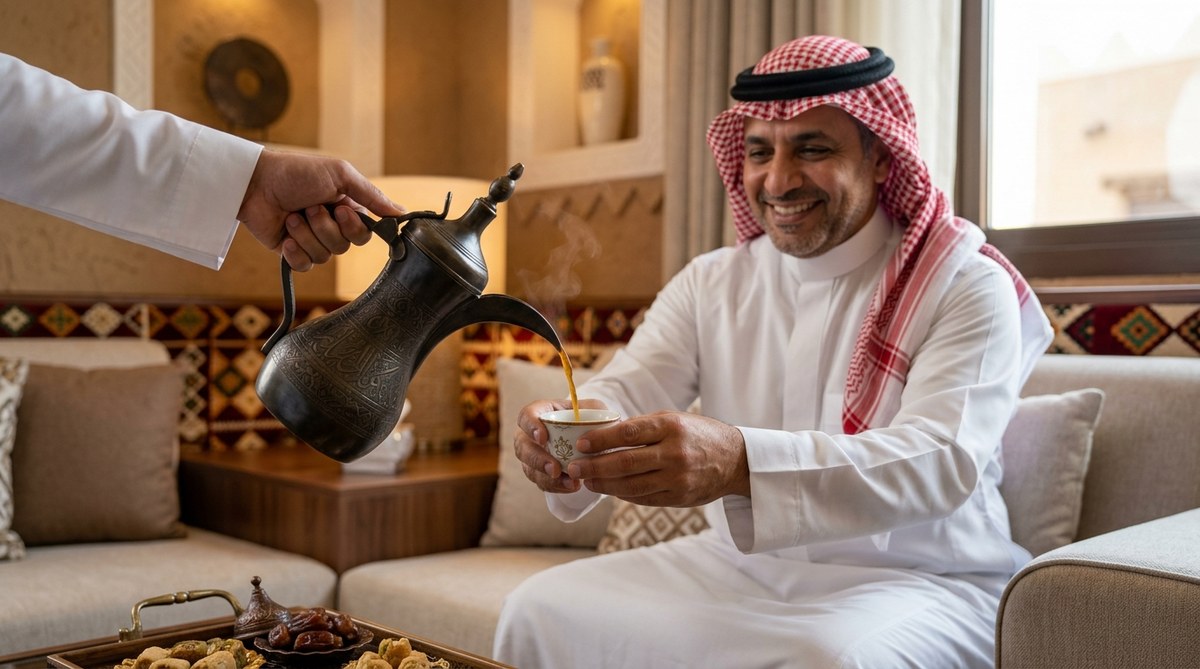
You are sitting in a majlis, the traditional reception room in a Saudi home. The host walks in carrying a gleaming brass pot with a long, curved spout. They pour a dark, aromatic liquid into a small handleless cup. But they do not fill it. They stop halfway. It is not an accident. It is a deliberate act of hospitality. The Saudi coffee pouring tradition is one of the most important social rituals in the Arabian Peninsula. It carries rules, meanings, and hidden signals that every visitor should understand.
The Saudi coffee pouring tradition is a ritual of respect, generosity, and equality. The cup is intentionally left half full so guests can drink multiple servings without feeling rushed. Accepting coffee shows gratitude, while a subtle hand gesture signals you are done. Understanding this custom helps visitors avoid awkward moments and shows respect for local culture.
The Deeper Meaning Behind the Pour
The act of pouring Saudi coffee, known as gahwa, is not just about serving a drink. It is a symbol of welcome. When a host pours for you, they are offering their home, their time, and their respect. The coffee itself is a blend of lightly roasted beans, cardamom, saffron, and sometimes cloves. It is bitter, not sweet. That bitterness is intentional. It reminds everyone that life has hardships, but sharing them with others makes them bearable.
The half-filled cup is the most important detail. A full cup would suggest the host wants you to leave. An empty cup means you are not welcome. The half measure invites you to stay, to talk, and to accept another serving. It is a silent conversation between host and guest.
How the Pouring Ceremony Works
The ritual follows a specific sequence. Here is what you can expect when you are invited for gahwa.
- The host or a younger family member brings out a tray with the coffee pot (dallah) and small cups (finjan).
- They hold the pot in their left hand and the cup in their right, or use a single hand for both depending on the region.
- They pour from a height. The stream of coffee falls into the cup from several inches above. This aerates the coffee and creates a slight foam.
- They fill the cup only one third to one half full.
- They present the cup to the oldest or most honored guest first.
- The guest accepts with the right hand. If you are seated, you can also use both hands as a sign of respect.
- You sip slowly. The coffee is hot and strong.
- When you want more, you simply hold the cup back toward the host. They will refill it without asking.
- When you are finished, you gently shake the cup from side to side or hand it back with a small wave to signal “no more.”
What to Do and What to Avoid
The table below outlines the correct technique and the common mistakes that visitors make.
| Correct Action | Common Mistake |
|---|---|
| Accept the cup with your right hand | Using your left hand to take the cup |
| Sip slowly and savor the bitterness | Gulping it down in one go |
| Hold the cup out for more if you want it | Placing the cup on the floor or table |
| Shake the cup when you are done | Leaving the cup full or saying “no thanks” loudly |
| Compliment the coffee | Asking for sugar or milk |
| Take at least one cup | Refusing outright without a polite reason |
Why the Rules Matter for Visitors
Understanding the Saudi coffee pouring tradition is not just about being polite. It is about building trust. For a business professional, accepting coffee shows you are open to a relationship. For a tourist, it shows you respect local customs. For an expat, it is a way to connect with colleagues and neighbors.
“The coffee ritual is the first step in any meaningful Saudi relationship. If you refuse the cup, you are refusing the connection.” — Khalid Al Otaibi, cultural advisor based in Riyadh
The custom also reflects the broader value of generosity in Saudi culture. You will find it in homes, offices, and even at government meetings. It is the same ritual whether you are meeting a king or a shopkeeper. That equality is part of the beauty of the tradition.
The Hidden Signal of the Hand
The most subtle part of the ritual is the hand gesture for stopping. When you have had enough, you do not say “no.” You simply hold the cup between your thumb and index finger and give it a small wiggle or a gentle shake. The host will immediately stop pouring. If you place the cup down, they will assume you want more and keep pouring until you signal. This gesture is universal across the Gulf, but it is especially important in Saudi Arabia.
Coffee and Dates: The Perfect Pair
Gahwa is almost always served with dates (tamr). The sweetness of the date balances the bitterness of the coffee. The combination is practical and symbolic. Dates provide energy. Coffee provides warmth. Together, they represent the hospitality of the desert. If you are offered both, take a date first, then sip your coffee. Eat the date with your right hand, and never spit the pit into your hand. Instead, cup your hand around your mouth and place the pit discreetly on your plate.
Regional Variations in the Saudi Coffee Pouring Tradition
While the core ritual is consistent, you may notice small differences depending on where you are in the Kingdom.
- Najd region (Riyadh area): The coffee is often lighter in color and heavily spiced with cardamom. The host may pour from a dallah with a very long spout.
- Hejaz region (Jeddah, Makkah): The coffee can be slightly darker and may include a hint of rose water or saffron. The cups are sometimes smaller.
- Eastern Province (Dammam, Al Ahsa): You may be offered a second cup of a different type of coffee, such as a stronger brew with more cloves.
- Asir region: The ritual may be more informal, but the same rules of respect apply. The host is still the one who pours.
No matter where you are, the basic etiquette remains the same. Watch what others do, and follow their lead.
Practical Tips for First-Time Visitors
If you are visiting Saudi Arabia for the first time, here are a few things to keep in mind.
- Do not refuse coffee if you are the guest of honor. It is considered rude.
- If you have a medical reason, simply say “God bless your hands” in Arabic (Allah yatik al afiya) and explain politely. The host will understand.
- Hold the cup with your thumb and index finger. Do not wrap your whole hand around it.
- Do not blow on the coffee to cool it down. Wait a moment for it to cool naturally.
- If the host pours for themselves last, it is a sign of humility. Do not insist they drink first.
- The number of cups you drink does not matter. Three is common, but one or two are fine.
Tying the Tradition to Your Travel Plans
Understanding this custom will enrich your trip. When you are invited to a local home or a traditional restaurant, you will know exactly what to do. It also helps you appreciate the deeper layers of Saudi culture. The same spirit of generosity you see in the coffee ritual appears in every part of Saudi life, from the way people greet each other to the way they share meals.
If you want to experience the coffee tradition in its most authentic setting, consider visiting a traditional majlis in a historic district. The Complete Weekend Guide to Exploring Jeddah’s Historic Al-Balad District is a great place to start. You can also learn more about the broader customs in our guide on How to Greet and Interact with Locals: Saudi Social Etiquette Explained. For a deeper look at the coffee culture itself, check out 10 Saudi Coffee Traditions Every Visitor Should Experience.
The Last Sip
The Saudi coffee pouring tradition is a small ritual with big meaning. It teaches patience, respect, and the value of human connection. Next time you are handed a half-filled cup of golden gahwa, remember that it is not about the amount in the cup. It is about the invitation to stay. Accept that invitation. Sip slowly. And when you are ready to leave, give that gentle shake of the cup. You will have mastered one of the most important social customs in the Kingdom. Enjoy the journey, and drink well.