
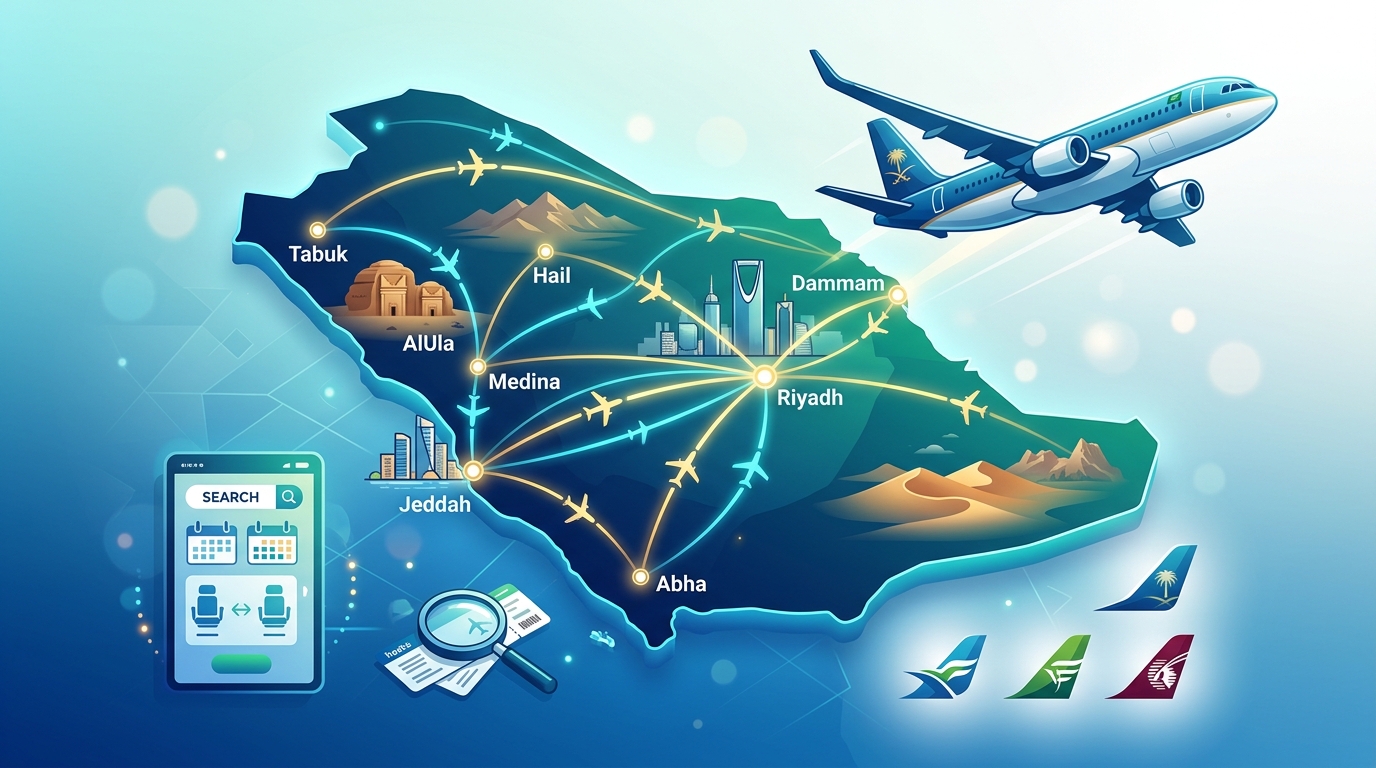
Flying between Saudi cities is easier than you might think. The Kingdom has invested billions in modern airports and domestic routes that connect everything from bustling Riyadh to the mountain retreats of Abha.
Most international travelers don’t realize how affordable and convenient domestic flights in Saudi Arabia have become. You can hop from Jeddah to AlUla in under two hours for less than the cost of a fancy dinner.
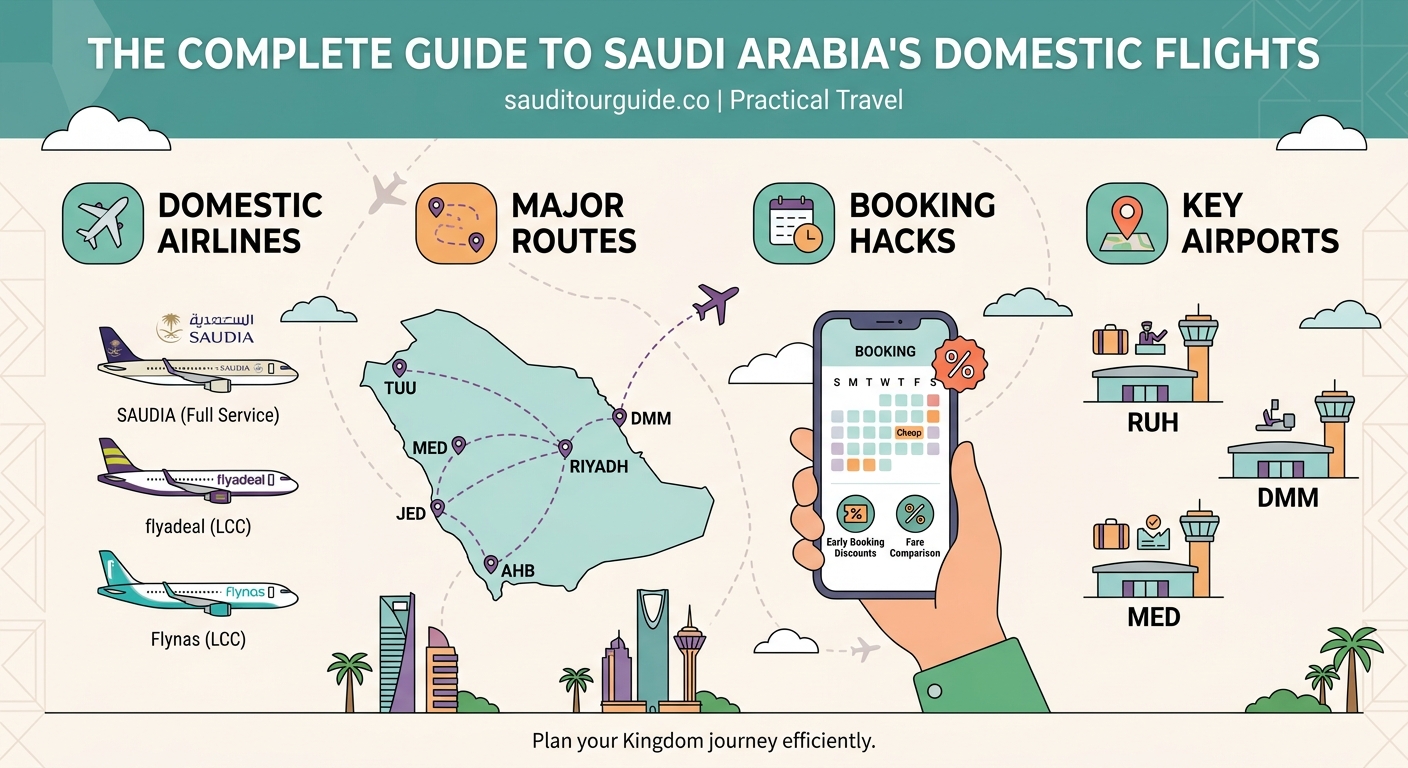
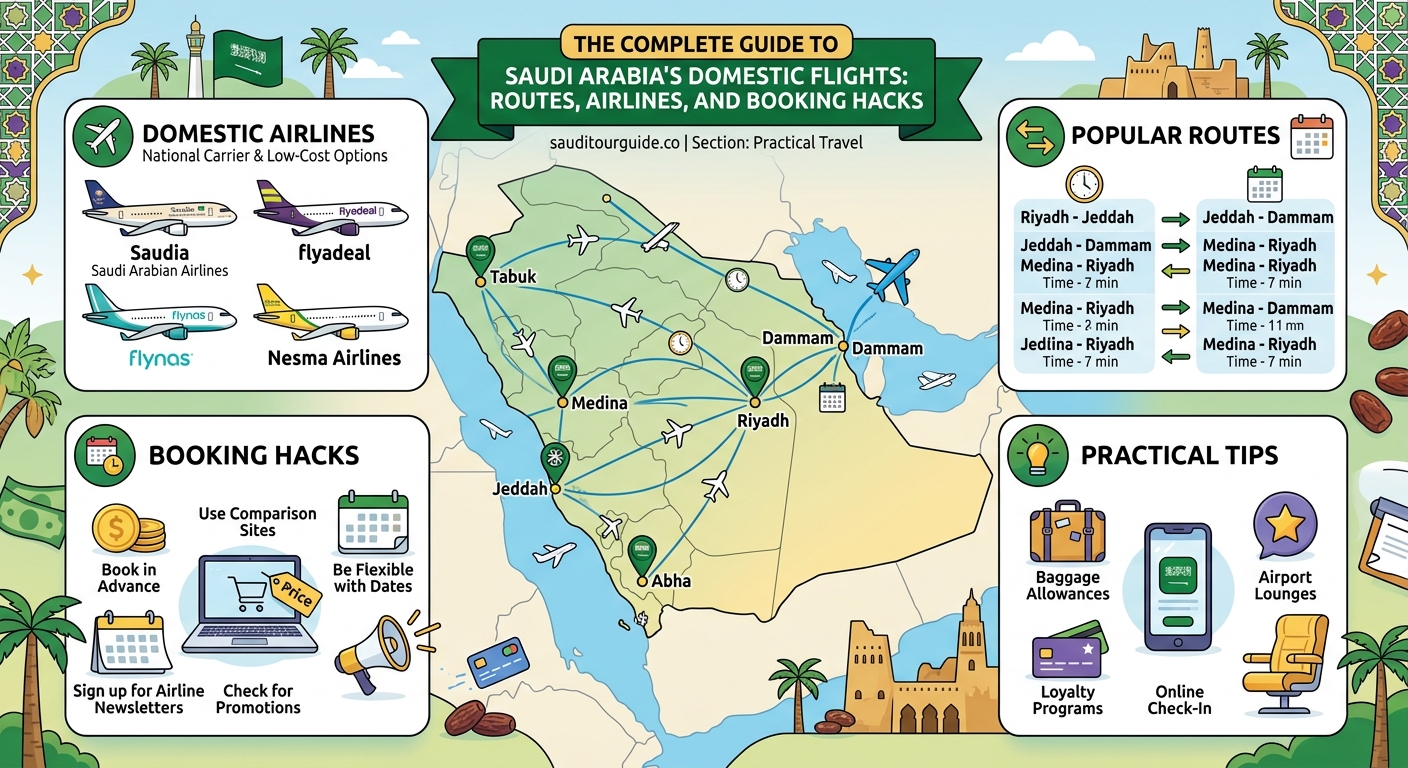
Saudi Arabia operates three major carriers and dozens of domestic routes connecting all major cities and tourist destinations. Flights are frequent, affordable, and modern. Book directly through airline apps for best prices, travel midweek for cheaper fares, and always compare Saudia, Flynas, and Flyadeal before purchasing. Most routes take under two hours and cost between 150 to 600 SAR depending on season and advance booking.
Airlines Operating Domestic Routes
Three carriers dominate the Saudi skies, each with different strengths.
Saudia is the national flag carrier. They offer the most routes, premium lounges, and a generous frequent flyer program. Their fleet is modern, and service includes complimentary snacks and beverages on most flights. Saudia operates from dedicated terminals in major airports, which can mean shorter security lines.
Flynas positions itself as the budget option but delivers solid service. Their fares often undercut Saudia by 30 to 40 percent. You’ll pay extra for checked bags and seat selection, but the base fare is hard to beat. Flynas has expanded rapidly and now serves smaller cities like Taif and Yanbu.
Flyadeal is Saudia’s low-cost subsidiary. They launched in 2017 and focus on price-sensitive travelers. Expect no-frills service but reliable schedules. Their mobile app is surprisingly good, and they often run flash sales with fares as low as 99 SAR.
All three airlines meet international safety standards and operate modern Airbus fleets. You won’t find aging aircraft or sketchy maintenance here.
Most Popular Domestic Routes
The Riyadh to Jeddah corridor is the busiest in the Kingdom. Flights depart every 30 to 45 minutes during peak hours. The journey takes about 90 minutes and costs between 200 and 400 SAR depending on when you book.
Jeddah to Dammam is popular with business travelers. Multiple daily flights connect the Red Sea coast to the Eastern Province. Expect similar pricing to the Riyadh route.
Tourist routes have exploded in recent years. Jeddah to AlUla now has daily service, making it easy to visit the ancient Nabatean tombs without a grueling desert drive. The flight takes 90 minutes and opens up access to one of Saudi’s most stunning archaeological sites.
Riyadh to Abha serves travelers heading to the Asir region, where cooler mountain weather and terraced farms offer a completely different side of Saudi Arabia. Summer demand is high as Saudi families escape the desert heat.
The new NEOM Bay Airport will eventually serve the futuristic megacity under construction in the northwest, though current service is limited.
Here are the main hubs and their typical flight frequencies:
| Airport | Daily Departures | Primary Destinations |
|---|---|---|
| King Khalid (Riyadh) | 200+ | Jeddah, Dammam, Abha, AlUla |
| King Abdulaziz (Jeddah) | 180+ | Riyadh, Dammam, Abha, Madinah |
| King Fahd (Dammam) | 120+ | Riyadh, Jeddah, Dubai, Bahrain |
| Abha Regional | 40+ | Riyadh, Jeddah, Dammam |
| AlUla International | 15+ | Riyadh, Jeddah |
Booking Strategies That Actually Save Money
Book directly through airline apps rather than third-party aggregators. You’ll see the same prices but get better customer service if something goes wrong. The apps also notify you about gate changes and delays faster than email.
Midweek flights cost significantly less than weekend departures. Thursday and Friday are peak travel days in Saudi Arabia since the weekend runs Friday and Saturday. Tuesday and Wednesday flights can be 40 percent cheaper for the same route.
Set price alerts if your dates are flexible. All three major carriers adjust fares based on demand, and prices can swing dramatically within a few days. I’ve seen Riyadh to Jeddah drop from 450 SAR to 180 SAR overnight.
Book at least two weeks ahead for leisure travel. Last-minute bookings rarely offer deals in Saudi Arabia. The sweet spot is 14 to 21 days before departure.
Avoid booking during Hajj season, Ramadan, and major Saudi holidays. Prices spike and flights sell out weeks in advance. The National Day holiday in September sees particularly heavy domestic travel.
Consider positioning flights. Sometimes flying Riyadh to Jeddah to AlUla costs less than a direct Riyadh to AlUla ticket, even though it takes longer. Check multi-city options if you’re visiting several destinations.
“I always check all three carriers before booking. The price difference for the same route can be 200 SAR or more. Five minutes of comparison shopping pays for a nice meal in Jeddah’s historic district.” – Experienced expat traveler
What to Expect at Saudi Airports
Security is thorough but efficient. Arrive 90 minutes before domestic flights. The process moves faster than most international airports, but prayer times can create brief bottlenecks.
Most major airports offer free WiFi, though connection quality varies. Download entertainment before you arrive rather than relying on airport internet.
Food options have improved dramatically. You’ll find everything from Starbucks to traditional Saudi restaurants. Prices are airport-standard (slightly inflated) but not outrageous. A meal costs 30 to 50 SAR.
Lounges are worth it if you travel frequently. Saudia’s Alfursan Gold membership gives lounge access, comfortable seating, free food, and showers. Day passes cost around 150 SAR.
Domestic terminals are clearly marked in both Arabic and English. Signage is excellent in major airports. Smaller regional airports may have less English, but staff generally speak enough to help travelers.
Luggage Rules and Restrictions
Each airline sets different baggage allowances:
Saudia includes one checked bag (23kg) and one carry-on (7kg) on most domestic fares. Business class gets two checked bags.
Flynas charges for checked bags unless you buy their “Plus” fare. Expect to pay 50 to 100 SAR per bag. Carry-on allowance is 7kg.
Flyadeal operates similarly to Flynas. Basic fares are carry-on only. Add bags during booking for better rates than at the airport.
Overweight bags cost 50 to 100 SAR per additional kilogram. Pack strategically or wear your heaviest items on the plane.
Prohibited items follow international standards. No liquids over 100ml in carry-ons. Leave your Swiss Army knife at home or pack it in checked luggage.
Special Considerations for International Visitors
Your tourist visa covers domestic travel throughout Saudi Arabia. You don’t need additional permits for most destinations. The exception is certain border areas and military zones, which aren’t tourist destinations anyway.
Bring your passport for domestic flights. Some airlines accept iqama (residence permits) for expats, but tourists must show passports. Keep it accessible rather than buried in checked luggage.
Dress codes on domestic flights are relaxed compared to public spaces. You’ll see Saudi women in everything from abayas to Western clothing. Modest casual wear works fine for international travelers.
Airport prayer rooms are clearly marked. Non-Muslims aren’t expected to use them, but knowing their location helps you understand why certain areas get crowded during prayer times.
Credit cards work everywhere in Saudi airports. Visa and Mastercard are widely accepted. Some smaller vendors prefer cash, but ATMs are plentiful.
Step-by-Step Booking Process
Here’s how to book a domestic flight from start to finish:
-
Compare all three carriers using their mobile apps or websites. Check the same route and dates across Saudia, Flynas, and Flyadeal.
-
Select your preferred flight time based on your schedule and price tolerance. Early morning flights are often cheaper but require predawn airport arrival.
-
Choose your fare class carefully. Budget carriers show a low base fare then add charges for bags, seats, and flexibility. Calculate the total cost before deciding.
-
Add baggage if needed during the booking process rather than at the airport. Advance purchase saves 30 to 50 percent on bag fees.
-
Enter passenger details exactly as shown on your passport. Middle name discrepancies can cause problems at check-in.
-
Save your booking confirmation to your phone. Screenshot it or download the PDF. Saudi airports have good WiFi, but don’t rely on accessing email at the gate.
-
Check in online 24 hours before departure. Most carriers allow mobile boarding passes. Print a backup if you’re nervous about phone battery life.
Common Mistakes and How to Avoid Them
| Mistake | Why It Happens | Solution |
|---|---|---|
| Booking wrong airport | Jeddah and Riyadh each have multiple airports | Double-check the three-letter code (JED, RUH, etc.) |
| Missing flight due to prayer time | Shops and services pause five times daily | Build 20-minute buffers around prayer times |
| Paying airport bag fees | Didn’t add luggage during booking | Always add bags when purchasing ticket |
| Arriving at wrong terminal | Domestic and international terminals are separate | Confirm terminal on booking confirmation |
| Forgetting passport | Assumed domestic ID would work | Always bring passport for domestic flights |
Seasonal Patterns and Pricing
Summer months (June through August) see heavy domestic traffic. Saudi families travel to cooler regions like Abha and Taif. Book early and expect higher fares.
Winter (November through February) is peak tourist season. International visitors fill flights to AlUla, Jeddah, and other attractions. Prices rise but availability stays good due to increased flight frequency.
Ramadan creates unpredictable patterns. Some routes get cheaper as business travel slows. Others spike as families visit relatives. The last week before Eid is particularly expensive.
Hajj season overwhelms flights to Jeddah and Madinah. Avoid these routes unless you’re participating. Other domestic routes see normal pricing and availability.
School holidays in Saudi Arabia (typically late June and December) mean crowded flights and higher fares. Plan around these if possible.
Connecting Through Saudi Hubs
King Khalid International in Riyadh and King Abdulaziz in Jeddah both serve as major connection points. Minimum connection time is officially 60 minutes for domestic to domestic flights, but give yourself 90 minutes to be safe.
You’ll need to collect and recheck bags if you’re on separate tickets. Airlines don’t interline baggage between competitors. Book everything on one ticket when possible.
Terminal transfers can eat up time. Some connections require switching buildings. Factor this into your planning, especially in Jeddah where terminals are spread out.
Consider an overnight layover if you’re connecting to smaller airports. Limited daily flights to places like Yanbu or Taif mean missing a connection could cost you a full day.
Using Domestic Flights to See More of Saudi Arabia
Strategic flight routing lets you pack more destinations into a single trip. Fly into Jeddah, visit the Red Sea coast and historic Al-Balad, then catch a flight to AlUla for ancient ruins. End in Riyadh before your international departure.
Budget about 400 to 600 SAR per domestic flight when planning your overall trip costs. Flying beats driving for most tourist routes. The time saved is worth the moderate expense.
Some hidden gems are only practical to reach by air. Najran near the Yemen border, for example, is a 14-hour drive from Riyadh but just a two-hour flight.
Domestic flights make multi-day itineraries feasible without exhausting yourself on long desert drives. You can see three or four distinct regions in a week.
Alternative Transportation Options
Renting a car makes sense for some routes. Jeddah to Taif is a scenic two-hour drive through mountain passes. You’ll save money compared to flying and enjoy flexibility.
The new high-speed rail between Mecca and Madinah serves pilgrims but doesn’t help most tourists. Future rail projects will eventually connect major cities, but completion is years away.
Intercity buses exist but cater mainly to budget-conscious workers. Comfort and reliability don’t match Western standards. Stick to flights or rental cars for tourist travel.
Domestic flights offer the best balance of speed, comfort, and cost for most travelers. The infrastructure is modern and the service is reliable.
Your Flight Plan for Saudi Adventures
Domestic air travel removes the biggest barrier to seeing Saudi Arabia’s incredible diversity. You can have breakfast in cosmopolitan Jeddah, lunch in ancient AlUla, and dinner back in Riyadh.
The three major carriers compete aggressively on price and service. This benefits you as a traveler. Download all three apps, set price alerts, and book when fares dip.
Start planning your route based on what you want to see. Archaeology fans should prioritize AlUla. Beach lovers need time in Jeddah or the Red Sea coast. Mountain enthusiasts will love Abha.
Book your domestic flights as soon as your international tickets are confirmed. Popular routes and dates sell out, especially during Saudi holidays and tourist season. Two weeks of advance notice gives you good prices and availability.
The Kingdom’s domestic flight network is one of the best-kept secrets in Middle Eastern travel. Modern airports, frequent flights, and competitive pricing make it easy to see multiple regions in a single trip. Your Saudi adventure is just a short flight away.