
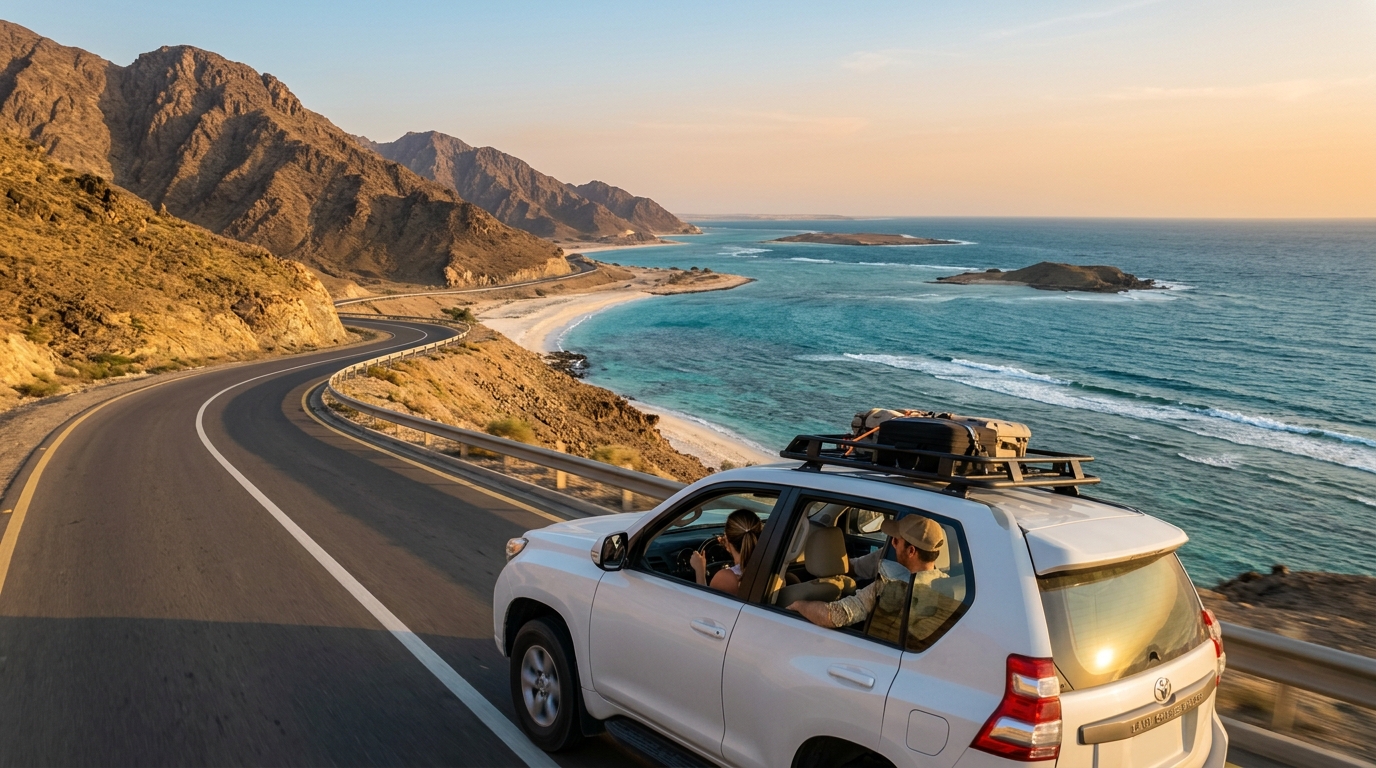
The Red Sea coastline of Saudi Arabia stretches over 1,800 kilometers of turquoise water, coral reefs, and empty beaches that most travelers have never heard of. This is one of the world’s last untouched coastal drives, where you can park on a deserted beach for hours without seeing another soul.
A Saudi Arabia Red Sea road trip offers adventure travelers pristine beaches, world-class diving sites, and historic coastal towns along 1,800 kilometers of coastline. This guide covers essential route planning, permit requirements, accommodation options, must-visit stops from Jeddah to the Jordanian border, and practical tips for navigating Saudi’s evolving tourism infrastructure. Budget 7-10 days for the full coastal experience.
Getting Ready for Your Coastal Drive
Before you hit the road, you need three things sorted out. First, your visa paperwork needs to be current. Second, you need an international driving permit alongside your home country license. Third, you need to understand that renting a car in Saudi Arabia requires some planning.
Most rental companies operate out of Jeddah’s King Abdulaziz International Airport. Book at least two weeks ahead during peak season (November through March). Request a 4WD if you plan beach camping or off-road sections.
Your phone needs a local SIM card with data. Coverage along the coast is surprisingly good, but stretches between Umluj and Haql can get spotty. Download offline maps before you leave Jeddah.
“The Red Sea coast is where Saudi Arabia’s tourism transformation is most visible. You’ll see mega-developments under construction next to fishing villages that haven’t changed in generations.” – Ahmed Al-Rashid, Saudi Tourism Guide
The Northern Route: Jeddah to the Jordanian Border
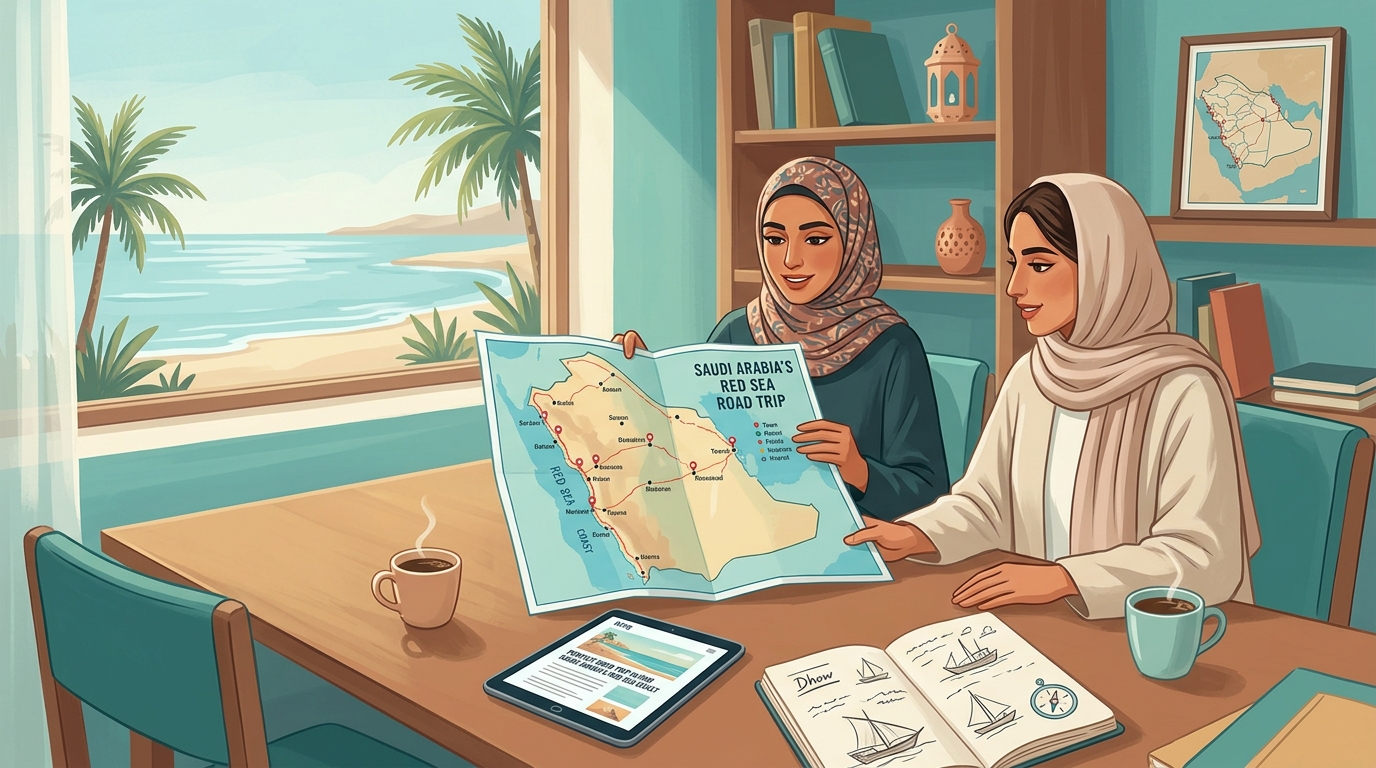
This route covers roughly 700 kilometers and takes you through some of the most dramatic coastal scenery in the Middle East.
Jeddah: Your Starting Point
Spend at least a full day in Jeddah before heading north. The historic Al-Balad district gives you context for the traditional architecture you’ll see in smaller coastal towns. Stock up on supplies here because options get limited once you leave the city.
Fill your cooler with water, snacks, and fresh fruit from the Al-Balad souq. Gas stations become sparse after Yanbu.
Yanbu: Industrial Port Meets Beach Town
Two hours north of Jeddah, Yanbu serves as your first major stop. The city splits into three sections: the industrial port, the modern downtown, and the old town along the waterfront.
Park near the corniche and walk the seafront promenade at sunset. Small restaurants serve fresh fish grilled over charcoal. Try the hammour or najil with rice.
Budget hotels start around 200 SAR per night. Mid-range options with sea views run 400-600 SAR.
Umluj: The Maldives of Saudi Arabia
This is where the trip gets interesting. Umluj sits 130 kilometers north of Yanbu, and the landscape shifts from rocky coast to white sand beaches and scattered islands.
Boat tours to the surrounding islands leave from the public beach area. Expect to pay 300-500 SAR for a half-day island hopping trip with snorkeling gear included. The coral reefs here rival anything in the Red Sea.
Several beach resorts have opened in the past two years. Book ahead or risk sleeping in your car (which many travelers do intentionally for the experience).
Haql and the Far North
The final stretch to Haql takes you through increasingly remote territory. This 400-kilometer section has limited services, so fuel up in Duba (the last major town before the border area).
Haql itself sits just 30 kilometers from the Jordanian border. The town serves as a base for visiting nearby beaches and the emerging NEOM development zone. You can see construction cranes on the horizon, marking where Saudi’s futuristic city is taking shape. Learn more about what to expect from NEOM.
The Southern Route: Jeddah to Jizan
Heading south from Jeddah opens up a completely different coastal experience. This route connects to the Asir mountain region, offering the option to combine beach and mountain driving.
The southern coastal highway runs approximately 700 kilometers from Jeddah to the Yemeni border region. Security checkpoints are more common on this route, so keep your documents accessible.
Al Lith: Mangrove Forests and Fishing Villages
Al Lith sits 130 kilometers south of Jeddah. The mangrove forests here attract migrating birds between October and March. Local fishermen offer boat tours through the mangroves for 200-300 SAR.
The town has basic accommodation and restaurants. This makes a good lunch stop if you’re pushing straight through to Al Qunfudhah.
Al Qunfudhah: Gateway to Farasan Islands
This mid-sized coastal city serves as the jumping-off point for the Farasan Islands, one of Saudi Arabia’s best-kept secrets. The ferry to Farasan leaves from the port twice daily (morning and late afternoon). Check current schedules at the port authority office.
If you’re continuing south without the island detour, Al Qunfudhah has several comfortable hotels in the 300-500 SAR range.
Jizan: The End of the Line
Jizan marks the southern terminus of the coastal highway. The city has grown rapidly in recent years, with new hotels and restaurants catering to domestic tourists.
The Corniche Fish Market operates every evening from 5 PM until late. You can buy fresh catch and have it grilled at adjacent restaurants for a small fee.
From Jizan, you can either loop back north along the coast or cut inland through the Asir mountains toward Abha and Taif.
Essential Planning Steps
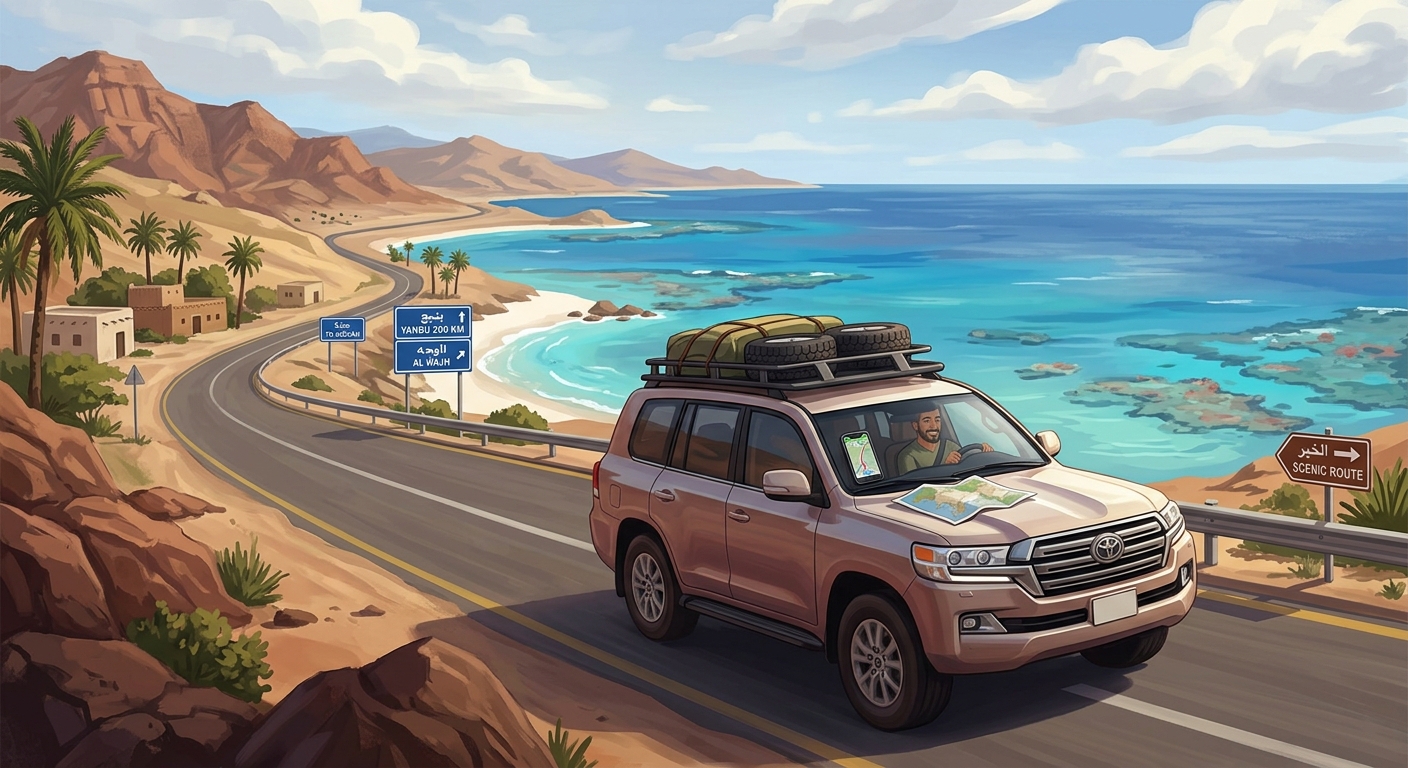
Here’s how to structure your trip from start to finish:
- Apply for your tourist visa at least two weeks before your planned departure date
- Book your rental car and confirm it includes full insurance coverage and roadside assistance
- Reserve accommodation for your first and last nights, leave middle nights flexible for spontaneous stops
- Download offline maps for the entire coastal region plus 100 kilometers inland
- Pack a cooler, camping gear if you plan beach camping, and a first aid kit
- Create a rough daily itinerary but build in buffer days for weather or unexpected discoveries
- Share your route plan with someone back home and check in daily
What to Pack for Coastal Driving
Your packing list needs to account for beach activities, conservative dress codes, and potential mechanical issues.
Essential gear:
- Modest swimwear and appropriate clothing for town visits
- High SPF sunscreen and a wide-brimmed hat
- Snorkeling gear if you have it (rental quality varies)
- Portable phone charger and car charging cables
- Basic tools: tire pressure gauge, jumper cables, flashlight
- Physical maps as backup to digital navigation
- Reusable water bottles and a cooler
- Arabic phrasebook or translation app
- Cash in small denominations (many small towns don’t accept cards)
Budgeting Your Red Sea Road Trip
Costs vary wildly depending on your accommodation choices and activities. Here’s a realistic breakdown:
| Expense Category | Budget Range (per day) | Mid-Range (per day) | Luxury (per day) |
|---|---|---|---|
| Accommodation | 150-300 SAR | 400-700 SAR | 1,000+ SAR |
| Food | 100-150 SAR | 200-300 SAR | 500+ SAR |
| Fuel | 80-120 SAR | 80-120 SAR | 80-120 SAR |
| Activities | 0-200 SAR | 300-500 SAR | 800+ SAR |
| Daily Total | 330-770 SAR | 980-1,620 SAR | 2,380+ SAR |
Fuel costs remain consistent regardless of budget because distances don’t change. A full coastal loop (north and south) consumes roughly 1,400 kilometers of driving.
For a complete cost analysis, check out how much a week in Saudi Arabia really costs.
Best Times for Coastal Driving
October through March offers the most comfortable weather. Daytime temperatures hover between 22-28°C, and evening beach camping doesn’t require air conditioning.
April and May get progressively hotter but remain manageable. You’ll find fewer tourists and better hotel rates.
June through September is brutally hot. Coastal temperatures regularly exceed 40°C, and humidity makes it feel worse. Only attempt summer driving if you have reliable air conditioning and don’t mind limiting beach time to early morning and evening.
Navigation and Road Conditions
The main coastal highway (Route 55 in the north, Route 5 in the south) is well-maintained and clearly marked. Secondary roads to beaches and small villages range from paved to graded dirt.
Google Maps works reliably for major routes but sometimes suggests shortcuts through military zones or private property. When in doubt, stick to the main highway.
Speed limits vary between 80-120 km/h depending on the section. Police enforce limits with radar, particularly near towns. Fines get processed through your rental company and can take weeks to appear.
Diving and Snorkeling Opportunities
The Saudi Red Sea hosts some of the world’s healthiest coral reefs. Water visibility often exceeds 30 meters.
Top spots for underwater activities:
- Umluj islands for beginner-friendly snorkeling
- Yanbu for shore diving and wreck sites
- Farasan Islands for pristine coral gardens
- Duba for advanced diving with strong currents
Most coastal towns have at least one dive shop. Certification requirements are strict, so bring your PADI or equivalent cards. For detailed information on specific sites, read our guide to Red Sea diving in Saudi Arabia.
Cultural Considerations on the Coast
Coastal communities tend to be more conservative than Jeddah. Women should keep shoulders and knees covered in town. Men should avoid going shirtless except on isolated beaches.
Public beaches have designated family sections and single men’s sections. Respect these divisions to avoid awkward situations or fines.
Friday is the weekly holiday. Many shops and restaurants close from noon to 4 PM for prayers. Plan your fuel stops and meal times accordingly.
Learning basic Arabic greetings goes a long way in smaller towns. Our guide on how to greet and interact with locals covers essential etiquette.
Safety and Emergency Contacts
Saudi Arabia’s roads are generally safe, but coastal highways see occasional accidents due to speeding and fatigue.
Save these numbers in your phone:
- Emergency services: 911
- Highway patrol: 993
- Roadside assistance (most rental companies): Check your contract
Your rental car should include a warning triangle and first aid kit. Verify both are present before leaving the lot.
Cell coverage exists along most of the main highway, but gaps occur between Umluj and Haql. Tell someone your daily plan and expected check-in times.
Combining Coast and Interior
Many travelers combine their Red Sea road trip with inland destinations. The most popular combinations include:
- Coastal drive plus AlUla (add 3-4 days)
- Southern coast plus Asir mountains (add 4-5 days)
- Full coastal loop plus Riyadh (add 2-3 days)
If you’re extending your trip, consider whether domestic flights make sense for returning to Jeddah or continuing to other regions.
Common Mistakes to Avoid
| Mistake | Why It’s a Problem | Better Approach |
|---|---|---|
| Underestimating distances | Towns appear close on maps but take hours to reach | Add 30% to your estimated driving time |
| Skipping travel insurance | Medical evacuation from remote areas costs thousands | Buy comprehensive coverage before departure |
| Relying only on cards | Small towns operate on cash | Carry at least 2,000 SAR in small bills |
| Ignoring fuel levels | Gas stations can be 100+ km apart | Fill up at every opportunity north of Yanbu |
| Overpacking the itinerary | Rushing between stops kills the road trip vibe | Plan fewer stops and leave room for spontaneity |
Finding Accommodation Along the Route
Major towns offer everything from budget hotels to international chains. Between towns, options thin out dramatically.
Book ahead for:
* Weekend stays (Thursday and Friday nights)
* Holiday periods (Eid, Saudi National Day)
* Any stay in Umluj during peak season
Beach camping is legal on most undeveloped beaches. Look for spots where you see evidence of previous campers (fire rings, cleared areas). Always pack out your trash.
Several new glamping operations have opened along the coast. These offer furnished tents with real beds, bathrooms, and meals. Prices run 600-1,200 SAR per night.
Food and Water Considerations
Tap water is technically safe but heavily chlorinated. Most travelers stick to bottled water, which costs 1-2 SAR for 1.5 liters at gas stations.
Every coastal town has small restaurants serving grilled fish, rice, and salads. Expect to pay 30-60 SAR for a full meal. Larger towns add international options like Indian, Egyptian, and Filipino cuisine.
Stock your cooler in Jeddah with items that are expensive or unavailable in small towns: fresh fruit, vegetables, cheese, and cold cuts.
If you drink traditional Saudi coffee, you’ll find it offered freely at gas stations and small shops throughout your journey.
Beyond the Obvious Stops
While Umluj and Yanbu get most of the attention, several lesser-known spots deserve your time.
The village of Sharma, 80 kilometers south of Haql, has virtually no tourist infrastructure but offers stunning beach camping with mountain backdrops. Arrive before sunset to claim a good spot.
Duba’s old town preserves traditional Hejazi architecture without the crowds you’ll find in Jeddah’s Al-Balad. Walk the narrow alleys in late afternoon when temperatures drop.
Between Al Lith and Al Qunfudhah, watch for brown road signs indicating beach access points. Many lead to completely empty coves perfect for a swim break.
For more off-the-beaten-path ideas, check out our list of hidden gems in Saudi Arabia.
Your Red Sea Journey Starts Now
A Saudi Arabia Red Sea road trip offers something increasingly rare in modern travel: the genuine sense of going somewhere few others have been. The infrastructure is improving rapidly, but it hasn’t yet reached the point where everything is easy and predictable.
That’s exactly what makes it worth doing now. In five years, this coast will look completely different. The empty beaches will have resorts. The quiet fishing villages will have tour buses. The sense of discovery will fade.
Get your documents in order, rent a reliable vehicle, and point yourself toward that turquoise water. The road is waiting, and it’s better than you imagine.