
Most travelers planning their first Saudi trip scroll past Tabuk without a second thought. They’re hunting for dramatic dunes, ancient ruins, or Red Sea beaches, and this northern city rarely makes the shortlist. But ignoring Tabuk means missing out on some of the Kingdom’s most surprising landscapes, from snow-dusted mountains to prehistoric rock art that predates the pyramids.
Tabuk is worth visiting for adventure travelers seeking uncrowded natural wonders and ancient history. The region offers UNESCO sites, winter snowfall, pristine beaches, and dramatic mountain scenery. Budget 3-4 days minimum. Best visited October through March. Requires rental car for most attractions. Expect basic tourism infrastructure but authentic experiences away from typical tourist crowds.
What makes Tabuk different from other Saudi destinations
Tabuk sits in Saudi Arabia’s northwestern corner, closer to Jordan than Riyadh. This geography shapes everything about the region.
The climate alone sets it apart. While most of Saudi Arabia bakes under relentless sun, Tabuk’s mountains receive actual snowfall between December and February. Locals post photos of snow-covered peaks on social media, and tourists from warmer Gulf states drive north just to see it.
The landscape shifts dramatically within short distances. You’ll find coastal areas along the Red Sea, volcanic rock fields that look like Mars, agricultural valleys growing olives and citrus, and the Hejaz mountain range cutting through the region.
Ancient history runs deep here. The area served as a crossroads for Nabataean traders, Roman legions, and early Islamic armies. You’re not visiting reconstructed theme parks. These are actual archaeological sites where you can touch 2,000-year-old carved stone.
The main attractions that justify the trip
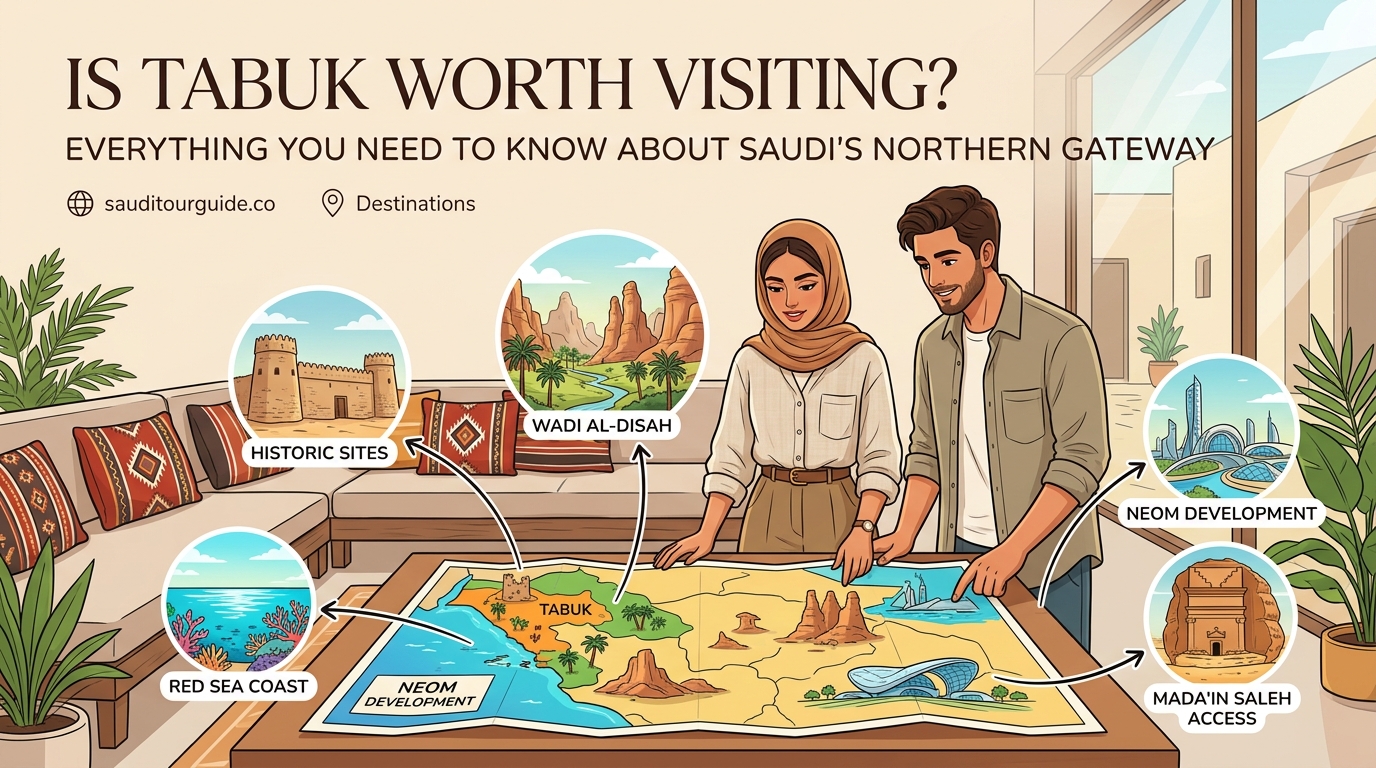
Hegra (Al-Ula province, accessible from Tabuk)
This UNESCO World Heritage Site showcases over 100 monumental tombs carved into sandstone outcrops by the Nabataean civilization. The same culture built Petra in Jordan, but Hegra sees a fraction of the visitors.
The tombs feature intricate facades with columns, pediments, and inscriptions. You’ll walk among structures that have stood since the first century CE, remarkably preserved by the dry climate.
Guided tours are mandatory and must be booked in advance. The site opens early morning and late afternoon to avoid midday heat. Plan for 3-4 hours minimum.
Tayma Oasis
This ancient settlement dates back over 4,000 years. Archaeological evidence shows Babylonian King Nabonidus lived here in the 6th century BCE.
The highlight is Bir Haddaj, a massive stone-lined well that still holds water. The surrounding ruins include parts of the old city wall and carved stone monuments with ancient Aramaic inscriptions.
You can visit independently. The site has minimal infrastructure, so bring water and sun protection.
Coastal areas near Haql
The northern Red Sea coast near the Jordanian border offers pristine beaches and coral reefs with almost zero tourist development.
The water clarity rivals more famous diving destinations. You’ll find healthy coral formations, diverse fish species, and the occasional sea turtle. The beaches remain nearly empty even during peak season.
Camping is permitted on many beaches. Bring all supplies from Tabuk city, as local facilities are limited.
Jebel Al-Lawz
This mountain range reaches over 2,500 meters elevation. The peaks receive snow most winters, creating scenes that contradict every stereotype about Saudi Arabia.
Hiking trails range from easy walks to challenging climbs. The views extend across three countries on clear days: Saudi Arabia, Jordan, and Egypt.
Access requires a 4×4 vehicle. The roads are rough and poorly marked. Consider hiring a local guide for your first visit.
Planning your Tabuk visit step by step
-
Apply for your Saudi tourist visa online through the official e-visa portal. The process takes 24-48 hours typically. You’ll need this approved before booking anything else. Check the how to apply for your Saudi Arabia e-visa in under 10 minutes guide for current requirements.
-
Book flights to Tabuk Regional Airport (TUU). Direct flights operate from Riyadh, Jeddah, and Dammam. International travelers usually connect through one of these hubs. The complete guide to Saudi Arabia’s domestic flights covers routes and booking strategies.
-
Arrange a rental car before arrival. Public transportation barely exists outside the city center. Most major attractions require driving 1-3 hours from Tabuk. Read up on renting a car in Saudi Arabia to understand insurance, road rules, and documentation needs.
-
Reserve accommodation in Tabuk city as your base. Options include international hotel chains and local guesthouses. Book Hegra tours separately through the official Al-Ula website, as availability fills up weeks in advance during peak season.
-
Download offline maps for the region. Mobile coverage drops significantly once you leave the main highways. GPS works, but you need downloaded map data.
What to expect for costs and logistics
| Expense Category | Budget Range | Notes |
|---|---|---|
| Accommodation | $40-150/night | Local hotels cheaper, international chains pricier |
| Rental car | $30-60/day | Essential for most attractions |
| Fuel | $20-40/trip | Cheap compared to Western countries |
| Meals | $5-25/meal | Local restaurants very affordable |
| Hegra entry | $95/person | Includes guided tour, book ahead |
| Other sites | Free-$15 | Most archaeological sites have low or no fees |
The total cost depends heavily on your accommodation choices and whether you’re traveling solo or splitting car rental costs.
Food options concentrate in Tabuk city. You’ll find Saudi, Lebanese, Indian, and international restaurants. Outside the city, options shrink to roadside cafes serving basic meals.
ATMs are common in Tabuk but rare at remote sites. Carry enough cash for fuel, small purchases, and emergencies.
Mobile internet works well in populated areas but becomes spotty in mountains and desert regions. Download entertainment and maps beforehand.
Weather patterns and timing your trip
The best months run from October through March. Temperatures stay comfortable for outdoor activities, ranging from 15-25°C during the day.
Winter months (December-February) bring the possibility of snow in mountain areas. This attracts domestic tourists, so book accommodation earlier. Coastal areas remain pleasant year-round.
April and May see temperatures climbing but remain tolerable. Wildflowers bloom in some areas after winter rains.
Summer (June-September) is brutally hot. Daytime temperatures regularly exceed 40°C. Only visit during this period if you have specific reasons and plan activities for early morning or evening.
“Tabuk in winter feels like a different country. I visited in January and needed a jacket in the mountains, then drove two hours to swim in the Red Sea the same afternoon. The variety caught me completely off guard.” – Travel blogger who spent two weeks in the region
Common mistakes that ruin Tabuk trips
Underestimating distances ranks as the top error. The region is massive. What looks like a short drive on a map often takes 2-3 hours on winding mountain roads.
Skipping the rental car to save money leaves you stranded. Taxis won’t take you to remote archaeological sites. Tour options are limited compared to major Saudi cities.
Visiting in summer without proper preparation leads to miserable days. The heat isn’t just uncomfortable; it’s dangerous. Dehydration happens faster than most travelers expect.
Failing to book Hegra tours in advance means missing the region’s premier attraction. Walk-up availability is rare, especially on weekends and holidays.
Ignoring cultural norms causes unnecessary friction. While Tabuk is relatively relaxed, basic respect for local customs matters. The what to wear in Saudi Arabia guide covers appropriate clothing choices.
Not carrying enough water during site visits is dangerous. Many locations have zero facilities. Bring more than you think you need.
Who should prioritize Tabuk on their Saudi itinerary
Adventure travelers looking beyond typical tourist circuits will appreciate Tabuk most. If you’re the type who seeks out hidden gems in Saudi Arabia rather than following crowds, this region delivers.
History enthusiasts fascinated by ancient civilizations find tremendous value here. The Nabataean sites rival anything in neighboring countries but see far fewer visitors.
Nature photographers can capture landscapes that few people associate with Saudi Arabia. Snow-capped mountains, volcanic fields, pristine coastline, and desert valleys provide diverse subjects.
Families with older children who can handle longer car rides and moderate hiking will enjoy the variety. The mix of beach time, historical sites, and mountain scenery keeps everyone engaged.
Road trip lovers who enjoy the journey as much as the destination fit perfectly. The drives between attractions often prove as memorable as the sites themselves.
How Tabuk compares to other Saudi regions
Tabuk offers more geographical diversity than the Riyadh area but less developed tourism infrastructure. You’ll see dramatic landscapes without the polish of newer projects like NEOM.
Compared to the Asir region, Tabuk has better archaeological sites but slightly less dramatic mountain scenery. Asir gets more domestic tourists, while Tabuk remains quieter.
The Red Sea coast here is less developed than areas near Jeddah. You’ll find fewer facilities but also fewer crowds and more pristine conditions for snorkeling and diving.
For pure adventure activities, Tabuk trails behind regions offering adrenaline-pumping adventure sports, but it compensates with historical depth and natural beauty.
Practical tips for a better Tabuk experience
Start your days early. Morning light creates better photos, temperatures stay cooler, and you’ll have sites largely to yourself before tour groups arrive.
Pack layers even if visiting in warmer months. Temperature swings between day and night can reach 15-20°C, especially in mountain areas.
Learn basic Arabic greetings. English proficiency outside hotels and major restaurants is limited. A few phrases go a long way. The guide to Saudi social etiquette covers useful interactions.
Download the Tabuk tourism app if available. It includes offline maps, site information, and emergency contacts.
Respect photography restrictions at certain sites. Some archaeological locations prohibit photography or require special permits. Always ask before shooting.
Join local Facebook groups for Tabuk tourism. Residents often share current road conditions, new discoveries, and practical tips not found in official guides.
Combine Tabuk with a Red Sea coast road trip for a longer adventure. The coastal highway connecting Tabuk to Jeddah ranks among Saudi Arabia’s most scenic drives.
Sample itineraries for different trip lengths
3-day minimum trip:
– Day 1: Arrive Tabuk, explore city center, visit Tabuk Castle
– Day 2: Day trip to Tayma and surrounding archaeological sites
– Day 3: Coastal area near Haql for beach and snorkeling
5-day recommended trip:
– Day 1: Arrive and settle in Tabuk
– Day 2: Full day at Hegra (drive to Al-Ula area)
– Day 3: Tayma archaeological sites
– Day 4: Jebel Al-Lawz mountain area
– Day 5: Coastal exploration and departure
7-day comprehensive trip:
– Days 1-2: Tabuk city and nearby sites
– Day 3: Hegra UNESCO site
– Day 4: Additional Al-Ula area exploration
– Day 5: Mountain areas and hiking
– Day 6: Coastal region
– Day 7: Buffer day and departure
Infrastructure realities you need to know
Hotel options in Tabuk city include international chains like Marriott and local properties. Standards vary widely. Read recent reviews before booking.
Restaurants close during prayer times, typically for 20-30 minutes. Plan meal times around the five daily prayers to avoid locked doors.
Gas stations appear regularly along main highways but become sparse on secondary roads. Fill up before heading to remote areas.
Medical facilities in Tabuk city meet basic needs. For serious emergencies, patients are often transferred to Riyadh or Jeddah. Travel insurance is essential.
Internet speeds are adequate in the city but slow in rural areas. Don’t expect to upload large photo files or stream video outside urban zones.
Shopping options are limited compared to Riyadh or Jeddah. Bring specialized gear, medications, or specific products you might need.
Making the most of limited time
If you only have 2-3 days, focus on one or two attractions rather than rushing through everything. A full day at Hegra plus one day exploring Tayma creates a more satisfying experience than trying to hit every site.
Prioritize based on your interests. History buffs should emphasize archaeological sites. Nature lovers will prefer mountains and coast. Don’t try to do everything.
Consider Tabuk as part of a longer Saudi journey rather than a standalone destination. It pairs well with Al-Ula, the Red Sea coast, or even a trip extending into Jordan.
Budget travelers can reduce costs significantly by camping at permitted beach areas, eating at local restaurants, and visiting free archaeological sites rather than paying for guided tours at every location.
Is Tabuk actually worth your time and money
The honest answer depends on what you value in travel.
If you need polished tourism infrastructure, English-speaking staff everywhere, and predictable experiences, Tabuk will frustrate you. The region is still developing its tourism sector.
If you want to see a side of Saudi Arabia that few international travelers experience, appreciate authentic archaeological sites without crowds, and enjoy the adventure of figuring things out as you go, Tabuk delivers exceptional value.
The landscapes alone justify the trip for photography enthusiasts and nature lovers. Where else can you see snow-covered mountains, ancient rock art, and pristine coral reefs within a few hours’ drive?
The relatively low tourist numbers mean you’ll often have major sites nearly to yourself. That solitude at places like Tayma creates a connection to history that’s impossible at crowded attractions.
For adventure seekers already planning a Saudi trip, adding Tabuk to your itinerary makes sense. The region offers experiences you can’t replicate elsewhere in the Kingdom. Just set realistic expectations about infrastructure and plan accordingly.
Your northern Saudi adventure starts with preparation
Tabuk rewards travelers who do their homework. The region won’t hand you easy experiences on a platter like more developed destinations might.
Research specific sites that match your interests. Download maps. Learn a few Arabic phrases. Understand the distances involved. Pack for temperature swings. Book key attractions in advance.
The extra preparation pays off when you’re standing alone at a 2,000-year-old Nabataean tomb, watching snow fall on desert mountains, or snorkeling over coral reefs with zero other tourists in sight.
Tabuk isn’t for everyone, and that’s exactly what makes it special. The travelers who venture north find a Saudi Arabia that exists far from the glossy marketing campaigns and megaprojects. They find a region where history, nature, and authentic culture combine into something genuinely memorable.