
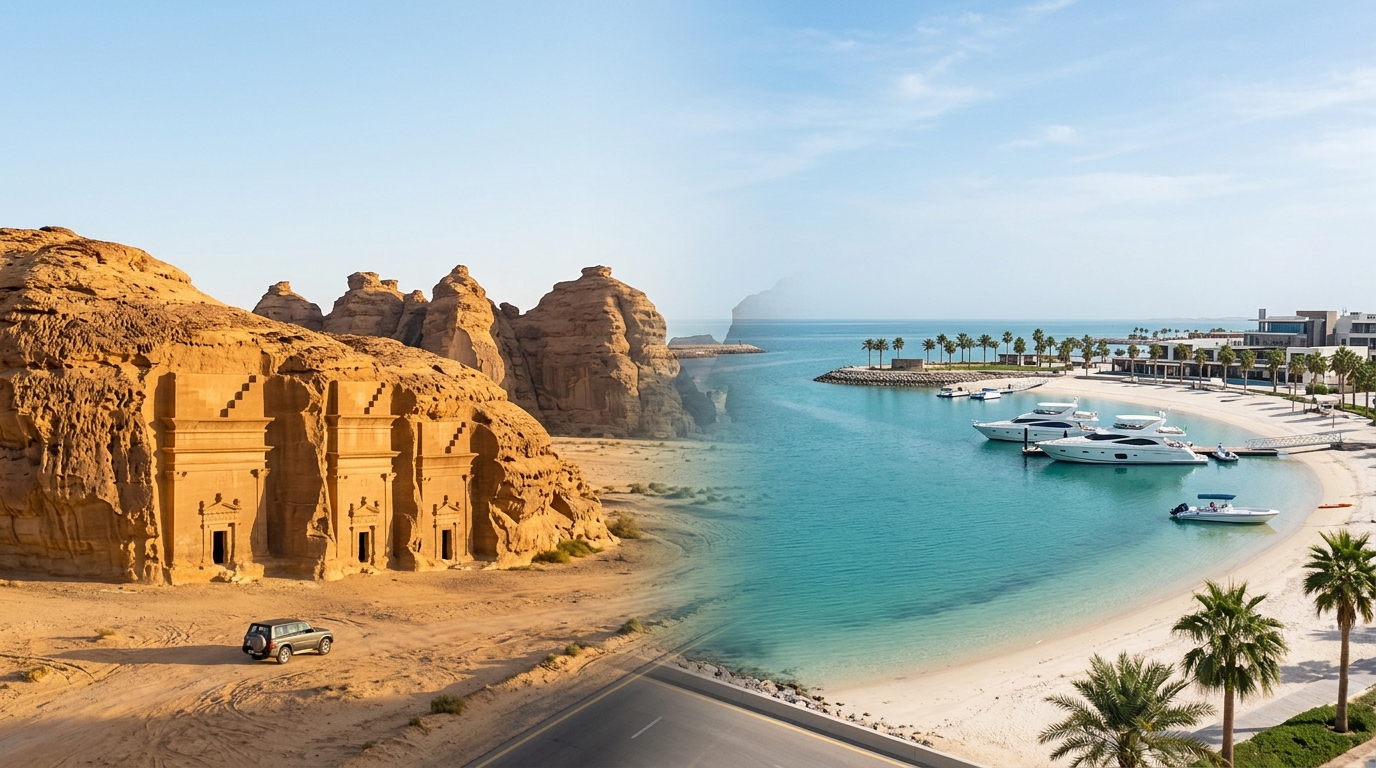
You’ve completed your spiritual duties in Madinah and found yourself with an extra day or two before your flight home. Most pilgrims don’t realize that some of Saudi Arabia’s most meaningful Islamic heritage sites and stunning natural wonders sit just a short drive from the Prophet’s City. These day trips from Medina let you deepen your understanding of early Islamic history while experiencing landscapes that shaped the faith’s formative years.
Pilgrims with extra time in Madinah can visit multiple significant sites within a day’s reach. Mount Uhud, Quba Mosque, and the Seven Mosques lie within 30 minutes. Longer excursions to AlUla’s Nabatean tombs, Khaybar’s volcanic fields, or Yanbu’s Red Sea coast require full days but offer profound historical connections. Most destinations need private transport or organized tours, with costs ranging from 200 to 800 SAR per person.
Sacred sites within Madinah’s immediate vicinity
The closest meaningful destinations require minimal planning and can fill half a day beautifully.
Quba Mosque sits about 5 kilometers south of Masjid al-Nabawi. This is where the Prophet Muhammad (peace be upon him) laid the foundation stone for Islam’s first mosque. Visiting Quba carries special spiritual weight. The hadith mentions that praying two rakats here equals the reward of an Umrah. You can reach it by taxi in 15 minutes or walk if you’re staying in southern Madinah.
The area around Mount Uhud deserves at least two hours of your time. This mountain witnessed the Battle of Uhud in 625 CE, one of Islam’s most significant early conflicts. The Uhud Martyrs Cemetery lies at its base, where 70 companions including Hamza ibn Abdul-Muttalib (the Prophet’s uncle) rest. The site feels profoundly moving, especially during sunrise or late afternoon when the reddish mountain takes on deeper hues.
The Seven Mosques (Saba Masajid) cluster on a small hill near the site of the Battle of the Trench. Despite the name, only six small mosques remain today. Each marks a spot where companions kept watch during the 627 CE siege of Madinah. The entire area takes about an hour to visit respectfully.
Planning your sacred circuit
Here’s how to organize a morning covering these nearby sites:
- Start at Quba Mosque right after Fajr prayer when crowds thin out
- Spend 30 minutes praying and reflecting before the tour groups arrive
- Drive to Mount Uhud and the martyrs’ cemetery by 7:30 AM
- Visit the Seven Mosques on your return route to central Madinah
- Complete the circuit by 10 AM, leaving your afternoon free
Most hotels can arrange a private driver for 150 to 250 SAR for this half-day circuit. Ride-hailing apps work well too, though you’ll need to book separate rides for each location.
AlUla and the ancient Nabatean kingdom
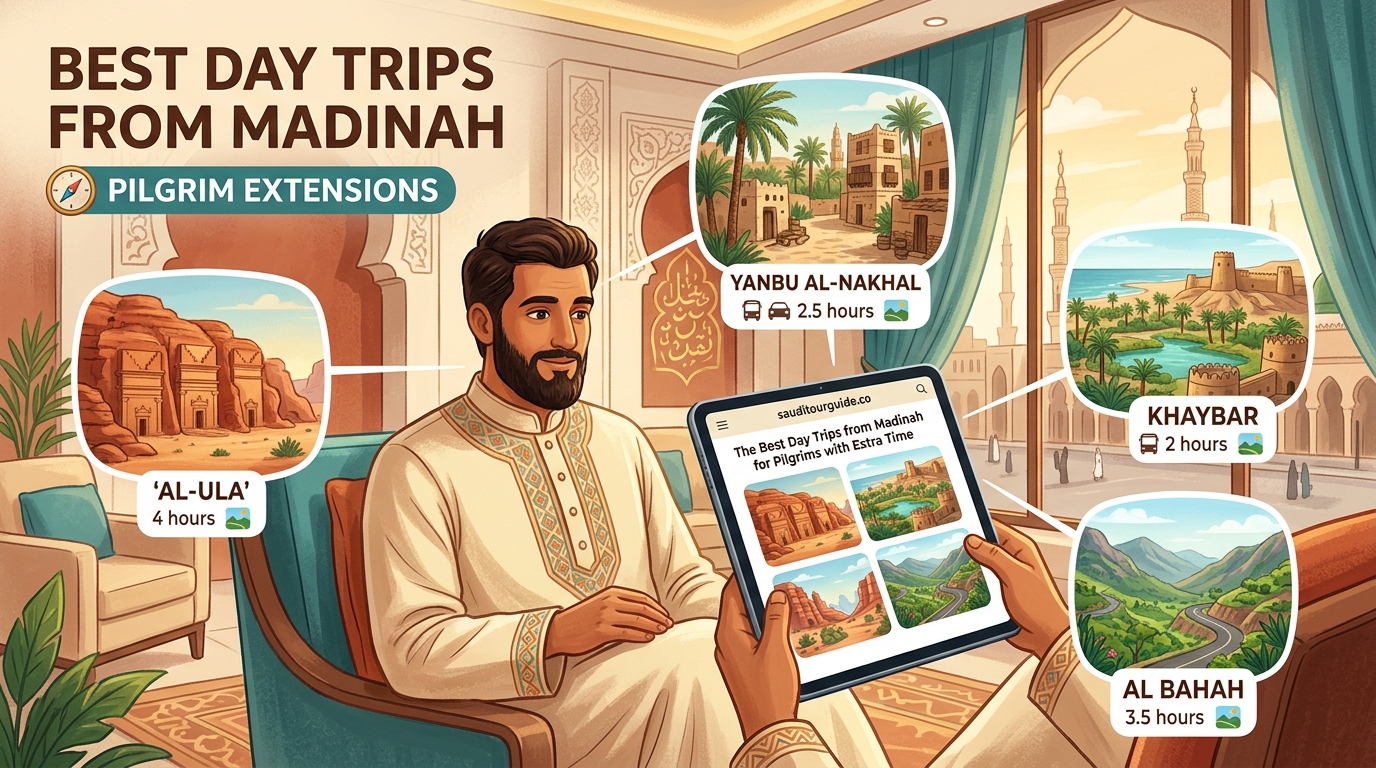
AlUla represents the most spectacular full-day trip from Medina, though it requires an early start. This UNESCO World Heritage site sits 300 kilometers north, about a 3.5-hour drive through dramatic desert landscapes.
The main attraction is Hegra (Madain Saleh), the southern capital of the Nabatean kingdom. These rock-cut tombs predate Islam by centuries but hold Quranic significance. The Quran mentions the people of Thamud who carved homes into mountains and were destroyed for rejecting Prophet Salih’s message. Walking among these 2,000-year-old facades brings those verses to vivid life.
The site requires advance booking through the official Experience AlUla website. Tickets cost around 95 SAR per person and include guided tours. The winter months (November through February) offer the most comfortable temperatures for wandering among the tombs.
Beyond Hegra, AlUla’s old town shows what traditional Hijazi architecture looked like before modern development. The mudbrick buildings, though abandoned, create an atmospheric maze of narrow alleys and crumbling facades.
“AlUla changed how I understood early Arabian history. Seeing the scale of Nabatean engineering made the Quranic stories about arrogant civilizations much more concrete. It’s worth the long drive.” — Fatima K., Malaysian pilgrim who extended her stay in 2023
Making AlUla work as a day trip
This destination pushes the limits of what counts as a day trip. Here’s the realistic timeline:
- Depart Madinah by 5:30 AM
- Arrive AlUla around 9:00 AM
- Visit Hegra from 9:30 AM to 1:00 PM
- Lunch break and old town visit until 3:00 PM
- Begin return drive by 3:30 PM
- Reach Madinah around 7:00 PM
Many pilgrims find this exhausting but worthwhile. If you have the flexibility, consider staying overnight in AlUla to see the sites without rushing. The area has developed excellent tourism infrastructure recently, with hotels ranging from budget to luxury.
Some pilgrims prefer joining organized tours from Madinah that handle all logistics. These typically cost 600 to 800 SAR per person including transport, entry fees, and lunch. Search for “AlUla day tour from Madinah” or ask your hotel concierge for recommendations.
For those planning extended travel after pilgrimage, AlUla deserves its own dedicated visit. Check out our guide on 7 hidden gems in Saudi Arabia every pilgrim should visit after Umrah for more ideas on extending your journey meaningfully.
Khaybar’s volcanic landscapes and Islamic history
Khaybar sits just 150 kilometers north of Madinah, making it a comfortable half-day or full-day excursion. This oasis town played a crucial role in early Islamic history as the site of a significant military campaign in 628 CE.
The landscape alone justifies the trip. Black volcanic rock (harrat) stretches for kilometers, creating an otherworldly terrain that looks almost lunar. Ancient lava flows formed natural fortifications that made Khaybar nearly impregnable in its time.
Several historic forts dot the area, though most exist as ruins today. The most accessible is Qamus Fort, perched on a volcanic hill with views across the oasis. Local guides (easily hired in the town center for 100 to 150 SAR) can explain the historical significance of each site and point out where major events occurred.
The modern town of Khaybar has limited tourist facilities, so bring water and snacks. The drive takes about 90 minutes each way on a good highway. You can comfortably visit in four to five hours total, making it perfect for an afternoon trip.
What to expect in Khaybar
The experience differs significantly from polished tourist sites. You’ll find:
- Minimal signage or formal infrastructure
- Unpaved paths to some fort ruins
- Few other visitors outside Saudi school groups
- Authentic local interaction if you visit the town market
- Stunning photo opportunities among the black volcanic rocks
Dress modestly and respect that this remains a conservative rural area. Women should wear abaya, and men should avoid shorts. The guide to dress codes for tourists covers appropriate attire in detail.
Yanbu and the Red Sea coast
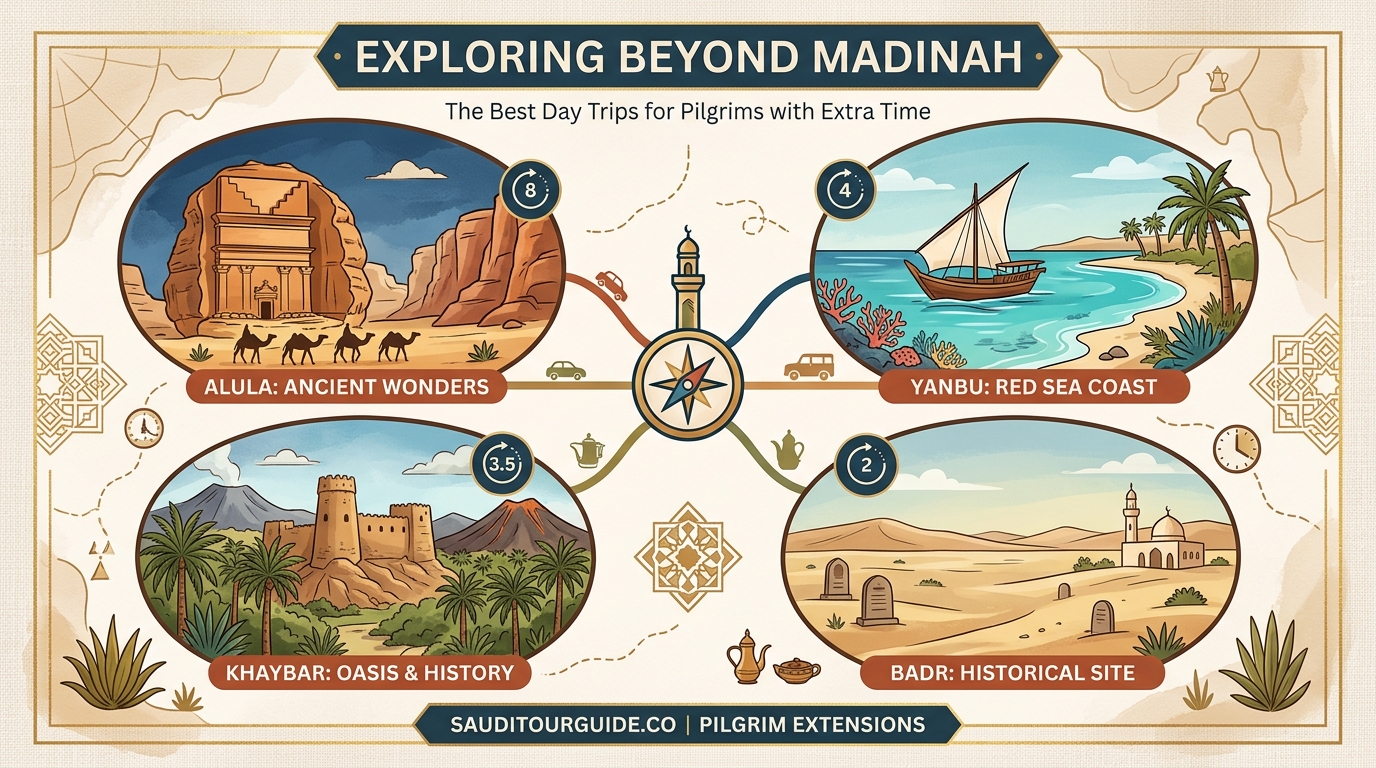
Yanbu offers a completely different experience from the other destinations. This Red Sea port city lies 220 kilometers west of Madinah, about a 2.5-hour drive through mountain passes.
The coastal corniche provides a refreshing change from desert landscapes. Palm-lined waterfront parks, fishing harbors, and beaches create a relaxed atmosphere. While Yanbu lacks major Islamic historical sites, it served as a port for pilgrims arriving by sea for centuries.
The old town (Yanbu al-Nakhl) preserves traditional Hijazi architecture with coral stone buildings and wooden balconies. Walking these streets gives insight into how coastal Arabian communities lived before oil wealth transformed the region.
For pilgrims interested in natural beauty, the coral reefs off Yanbu rank among the Red Sea’s best. Several dive shops offer introductory dives or snorkeling trips. If you’re considering underwater adventures elsewhere in the kingdom, our guide to Red Sea diving in Saudi Arabia covers what to expect.
The drive to Yanbu takes you through the Hijaz mountains, with several scenic overlooks worth stopping at. The road descends dramatically from Madinah’s plateau (about 600 meters elevation) to sea level, offering spectacular views.
Comparing your day trip options
Each destination serves different interests and requires different commitments. This table helps you match sites to your priorities:
| Destination | Distance from Madinah | Travel time (one way) | Best for | Minimum time needed | Typical cost |
|---|---|---|---|---|---|
| Quba Mosque & Mount Uhud | 5-8 km | 15-20 min | Islamic history, easy access | 3 hours | 150-250 SAR (driver) |
| Khaybar | 150 km | 90 min | Early Islamic history, unique landscapes | 5 hours | 200-400 SAR (driver/tour) |
| AlUla (Hegra) | 300 km | 3.5 hours | Pre-Islamic history, dramatic scenery | 10-12 hours | 600-800 SAR (organized tour) |
| Yanbu | 220 km | 2.5 hours | Coastal scenery, relaxation | 8 hours | 400-600 SAR (driver + activities) |
Practical considerations for pilgrims
Most pilgrims arrive on Umrah visas that technically restrict travel to Makkah and Madinah. However, Saudi Arabia now allows Umrah visa holders to visit other cities if they convert their visa to a tourist visa. This process takes about 24 hours and costs 300 SAR.
If you’re planning day trips beyond the immediate Madinah area, handle this conversion early in your stay. Some pilgrims report that checkpoints on highways occasionally verify visa status, though enforcement varies.
Transport logistics
Renting a car offers the most flexibility for day trips from Medina. International driving permits work in Saudi Arabia, and rental rates start around 150 SAR per day for economy vehicles. The highways are well-maintained and clearly signed in both Arabic and English.
For those uncomfortable driving in a foreign country, private drivers cost 400 to 600 SAR for full-day trips. Your hotel can usually arrange this, or you can use apps like Uber or Careem to negotiate day rates directly with drivers.
Organized tours eliminate all logistical concerns but cost more and follow fixed schedules. They work best for destinations like AlUla where having a knowledgeable guide enhances the experience significantly.
Budget planning
Here’s what a realistic day trip budget looks like:
- Transport (driver or rental): 200-600 SAR
- Entry fees (where applicable): 0-95 SAR per person
- Meals and refreshments: 50-150 SAR per person
- Guide fees (optional): 100-200 SAR
- Miscellaneous (souvenirs, tips): 50-100 SAR
Total per person: 400-1,145 SAR depending on destination and choices
Groups of three or four can split transport costs, making private drivers more economical than they first appear. For more detailed budgeting help, see our breakdown of how much a week in Saudi Arabia really costs.
Making the most of limited time
If you only have one extra day, prioritize based on your interests:
For maximum Islamic historical significance: Spend the morning at Quba Mosque, Mount Uhud, and the Seven Mosques. Use the afternoon for a half-day trip to Khaybar.
For dramatic scenery and unique experiences: Commit the full day to AlUla, accepting the long drive as part of the adventure.
For relaxation after intense pilgrimage days: Choose Yanbu for coastal scenery and a slower pace.
Many pilgrims find that the nearby sites (Quba, Uhud, Seven Mosques) feel most spiritually connected to their pilgrimage experience. These locations appear frequently in hadith and seerah (prophetic biography), making them feel like natural extensions of time spent at Masjid al-Nabawi.
The more distant destinations appeal to those who want to understand the broader Arabian context in which Islam emerged. Seeing the scale of pre-Islamic civilizations at AlUla or the challenging terrain around Khaybar adds depth to Quranic narratives.
Common mistakes to avoid
- Underestimating desert heat: Even in winter, midday temperatures can reach 30°C (86°F). Carry more water than you think you need.
- Skipping advance research: AlUla requires ticket reservations. Khaybar benefits greatly from hiring a local guide. Plan ahead.
- Wearing inappropriate footwear: Many sites involve walking on uneven ground or loose sand. Skip the flip-flops.
- Forgetting prayer times: Factor in time for prayers, especially Dhuhr and Asr if you’re out all day. Most sites have basic prayer facilities.
- Ignoring visa restrictions: Verify your visa allows travel outside the holy cities before booking expensive tours.
Cultural sensitivity at historical sites
These locations hold different meanings for local Saudis than they might for international visitors. The Battle of Uhud site, in particular, is a place of mourning and reflection for many Muslims.
Keep these guidelines in mind:
- Speak quietly near burial sites and battlefields
- Ask permission before photographing local people
- Dress conservatively even at non-religious sites
- Don’t climb on ruins or remove any artifacts
- Follow any posted rules about restricted areas
The Saudi tourism sector is still developing in many regions. Your respectful behavior helps create positive impressions that benefit future visitors.
Extending beyond day trips
Some pilgrims discover that a day trip whets their appetite for longer exploration. If you find yourself wishing you had more time, consider extending your stay.
The process of extending your tourist visa while in Saudi Arabia has become simpler in recent years. Many pilgrims who came only for Umrah end up spending an additional week traveling the kingdom.
Popular multi-day extensions include:
- Three days in AlUla to see all sites without rushing
- A Red Sea coastal route from Yanbu to Jeddah
- Northern exploration to Tabuk and the mountains
- Eastern desert adventures in the Empty Quarter
Our guide on how to plan a 10-day Saudi Arabia itinerary after your Hajj journey provides detailed routing for those with more time.
Where your extra days lead
Those one or two spare days in Madinah open doors to experiences that most pilgrims never imagine. Whether you’re standing among 2,000-year-old Nabatean tombs, walking the battlefield where companions sacrificed everything, or simply watching the sun set over black volcanic rocks, these day trips from Medina add unexpected dimensions to your pilgrimage journey.
The Prophet’s city serves as more than a spiritual destination. It’s your gateway to understanding the landscape, history, and culture that shaped Islam’s early years. Choose the destinations that call to you, plan thoughtfully, and give yourself permission to be both pilgrim and traveler. The memories you create in these extra days often become the stories you tell for years to come.