
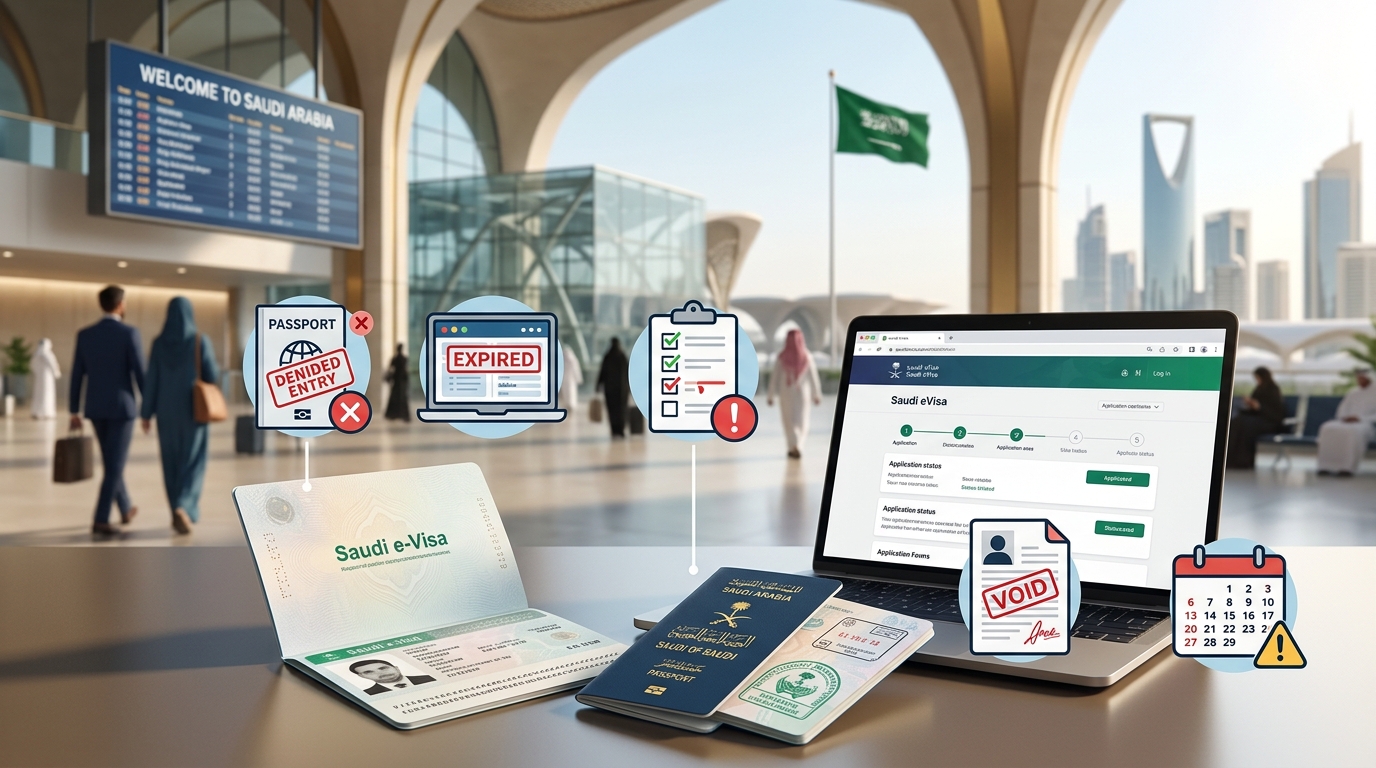
You’ve booked your flights, planned your itinerary, and can’t wait to see AlUla’s ancient tombs or the futuristic skyline of Riyadh. Then your visa application gets rejected.
It happens more often than you’d think. Saudi Arabia’s e-visa system has made travel easier, but small mistakes still lead to denials. Some are obvious. Others catch even experienced travelers off guard.
Saudi visa rejection reasons include passport validity under six months, incorrect photo specifications, incomplete application forms, previous immigration violations, and insufficient travel insurance. Understanding these common pitfalls and preparing your documents correctly increases your approval chances significantly. Double-checking every detail before submission prevents costly delays and ensures smooth entry into the Kingdom.
Understanding how Saudi visa applications get reviewed
Saudi Arabia processes thousands of visa applications daily through its automated e-visa platform. The system flags applications that don’t meet specific criteria.
Human reviewers then examine flagged applications. They look for discrepancies, missing information, or potential security concerns.
Most rejections happen within 24 to 48 hours of submission. The system sends a generic denial notice without detailed explanations. This makes it hard to know exactly what went wrong.
Reapplying is possible, but you’ll need to pay the fee again. That’s why getting it right the first time matters.
Passport validity problems that trigger automatic rejection
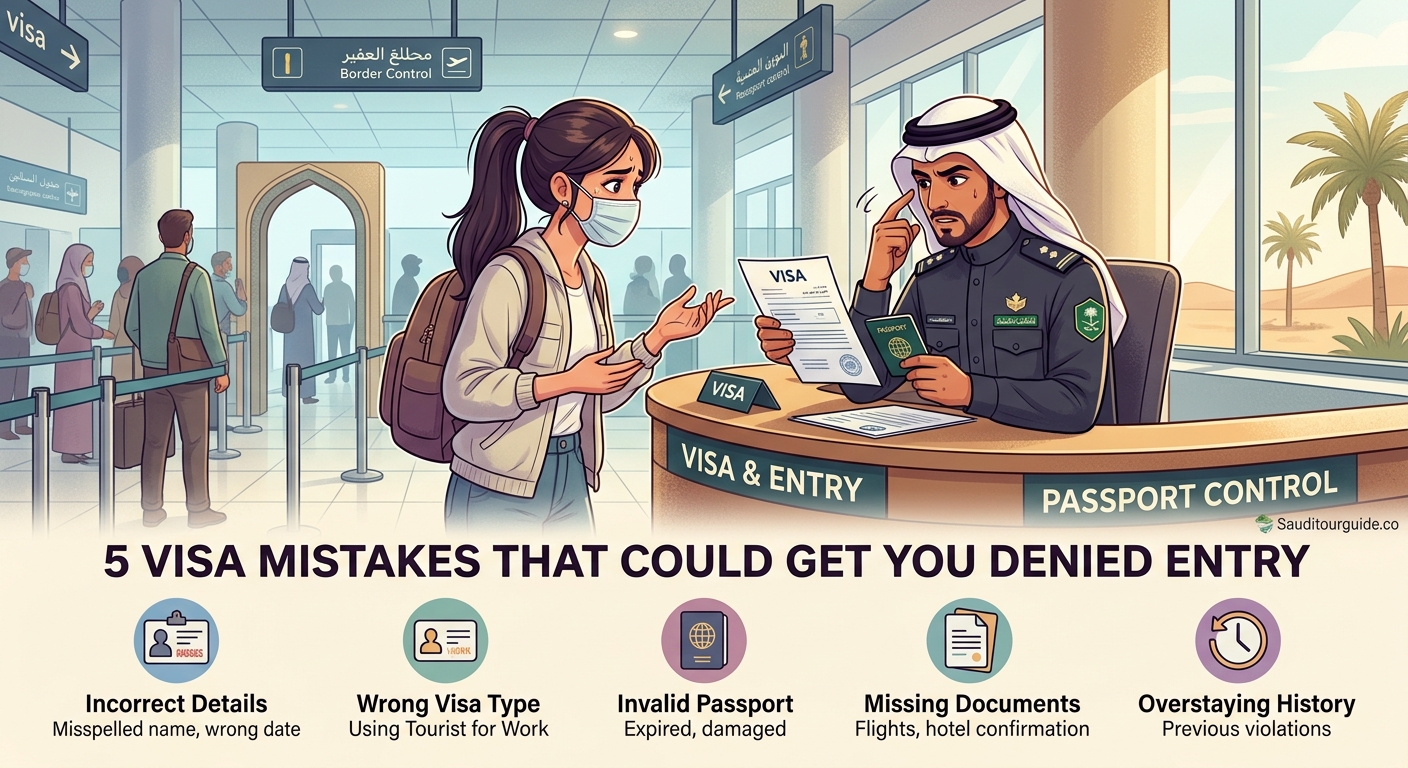
Your passport needs at least six months of validity from your planned entry date. Not from today. From the day you land in Saudi Arabia.
Many travelers miss this detail. They see their passport expires in eight months and assume they’re fine. But if they’re traveling in three months, they only have five months of validity remaining at entry.
The automated system rejects these applications immediately.
Additional passport issues include:
- Damaged passport pages or covers
- Missing or illegible biographical information
- Previous visas that overlap with Saudi entry stamps
- Passports from countries not eligible for e-visa
- Emergency or temporary travel documents
“I’ve seen dozens of travelers turned away at immigration because their passport had water damage on the photo page. The immigration officer couldn’t verify their identity properly, and they were sent back on the next flight.” – Immigration consultant at King Khalid International Airport
If your passport shows significant wear, consider renewing it before applying. The small delay is worth avoiding rejection.
Photo specification failures that cost you approval
Saudi visa photos follow strict technical requirements. The system uses facial recognition software to verify your identity.
Blurry photos get rejected. So do photos with shadows, filters, or incorrect backgrounds.
Here’s what the system checks:
| Requirement | Acceptable | Not Acceptable |
|---|---|---|
| Background | Plain white or light grey | Colored, patterned, or busy |
| Expression | Neutral, mouth closed | Smiling, mouth open |
| Head covering | Religious head coverings allowed | Hats, caps, sunglasses |
| Photo age | Taken within last 6 months | Old photos, even if you look the same |
| Dimensions | 200×200 pixels minimum | Low resolution images |
| Glasses | Only if worn daily for medical reasons | Fashion glasses, tinted lenses |
Many applicants use smartphone selfies. These rarely meet the technical standards. The lighting is wrong. The angle is off. The resolution is too low.
Professional passport photo services cost around $10 to $15. They guarantee compliance with international standards.
If you’re taking your own photo, use a plain wall as backdrop. Position yourself two feet away. Have someone else take the photo from eye level. Natural daylight works better than flash.
Application form errors that seem minor but aren’t
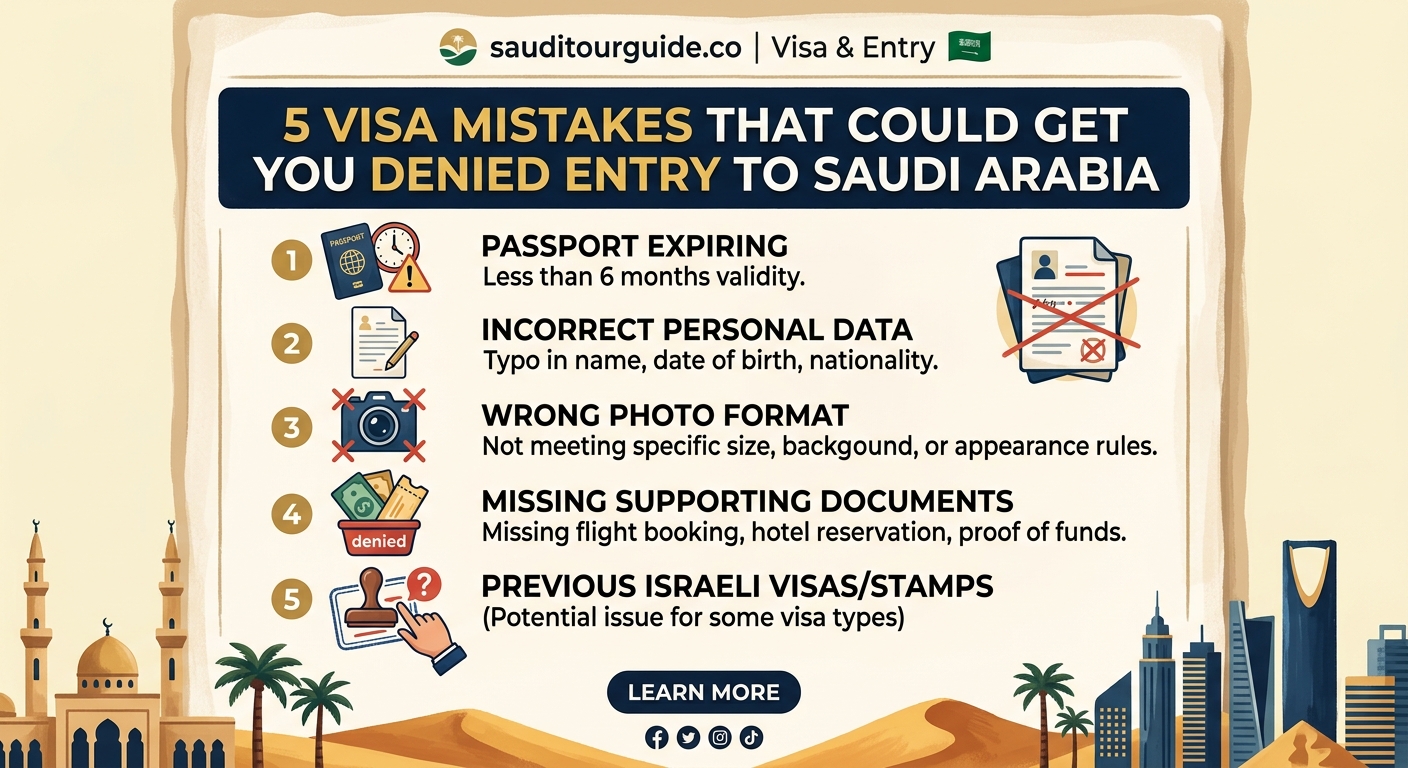
The visa application asks for specific information in specific formats. Inconsistencies between your passport and application trigger red flags.
Common mistakes include:
-
Name spelling variations: Your application must match your passport exactly. If your passport says “Mohammed” but you write “Muhammad,” the system flags it.
-
Date format confusion: Saudi Arabia uses DD/MM/YYYY format. Americans often enter MM/DD/YYYY by habit. A birthday of March 5th entered as 03/05/1990 becomes May 3rd in the system.
-
Address details: Your home address needs to be complete and verifiable. “123 Main St” isn’t enough. Include apartment numbers, postal codes, and city names spelled correctly.
-
Employment information: Listing “self-employed” without additional details raises questions. Provide your business name, registration number, or professional license.
-
Previous travel history: If you’ve visited Saudi Arabia before, those dates must be accurate. The system cross-references with immigration records.
Take your time filling out each field. Review everything twice before submitting. One typo can mean starting over.
Previous immigration violations that haunt your application
Saudi Arabia maintains detailed records of all visitors. If you’ve violated immigration rules before, your new application faces extra scrutiny.
Violations include:
- Overstaying a previous visa
- Working on a tourist visa
- Violating local laws during a past visit
- Attempting to enter with fraudulent documents
- Being deported from Saudi Arabia or other GCC countries
These violations don’t always result in permanent bans. Minor overstays of a few days might receive warnings. Serious violations lead to five or ten-year bans.
The problem is that many travelers don’t realize they have violations on record. You might have overstayed by three days five years ago and forgotten about it.
If you suspect you might have a violation, contact the Saudi embassy before applying. They can check your status and advise whether you’re eligible.
GCC countries share immigration databases. A violation in the UAE or Qatar might affect your Saudi application.
Insurance coverage gaps that immigration officers notice
Saudi Arabia requires valid travel insurance for all tourist visa holders. The insurance must cover medical emergencies, hospitalization, and repatriation.
Your policy needs minimum coverage of $13,500 (50,000 SAR). Many budget travel insurance policies fall short of this threshold.
The insurance must be valid for your entire stay. If you’re visiting for 20 days, your policy needs to cover all 20 days plus a buffer.
Immigration officers at the airport check insurance documents. They’re looking for:
- Coverage amounts in Saudi Riyals or US Dollars
- Emergency medical treatment inclusion
- COVID-19 coverage (still required as of 2024)
- Valid policy dates matching your visa dates
- Insurance company licensed to operate internationally
Some travelers buy insurance but don’t download the policy certificate. They arrive at the airport with just a confirmation email. That’s not enough.
Print your full policy document. Save a digital copy on your phone. Make sure the document clearly shows your name, coverage dates, and coverage amounts.
If you’re planning to apply for your Saudi Arabia e-visa, arrange your insurance first. Some visa platforms offer insurance packages during the application process.
Financial proof requirements that catch business travelers
Tourist visa applicants rarely need to show financial proof. Business visa applicants face different rules.
If you’re visiting for work, conferences, or business meetings, immigration wants evidence you can support yourself. They also want assurance you’re not planning to work illegally.
Acceptable financial documents include:
- Bank statements from the last three months
- Employment letters on company letterhead
- Invitation letters from Saudi business partners
- Hotel reservations showing prepayment
- Return flight tickets
The bank statements need to show regular income and sufficient balance. There’s no official minimum, but most immigration consultants recommend showing at least $3,000 to $5,000 for a two-week trip.
Cash deposits made just before applying raise suspicions. Immigration officers look for consistent financial activity, not sudden large deposits.
Business travelers should also carry documentation about their company. Registration certificates, tax documents, and business cards add credibility.
Incomplete accommodation details that slow processing
Your visa application asks where you’ll stay in Saudi Arabia. Vague answers cause delays.
“Hotel in Riyadh” isn’t specific enough. The system wants names, addresses, and confirmation numbers.
If you’re staying with friends or family, you need their full contact information. Some applications require a letter of invitation from your host.
Hotel reservations should be:
- Confirmed and prepaid when possible
- From legitimate, registered hotels
- Covering your entire stay period
- Showing your name exactly as it appears on your passport
Booking.com and other platforms provide confirmation documents suitable for visa applications. Budget hotels and hostels work fine as long as they’re registered businesses.
If you’re planning a road trip along Saudi Arabia’s Red Sea coast with multiple stops, list your first hotel. You can change plans once you arrive.
Some travelers list five-star hotels they can’t afford, thinking it improves their chances. Immigration officers can spot this. Be honest about your accommodation level.
Religious pilgrimage visa confusion
Saudi Arabia issues different visa types for different purposes. Tourist visas and Umrah visas are separate categories.
Applying for a tourist visa when you’re actually planning Umrah can result in rejection. The system flags applications from Muslim-majority countries during Hajj season.
If you’re Muslim and want to visit holy sites, apply for the appropriate religious visa. Tourist visas technically allow visits to Mecca and Medina now, but the application process differs.
Converting your Umrah visa to a tourist visa is possible after you arrive, but starting with the right visa type prevents complications.
Non-Muslims face restrictions on visiting certain areas. Mecca and parts of Medina remain off-limits. Your visa application should reflect realistic travel plans.
Nationality-based restrictions that applicants overlook
Saudi Arabia’s e-visa program covers 66 countries. Citizens of other nations need different visa types.
Even if you’re from an eligible country, dual citizenship creates complications. If you hold passports from both an eligible and ineligible country, use the eligible passport for your application.
Traveling on a passport from a country with strained relations with Saudi Arabia faces extra scrutiny. These applications take longer to process and have higher rejection rates.
Israeli passport holders cannot obtain Saudi tourist visas. Passports showing Israeli entry stamps sometimes cause issues, though this policy has relaxed recently.
Political activists, journalists, and human rights workers from certain countries face additional background checks. These aren’t automatic rejections, but processing takes weeks instead of days.
Technical glitches and payment processing errors
Sometimes rejections happen due to technical problems rather than eligibility issues.
Payment processing errors are common. Your credit card gets charged, but the visa platform doesn’t register the payment. The application sits incomplete, then gets automatically rejected after 48 hours.
Browser compatibility issues cause form data to save incorrectly. You fill out everything properly, but the system records blank fields or corrupted characters.
Photo upload failures happen frequently. The file uploads successfully from your perspective, but the immigration system receives a corrupted or blank image.
To avoid technical rejections:
- Use Chrome or Safari browsers (Firefox sometimes has compatibility issues)
- Clear your browser cache before starting the application
- Don’t use VPNs during the application process
- Save your application progress frequently
- Take screenshots of each completed page
- Keep your payment confirmation emails
If your application gets rejected and you’re certain everything was correct, technical failure might be the cause. Reapply using a different device or browser.
What to do after receiving a rejection notice
Getting rejected feels frustrating, especially when the notice doesn’t explain why.
First, review your application carefully. Compare every detail against your passport. Look for typos, wrong dates, or mismatched information.
Check your email spam folder. Sometimes additional information or requests for clarification get filtered as junk mail.
If you can’t identify the problem, contact the visa platform’s support team. Response times vary, but most reply within 48 hours.
Common solutions include:
- Retaking your photo with proper specifications
- Providing additional documentation
- Correcting date or name spelling errors
- Updating passport information if you’ve renewed it recently
- Waiting out a cooling-off period if you’ve applied multiple times
You can reapply immediately after rejection. However, submitting the same incorrect application multiple times can flag your profile as problematic.
Fix the issue before reapplying. Each application costs money, and multiple rejections make future applications harder.
Preparing your documents before you apply
Prevention beats correction. Gathering everything before starting your application reduces rejection risk dramatically.
Create a checklist:
- [ ] Passport with 6+ months validity
- [ ] Recent passport photo meeting specifications
- [ ] Travel insurance policy document
- [ ] Hotel confirmations for entire stay
- [ ] Return flight booking
- [ ] Bank statements (if required for your visa type)
- [ ] Employment letter (for business visas)
- [ ] Invitation letters (if visiting friends/family)
Scan all documents as high-quality PDFs. Keep digital and physical copies accessible.
Review your passport for damage. Even minor tears or water spots can cause problems at immigration.
If you’re planning to visit after your trip is approved, knowing what documents you actually need at Saudi immigration helps you prepare for arrival.
Double-check that your planned travel dates allow enough processing time. Applications typically process within 24 hours, but technical delays happen.
Getting your Saudi visa approved on the first try
Most Saudi visa rejections are preventable. The system isn’t trying to keep you out. It’s verifying you meet basic requirements.
Attention to detail makes the difference. Read each question carefully. Match your passport exactly. Upload clear, compliant photos. Provide complete accommodation information.
If something seems unclear, research it before guessing. The extra 10 minutes spent verifying a date format or photo specification saves you days of reapplication delays.
Once approved, your visa arrives via email as a PDF. Print multiple copies. Keep one in your carry-on bag and another in your checked luggage. Save a digital copy in your phone and email.
Saudi Arabia’s tourism infrastructure is growing rapidly. The country offers everything from hidden gems most tourists never discover to modern entertainment destinations. Getting your visa right opens the door to all of it.
Take your time with the application. Triple-check everything. Your Saudi adventure starts with that approval email.