
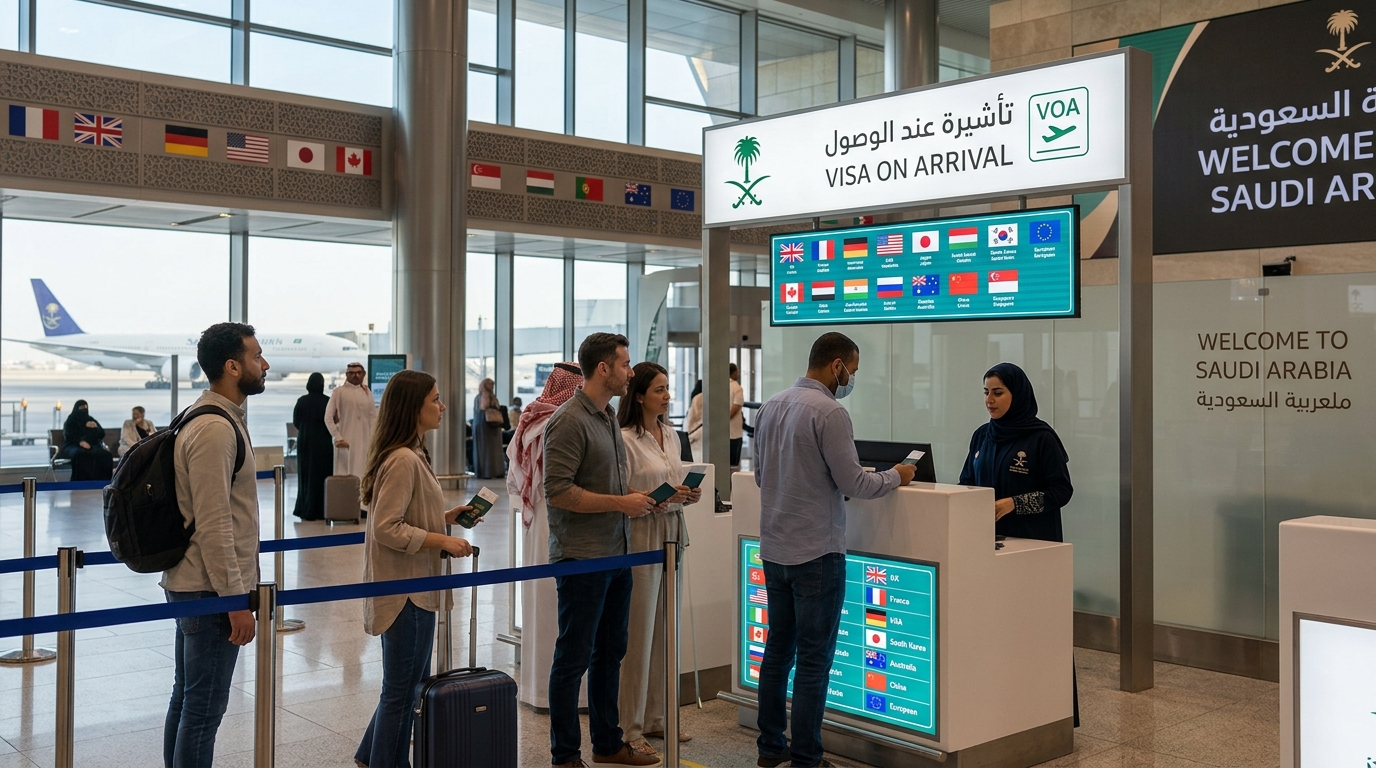
Planning a trip to Saudi Arabia just got easier. If you hold a passport from one of 49 eligible countries, you can skip the online application and get your visa on arrival at the airport. This policy has opened doors for millions of travelers who want to experience the Kingdom’s ancient heritage sites, stunning Red Sea coastline, and modern cities without the hassle of advance paperwork.
Saudi Arabia offers visa on arrival to citizens of 49 countries, allowing stays up to 90 days for tourism or business. Travelers can obtain their visa directly at major airports by presenting a valid passport, return ticket, and accommodation proof. The process takes 15 to 30 minutes and costs approximately 300 SAR, making entry to the Kingdom more accessible than ever before.
Which countries qualify for visa on arrival
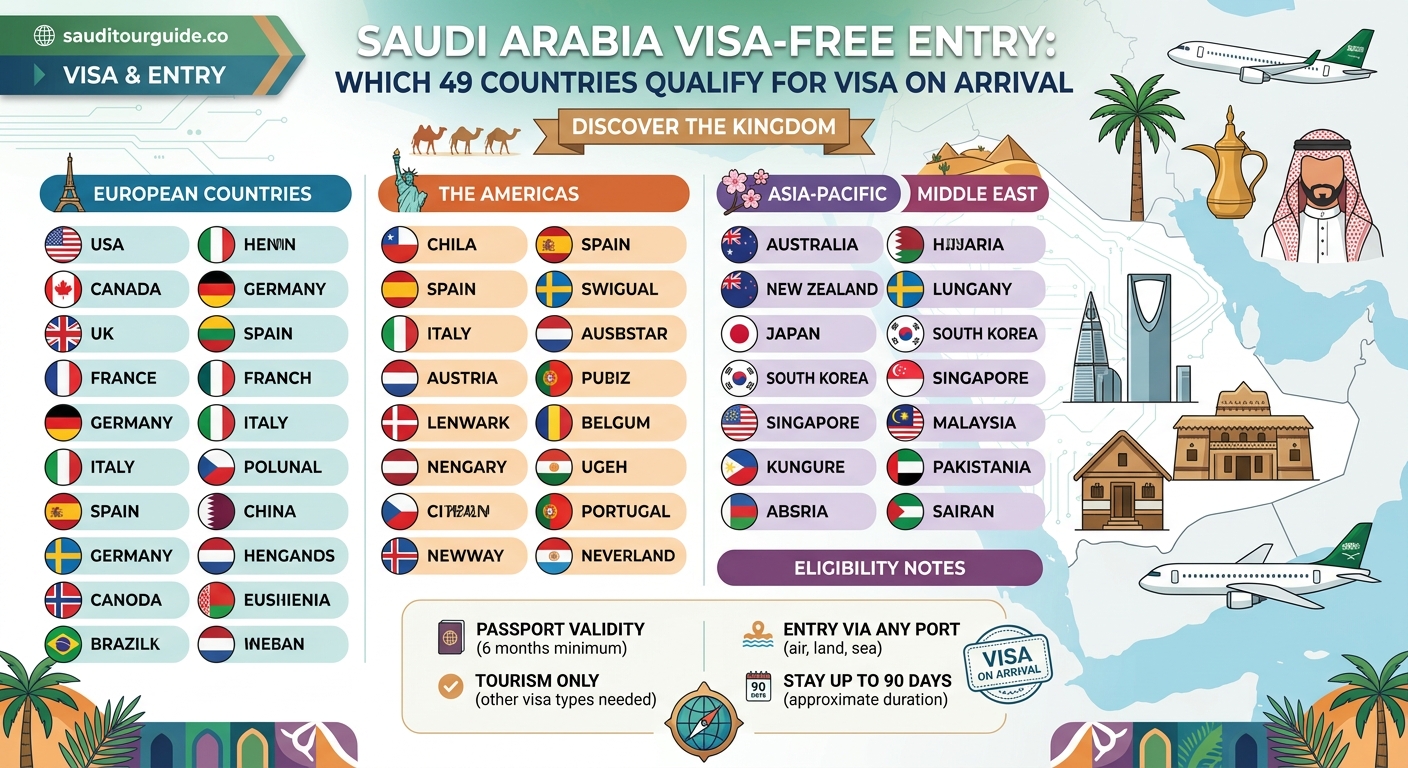
Saudi Arabia extends visa on arrival privileges to citizens from North America, Europe, Asia, and Oceania. The list includes major tourism markets and reflects the Kingdom’s push to attract international visitors.
North American countries:
– United States
– Canada
European countries:
– All Schengen Area nations
– United Kingdom
– Ireland
– Russia
– Ukraine
Asian countries:
– Japan
– South Korea
– Singapore
– Malaysia
– Brunei
– China (including Hong Kong and Macau)
Oceania:
– Australia
– New Zealand
The complete list of 49 countries also includes Andorra, Austria, Belgium, Bulgaria, Croatia, Cyprus, Czech Republic, Denmark, Estonia, Finland, France, Germany, Greece, Holland, Hungary, Iceland, Italy, Kazakhstan, Latvia, Liechtenstein, Lithuania, Luxembourg, Malta, Monaco, Montenegro, Norway, Poland, Portugal, Romania, San Marino, Slovakia, Slovenia, Spain, Sweden, Switzerland, and the Vatican.
Citizens from these nations can show up at King Khalid International Airport in Riyadh, King Abdulaziz International Airport in Jeddah, or King Fahd International Airport in Dammam and apply directly at immigration.
How to get your visa on arrival
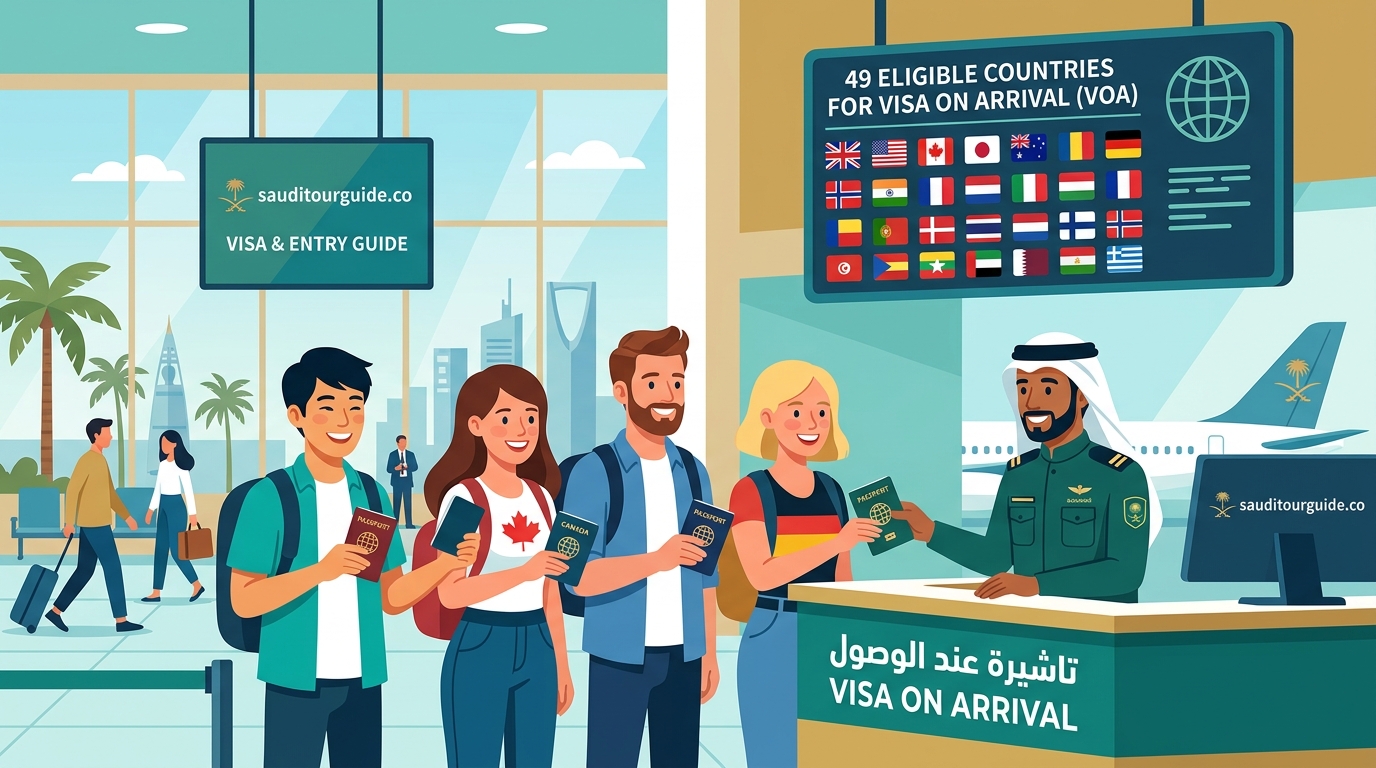
The process is straightforward if you arrive prepared. Here’s what happens from the moment you land.
- After disembarking, follow signs to the visa on arrival counter before reaching passport control.
- Present your passport (valid for at least six months), return flight ticket, and hotel reservation or invitation letter.
- Pay the visa fee using a credit card or cash in Saudi Riyals.
- Receive your visa stamp and proceed to passport control.
- Clear customs and enter Saudi Arabia.
Most travelers complete this process in 15 to 30 minutes during off-peak hours. During busy periods like school holidays or major events, expect waits up to an hour.
“The visa on arrival system has transformed Saudi tourism. What used to take days of planning now happens at the airport in minutes. Just make sure your documents are in order before you board your flight.” — Immigration officer at King Khalid International Airport
Requirements you need to meet
Not everyone from eligible countries automatically qualifies. You must meet specific conditions.
Essential requirements:
– Passport valid for at least six months from entry date
– Return or onward flight ticket
– Proof of accommodation (hotel booking or host invitation)
– Travel insurance covering your stay (recommended but not always enforced)
– No previous deportation or ban from Saudi Arabia
Children under 18 need parental consent letters if traveling without both parents. Women of all ages can travel independently without a male guardian, a policy change that reflects the Kingdom’s modernization efforts.
Your passport should have at least two blank pages for stamps. Immigration officers may deny entry if your passport is damaged or if pages are missing.
Costs and validity period
The visa on arrival costs approximately 300 Saudi Riyals (about 80 USD). This fee covers a multiple-entry visa valid for one year.
You can stay up to 90 days per visit. The 90-day period can be continuous or split across multiple trips within the year. After 90 days, you must leave and can return for another 90-day stay as long as your visa remains valid.
Payment methods include major credit cards (Visa, Mastercard) and cash. Some airports also accept debit cards. Keep your receipt as proof of payment.
If you plan to stay longer than 90 days, you’ll need to apply for a visa extension through the Absher platform or visit a Jawazat office. Learn more about extending your tourist visa while in Saudi Arabia.
Common mistakes that cause delays
Many travelers face unnecessary complications at the airport. Avoid these errors.
| Mistake | Why it matters | How to fix it |
|---|---|---|
| Passport expires in 4 months | Saudi Arabia requires 6 months validity | Renew passport before booking flights |
| No hotel booking | Immigration needs proof of accommodation | Book refundable hotel or get invitation letter |
| Missing return ticket | One-way tickets raise red flags | Purchase round-trip or show onward travel proof |
| Insufficient blank pages | Stamps need space | Check passport has 2+ blank pages |
| Previous visa violations | Past overstays trigger automatic denial | Clear any violations before traveling |
Some travelers assume they can extend their visa indefinitely. The 90-day limit is strict. Overstaying leads to fines of 100 SAR per day and potential travel bans.
Alternative visa options if you don’t qualify
Not all nationalities can get a visa on arrival. If your country isn’t on the list, you have other options.
The Saudi e-visa program covers citizens from additional countries. The online application takes about 10 minutes and costs the same as visa on arrival. You receive approval within 24 to 72 hours. Check out how to apply for your Saudi Arabia e-visa in under 10 minutes for a step-by-step walkthrough.
Business travelers can apply through their Saudi sponsor or company. This requires an invitation letter and typically takes one to two weeks.
Residents of GCC countries (UAE, Kuwait, Bahrain, Qatar, Oman) enjoy visa-free entry and can stay up to three months.
What happens if you’re denied entry
Immigration officers have final say on entry. Denial is rare for eligible passport holders, but it happens.
Common reasons include:
– Damaged or altered passport
– Suspected fraudulent documents
– Previous immigration violations
– Security concerns
– Incomplete paperwork
If denied, you’ll be held in a waiting area until the next flight to your origin country or a third destination you’re eligible to enter. Airlines that brought you are responsible for return transport.
You can appeal the decision, but this rarely succeeds at the airport. Better to ensure all documents are legitimate and complete before traveling.
Tips for a smooth arrival experience
Preparation makes all the difference. Follow these insider tips.
Print all documents even if you have digital copies. Airport wifi can be unreliable, and immigration officers prefer paper.
Arrive at major international airports. Smaller regional airports may not have visa on arrival facilities or trained staff.
Dress modestly upon arrival. While Saudi Arabia has relaxed dress codes for tourists, conservative clothing at immigration creates a positive first impression. Read about what to wear in Saudi Arabia to avoid any confusion.
Have local currency ready. ATMs are available after clearing immigration, but paying the visa fee in Riyals speeds up the process.
Download the Absher platform app before traveling. You’ll need it to track visa status, apply for extensions, and access government services during your stay.
Book your first night’s accommodation near the airport. This gives you time to adjust and plan your itinerary without rushing. Consider budgeting for your week in Saudi Arabia to plan expenses.
Where to go once you’re in
Saudi Arabia offers experiences you won’t find anywhere else. From ancient Nabatean ruins to futuristic cities, your visa on arrival opens access to all of it.
The Red Sea coast near Jeddah features world-class diving sites with pristine coral reefs. Check out the best Red Sea diving spots if underwater adventures appeal to you.
AlUla’s archaeological treasures rival Petra but see a fraction of the crowds. Madain Saleh’s rock-cut tombs predate many famous European landmarks.
Riyadh blends traditional souqs with luxury shopping malls. The Edge of the World escarpment sits just two hours from the capital and offers dramatic desert vistas.
The Asir region in the southwest provides cool mountain air and terraced farms. It’s nothing like the desert stereotypes most people associate with Saudi Arabia. Learn why the Asir region should be your next adventure destination.
For coffee enthusiasts, traditional Saudi coffee ceremonies offer cultural immersion you can’t get from guidebooks. Discover 10 Saudi coffee traditions every visitor should experience.
Special considerations for different traveler types
Your travel purpose affects how you use your visa on arrival.
Business travelers can conduct meetings, attend conferences, and sign contracts on a tourist visa. You cannot work or receive salary from Saudi companies without a proper work visa.
Pilgrims performing Umrah during non-Hajj periods can use visa on arrival. However, dedicated Umrah visas are cheaper and easier if pilgrimage is your only purpose. After completing Umrah, many visitors extend their trip to see hidden gems pilgrims often miss.
Digital nomads can work remotely on tourist visas as long as they’re employed by foreign companies. Don’t advertise this at immigration, simply state you’re visiting for tourism.
Families with young children should bring birth certificates and vaccination records. Some attractions require proof of age for discounted tickets.
Solo female travelers face no restrictions. Women can book hotels, rent cars, and travel independently throughout the Kingdom.
Getting ready for your Saudi adventure
Now that you know your passport qualifies for visa on arrival, start planning your trip. The Kingdom’s transformation into a tourism destination is real, not just marketing hype.
Book flights to Riyadh, Jeddah, or Dammam. Print your hotel confirmations and return tickets. Double-check your passport expiration date. Pack modest clothing and an open mind.
Saudi Arabia rewards travelers who venture beyond preconceptions. The visa on arrival policy removes barriers that kept curious visitors away for decades. Your eligibility is an invitation to see a country in the middle of remarkable change.
Whether you’re planning a 10-day itinerary, seeking hidden gems most tourists never discover, or just curious about NEOM’s futuristic vision, your visa on arrival makes it all accessible. The hardest part is deciding what to see first.