
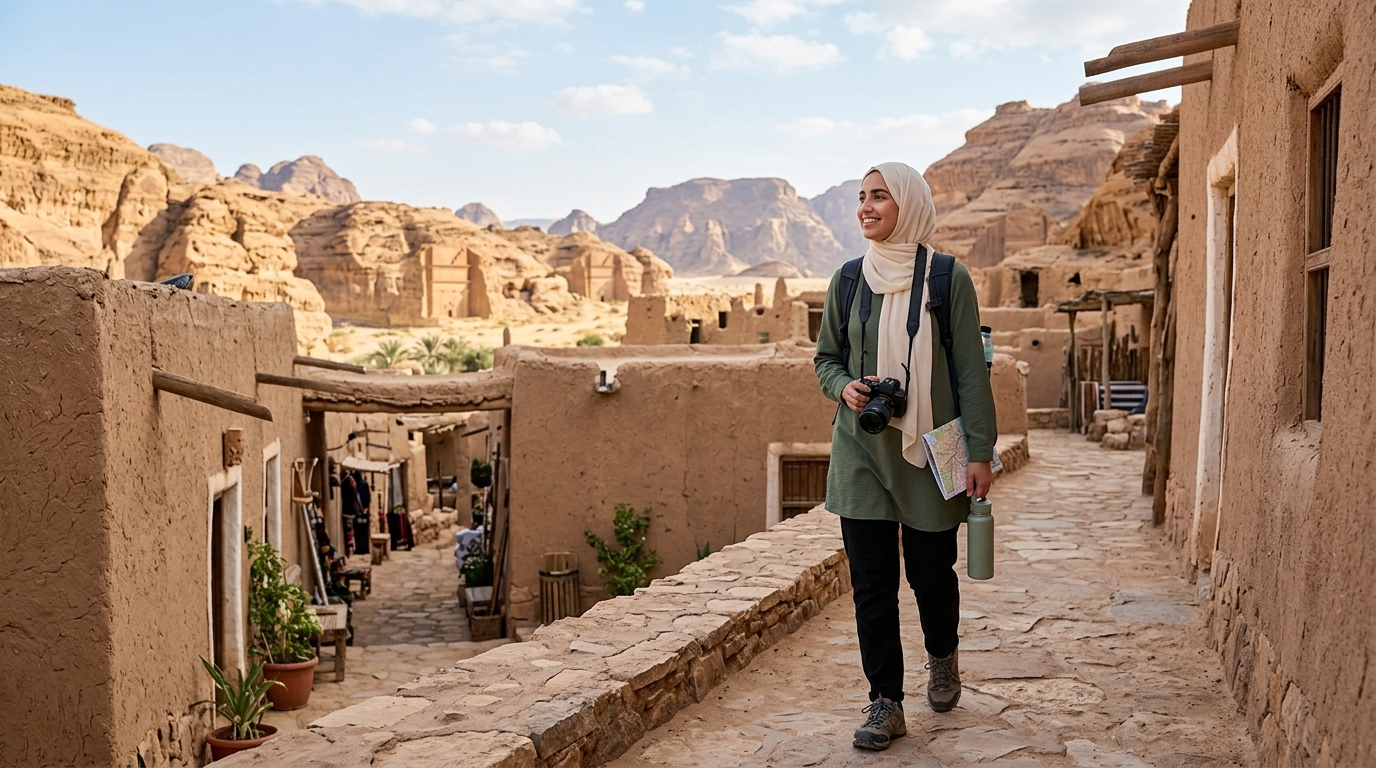
You’ve completed your pilgrimage and felt the profound peace of Makkah and Madinah. Now you’re wondering if you can afford to see more of Saudi Arabia without breaking the bank. The good news? You absolutely can. The Kingdom has opened its doors to tourists, and with some smart planning, you can experience ancient heritage sites, stunning landscapes, and vibrant cities without spending a fortune.
Budget travel Saudi Arabia after pilgrimage is entirely possible with strategic planning. By using domestic budget airlines, staying in affordable accommodations, eating at local restaurants, and timing your extension right, you can see incredible destinations like Jeddah, AlUla, and the Asir mountains for 150 to 250 SAR per day. Most pilgrims already have their visa sorted, making the extension process straightforward and cost effective.
Understanding your visa options after pilgrimage
Most pilgrims arrive on Hajj or Umrah visas, which have specific validity periods. But here’s what many travelers don’t realize: you have options for extending your stay legally.
If you arrived on an Umrah visa, you typically have 30 days from entry. Some pilgrims complete their rituals in just a few days, leaving plenty of time for travel. The trick is planning your pilgrimage early in your visa window.
For those wanting more time, converting to a tourist visa or applying for an extension is possible. The process has become much simpler since Saudi Arabia launched its tourist visa program in 2019. You can learn more about extending your tourist visa while in Saudi Arabia through official channels.
Budget consideration: Visa extensions typically cost between 300 to 500 SAR, but they buy you weeks of additional travel time. That’s far cheaper than a return flight home and back again.
Choosing affordable destinations near the holy cities
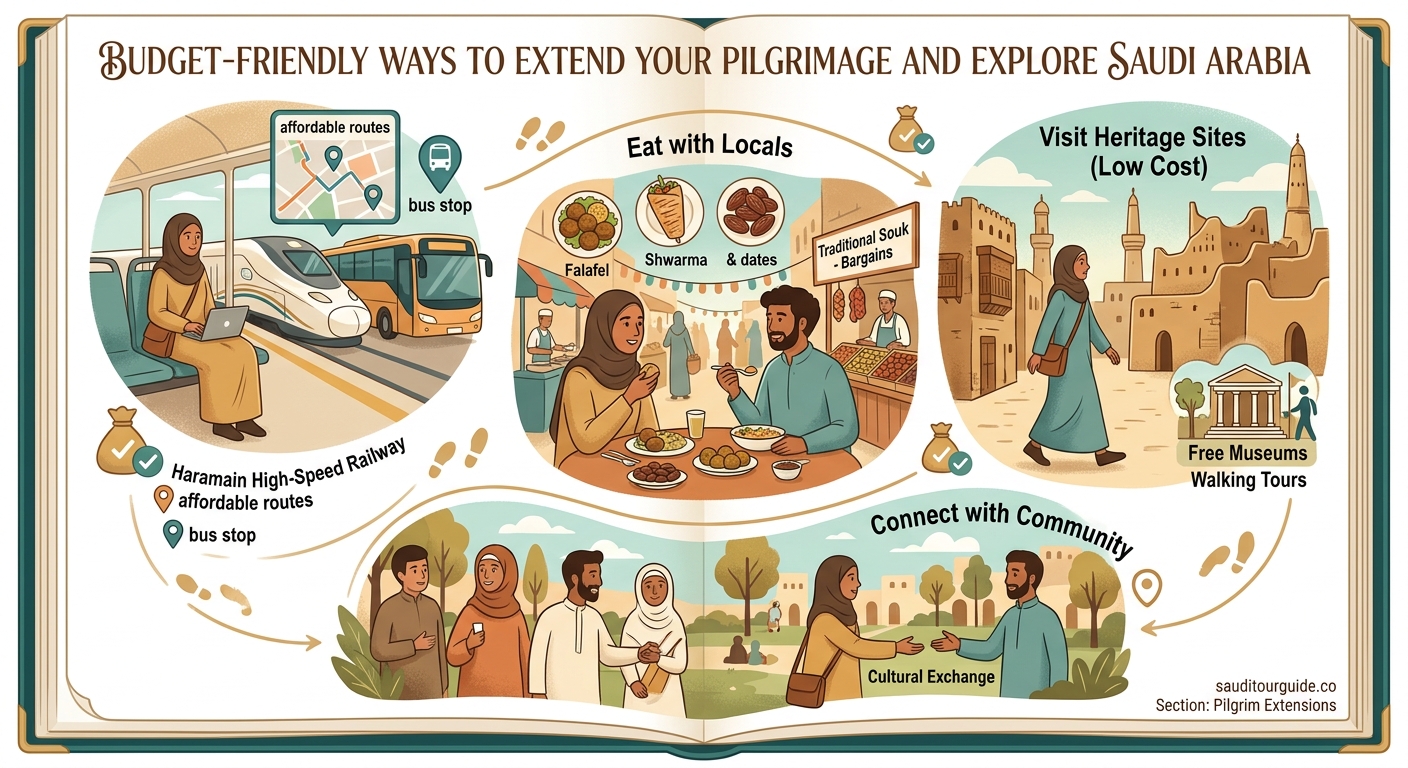
Geography is your friend when planning budget travel Saudi Arabia after pilgrimage. Starting from Makkah or Madinah puts you within striking distance of several incredible destinations.
Jeddah sits just 80 kilometers from Makkah. A bus ticket costs around 20 SAR, and the city offers free attractions like the historic Al-Balad district, the Jeddah Corniche, and floating mosque. You can easily spend two days here for under 300 SAR including accommodation.
Taif provides mountain air and cooler temperatures, especially welcome if you’ve been in Makkah during summer. Buses run regularly for 25 to 35 SAR. The city is famous for roses, honey, and beautiful viewpoints that cost nothing to visit.
AlUla requires more travel time but delivers extraordinary value. The ancient Nabataean tombs at Hegra rival Petra in Jordan. While the heritage site charges admission (95 SAR), budget travelers can still enjoy the old town and dramatic rock formations for free.
Here’s a smart three destination route:
- Complete your pilgrimage in Makkah
- Take a day trip or overnight to Taif (closest, cheapest)
- Spend 2 to 3 days in Jeddah (moderate distance, high value)
- Travel to AlUla if your budget and time allow (splurge destination)
Transportation strategies that save serious money
Getting around Saudi Arabia doesn’t have to drain your wallet. The key is mixing transportation methods based on distance and timing.
Domestic budget airlines have transformed travel in the Kingdom. Flynas and Flyadeal offer routes between major cities for as low as 99 SAR if you book ahead. A flight from Jeddah to Riyadh that would take 10 hours by bus costs around 150 to 200 SAR and takes 90 minutes.
Intercity buses through SAPTCO connect most major destinations. They’re clean, punctual, and incredibly affordable. Jeddah to Riyadh costs approximately 120 SAR for a comfortable seat with air conditioning. Night buses save you a hotel night.
Ride sharing apps like Uber and Careem work throughout Saudi cities. They cost a fraction of traditional taxis and show upfront pricing. A 15 minute ride typically runs 15 to 25 SAR.
Metro systems now operate in Riyadh and are expanding. Tickets cost just 4 SAR per trip, making city exploration affordable.
“I spent three weeks traveling Saudi Arabia after Umrah on 200 SAR per day. The bus network is fantastic, and I actually enjoyed the longer journeys because I met local families who shared food and stories. My biggest tip? Always book transport tickets a few days ahead online for the best prices.” – Fatima K., Malaysia
For those considering more flexibility, renting a car in Saudi Arabia can work for groups of three or four splitting costs, though solo travelers usually save more with public transport.
Finding accommodation that fits a pilgrim’s budget
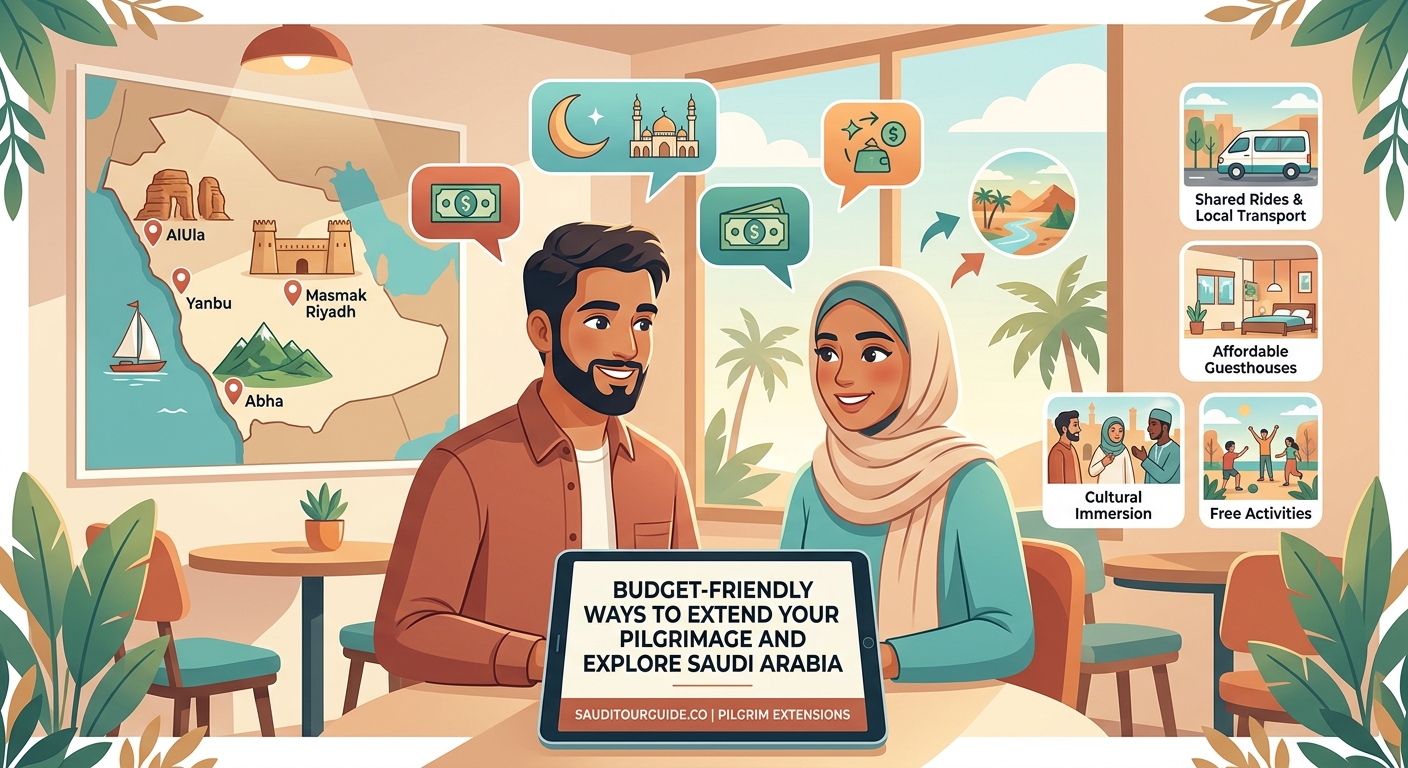
Forget the expensive hotels near Haram. Once you leave the holy cities, accommodation costs drop dramatically.
Budget hotels and hostels have sprouted across Saudi cities. Expect to pay 80 to 150 SAR per night for a clean, basic room with private bathroom. Neighborhoods away from business districts offer the best value.
Apartment hotels work well for stays longer than three nights. A studio with kitchenette runs 120 to 180 SAR nightly and lets you prepare simple meals, cutting food costs significantly.
Booking platforms like Booking.com and Agoda list Saudi properties, but also check local apps like Mrhaba and Travelwings for deals. Prices often drop 20 to 30 percent for last minute bookings during off peak seasons.
Timing matters enormously. Avoid Saudi school holidays (typically late June through August) and major events when prices spike. February through April and October through November offer pleasant weather and lower rates.
| Accommodation Type | Average Cost (SAR/night) | Best For | Money Saving Tip |
|---|---|---|---|
| Budget hotel | 80-150 | Solo travelers, couples | Book directly via hotel website for loyalty points |
| Hostel dorm | 50-80 | Solo adventurers | Rare but growing, mainly in Jeddah and Riyadh |
| Apartment hotel | 120-180 | Groups, longer stays | Negotiate weekly rates for 15-20% discount |
| Mid-range hotel | 200-350 | Comfort seekers | Use points from international chains |
Eating well without emptying your wallet
Saudi food culture offers incredible value if you know where to look. Forget hotel restaurants and follow the locals.
Local restaurants serving traditional Saudi dishes charge 15 to 30 SAR for filling meals. Mandi, kabsa, and shawarma provide protein, rice, and vegetables for less than a fancy coffee back home. Small neighborhood spots always beat chain restaurants on price.
Supermarkets stock familiar international brands plus local products. A breakfast of Arabic bread, labneh, olives, and dates costs maybe 10 SAR and fuels you until lunch. Most apartment hotels have mini fridges and microwaves.
Street food is safe, delicious, and cheap. Falafel sandwiches run 5 to 8 SAR. Fresh juice stands squeeze pomegranate, orange, or mango for 8 to 12 SAR. Samboosa during Ramadan costs just a few riyals.
Free water is widely available. Hotels, malls, and mosques have water dispensers. Carry a refillable bottle and skip buying plastic bottles at tourist prices.
Daily food budget breakdown for budget conscious travelers:
- Breakfast from supermarket: 10 SAR
- Lunch at local restaurant: 20 SAR
- Snacks and drinks: 10 SAR
- Dinner at local restaurant: 25 SAR
- Total: 65 SAR per day
Spending 70 to 90 SAR daily on food keeps you well fed and energized. Save your splurge for one nice meal showcasing regional specialties.
Free and low cost attractions worth your time
Saudi Arabia’s best experiences often cost little or nothing. The country’s heritage and natural beauty don’t require expensive tickets.
Historic districts like Jeddah’s Al-Balad, Diriyah near Riyadh, and old Jeddah souqs offer hours of wandering through authentic architecture. Entry is free, though you might buy tea or small souvenirs.
Natural wonders abound. The Edge of the World near Riyadh costs nothing except transport. Red Sea beaches near Jeddah welcome swimmers and snorkelers free of charge. Mountain viewpoints in Abha and Taif provide stunning photo opportunities at zero cost.
Museums have surprisingly low admission fees. The National Museum in Riyadh charges just 10 SAR. Many regional museums cost 5 SAR or less. Friday mornings sometimes offer free entry.
Corniche walks in coastal cities provide evening entertainment. Families picnic, children play, and the sea breeze cools everyone down. Pack snacks and join the scene.
For those seeking hidden gems in Saudi Arabia, many lesser known sites charge minimal fees or nothing at all.
Adventure seekers should consider the Asir region, where hiking trails, mountain villages, and cool weather create memorable experiences without big expenses.
Sample budget itineraries for different timeframes
Let’s put this into practice with realistic itineraries and costs.
3 Day Extension (Jeddah Focus)
Day 1: Bus from Makkah to Jeddah (20 SAR), check into budget hotel (100 SAR), walk Al-Balad district (free), dinner at local restaurant (25 SAR)
Day 2: Morning at Jeddah Corniche (free), lunch (20 SAR), afternoon at souq (free, maybe 30 SAR for shopping), evening at floating mosque (free), dinner (25 SAR)
Day 3: Half day at Red Sea beach (free), lunch (20 SAR), return bus to Makkah or airport (20 SAR)
Total cost: Approximately 460 SAR for three days including accommodation, transport, and food.
7 Day Extension (Jeddah + Taif + AlUla)
Days 1 to 2: Jeddah as above
Day 3: Bus to Taif (30 SAR), budget hotel (90 SAR), explore rose shops and viewpoints (free), dinner (20 SAR)
Day 4: Morning in Taif, afternoon bus to Jeddah (30 SAR), evening flight to AlUla (180 SAR)
Days 5 to 6: AlUla budget hotel (120 SAR/night), Hegra site entry (95 SAR), old town exploration (free), local meals (40 SAR/day)
Day 7: Morning in AlUla, flight back to Jeddah (180 SAR), connection to home
Total cost: Approximately 1,400 SAR for seven days, averaging 200 SAR daily.
10 Day Extension (Grand Tour)
This itinerary adds Riyadh and gives more time in each location. Following a similar pattern, budget 1,800 to 2,200 SAR depending on flight timing and accommodation choices. You can see how to plan a 10 day Saudi Arabia itinerary for detailed routing.
Common mistakes that blow your budget
Even careful planners make these errors. Avoid them and keep your costs down.
Mistake 1: Not researching transport options
Many pilgrims assume flying is always expensive or buses are unreliable. Reality check: budget airlines offer great deals, and SAPTCO buses are excellent. Compare options before booking.
Mistake 2: Staying in tourist zones
Hotels within walking distance of major attractions charge premium rates. A 10 minute Uber ride from a budget neighborhood saves 50 to 100 SAR nightly.
Mistake 3: Eating at hotel restaurants
Hotel breakfast buffets cost 40 to 60 SAR. Walk two blocks to a local spot and pay 10 SAR for the same meal, often tastier and more authentic.
Mistake 4: Buying bottled water constantly
At 3 to 5 SAR per bottle, this adds up fast. One refillable bottle saves 100+ SAR weekly.
Mistake 5: Not checking domestic flight sales
Airlines run frequent promotions. Setting price alerts or checking every few days can cut flight costs by half.
Mistake 6: Overpacking activities
Saudi Arabia offers so much that’s free. You don’t need to pay for every experience. Balance paid attractions with free exploration.
Cultural considerations and etiquette
As a pilgrim extending your stay, you already understand Saudi Arabia’s Islamic culture. A few additional points help budget travelers specifically.
Dress codes for tourists remain important outside the holy cities, though they’ve relaxed somewhat. Women don’t need abaya in many areas now, but modest clothing is essential. Men should avoid shorts in public spaces.
Saudi social etiquette includes respecting prayer times. Restaurants and shops close during prayer, typically for 20 to 30 minutes. Plan your day around these breaks rather than fighting them.
Gender segregation exists in some restaurants and public spaces. Family sections welcome women and children. Single men use separate areas. This is normal and not meant to offend.
Tipping isn’t mandatory but appreciated. Round up taxi fares or leave 5 to 10 SAR at restaurants if service was good. This small gesture goes a long way.
Photography is generally allowed, but always ask before photographing people, especially women. Government buildings and military sites prohibit photography.
Money management and practical tips
Managing money smartly makes your budget stretch further.
ATMs are everywhere and accept international cards. Withdraw larger amounts less frequently to minimize fees. Most banks charge 10 to 15 SAR per transaction.
Credit cards work at hotels, malls, and chain restaurants but many small local places prefer cash. Carry 200 to 300 SAR in small bills daily.
Currency exchange at airports offers poor rates. Use ATMs instead or exchange money at banks in cities for better rates.
Mobile data is essential for maps, translation, and ride sharing apps. Tourist SIM cards from STC, Mobily, or Zain cost 50 to 100 SAR for a month with several gigabytes. Buy at any mobile shop with your passport.
Emergency funds matter. Keep 500 SAR separate from your daily money for unexpected situations like missed transport or medical needs.
Understanding how much a week in Saudi Arabia really costs helps you plan realistically and avoid mid trip budget panic.
Seasonal timing for maximum value
When you travel affects what you pay and what you experience.
Best budget months: February, March, April, October, and November offer pleasant weather and lower prices. Hotels discount rates, attractions are less crowded, and you’ll enjoy comfortable temperatures.
Avoid if possible: July and August bring extreme heat (45°C+) and Saudi school holidays. Prices spike and popular destinations overflow with domestic tourists.
Ramadan considerations: Traveling during Ramadan offers unique cultural experiences but requires adjustment. Restaurants close during daylight hours, though hotels serve guests. Prices sometimes drop because fewer tourists visit, but some attractions have reduced hours.
Shoulder seasons: Late April to early May and late September to early October split the difference. Temperatures rise but remain bearable, and you catch the tail end of low season pricing.
If your pilgrimage timing is flexible, planning Umrah for February or March gives you the best weather window for budget travel Saudi Arabia after pilgrimage.
Connecting with other travelers and locals
Solo travel on a budget becomes easier and more enjoyable when you connect with others.
Mosque communities remain welcoming after you complete your pilgrimage. Attending prayers in different cities lets you meet locals who often invite travelers for meals or offer guidance.
Social media groups for expats and travelers in Saudi Arabia share current tips, ride sharing opportunities, and event information. Facebook groups like “Expats in Saudi Arabia” and “Saudi Travel Community” are active and helpful.
Hostel common areas (where they exist) naturally facilitate meeting fellow budget travelers. Even budget hotels sometimes have lobby areas where guests chat.
Free walking tours have started in major cities, often run by expats or young Saudis practicing English. They work for tips, making them affordable and informative.
Language exchange meetups happen in Riyadh and Jeddah. You can practice Arabic while helping others with your language, plus get insider tips on budget eating and activities.
Remember that Saudi coffee traditions offer natural opportunities for cultural exchange. Accepting coffee from locals opens conversations and sometimes leads to unexpected hospitality.
Safety and health on a budget
Staying safe and healthy doesn’t require expensive insurance or precautions, but smart planning helps.
Travel insurance is worth considering if your trip extends beyond a few days. Basic policies covering medical emergencies and trip interruption cost 50 to 100 SAR for a week. Some credit cards include travel insurance if you book transport with them.
Public healthcare in Saudi Arabia is excellent but primarily for residents. Private clinics charge reasonable fees for minor issues. A doctor consultation runs 150 to 250 SAR. Pharmacies stock international medications and pharmacists often advise on minor ailments.
Sun protection is critical and cheap. Sunscreen, a hat, and staying hydrated prevent heat related problems that could derail your trip and budget.
Food safety is generally high. Stick to busy restaurants where turnover keeps food fresh. Avoid street food that’s been sitting out in heat.
Personal safety in Saudi Arabia ranks among the best globally. Violent crime against tourists is extremely rare. Normal precautions like watching your belongings in crowded areas suffice.
Emergency numbers: 997 for police, 997 for ambulance. Save these in your phone along with your embassy contact information.
Beyond the obvious tourist trail
Budget travelers often discover the best experiences off the beaten path.
Hidden gems every pilgrim should visit include smaller towns and natural areas that see few international visitors. These places offer authentic experiences and rock bottom prices.
Najran near the Yemen border showcases distinct architecture and culture. It’s far from the typical tourist circuit but buses run from Riyadh and accommodation costs 70 to 100 SAR nightly.
Yanbu on the Red Sea offers beaches and diving without Jeddah’s crowds. The coral reefs rival anything in the region, and the town maintains a relaxed atmosphere.
Hofuf in the eastern province features the largest oasis in Saudi Arabia, traditional souqs, and Ottoman era forts. Very few Western tourists make it here, meaning genuine local interactions and low prices.
Al-Ahsa Oasis (near Hofuf) is a UNESCO World Heritage site with date palm groves, springs, and caves. Entry is free, and the area is stunning.
For those with adventure in mind, the Red Sea diving sites offer world class experiences, though diving does increase your budget. Snorkeling from the beach costs nothing and still reveals incredible marine life.
Making your pilgrimage extension meaningful
Budget travel isn’t just about saving money. It’s about maximizing experiences and deepening your connection to the places you visit.
Staying longer in Saudi Arabia after your pilgrimage lets you see beyond the holy cities. You meet Saudis in their daily lives, not just in service roles around Haram. You taste regional foods, hear different Arabic dialects, and witness the Kingdom’s rapid transformation.
The spiritual high of pilgrimage can extend into cultural learning. Understanding how Islam shapes daily life across different Saudi regions adds depth to your faith journey. Visiting historical Islamic sites like Diriyah or the old mosques in Jeddah connects you to the religion’s living history.
Budget constraints actually enhance some experiences. Taking buses instead of flights means conversations with Saudi families traveling home. Eating at neighborhood restaurants puts you at tables next to local workers and students. Staying in budget hotels in residential areas shows you real Saudi life, not the polished tourist version.
Your pilgrimage brought you to Saudi Arabia for spiritual reasons. Extending your stay affordably lets you complete that journey with cultural understanding and human connections that last far longer than any luxury experience could provide.
Your journey continues beyond the holy cities
Budget travel Saudi Arabia after pilgrimage isn’t just possible; it’s one of the most rewarding ways to truly understand this rapidly changing country. You’ve already made the biggest investment by getting here for Hajj or Umrah. Adding a week or two of exploration costs less than you’d spend on a typical vacation back home, yet delivers experiences most travelers never access.
The Kingdom welcomes pilgrims who want to see more. Transportation networks are modern and affordable. Accommodation options suit every budget. Food is delicious and cheap. Most importantly, you’re traveling as someone who already respects and understands the culture, giving you advantages other tourists don’t have.
Start planning your extension now. Check your visa validity, research destinations that match your interests, book that budget flight or bus ticket, and prepare for the journey of a lifetime. The spiritual peace you found in Makkah and Madinah can expand into cultural richness across mountains, deserts, ancient cities, and modern metropolises. Your pilgrimage brought you here. Let budget travel show you why you should stay.