
You’ve completed Hajj, one of the most profound spiritual journeys of your life. Your heart feels full, but your flight home isn’t for another ten days. Instead of spending that time in a hotel room near the airport, why not see the rest of this remarkable country? Saudi Arabia has opened its doors to tourists in recent years, and you’re already here with a valid visa. The infrastructure is modern, the sites are breathtaking, and you’ll return home with stories that go far beyond the pilgrimage itself.
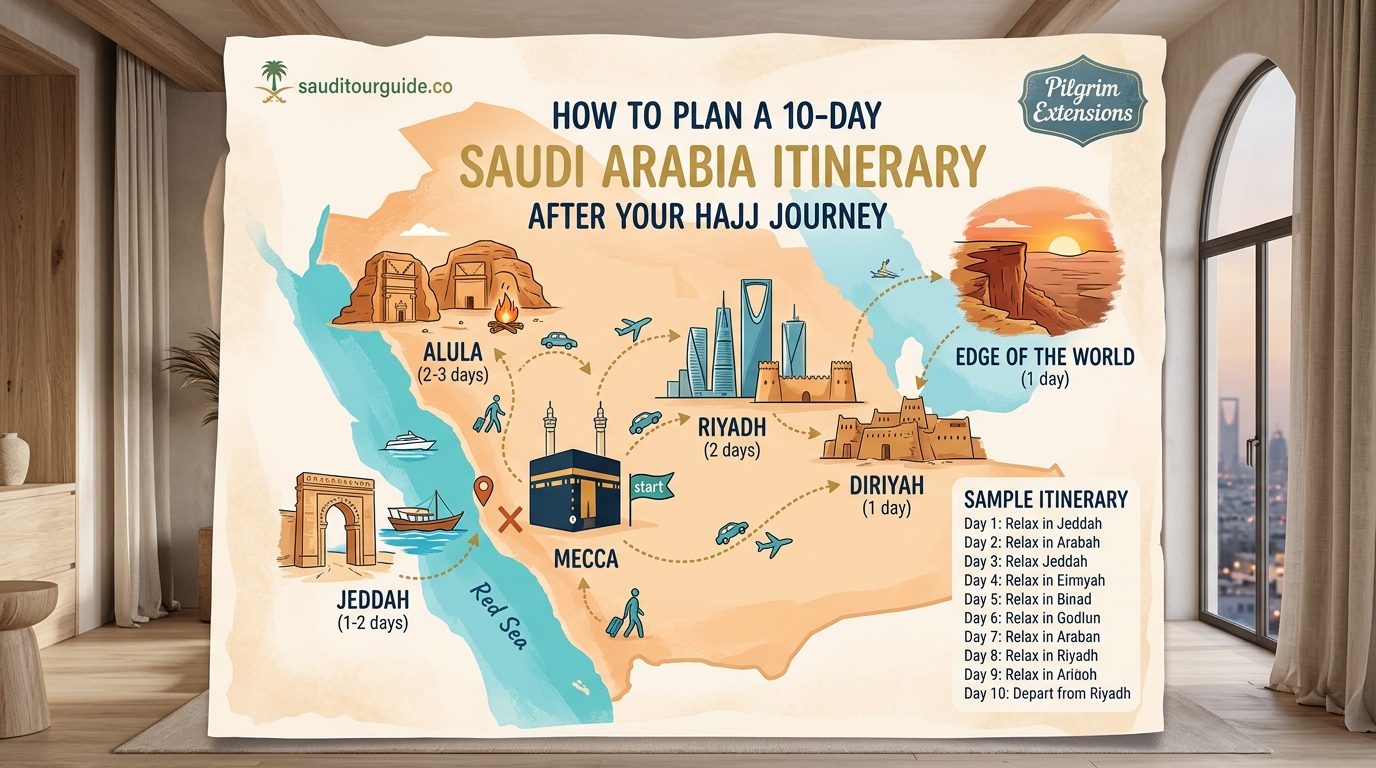
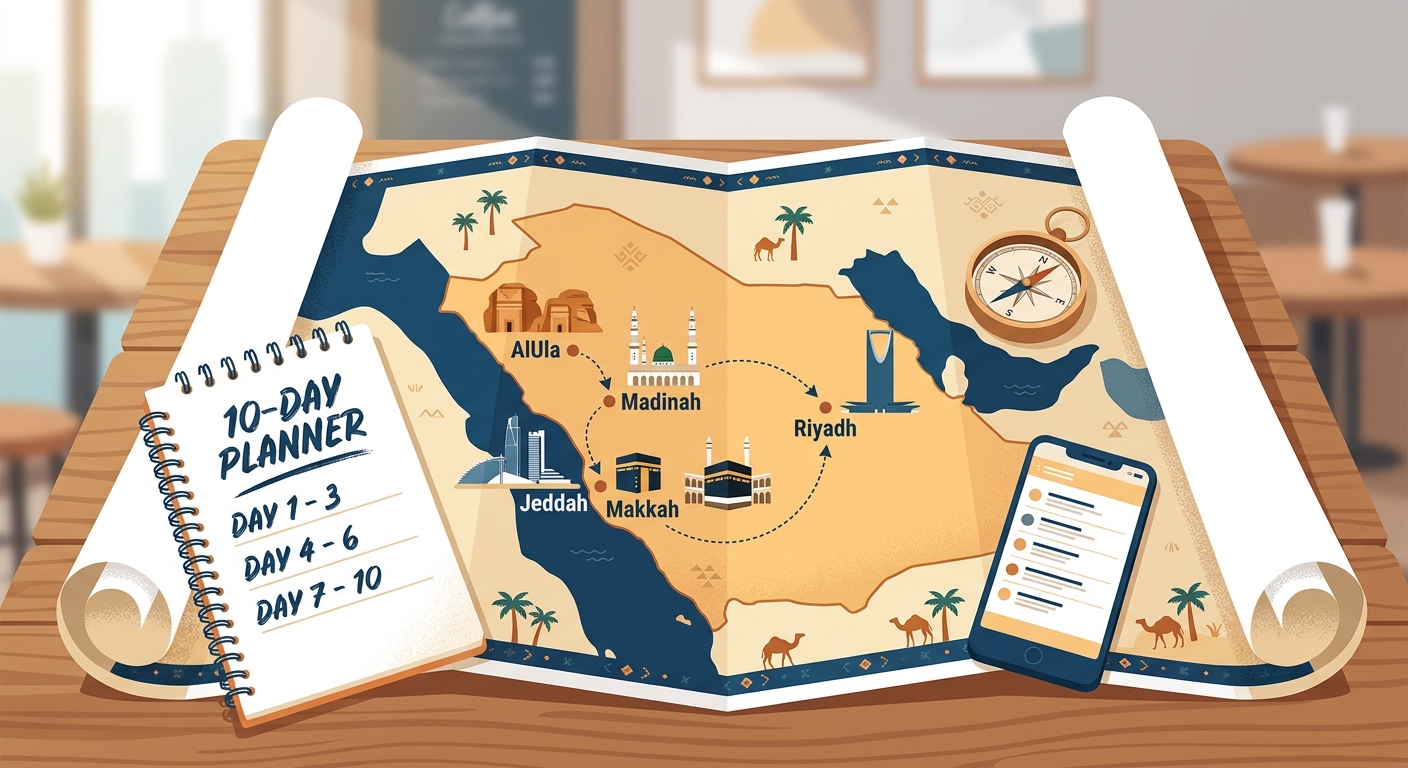
A Saudi Arabia itinerary after Hajj should balance spiritual reflection with cultural discovery. Spend three days in Madinah, two days experiencing Jeddah’s coastal charm, three days in Riyadh’s modern capital, and two days at AlUla’s ancient Nabatean ruins. This route uses existing infrastructure, respects your energy levels post-pilgrimage, and shows you Saudi Arabia beyond the holy cities.
Understanding Your Post-Hajj Travel Window
Most pilgrims arrive on a Hajj visa that allows 30 to 90 days in the country. That gives you flexibility.
Your body needs recovery time after Hajj. The physical demands of the pilgrimage are real. Walking miles each day in heat, managing crowds, and maintaining ritual focus takes a toll. Build in rest days. Don’t pack your itinerary so tightly that you arrive home exhausted.
Saudi Arabia’s domestic flight network is excellent. Saudia, Flynas, and Flyadeal operate frequent routes between major cities. Flights from Jeddah to Riyadh take 90 minutes. Jeddah to AlUla takes about two hours. Book these flights as soon as you finalize your dates because prices rise closer to departure.
Ground transportation between cities works well too. The Haramain High-Speed Railway connects Makkah, Jeddah, and Madinah in air-conditioned comfort. Tickets cost between 50 and 150 SAR depending on class. Buses run regularly but take longer.
Days 1 to 3: Extended Time in Madinah
Most pilgrims visit Madinah before or after Hajj, but few stay long enough to see beyond Masjid an-Nabawi. Give yourself three full days here.
Start each morning with Fajr at the Prophet’s Mosque, then spend your days visiting sites that deepen your understanding of early Islamic history. Quba Mosque, where the Prophet himself laid the first stones, sits about 20 minutes south of the city center. Visiting Quba on Saturday carries special merit according to hadith.
Mount Uhud marks the site of the Battle of Uhud. The mountain itself is striking, and the area includes a small museum explaining the battle’s significance. The Uhud Martyrs Cemetery rests at the mountain’s base. Many pilgrims find this visit deeply moving.
The Qiblatain Mosque commemorates the moment when the qibla direction changed from Jerusalem to Makkah. The architecture makes this change visible, with two prayer niches instead of one.
Madinah’s dates are famous throughout the Muslim world. The Dates Market near the old city center offers hundreds of varieties. Buy some Ajwa dates to bring home. They’re considered the finest in the region.
“Madinah offers a pace of reflection that Makkah’s intensity doesn’t allow. Take your time here. Pray extra prayers. Sit in the Rawdah. This is where many pilgrims feel the spiritual weight of their journey settle into something they can carry forward.” — Sheikh Ahmad Al-Ghamdi, Islamic scholar and tour guide
Days 4 to 5: Jeddah’s Coastal Culture
Take the high-speed train from Madinah to Jeddah. The journey takes about two hours and costs roughly 60 SAR.
Jeddah is Saudi Arabia’s most cosmopolitan city. It has been a trading port for centuries, and that history shows in its architecture, food, and atmosphere.
Spend your first afternoon in Al-Balad, the old town. This UNESCO World Heritage site features traditional Hijazi architecture with coral stone buildings and wooden balconies called rawashin. The houses date back to the 7th century. Many have been restored and now house small museums, cafes, and art galleries.
Walk through Souq Al-Alawi in the evening. The market sells everything from spices to textiles to traditional oud perfumes. Bargaining is expected. Vendors respect polite negotiation.
The Jeddah Corniche stretches for miles along the Red Sea. Rent a bike or simply walk the waterfront path. The King Fahd Fountain shoots water 260 meters into the air, making it the tallest fountain of its type in the world. It operates most evenings after Maghrib.
Jeddah’s food scene reflects its history as a port city. Try Yemeni mandi, fresh seafood grilled on the corniche, or traditional Saudi kabsa at a local restaurant. Saudi coffee traditions are alive here, with many cafes serving gahwa with dates and conversation.
The Floating Mosque (Al Rahma Mosque) sits partially over the Red Sea. Visit during sunset for stunning photos. Women should bring a headscarf; modest dress is expected at all mosques.
Days 6 to 8: Riyadh’s Modern Energy
Fly from Jeddah to Riyadh. Flights run hourly and take 90 minutes. Riyadh feels completely different from the western cities. It’s the political and administrative capital, with a skyline that rivals Dubai.
Day 6: Historical Riyadh
Start at Masmak Fortress in the old city center. This mud-brick fort played a central role in the founding of modern Saudi Arabia. The museum inside explains the history clearly, with artifacts and displays in both Arabic and English.
Diriyah, just outside Riyadh, is the original home of the Saudi royal family. The At-Turaif district has been restored to show traditional Najdi architecture. Walk through the narrow streets and imagine life here 300 years ago. The site offers guided tours in multiple languages.
Day 7: Museums and Markets
The National Museum of Saudi Arabia presents the country’s history from prehistoric times to the present. The Islamic heritage section includes manuscripts, artifacts, and explanations of the kingdom’s role in Islamic history. Plan for three hours here.
Souq Al Zal, one of Riyadh’s oldest markets, sells traditional goods: carpets, antiques, spices, and handicrafts. Unlike tourist markets in other countries, this souq serves locals too. Prices reflect that.
The Kingdom Centre Tower offers observation deck views from the 99th floor. Go at sunset to watch the city transition from day to night. The shopping mall below the tower includes international brands and Saudi designers.
Day 8: Edge of the World
Book a tour to Jebel Fihrayn, known as the Edge of the World. This dramatic cliff formation sits about 90 kilometers northwest of Riyadh. The views across the ancient ocean floor are stunning. The site requires a 4×4 vehicle to reach, so independent travel is difficult. Most hotels can arrange tours.
Bring water, sunscreen, and a hat. The desert sun is intense even in winter months. Tours typically leave early morning and return by mid-afternoon.
Days 9 to 10: AlUla’s Ancient Wonders
Fly from Riyadh to AlUla. This route operates several times per week. AlUla is Saudi Arabia’s archaeological treasure, home to Hegra (also called Mada’in Salih), Saudi Arabia’s first UNESCO World Heritage site.
Hegra was built by the Nabateans, the same civilization that created Petra in Jordan. The tombs here are remarkably preserved, carved directly into sandstone cliffs. The site includes more than 100 monumental tombs with elaborate facades.
Entry requires advance booking through the Experience AlUla website. Guided tours run throughout the day. The evening tours under floodlights create an atmosphere you won’t forget.
The Old Town of AlUla sits in a valley surrounded by rock formations. The abandoned mud-brick village dates back at least 800 years. Walk through the narrow passages and climb to the overlook for panoramic views.
Elephant Rock (Jabal AlFil) is a natural rock formation that looks exactly like an elephant. It’s especially photogenic at sunset. The site is easily accessible and requires no special tour.
Hidden locations throughout the kingdom continue to open to visitors, but AlUla remains the crown jewel of Saudi archaeological tourism.
Practical Planning Steps for Your Journey
Follow these steps to organize your post-Hajj travels:
- Confirm your visa validity and any travel restrictions within Saudi Arabia
- Book domestic flights as soon as your Hajj dates are confirmed
- Reserve hotels in each city, focusing on locations near public transportation
- Purchase a local SIM card for data and navigation
- Download offline maps for each city you’ll visit
- Arrange tours for sites requiring advance booking (Hegra, Edge of the World)
- Pack modest clothing appropriate for both religious sites and general tourism
- Keep copies of your passport, visa, and hotel confirmations in both physical and digital formats
What to Pack Beyond Your Hajj Essentials
Your Hajj luggage focused on pilgrimage needs. Touring the country requires a few additions:
- Comfortable walking shoes beyond your pilgrimage sandals
- Light layers for air-conditioned spaces and outdoor heat
- A small daypack for tours and museum visits
- Portable phone charger
- Sunglasses and sunscreen
- Camera or phone with good storage capacity
- Any prescription medications in original packaging
- Modest swimwear if your hotel has a pool
Dress codes vary by context, but modesty remains important throughout the country. Women don’t need to wear abaya in most tourist areas anymore, but loose, conservative clothing shows respect.
Budget Considerations for Ten Days
Understanding costs helps you plan realistically. Here’s a breakdown:
| Category | Budget Range (SAR) | Notes |
|---|---|---|
| Domestic flights | 800 to 1,500 | Book early for better prices |
| Hotels (per night) | 200 to 600 | Mid-range options in tourist areas |
| Meals (per day) | 100 to 200 | Mix of restaurants and casual dining |
| Tours and entry fees | 500 to 1,000 | Hegra, Edge of World, museums |
| Local transportation | 200 to 400 | Taxis, ride-sharing, trains |
| Souvenirs and extras | 300 to 800 | Dates, textiles, gifts |
Total estimated cost for ten days ranges from 3,500 to 6,500 SAR (roughly $930 to $1,730 USD) per person beyond your Hajj expenses. Detailed budget breakdowns help you plan according to your travel style.
Common Mistakes to Avoid
Learn from others who’ve traveled Saudi Arabia after Hajj:
- Overplanning your first few days: Your body needs recovery time after Hajj. Don’t book intensive tours immediately.
- Skipping travel insurance: Medical care in Saudi Arabia is excellent but expensive for visitors.
- Assuming everywhere accepts cards: Many small shops and restaurants operate cash-only.
- Forgetting prayer times: Museums and attractions close during prayer times. Plan around these breaks.
- Not booking Hegra in advance: This site requires pre-booking and sells out during peak seasons.
- Traveling during midday heat: Schedule outdoor activities for early morning or late afternoon.
- Neglecting to respect local customs: Saudi Arabia is modernizing rapidly but remains conservative. Dress modestly and behave respectfully.
Transportation Between Cities Compared
| Method | Best For | Pros | Cons |
|---|---|---|---|
| Domestic flights | Long distances (Riyadh to AlUla) | Fast, comfortable, frequent | More expensive, airport time |
| High-speed rail | Jeddah to Madinah route | Comfortable, scenic, reliable | Limited routes currently |
| Rental car | Flexibility, multiple stops | Independence, schedule control | Requires international license, navigation challenges |
| Private driver | Comfort, no driving stress | Door-to-door service, local knowledge | Most expensive option |
| Intercity buses | Budget travel | Cheapest option, regular service | Longer journey times, less comfortable |
Making the Most of Your Extended Stay
This journey offers something most pilgrims never experience: seeing Saudi Arabia as both a spiritual homeland and a living, evolving country.
You’ll eat meals with local families. You’ll see teenagers skateboarding in Riyadh parks. You’ll watch the sun set over cliffs where ancient traders once rested. You’ll understand that Saudi Arabia is more than the holy cities, though those cities remain its heart.
The southern regions offer even more diversity if you return for a future visit. The kingdom continues opening new areas to tourism, including ambitious projects like NEOM in the northwest.
Your Journey Continues Beyond the Pilgrimage
Hajj changes people. The spiritual intensity of those days creates a before and after in your life. But returning home immediately after such an experience can feel jarring. These ten days offer a bridge between the sacred and the everyday.
You’ll board your flight home with prayer beads in one pocket and desert sand still in your shoes. You’ll have photos of ancient tombs and modern skyscrapers. You’ll carry memories of both profound worship and simple human connection.
The Saudi Arabia you’ll discover after Hajj isn’t separate from your pilgrimage. It’s the context that makes the pilgrimage possible. These are the people who maintain the holy cities. This is the culture that produced the companions of the Prophet. This is the land where Islamic history unfolded.
Take these ten days. See this country. Let your journey be complete.