
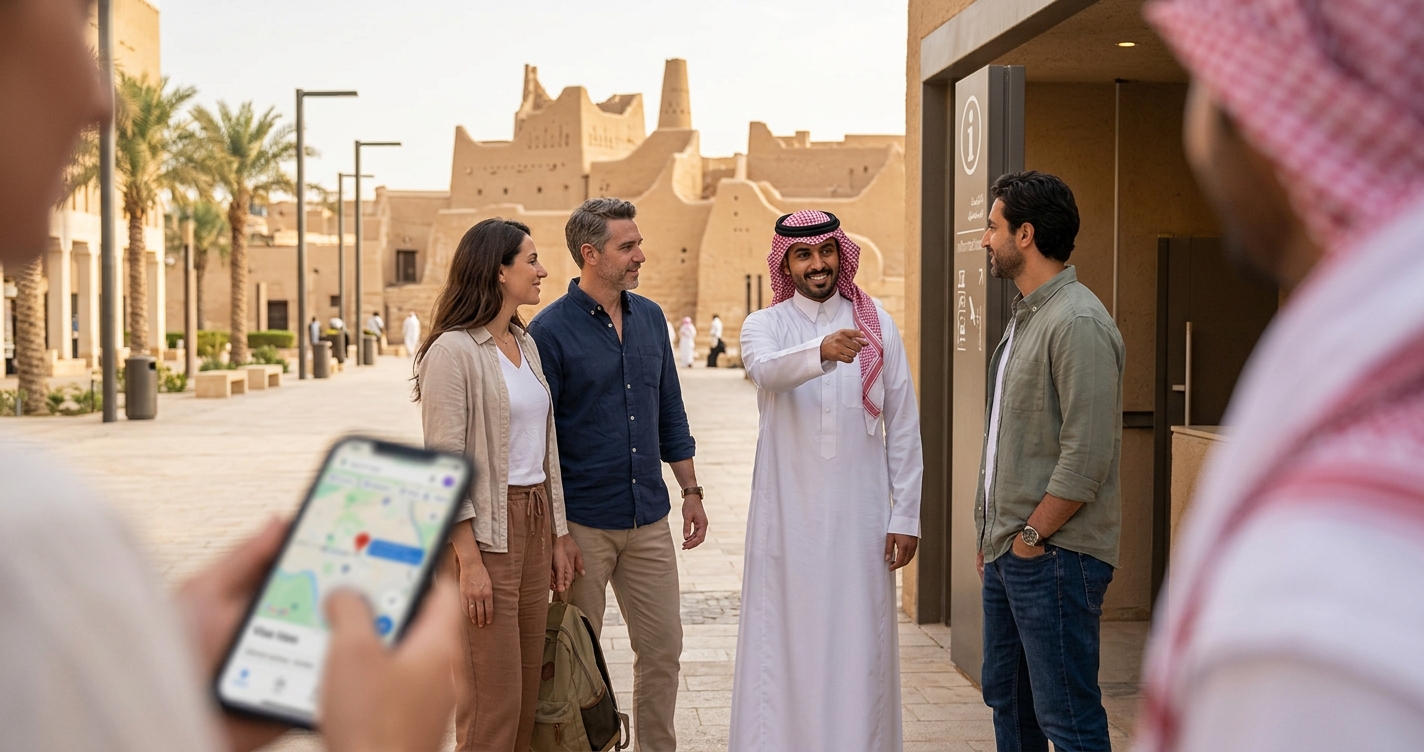
You’ve booked flights to a country that most people still associate with closed borders and strict rules. Your family has questions. Your friends think you’re crazy. And you’re wondering if is saudi arabia safe for tourists is even the right question to be asking.
The short answer: Saudi Arabia is safer than most Western cities when it comes to violent crime. The real challenges aren’t what you expect.
Saudi Arabia has extremely low crime rates and heavy security presence, making physical safety a non-issue for most tourists. The actual risks involve cultural misunderstandings, traffic accidents, and extreme heat. Women can travel safely, but must follow modest dress codes. Political tensions exist but rarely affect tourists in major cities. Most safety concerns stem from unfamiliarity rather than actual danger.
What the Crime Statistics Actually Tell Us
Saudi Arabia’s violent crime rate sits at 0.8 per 100,000 people. That’s lower than Japan, Switzerland, and Singapore.
Petty theft exists but remains rare. Pickpocketing happens occasionally in crowded souks. Car break-ins occur in parking lots. But muggings, armed robberies, and street violence are almost unheard of.
The reason is simple: punishments are severe, enforcement is strict, and surveillance is everywhere.
You’ll see security cameras on nearly every street corner. Police presence is visible and constant. Religious police (Mutawa) have been stripped of most enforcement powers since 2016, but cultural expectations still run deep.
Here’s what that means for you:
- Leave your laptop in a café to use the bathroom? It’ll probably still be there.
- Walk alone at night in Riyadh or Jeddah? Statistically safer than doing the same in London or New York.
- Worry about violent crime? Not unless you’re actively looking for trouble.
The flip side: if you break laws (even unknowingly), consequences are harsh. Alcohol possession, drug use, and public displays of affection can lead to arrest, deportation, or worse.
The Real Risks Nobody Talks About
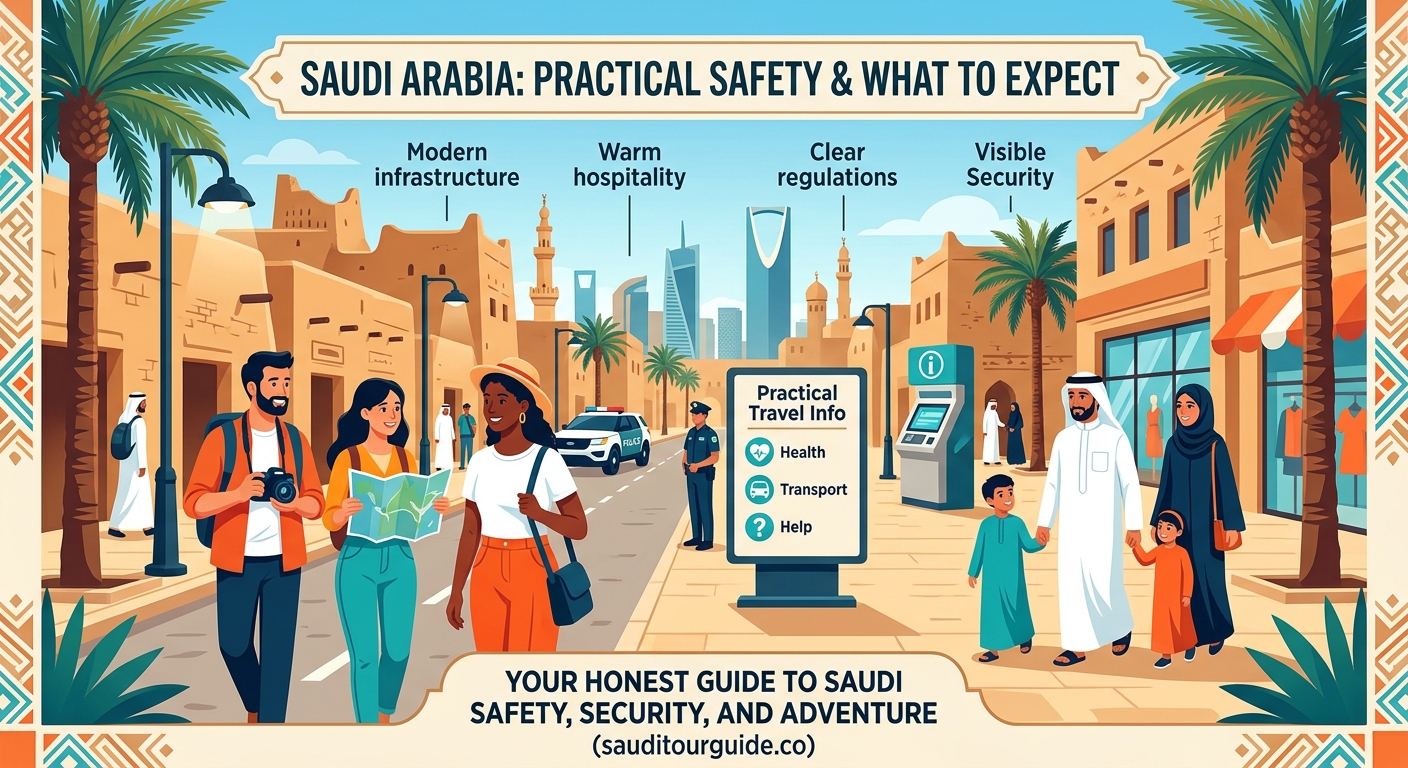
Traffic accidents kill more tourists in Saudi Arabia than any other cause.
Driving culture here is aggressive. Speed limits are suggestions. Lane discipline doesn’t exist. Drivers weave between lanes, tailgate at 140 km/h, and treat red lights as optional after midnight.
If you’re renting a car in Saudi Arabia, understand that you’re entering one of the world’s most dangerous driving environments.
Road Safety by the Numbers
| Risk Factor | Saudi Arabia | Global Average |
|---|---|---|
| Traffic deaths per 100,000 | 27.4 | 18.2 |
| Seatbelt usage rate | 68% | 82% |
| Speed-related accidents | 41% | 29% |
Other overlooked risks:
- Heat exhaustion: Summer temperatures hit 50°C (122°F). Dehydration happens faster than you think.
- Food safety: Street food is generally safe, but tap water isn’t for drinking.
- Medical emergencies: Healthcare is excellent in cities, but remote areas have limited facilities.
What Women Need to Know
This is the question everyone asks: is Saudi Arabia safe for female tourists?
Yes, but with conditions.
Women can now travel without a male guardian. You can stay in hotels alone, rent cars, and move freely. These changes only happened in 2019, so some older locals still find it unusual.
Physical safety isn’t the concern. Sexual harassment rates are lower than in many European countries. Groping, catcalling, and aggressive behavior toward women are rare and socially unacceptable.
The real challenges are cultural:
- Dress codes: You must wear an abaya (loose robe) in most public spaces. Hair covering is optional for non-Muslims in major cities, but required in conservative areas.
- Gender segregation: Some restaurants have family sections (where women can eat) and bachelor sections (men only).
- Staring: Foreign women attract attention. It’s usually curiosity, not hostility, but can feel uncomfortable.
“I traveled solo through Riyadh, AlUla, and Jeddah for two weeks. Not once did I feel unsafe. The biggest adjustment was the constant staring and questions about why I was traveling alone.” – Emma, Australian travel blogger
Understanding what to wear in Saudi Arabia before you arrive will save you stress and unwanted attention.
Regional Security Differences
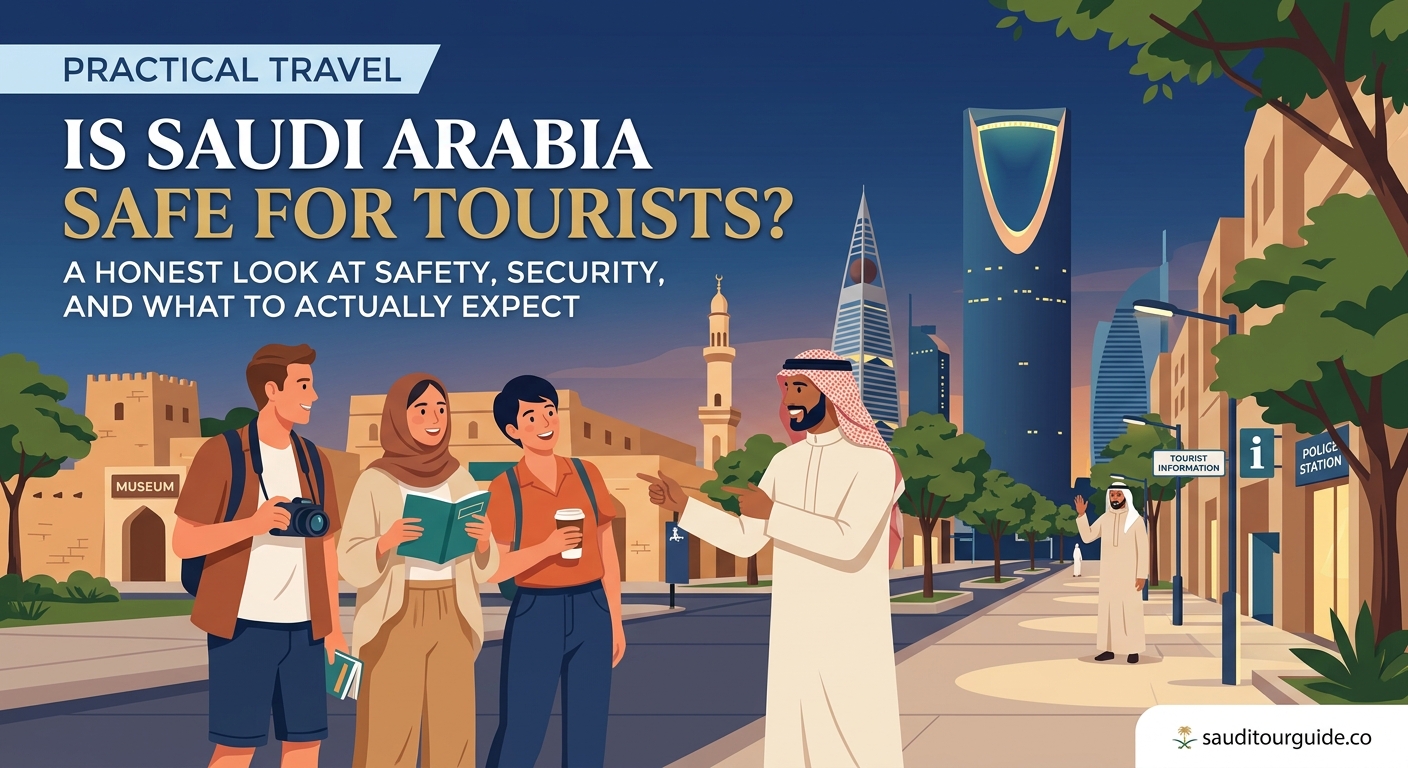
Saudi Arabia isn’t uniformly safe everywhere.
Safe zones for tourists:
- Riyadh (capital city)
- Jeddah (Red Sea coast)
- AlUla (archaeological sites)
- Asir Region (mountains and national parks)
- Dammam and Eastern Province (business centers)
- Red Sea coastal resorts
Areas to avoid:
- Yemen border (active conflict zone)
- Southern border regions near Jizan (occasional cross-border attacks)
- Areas within 80 km of the Yemen border
The government restricts travel to border regions anyway. You won’t accidentally wander into a dangerous area because checkpoints and permits control access.
Most tourists stick to the main cities and archaeological sites. These areas have heavy security presence and zero tolerance for anything that might harm the tourism initiative.
If you’re planning to visit hidden gems in Saudi Arabia, check current travel advisories for specific regions.
Cultural Mistakes That Create Problems
Physical danger is rare. Cultural violations are common.
Here’s what gets tourists into trouble:
Photography restrictions: Don’t photograph government buildings, military installations, airports, or women without permission. The last one is especially important. Taking photos of Saudi women (even in public) can lead to arrest.
Alcohol and drugs: Zero tolerance. Bringing alcohol into the country or attempting to buy it will result in immediate deportation at minimum. Drug possession carries severe penalties including execution.
Public behavior: No kissing, hugging, or hand-holding between unmarried couples. No loud music. No public displays of affection. What’s normal in your home country might be illegal here.
Religious sensitivity: Non-Muslims cannot enter Mecca or Medina’s holy sites. Eating, drinking, or smoking in public during Ramadan daylight hours is prohibited and can result in fines.
Common Cultural Violations
| Behavior | Consequence | How to Avoid |
|---|---|---|
| Public affection | Police warning or fine | Keep interactions platonic in public |
| Improper dress | Denied entry to sites | Wear abaya, cover shoulders and knees |
| Photographing people | Confrontation or arrest | Always ask permission first |
| Drinking alcohol | Arrest and deportation | Don’t bring it, don’t seek it |
| Disrespecting Islam | Legal charges | Be respectful in religious discussions |
Health and Medical Safety
Healthcare quality in Saudi Arabia rivals Western standards in major cities.
Private hospitals in Riyadh and Jeddah offer excellent care. Many doctors trained in the US or UK. Medical technology is modern. Emergency response is fast in urban areas.
But medical care is expensive without insurance. A simple emergency room visit can cost $500. Serious treatment runs into thousands.
Travel insurance is mandatory for visa approval. Make sure yours covers:
- Medical evacuation
- Emergency hospitalization
- Repatriation
- Adventure activities (if you’re doing Red Sea diving or desert safaris)
Health risks to prepare for:
- Dehydration and heat stroke (especially May through September)
- Respiratory issues from dust storms
- Food poisoning from unfamiliar cuisine
- MERS-CoV (rare but present, especially around camels)
Vaccinations aren’t required for most visitors, but hepatitis A, typhoid, and routine vaccines are recommended.
How to Stay Safe as a Tourist
Follow these practical steps to minimize risks:
- Register with your embassy: Most countries offer traveler registration programs that help locate you in emergencies.
- Keep digital copies of documents: Store passport, visa, and insurance details in cloud storage.
- Download offline maps: Cell coverage is excellent in cities but spotty in deserts.
- Learn basic Arabic phrases: “Shukran” (thank you), “Min fadlak” (please), and “La afham” (I don’t understand) go a long way.
- Dress conservatively from the airport: Don’t wait until you’re in the city to follow dress codes.
- Use registered taxis or ride apps: Uber and Careem operate in major cities and are safer than unmarked taxis.
- Stay hydrated: Carry water everywhere, especially if you’re exploring the Empty Quarter.
What to Do If Something Goes Wrong
Despite precautions, problems can happen.
For medical emergencies:
* Call 997 for ambulance
* Go to nearest private hospital for faster service
* Contact your embassy if you need help navigating the system
For police matters:
* Tourist police number: 1989
* Regular police: 999
* Keep calm and be respectful (arguing makes everything worse)
For lost documents:
* Report to local police immediately
* Contact your embassy for emergency travel documents
* File a report before leaving the country (you’ll need it for insurance claims)
Your embassy can help with:
- Lost or stolen passports
- Legal trouble (they can’t get you out of jail, but can ensure fair treatment)
- Medical emergencies
- Natural disasters or civil unrest
The Visa Process and Entry Requirements
Getting into Saudi Arabia requires planning.
The tourist e-visa launched in 2019 made entry much easier. Citizens from 49 countries can apply online. The process takes about 30 minutes and costs around $135 including insurance.
Applying for your Saudi Arabia e-visa is straightforward, but rejections happen if you have:
- Israeli stamps in your passport
- Previous visa violations in Gulf countries
- Criminal records
- Incomplete applications
The visa is valid for one year and allows multiple entries of up to 90 days each.
Some travelers wonder about extending your tourist visa once they’re in the country. It’s possible but involves bureaucracy.
What Other Travelers Report
Real experiences from tourists paint a consistent picture.
Most visitors are surprised by how safe they feel. The biggest complaints aren’t about danger but about:
- Difficulty finding vegetarian food
- Confusion about prayer times (everything closes five times daily for 20-30 minutes)
- Lack of nightlife or entertainment options
- Strict gender segregation in some spaces
- Heat during summer months
Positive surprises include:
- Generous hospitality from locals
- Pristine archaeological sites without crowds
- Modern infrastructure and cleanliness
- Unique coffee traditions and cultural experiences
- Affordable accommodation and food
The country is actively building its tourism infrastructure. New attractions open regularly. Service standards improve each year. But it’s still a work in progress.
If you’re trying to figure out how much a week in Saudi Arabia costs, budget more for experiences than safety precautions.
Comparing Saudi Arabia to Other Middle Eastern Destinations
Context matters when evaluating safety.
Saudi Arabia is statistically safer than:
- Egypt (higher crime rates, more tourist scams)
- Jordan (generally safe but some border instability)
- Lebanon (political instability, infrastructure issues)
- Iraq (active conflict zones)
It’s comparable to:
- UAE (similar low crime, similar cultural restrictions)
- Oman (slightly more relaxed culturally, similar safety levels)
- Kuwait (similar conservative culture, similar safety)
The main difference: Saudi Arabia has stricter cultural enforcement but also more tourist infrastructure investment. The government has staked significant resources on making tourism work.
Projects like NEOM show how seriously the country takes its tourism future.
Making Your Decision
Is Saudi Arabia safe for tourists? The data says yes for physical safety, with caveats for cultural adaptation.
You’re more likely to face challenges from:
- Heat and dehydration
- Traffic accidents
- Cultural misunderstandings
- Strict laws around behavior and dress
You’re unlikely to face:
- Violent crime
- Terrorism targeting tourists
- Harassment or assault
- Scams or theft
The country is safe in the traditional sense. But it requires cultural flexibility that some travelers aren’t comfortable with.
If you can respect local customs, dress modestly, and avoid alcohol and public affection, you’ll find Saudi Arabia to be one of the safest countries you’ve visited.
The real question isn’t whether it’s safe. It’s whether you’re ready to experience a culture that’s fundamentally different from Western norms.
Your Safety Checklist Before Booking
Before you commit to a Saudi Arabia trip, honestly assess:
- Can you follow strict dress codes every day?
- Can you go without alcohol for your entire trip?
- Are you comfortable with gender segregation in some spaces?
- Can you handle extreme heat if traveling in summer?
- Do you have comprehensive travel insurance?
- Have you researched cultural norms beyond basic safety?
If you answered yes to all of these, Saudi Arabia offers experiences you can’t get anywhere else. Ancient archaeological sites rival Petra. The Asir Region offers mountain scenery that surprises everyone. Red Sea beaches compete with the Maldives.
The country is safe. The culture is strict. The experiences are unforgettable.
Your job is to decide if the tradeoffs align with your travel style and comfort level. For many travelers, they absolutely do.