
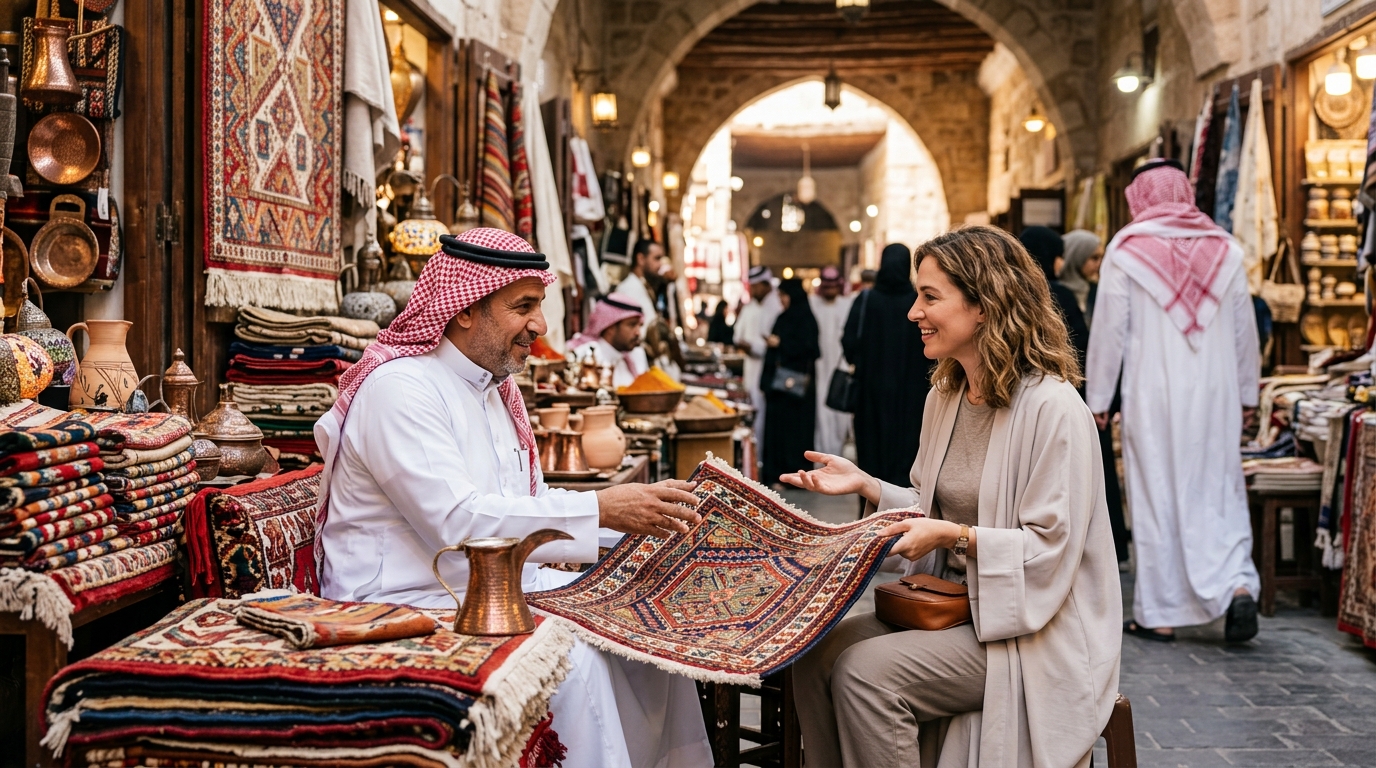
Walking through a Saudi souq for the first time can feel overwhelming. The colors, the scents, the calls of vendors competing for your attention. You spot a beautiful handwoven rug, but the price seems high. Should you negotiate? How much is too much to ask off? Will you offend the seller?
These questions stop many travelers from getting the authentic souq experience they deserve. Haggling isn’t just accepted in Saudi traditional markets. It’s expected. But there’s a right way and a wrong way to do it.
Haggling in Saudi souqs follows cultural rules that reward respect and patience. Start at 50-60% of the asking price for most items, never negotiate aggressively, and know which markets welcome bargaining versus those with fixed prices. Understanding local customs, building rapport with sellers, and recognizing quality goods will help you secure fair deals while honoring Saudi hospitality traditions that have shaped marketplace interactions for centuries.
Understanding where haggling is welcome
Not every market in Saudi Arabia operates the same way.
Traditional souqs in Riyadh, Jeddah, and Dammam expect negotiation. These historic marketplaces have operated for generations on the back-and-forth dance between buyer and seller. You’ll find them in areas like Jeddah’s historic Al-Balad district, where vendors sell everything from spices to traditional clothing.
Modern shopping malls have fixed prices. The same goes for chain stores and most restaurants. You won’t haggle at a coffee shop or a clothing boutique in a contemporary shopping center.
Gold and jewelry souqs follow their own rules. Prices for gold are typically based on daily market rates plus a small making charge. You can negotiate the making charge, but not the gold price itself.
Here’s where you should and shouldn’t negotiate:
- Do haggle: Traditional souqs, spice markets, textile vendors, antique shops, handicraft stalls
- Don’t haggle: Malls, supermarkets, restaurants, modern boutiques, government-run shops
- Partial haggling: Gold souqs (making charges only), carpet shops (some flexibility), tourist areas (limited room)
Starting the conversation the right way
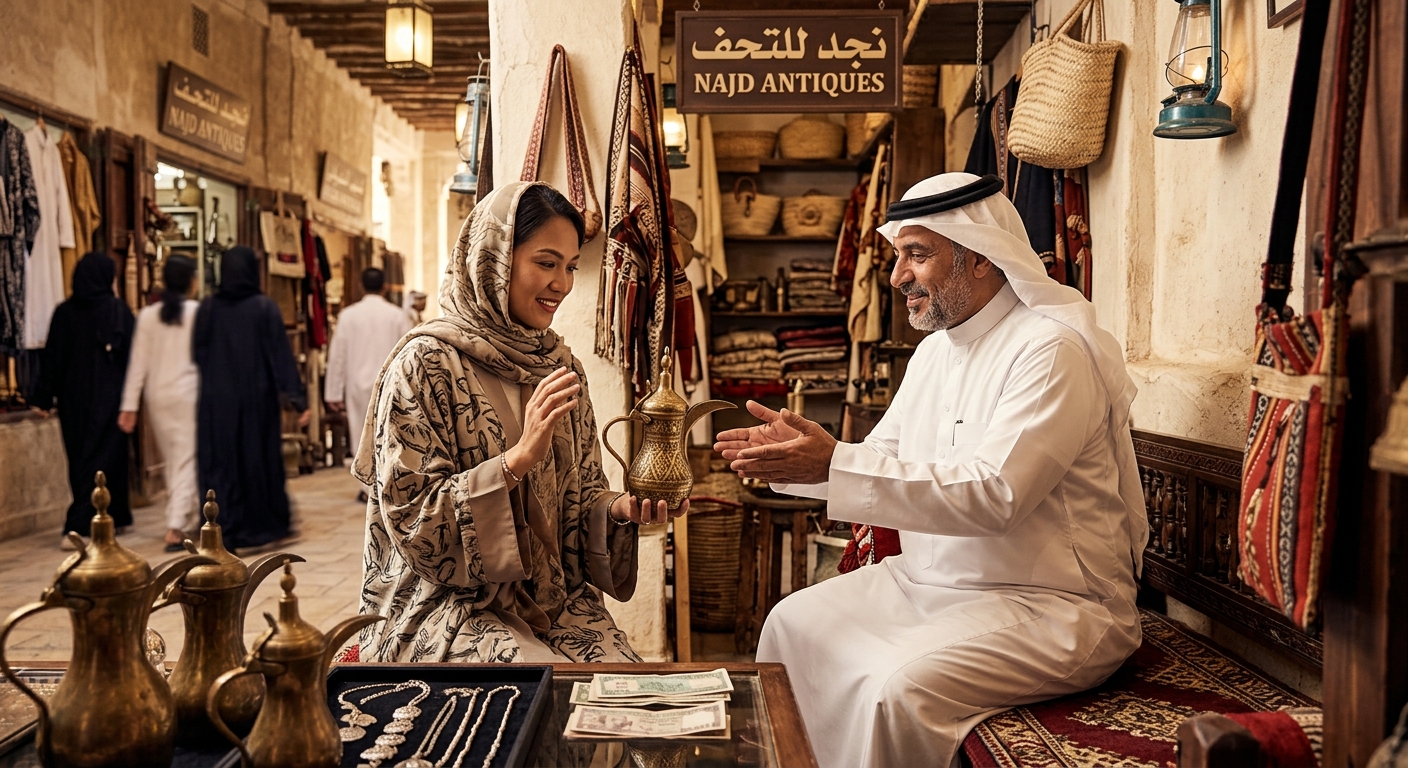
Bargaining begins before you mention price.
Greet the shopkeeper properly. A simple “As-salamu alaykum” (peace be upon you) goes a long way. The vendor will respond “Wa alaykumu as-salam” (and upon you, peace). This exchange isn’t just politeness. It sets the tone for a respectful transaction.
Take time to browse. Don’t rush straight to the item you want. Show interest in several things. Ask questions about origin, materials, and craftsmanship. This demonstrates you’re a serious buyer, not just a tourist killing time.
Accept tea or coffee if offered. Saudi hospitality culture means vendors often offer refreshments to potential customers. Accepting builds rapport. You’re not obligated to buy, but the gesture creates goodwill.
Let the seller quote first. Never ask “what’s your best price?” right away. Instead, ask “how much is this?” The opening price is almost always inflated, sometimes by 100% or more. This gives both parties room to negotiate.
“In Saudi culture, haggling is a social interaction, not a battle. The best deals come when both parties enjoy the conversation and feel they’ve won something.” — Ahmed Al-Rashid, third-generation souq merchant in Riyadh
The step-by-step negotiation process
Follow this sequence for the best results:
-
Ask the price and show mild surprise. Your reaction should communicate “that’s higher than I expected” without being rude. A slight pause works well.
-
Counter at 50-60% of the asking price. If the vendor says 200 riyals, offer 100-120. This isn’t insulting in souq culture. It’s the expected opening move.
-
Let the seller counter. They’ll come down, but not to your price. They might say 180 riyals. This is progress.
-
Increase your offer slightly. Move to 130 riyals. The gap is narrowing.
-
Continue in smaller increments. Each round, both parties move closer. The vendor drops to 160, you go to 145.
-
Know when to walk away. If you’re not close after 3-4 rounds, thank them and start to leave. Often, this triggers a final, better offer.
-
Close the deal or move on. If they chase you with a price you like, accept it. If not, visit other shops. You can always return.
The final price typically lands at 60-75% of the original asking price for most goods.
What you can realistically negotiate
Different items have different flexibility:
| Item Type | Typical Discount Range | Negotiation Difficulty |
|---|---|---|
| Textiles and fabrics | 30-50% off asking price | Easy |
| Spices and dried goods | 20-30% off asking price | Moderate |
| Handicrafts and souvenirs | 40-60% off asking price | Easy |
| Traditional clothing | 25-40% off asking price | Moderate |
| Antiques and collectibles | 30-50% off asking price | Difficult |
| Gold jewelry (making charge) | 10-25% off making charge | Moderate |
| Perfumes and oud | 20-35% off asking price | Easy to Moderate |
Vendors have more room to negotiate on items with unclear market values. A handmade item has flexible pricing. Commodity goods like saffron or dates have less wiggle room because sellers know you can compare prices easily.
Cultural mistakes that kill your negotiating power
Certain behaviors mark you as an inexperienced haggler.
Being aggressive or confrontational backfires. Raised voices, angry gestures, or accusatory language (“you’re trying to cheat me!”) end negotiations immediately. Saudi culture values dignity and respect above all.
Comparing to other shops too directly can offend. Instead of saying “the shop next door sells this for half,” try “I’ve seen similar items at different prices.” The first approach questions the vendor’s integrity. The second simply states market awareness.
Negotiating for small amounts wastes everyone’s time. If you’ve agreed on 95 riyals, don’t fight over the last 5. That final concession often comes as a gesture of goodwill anyway, but demanding it makes you look petty.
Touching items roughly or handling merchandise carelessly shows disrespect. Especially with delicate goods like textiles or ceramics, treat items as if they’re already yours.
Using your phone to look up prices mid-negotiation is considered rude. Do your research before entering the souq, not during the conversation.
Reading the seller’s signals
Experienced vendors communicate through subtle cues.
If a shopkeeper starts wrapping an item before you’ve agreed on price, they’re confident you’ll accept their last offer. This is a closing technique.
When they say “this is my final price” early in negotiation, it usually isn’t. But if they say it after several rounds and start serving another customer, they mean it.
A vendor who pulls out a calculator and shows you numbers is signaling they’re ready to get serious. This usually happens when you’re close to an acceptable price.
If they offer to throw in a small extra item instead of lowering the price further, you’re at their bottom line. The add-on costs them less than another price reduction.
Watch for the tea moment. If negotiation stalls and the vendor offers tea, they’re resetting the conversation. This is a good sign. It means they want to make the sale but need a face-saving way to come down further.
Building relationships for better deals
Regular customers get better prices.
If you’re living in Saudi Arabia or visiting for an extended period, developing relationships with specific vendors pays off. Return to the same shops. Remember names. Ask about family.
Buy smaller items first. A vendor who sells you spices or small souvenirs today will offer better prices on that expensive carpet tomorrow. You’ve proven you’re a real customer.
Bring friends on return visits. Saudi culture rewards those who bring business. If you refer other customers, vendors remember.
Shop during slow periods. Late morning or early afternoon, when foot traffic is light, gives you more negotiating leverage. Vendors are more motivated to make sales when the souq is quiet.
Learn basic Arabic phrases beyond greetings. Even simple words like “ghali” (expensive) or “mumtaz” (excellent) show effort and respect. This cultural investment translates to better prices.
Special considerations for tourist areas
Markets near major attractions operate differently.
Vendors in tourist-heavy locations like those near historical sites expect less sophisticated haggling. They’re used to visitors who don’t know local customs. This can work for or against you.
Prices start even higher in tourist souqs. The initial quote might be 150-200% above fair value instead of the usual 100%. Adjust your counter-offer accordingly.
These vendors have less patience for extended negotiation. They know another tourist will arrive in minutes. Keep your haggling efficient.
Quality can be lower in tourist markets. Vendors stock items specifically for visitors who won’t return. Inspect goods carefully. Check stitching on textiles, smell spices for freshness, and examine craftsmanship closely.
Consider shopping where locals shop instead. Ask your hotel staff or local guides where they buy similar items. You’ll find better quality and prices.
Items worth the negotiation effort
Some purchases justify more time and energy.
Carpets and rugs represent significant investments. A quality Persian or Turkish rug can cost thousands of riyals. Spend 30-45 minutes on these negotiations. Ask about origin, knot count, materials, and age. Request certificates of authenticity for expensive pieces.
Traditional thobes or abayas made from quality fabric deserve careful negotiation. These garments last years if well-made. Discuss fabric weight, stitching quality, and customization options.
Oud and perfumes vary wildly in quality and price. Natural oud oil costs exponentially more than synthetic versions. Take time to understand what you’re buying before negotiating price.
Antiques and collectibles require expertise. Unless you know the market well, bring a knowledgeable friend or hire a guide. The difference between a genuine antique and a clever reproduction can be thousands of riyals.
For everyday items like spices, dates, or simple souvenirs, keep negotiations brief and friendly. The time investment isn’t worth an extra 10 riyals off.
Payment and final transaction tips
How you pay affects your deal.
Cash gives you negotiating power. Vendors prefer cash because it avoids transaction fees and banking delays. Mention you’re paying cash when making your final offer. It might squeeze out another small discount.
Large bills can be problematic. Bring smaller denominations. A vendor might not have change for a 500 riyal note, creating awkward situations.
Count your change carefully but discreetly. Mistakes happen, usually unintentionally. Double-check without making a show of distrust.
Get receipts for valuable items. This matters for customs, warranties, and proving authenticity later.
Understand return policies before buying. Most souq sales are final. If you’re unsure about a purchase, clarify this before handing over money.
Seasonal and timing strategies
When you shop matters almost as much as how you haggle.
During Ramadan, souqs come alive at night but vendors are fasting during the day. Evening shopping means crowds and higher energy but also more competition among sellers. Daytime shopping when vendors are tired and fasting can yield better deals if you’re respectful and efficient.
Before major holidays like Eid, demand increases for traditional clothing, perfumes, and gifts. Vendors know this. Prices firm up. Shop well before or after these periods.
End of day often brings better deals. Vendors who haven’t met their daily targets become more flexible. The last hour before closing time can be golden.
Off-season for tourists means better prices. If you’re visiting during summer heat when fewer tourists brave the weather, vendors are more motivated.
Weekdays versus weekends matter too. Thursday and Friday see more local shoppers. Tuesday or Wednesday often have lighter traffic and more negotiating room.
Recognizing quality to negotiate fairly
You can’t negotiate well if you can’t judge value.
For textiles, check thread count and weave tightness. Hold fabric up to light. Loose weaves mean lower quality. Feel the weight. Heavier usually means better, especially for cotton and wool.
Spices should smell potent. Faded color indicates age and lost flavor. Saffron threads should be deep red with slight orange tips. If they’re mostly yellow, quality is poor.
Leather goods need flexibility and consistent color. Stiff leather or uneven dye jobs signal lower quality. Check stitching for evenness and strength.
Gold purity is marked by karat stamps. 18k, 21k, and 24k are common in Saudi markets. Know the daily gold price before shopping. Many vendors display current rates.
Understanding quality helps you negotiate from knowledge, not just hope. A vendor respects a customer who recognizes craftsmanship.
Making your souq experience memorable
The best souq visits combine smart shopping with cultural appreciation.
Budget time for wandering without buying. Not every market visit needs to be transactional. Sometimes the experience itself is the value. The sights, sounds, and smells of a traditional Saudi souq offer insights into daily life that no guidebook can match.
Photograph respectfully. Always ask permission before taking photos of vendors or their goods. Many will happily pose once you’ve built rapport. Some may ask you to buy something small in return. That’s fair.
Try local snacks and drinks from souq vendors. Fresh dates, traditional sweets, or Arabic coffee from market stalls cost little but add authenticity to your visit.
Learn the stories behind items. Many vendors love sharing the history and cultural significance of their goods. These conversations enrich your understanding and often lead to better deals because you’ve shown genuine interest.
Consider the broader context of your Saudi Arabia travel budget. Souq purchases can be affordable highlights if you negotiate well, but they shouldn’t dominate your spending unless shopping is your primary interest.
When walking away is winning
Sometimes the best negotiation ends without a purchase.
If you’ve reached an impasse and the price still feels wrong, leave politely. Thank the vendor for their time. You might find better elsewhere, or the same vendor might chase you with a better offer.
Walking away isn’t failure. It’s information gathering. You now know the market better. Visit three or four shops selling similar items before committing. This gives you price anchors and quality comparisons.
The practice itself has value. Each negotiation improves your skills. Even if you don’t buy today, you’re learning for tomorrow.
Remember that vendors negotiate dozens of times daily. They won’t take your departure personally. If you return later, they’ll usually welcome you back. Saudi hospitality culture means holding grudges over failed negotiations isn’t common.
Trust your instincts. If something feels off about the deal, the item, or the vendor, walk away. Souq shopping should feel exciting, not stressful.
Your souq negotiation skills will improve with practice
Your first haggling attempt might feel awkward. That’s normal.
Each conversation teaches you something. You’ll learn to read vendor signals better. You’ll develop a sense for fair prices. You’ll discover which phrases work and which fall flat.
Start small with low-stakes items. Practice on 20-riyal souvenirs before attempting to negotiate a 2,000-riyal carpet. Build confidence gradually.
Embrace the cultural exchange. Haggling in Saudi souqs isn’t just about saving money. It’s about participating in a tradition that connects you to centuries of marketplace culture. The relationships you build and the stories you collect often outlast the items you buy.
Approach each negotiation with respect, patience, and a genuine smile. These qualities matter more than any technique. Vendors respond to authenticity. Show real interest in their goods and their culture, and the prices will take care of themselves.
The souqs are waiting. Your bargaining adventure starts with a simple greeting and an open mind.