
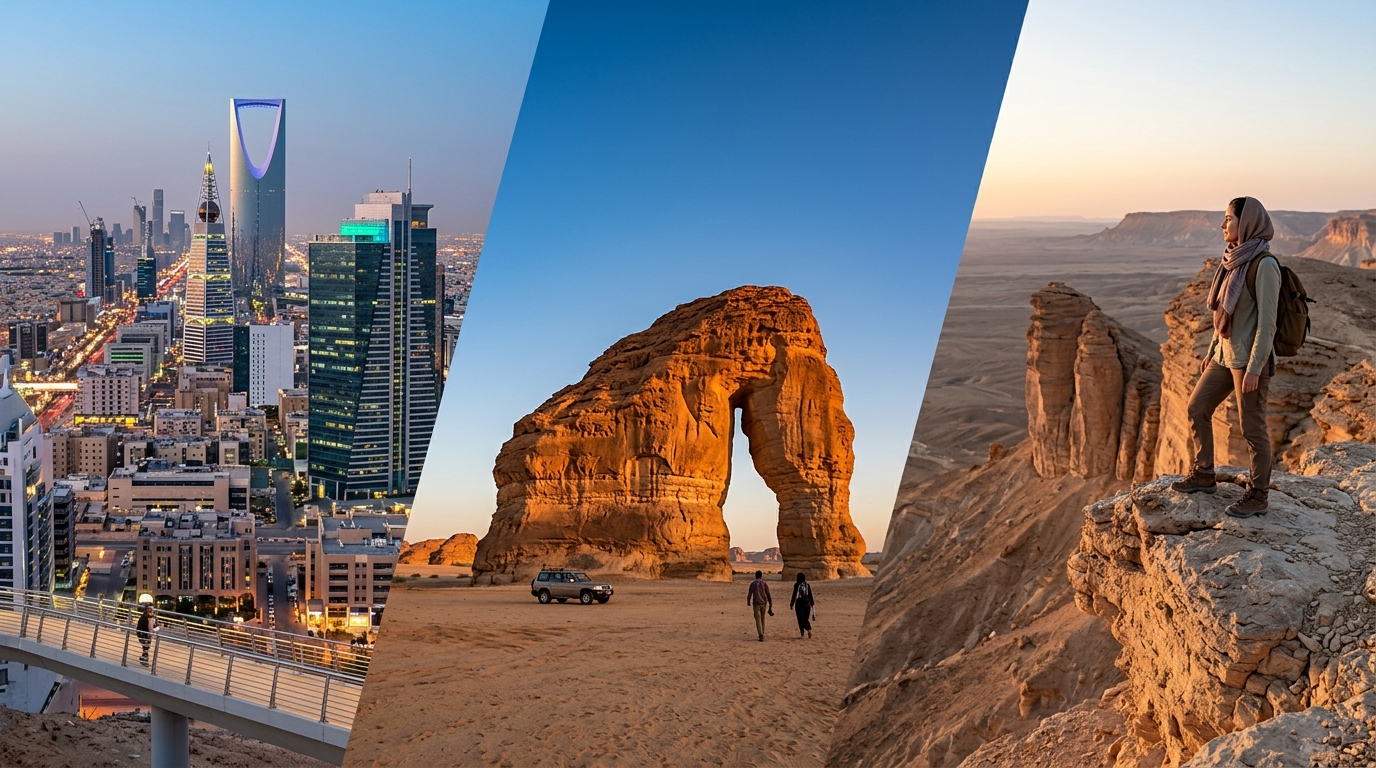
Planning your first trip to Saudi Arabia feels overwhelming when you’re staring at a map of a country nearly the size of Western Europe. You want to see ancient ruins, dramatic desert landscapes, and modern cities, but you only have seven days. The good news? A well-planned Saudi Arabia 7 day itinerary can give you a taste of everything that makes this newly opened kingdom so compelling.
This Saudi Arabia 7 day itinerary balances cultural landmarks in Riyadh, UNESCO heritage sites in AlUla, and natural wonders like the Edge of the World. You’ll experience modern Saudi life, ancient Nabataean tombs, and dramatic desert cliffs while learning practical tips for visas, transportation, dress codes, and budgeting. Perfect for first-time visitors seeking an authentic introduction to the kingdom.
Before You Go: Essential Preparation
Getting your paperwork sorted saves headaches later. Saudi Arabia’s e-visa system makes entry straightforward for citizens of 49 countries. The application takes about 10 minutes online, and approval usually arrives within 24 hours. You’ll need a passport valid for at least six months and a return ticket.
Budget around $1,200 to $2,500 per person for the week, depending on your accommodation choices. Mid-range hotels run $80 to $150 per night in Riyadh, while AlUla properties start higher due to limited options. Domestic flights between cities cost $100 to $200 each way.
Pack modest clothing that covers shoulders and knees. Women no longer need abayas, but loose, conservative outfits help you blend in and show respect. Bring sunscreen, a hat, and comfortable walking shoes. Desert temperatures swing wildly between day and night.
“The biggest mistake first-time visitors make is underestimating distances. Saudi Arabia is huge. Trying to see everything in one trip leaves you exhausted and missing the details that make each place special.”
Before booking anything, check if your visit coincides with Ramadan. Restaurant hours change dramatically, and some attractions adjust schedules. The kingdom transforms during this holy month, offering unique cultural experiences but requiring flexibility.
If you need more details on the application process, our guide on how to apply for your Saudi Arabia e-visa in under 10 minutes walks through every step.
Days 1-2: Riyadh’s Modern and Historic Contrasts
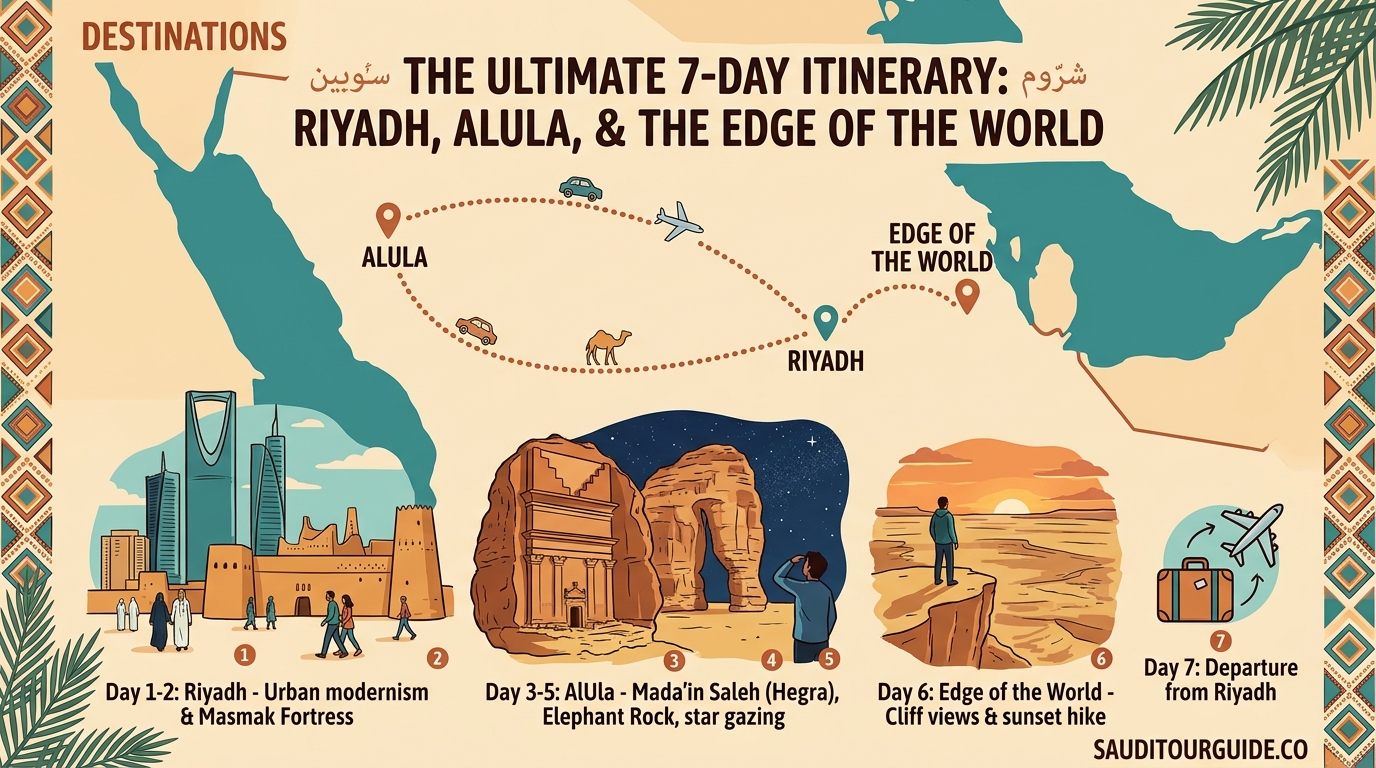
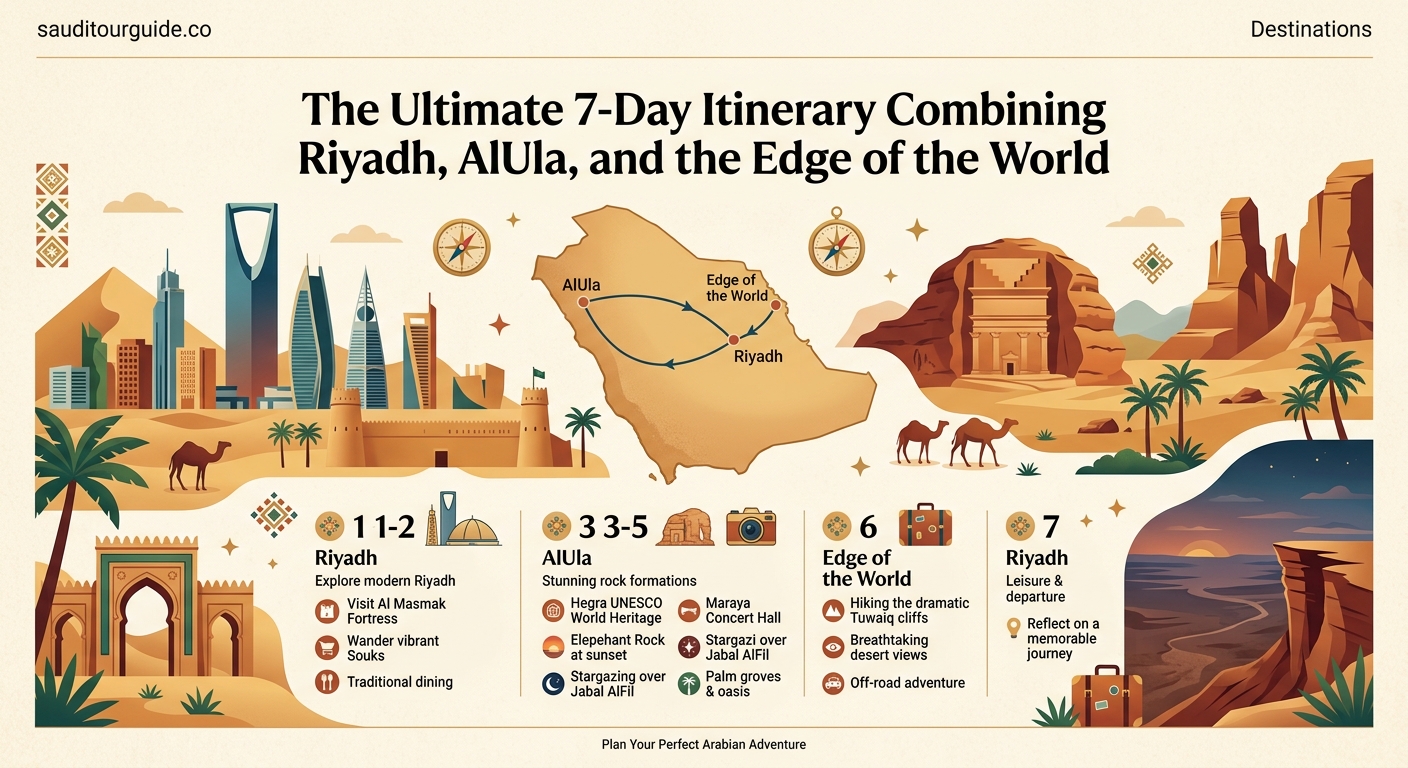
Land in Riyadh and spend your first afternoon adjusting to the time zone. The capital sprawls across the desert with gleaming skyscrapers next to traditional souqs. Start at the National Museum to understand Saudi history from prehistoric times through the formation of the modern kingdom. The exhibits flow chronologically, making it easy to grasp context before seeing other sites.
Day two begins at Diriyah, the birthplace of the Saudi state. This UNESCO World Heritage site sits just outside central Riyadh. Mud-brick buildings rise from the valley floor, restored to show how the first Saudi dynasty lived in the 1700s. Walk the narrow alleyways early before heat makes exploration uncomfortable.
After lunch, visit the Masmak Fortress in downtown Riyadh. This clay and mud-brick fort played a crucial role when Abdulaziz Ibn Saud recaptured Riyadh in 1902. The spear mark on the gate from that battle remains visible. The museum inside displays weapons, photographs, and maps documenting the unification of Saudi Arabia.
Spend your evening at Kingdom Centre. The 99-story tower dominates Riyadh’s skyline. Take the elevator to the Sky Bridge observation deck for sunset views across the city. The shopping mall below offers international brands and local designers.
For dinner, head to the Najd Village restaurant for traditional Saudi cuisine. You’ll sit on floor cushions while servers bring out kabsa, mandi, and other regional specialties. The atmosphere feels authentic without being touristy.
Where to Stay in Riyadh
- Budget: Ibis Riyadh Olaya Street (clean, central location)
- Mid-range: Narcissus Hotel & Residence (spacious rooms, good breakfast)
- Luxury: Four Seasons Hotel Riyadh at Kingdom Centre (connected to the tower, exceptional service)
Day 3: Edge of the World Adventure
Wake up early for the drive to the Edge of the World. This dramatic escarpment sits about 90 kilometers northwest of Riyadh. The cliffs drop 300 meters straight down, revealing an ancient ocean floor that dried up millions of years ago. The views stretch endlessly across the desert.
Most visitors hire a driver with a 4×4 vehicle since the final approach requires off-road capability. Tours typically cost $80 to $150 per person and include pickup from your hotel around 7:00 AM. The drive takes about 90 minutes on paved roads, then another 30 minutes on rough desert tracks.
Bring plenty of water, snacks, and sun protection. No facilities exist at the site. The hike to the best viewpoints takes 20 to 30 minutes over rocky terrain. Wear sturdy shoes with good grip.
The landscape feels otherworldly. Acacia trees dot the clifftops, and if you’re lucky, you might spot camels wandering below. Stay back from the edge since no barriers exist. The drop is sheer and unforgiving.
Plan to spend two to three hours at the site. Most tours return to Riyadh by early afternoon, giving you time to rest before your evening flight to AlUla. If you want more details about what to expect, check out our article on hiking the Edge of the World.
| Time | Activity | Duration |
|---|---|---|
| 7:00 AM | Hotel pickup | 30 min |
| 9:00 AM | Arrive at Edge of the World | 2-3 hours |
| 12:00 PM | Return drive to Riyadh | 2 hours |
| 3:00 PM | Rest at hotel | 3 hours |
| 6:00 PM | Flight to AlUla | 2 hours |
Days 4-5: AlUla’s Ancient Wonders
AlUla feels like stepping into another era. This northwestern region holds some of Arabia’s most significant archaeological treasures. The compact size means you can see major sites without exhausting yourself.
Start day four at Hegra, Saudi Arabia’s first UNESCO World Heritage site. The Nabataeans carved over 100 monumental tombs into sandstone outcrops between the 1st century BC and 1st century AD. These same people built Petra in Jordan, but Hegra receives a fraction of the visitors.
Book your Hegra tickets in advance through the Experience AlUla website. Timed entry slots control crowds. The site opens at 9:00 AM, and morning visits offer the best light for photography. A guided tour is mandatory and included in your ticket price.
The Qasr al-Farid tomb stands alone in the desert, its facade rising 22 meters high. The symmetry and detail of the carving remain stunning after 2,000 years. Your guide explains Nabataean burial customs and the symbolism in the decorative elements.
After Hegra, visit the old town of AlUla. Abandoned in the 1980s when residents moved to modern housing, the mud-brick buildings now form an open-air museum. Climb to the hilltop fortress for panoramic views of the oasis and surrounding rock formations.
Day five takes you to Dadan and Jabal Ikmah. Dadan served as the capital of the Dadanite and Lihyanite kingdoms. Stone lion statues guard the ancient city. Nearby Jabal Ikmah contains hundreds of inscriptions in various ancient languages, earning it the nickname “open library.”
The rock formations around AlUla create natural sculptures. Elephant Rock (Jabal AlFil) is a popular sunset spot. The 50-meter-high formation looks exactly like an elephant with its trunk touching the ground. Small cafes nearby serve Arabic coffee while you watch the sky change colors.
AlUla Accommodation Options
AlUla’s hotel scene caters to upscale travelers. Budget options remain limited. Book well in advance during peak season (October through March).
- Mid-range: Shaden Resort (comfortable chalets, pool, desert views)
- Luxury: Habitas AlUla (eco-luxury tents, stunning design, excellent restaurant)
- Ultra-luxury: Banyan Tree AlUla (private villas, spa, dramatic canyon setting)
Day 6: AlUla to Riyadh
Catch a morning flight back to Riyadh. You’ll have most of the day to see sites you missed earlier or do some shopping. The Souq Al Zal offers traditional goods like dates, spices, and handicrafts. Vendors expect bargaining, so start at half the asking price and negotiate from there.
The Boulevard Riyadh City entertainment district comes alive in the evening. This sprawling complex features restaurants, shops, and entertainment venues. During cooler months, outdoor concerts and cultural events happen regularly. The atmosphere feels festive and family-friendly.
For a taste of local life, visit the Al Masmak Souq area after sunset. Families stroll through the pedestrian streets, stopping for ice cream or fresh juice. Small restaurants serve shawarma, falafel, and other street food favorites.
If you’re interested in Saudi coffee culture, many traditional cafes in the old city center serve qahwa (Arabic coffee) with dates. The ritual of coffee service carries deep cultural significance. Our guide to Saudi coffee traditions explains the etiquette and customs.
Day 7: Final Riyadh Experiences and Departure
Your last day depends on flight times. If you’re leaving in the evening, you have time for a few more activities. The King Abdullah Park offers green space in the middle of the city. Families picnic here, and the musical fountain show draws crowds after dark.
For art lovers, the Naila Art Gallery showcases contemporary Saudi and Middle Eastern artists. The exhibitions change regularly, highlighting the kingdom’s growing creative scene. Entry is free, and the space feels intimate and thoughtfully curated.
The Riyadh Season (October through March) brings international performers, sporting events, and cultural festivals. Check what’s happening during your visit. Events range from Formula E races to opera performances to food festivals.
Before heading to the airport, stock up on dates, Arabic coffee, and traditional textiles as gifts. The Dates Market near the old city has hundreds of varieties at prices far below what you’d pay elsewhere.
Transportation Between Cities
Domestic flights connect Riyadh and AlUla multiple times daily. Saudia and flynas operate most routes. Book directly through airline websites for the best prices. Flights take about two hours and cost $100 to $200 each way.
Driving between Riyadh and AlUla takes about 10 hours through desert highways. Most first-time visitors prefer flying to maximize their limited time. If you’re considering a road trip for future visits, our guide to renting a car in Saudi Arabia covers requirements and tips.
Taxis and ride-sharing apps like Uber and Careem work well in Riyadh. AlUla requires either rental cars or arranged transportation through your hotel since distances between sites are significant.
What This Itinerary Misses
Seven days means making tough choices. This itinerary skips Jeddah’s historic Al-Balad district and Red Sea coast. The Asir region’s green mountains and traditional villages deserve their own trip. The Empty Quarter’s endless dunes require multiple days to appreciate properly.
Think of this week as an introduction. You’ll leave with enough knowledge to plan a longer return visit focusing on specific interests. Beach lovers might spend a week along the Red Sea. History enthusiasts could dedicate two weeks to archaeological sites. Adventure seekers have endless options in the mountains and deserts.
If you’re curious about what else the kingdom offers, browse our collection of hidden gems in Saudi Arabia for inspiration.
Common Mistakes to Avoid
-
Underpacking modest clothing: You’ll feel uncomfortable and draw unwanted attention if your outfits are too revealing. When in doubt, cover more.
-
Skipping travel insurance: Medical care is excellent but expensive for foreigners. A week of coverage costs $30 to $50 and provides peace of mind.
-
Ignoring prayer times: Shops and restaurants close for 15 to 30 minutes during each of the five daily prayers. Plan meals and shopping around these breaks.
-
Forgetting cash: While cards work in cities, smaller shops and desert tour operators prefer cash. ATMs are widely available in Riyadh and AlUla.
-
Overscheduling: Desert heat drains energy faster than you expect. Build in rest time, especially during midday hours.
Understanding local customs helps interactions go smoothly. Our article on how to greet and interact with locals covers essential etiquette.
Budget Breakdown by Travel Style
| Category | Budget | Mid-Range | Luxury |
|---|---|---|---|
| Accommodation (6 nights) | $480 | $900 | $2,400 |
| Domestic flights (2) | $200 | $250 | $400 |
| Tours and entrance fees | $300 | $400 | $600 |
| Food and drinks | $200 | $400 | $800 |
| Transportation (local) | $100 | $150 | $300 |
| Total per person | $1,280 | $2,100 | $4,500 |
These estimates assume double occupancy for hotels. Solo travelers pay more for single rooms. Prices fluctuate based on season, with November through February commanding premium rates.
For a detailed cost analysis, our breakdown of how much a week in Saudi Arabia really costs examines expenses across different travel styles.
Making the Most of Your Week
This Saudi Arabia 7 day itinerary balances iconic landmarks with authentic experiences. You’ll see ancient ruins, dramatic natural wonders, and modern Saudi life. The pace allows for spontaneity without feeling rushed.
The kingdom’s tourism infrastructure improves monthly. New hotels open, more sites become accessible, and regulations continue evolving. What felt impossible five years ago is now straightforward for independent travelers.
Start planning now. Book your flights and apply for your visa. Research what you want to see most and adjust this itinerary to match your interests. Saudi Arabia rewards curious travelers with experiences unlike anywhere else in the world.
Your week here plants seeds for deeper understanding. You’ll return home with stories about a country most people only know through headlines. The real Saudi Arabia is more complex, welcoming, and fascinating than stereotypes suggest.