
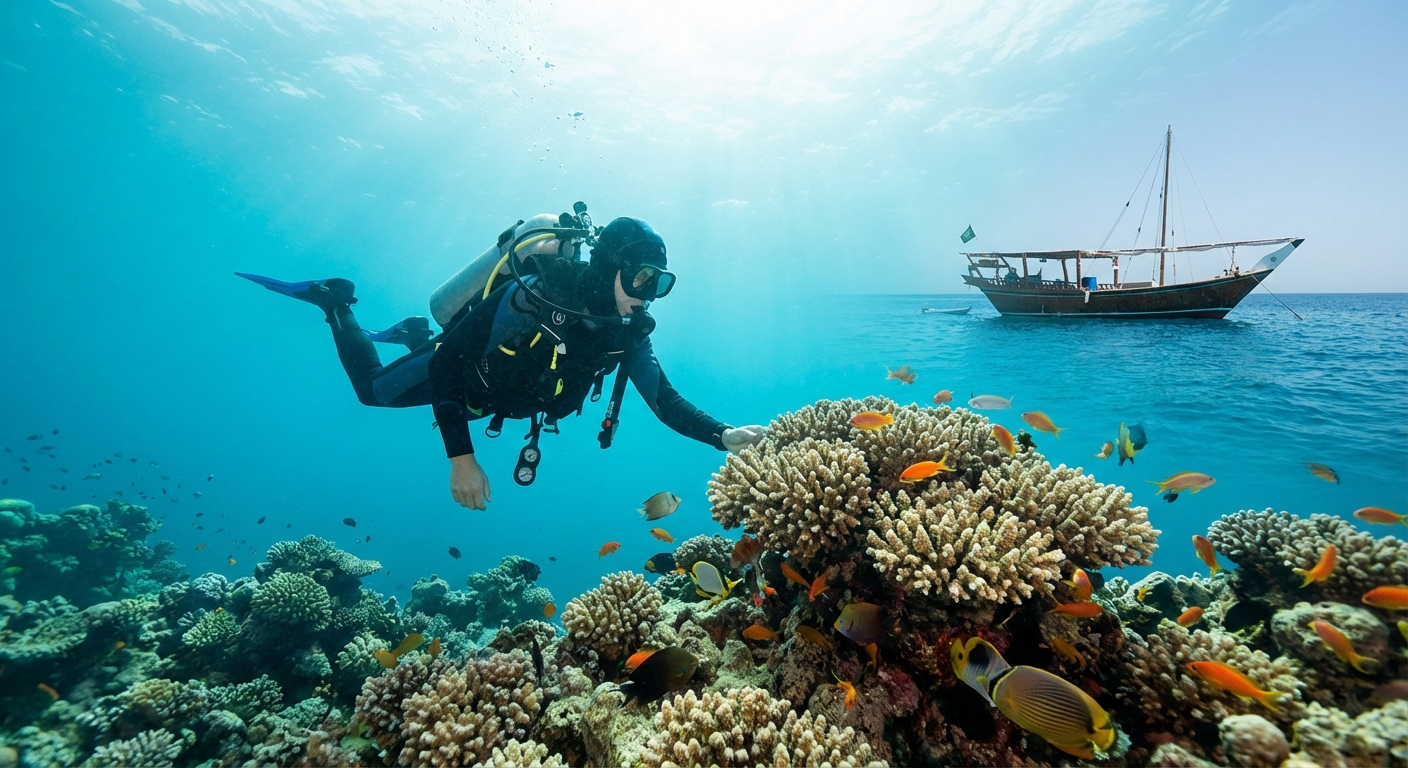
The Red Sea along Saudi Arabia’s western coast holds some of the planet’s most untouched underwater landscapes. While Egypt and Jordan have welcomed divers for decades, Saudi Arabia’s coastline remained largely off limits until recent tourism reforms opened these waters to international visitors.
Red sea diving saudi arabia offers pristine coral reefs, minimal crowds, and exceptional visibility year round. Top sites include Farasan Islands, Yanbu wrecks, and Jeddah’s offshore reefs. Most divers visit between March and November, though conditions remain excellent through winter. Saudi Arabia’s e-visa makes entry straightforward for citizens of eligible countries. Liveaboards and shore-based operations serve different experience levels.
Why Saudi Arabia’s Red Sea stands apart
Saudi Arabia controls over 1,800 kilometers of Red Sea coastline. That’s more shoreline than Egypt and Jordan combined.
The difference shows underwater. Coral systems here face less pressure from tourism. Reef structures remain intact. Fish populations thrive without constant human presence.
Visibility regularly exceeds 30 meters. Water temperatures stay comfortable between 23°C and 29°C depending on season. Currents tend to be mild along most of the coast, making conditions manageable for intermediate divers.
The Saudi government has designated several marine protected areas along the coast. These zones restrict fishing and development, creating natural sanctuaries where marine life flourishes.
Top dive sites along the Saudi coast
Farasan Islands
Located off Jazan in the southern Red Sea, the Farasan archipelago consists of over 170 islands. Only a handful see regular human activity.
The underwater landscape features dramatic drop-offs, coral gardens, and cleaning stations frequented by manta rays. Whale sharks pass through between March and May.
Getting there requires a ferry from Jazan or a liveaboard departure. Shore diving is possible on several islands, though boat diving opens up the best sites.
Water temperatures run warmer here than northern sites, averaging 26°C to 29°C most of the year.
Yanbu
This industrial port city might not look promising from land, but the offshore waters tell a different story.
Yanbu’s main attractions are wrecks. Several cargo ships and tankers rest on sandy bottoms between 15 and 35 meters. These artificial reefs attract schools of barracuda, snapper, and occasional hammerheads.
The SS Iona, a Greek cargo vessel that sank in the 1970s, sits upright at 28 meters. The structure remains largely intact, allowing penetration for properly trained wreck divers.
Several dive centers operate from Yanbu, offering daily boat trips and PADI courses through advanced levels.
Jeddah coastline
Saudi Arabia’s second largest city serves as the gateway for most international dive travelers. The airport handles direct flights from Europe, Asia, and the Middle East.
Reef diving here centers on fringing coral systems 20 to 45 minutes by boat from shore. Sites range from shallow gardens at 8 meters to walls that plunge past 40 meters.
Soft corals dominate many sites, creating colorful landscapes in shades of purple, orange, and yellow. Hard coral formations provide structure and habitat for reef fish.
Night diving reveals different species. Octopus, Spanish dancers, and hunting lionfish emerge after sunset.
Al Lith
This small coastal town sits roughly halfway between Jeddah and Jazan. The area sees fewer divers than other regions, which means healthier reefs and more wildlife encounters.
Turtle populations are particularly strong here. Green and hawksbill turtles feed on seagrass beds and rest on coral outcrops. Seeing multiple turtles on a single dive happens regularly.
The reef structure includes both shallow plateaus and deeper walls. Currents can pick up on exposed sites, bringing nutrients and attracting pelagic species.
Accommodation options are limited compared to Jeddah or Yanbu. Most visitors stay in simple hotels or camp near the beach.
What you’ll encounter underwater
| Marine Life Category | Common Species | Best Season |
|---|---|---|
| Sharks | Hammerhead, reef sharks, whale sharks | March to May |
| Rays | Manta, eagle, stingray | Year round |
| Turtles | Green, hawksbill | Year round |
| Reef fish | Anthias, butterflyfish, grouper, snapper | Year round |
| Macro life | Nudibranchs, shrimp, octopus | Year round |
The Red Sea’s unique geography creates high salinity and warm temperatures. These conditions favor coral growth and support diverse ecosystems.
Hard corals build the reef framework. Species like Acropora and Porites create branching structures that shelter smaller fish. Massive brain corals can reach several meters in diameter.
Soft corals add color and movement. They extend polyps to feed when currents bring plankton. Photographers love these subjects for their vibrant hues.
Fish populations include both resident species and seasonal visitors. Schools of fusiliers and snappers hover above reef tops. Groupers hide in crevices. Moray eels peer from holes.
Larger animals appear less predictably but often enough to make every dive exciting. Dolphins sometimes approach divers out of curiosity. Manta rays glide past cleaning stations. Hammerheads patrol deeper walls.
“The Saudi Red Sea feels like stepping back in time. Reefs look the way they did in Egypt 40 years ago, before mass tourism changed everything. If you want to see the Red Sea in its natural state, this is your chance.” — Marine biologist and technical diver with 15 years of Red Sea experience
Best times for red sea diving saudi arabia
The Saudi Red Sea offers year round diving, but conditions vary by season.
March through May brings the best visibility and the highest chance of pelagic encounters. Water temperatures climb from winter lows into the comfortable mid-20s Celsius. Whale sharks migrate through southern waters. Manta rays appear at cleaning stations.
June through August sees the warmest water, often reaching 29°C or higher in shallow areas. Visibility remains excellent. Crowds stay minimal since summer heat deters some travelers. A 3mm wetsuit provides enough thermal protection.
September through November offers ideal conditions for most divers. Water stays warm from summer heating. Visibility peaks. Weather remains stable with minimal wind.
December through February brings cooler water temperatures, dropping to 23°C in northern areas. A 5mm wetsuit becomes necessary for longer dives. Visibility stays strong. Fewer tourists mean even emptier dive sites.
Wind patterns affect surface conditions more than underwater visibility. Strong northerly winds occasionally create choppy seas between December and February, but these periods rarely last more than a few days.
Practical requirements for diving in Saudi Arabia
Getting your visa
Saudi Arabia launched its tourist e-visa program in 2019. Citizens from 49 countries can apply online and receive approval within 24 hours in most cases.
The visa costs approximately $135 USD and allows stays up to 90 days. Multiple entry is permitted within the one-year validity period.
Some nationalities still require embassy visas, so check current requirements before booking flights.
Certification and experience levels
Most Saudi dive operators require at least Open Water certification. Some sites suit beginners, while others demand advanced skills.
Wreck penetration requires appropriate training and certification. Wall diving needs good buoyancy control. Drift diving calls for awareness of current conditions.
If you’re newly certified, stick to shallow reef sites until you build experience. Operators can recommend appropriate sites based on your log book.
What to pack
Standard tropical diving gear works for most of the year:
- 3mm to 5mm wetsuit depending on season
- Mask, fins, and snorkel
- Dive computer and backup timing device
- Surface marker buoy for safety stops
- Reef-safe sunscreen
- Underwater camera if desired
Rental equipment is available at established dive centers, though serious divers prefer their own gear for fit and familiarity.
Costs and budgeting
Diving in Saudi Arabia costs more than budget destinations like Egypt or Thailand, but less than premium locations like the Maldives.
Two-tank boat dives typically run $80 to $120 USD. Liveaboard packages range from $1,200 to $2,500 for a week depending on boat quality and itinerary.
Accommodation spans budget hotels around $40 per night to international chain properties at $150 and up.
Food costs vary widely. Local restaurants serve filling meals for $8 to $15. Hotel dining and Western restaurants charge $25 to $50 per person.
Choosing between liveaboards and shore-based diving
Liveaboard advantages
Boats reach remote sites impossible to access from shore. You’ll spend more time underwater and less time commuting. Multiple dives per day maximize your trip.
Saudi liveaboards currently operate limited itineraries compared to Egypt, but options are expanding. Most trips run 7 to 10 days and cover either northern or southern regions.
Boats range from basic to luxury. Check recent reviews before booking since the industry is still developing.
Shore-based benefits
Staying on land costs less than liveaboards. You control your schedule and can skip dives if you want rest days. Non-diving companions have more to do.
Jeddah and Yanbu offer the best shore-based infrastructure. Multiple operators run daily boats. Hotels and restaurants provide variety.
This approach works well for shorter trips or if you want to combine diving with cultural exploration.
Safety considerations
Saudi Arabia’s dive industry follows international standards, but the infrastructure is newer than established destinations.
- Choose operators with current safety certifications and well-maintained equipment.
- Check that boats carry oxygen, first aid kits, and communication devices.
- Confirm the location of the nearest hyperbaric chamber before your trip.
- Consider dive insurance that covers evacuation and chamber treatment.
- Stay conservative with depth and bottom time, especially on multi-dive days.
The nearest chambers operate in Jeddah and Yanbu. Remote areas like Farasan Islands sit hours from advanced medical care.
Cell coverage extends along most coastal areas but can be spotty offshore. Satellite communication provides backup on properly equipped boats.
Beyond diving activities
Many visitors combine underwater time with cultural experiences:
- Historic Jeddah’s UNESCO-listed old town features coral stone architecture
- Desert trips from coastal cities reach stunning landscapes
- Traditional souks sell spices, textiles, and handicrafts
- Red Sea beaches offer swimming and snorkeling for non-divers
Saudi culture differs significantly from Western norms. Modest dress is expected in public. Alcohol is prohibited throughout the country. Prayer times affect business hours.
Respect for local customs makes travel smoother and more rewarding. Most Saudis welcome tourists and appreciate genuine interest in their culture.
Common mistakes to avoid
| Mistake | Why It’s Problematic | Better Approach |
|---|---|---|
| Visiting in peak summer heat | Temperatures exceed 40°C on land | Plan for March to May or September to November |
| Skipping travel insurance | Medical evacuation costs thousands | Buy comprehensive coverage before departure |
| Overpacking dive days | Fatigue increases risk | Limit to 3 dives per day maximum |
| Ignoring local customs | Creates uncomfortable situations | Research cultural norms before arrival |
| Booking unknown operators | Safety standards may be inadequate | Choose established centers with reviews |
Making your Saudi Red Sea trip happen
Start planning at least three months before your intended travel dates. This gives you time to:
- Research operators and read current reviews
- Apply for your e-visa
- Book flights during sale periods
- Arrange accommodation that fits your budget
- Get any needed vaccinations
- Purchase or service dive equipment
Saudi Arabia’s dive industry is growing rapidly. New operators launch regularly. Liveaboard routes expand. Infrastructure improves.
This creates both opportunities and challenges. You might find incredible deals as businesses compete for customers. You might also encounter growing pains as the industry matures.
Reading recent trip reports helps set realistic expectations. Online dive forums and social media groups share current conditions and operator experiences.
Your chance to see pristine reefs
Saudi Arabia’s Red Sea offers something increasingly rare in popular dive destinations: healthy coral systems with minimal human impact. The reefs look the way they should, not the way they’ve been altered by decades of tourism.
This won’t last forever. As word spreads and access improves, more divers will come. That’s not necessarily bad, but it will change the experience.
Going now means seeing these underwater landscapes in their most natural state. You’ll have sites to yourself. You’ll encounter wildlife that hasn’t learned to avoid bubbles. You’ll create memories of a place that feels genuinely wild.
The Saudi government has shown commitment to sustainable tourism development. Marine protected areas provide some insurance against overdevelopment. But the clock is ticking on the truly pristine experience.
If red sea diving saudi arabia has been on your list, this is the time. The infrastructure exists to support safe, comfortable trips. The reefs remain healthy and vibrant. The crowds haven’t arrived yet.
Pack your gear, apply for that e-visa, and get yourself to the western Saudi coast. The underwater world waiting there deserves to be seen.