
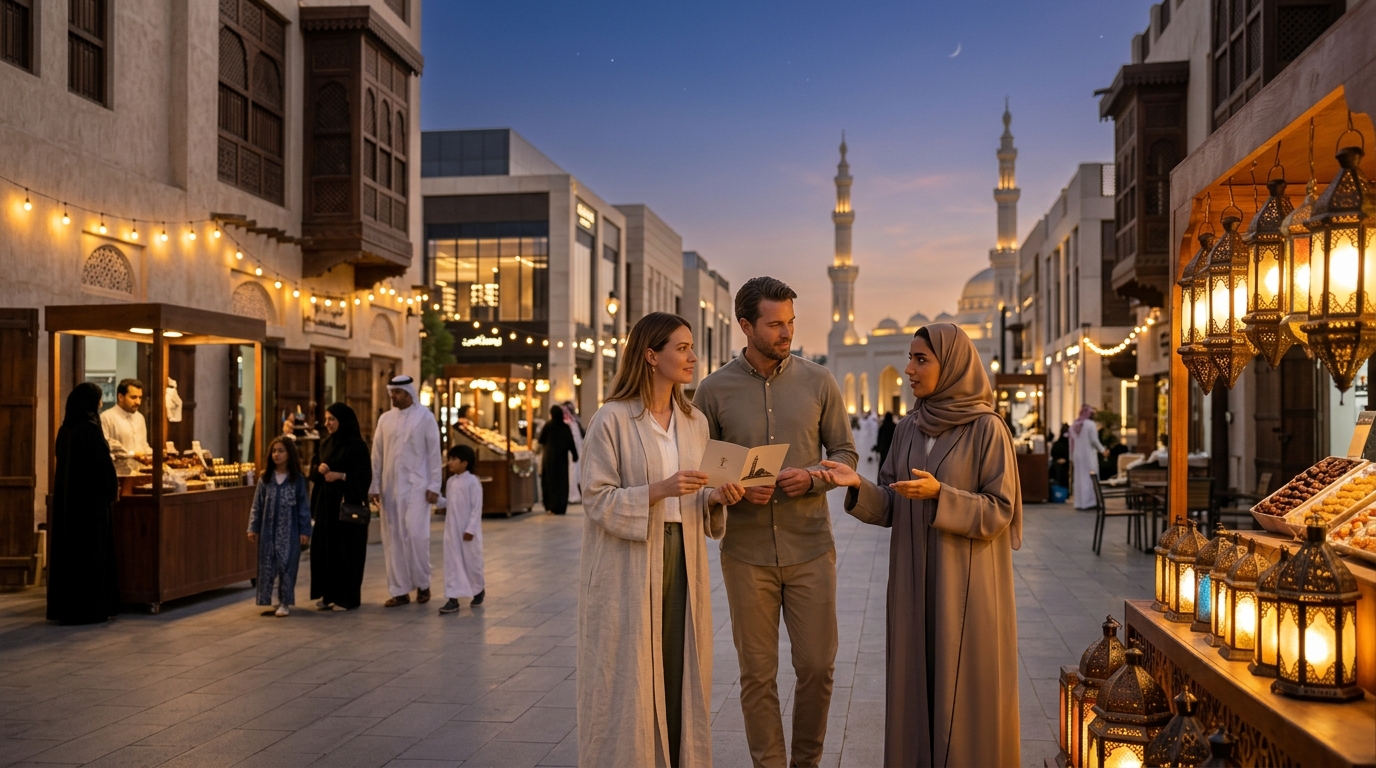
Ramadan transforms the rhythm of daily life across Saudi Arabia and the broader Muslim world. Streets that buzz with activity during the day fall quiet, only to come alive after sunset with festive energy and communal meals. For travelers unfamiliar with the holy month, this shift can feel disorienting at first. But with the right preparation, traveling during Ramadan offers a unique window into Islamic culture, hospitality, and traditions you won’t experience any other time of year.
Traveling during Ramadan requires understanding fasting hours, adjusted business schedules, and cultural etiquette around eating in public. Most tourist attractions remain open, hotels serve meals to non-Muslim guests, and many cities come alive with special night markets and celebrations after sunset. Respect for local customs, modest dress, and flexibility with dining times will make your visit smooth and enriching during this spiritually significant month.
Understanding what Ramadan means for your trip
Ramadan is the ninth month of the Islamic lunar calendar, when Muslims fast from dawn until sunset. No food, drink, or smoking during daylight hours. This practice affects everyone in the country, Muslim and non-Muslim alike, because it reshapes business hours, restaurant availability, and social norms.
The dates shift each year by about 10 to 11 days earlier on the Gregorian calendar. One year Ramadan might fall in winter, the next in scorching summer. This matters because fasting in June means abstaining from water for 15 hours in extreme heat, while winter Ramadan has shorter, milder fasting periods.
Most businesses reduce hours or close during the day. Government offices typically operate from 10 AM to 3 PM. Malls and shops often open late afternoon and stay busy until well past midnight. Restaurants in tourist areas may serve non-Muslim guests during the day, but many close entirely until sunset.
Tourist sites generally remain open, though with modified schedules. Museums might close mid-afternoon and reopen after evening prayers. Popular outdoor attractions like hiking the edge of the world worth the hype stay accessible, but expect fewer tour operators running daytime excursions.
What you can and cannot do as a non-Muslim visitor
Saudi Arabia does not require non-Muslims to fast, but the law prohibits eating, drinking, or smoking in public during fasting hours. This applies to everyone, regardless of religion.
Hotels are the exception. Most international hotels serve breakfast and lunch to guests in designated dining areas, usually screened from public view. Room service runs normally. You can eat privately in your hotel without issue.
Outside your hotel, finding food during the day becomes challenging. Some restaurants in major cities serve non-Muslim patrons in closed-off sections, but this is not guaranteed. Coffee shops in malls often remain shuttered until late afternoon.
Here’s what you should avoid:
- Eating or drinking on the street, in parks, or other public spaces
- Smoking outdoors during daylight hours
- Playing loud music or engaging in obviously festive behavior before sunset
- Wearing revealing clothing (this applies year-round but becomes more sensitive during Ramadan)
Violating these norms can result in fines or, in serious cases, detention. Police and religious authorities increase patrols during Ramadan. Respect goes a long way.
Planning your daily schedule around fasting hours
The rhythm of Ramadan runs opposite to typical tourist schedules. Mornings feel sleepy. Afternoons are quiet. Then, as the call to prayer signals sunset (maghrib), the city erupts with energy.
Iftar is the meal that breaks the fast. Families gather, restaurants fill, and special buffets appear in hotels. This is the most social, celebratory time of day. Streets stay busy until well after midnight.
Suhoor is the pre-dawn meal before fasting resumes. Some restaurants and cafes stay open until 3 or 4 AM to serve suhoor crowds. You’ll see people eating, smoking shisha, and socializing in the early morning hours.
For tourists, this means flipping your itinerary:
- Start early. Visit outdoor sites like the perfect road trip along Saudi Arabia’s Red Sea coast in the cooler morning hours before the heat peaks and before locals head home to rest.
- Plan indoor activities mid-afternoon. Museums, shopping malls, and air-conditioned attractions work well during the hottest, quietest part of the day.
- Experience iftar. Book a table at a hotel or restaurant for the sunset meal. Many places offer special Ramadan tents with traditional dishes and festive atmospheres.
- Stay out late. After iftar, cities like Riyadh and Jeddah buzz with night markets, cultural events, and open shops. This is when you’ll see Saudi social life in full swing.
Carry water and snacks in your bag if you’re spending the day out. Drink discreetly in your car or inside restrooms if needed. Just don’t do it where fasting Muslims can see you.
Where to eat during the day
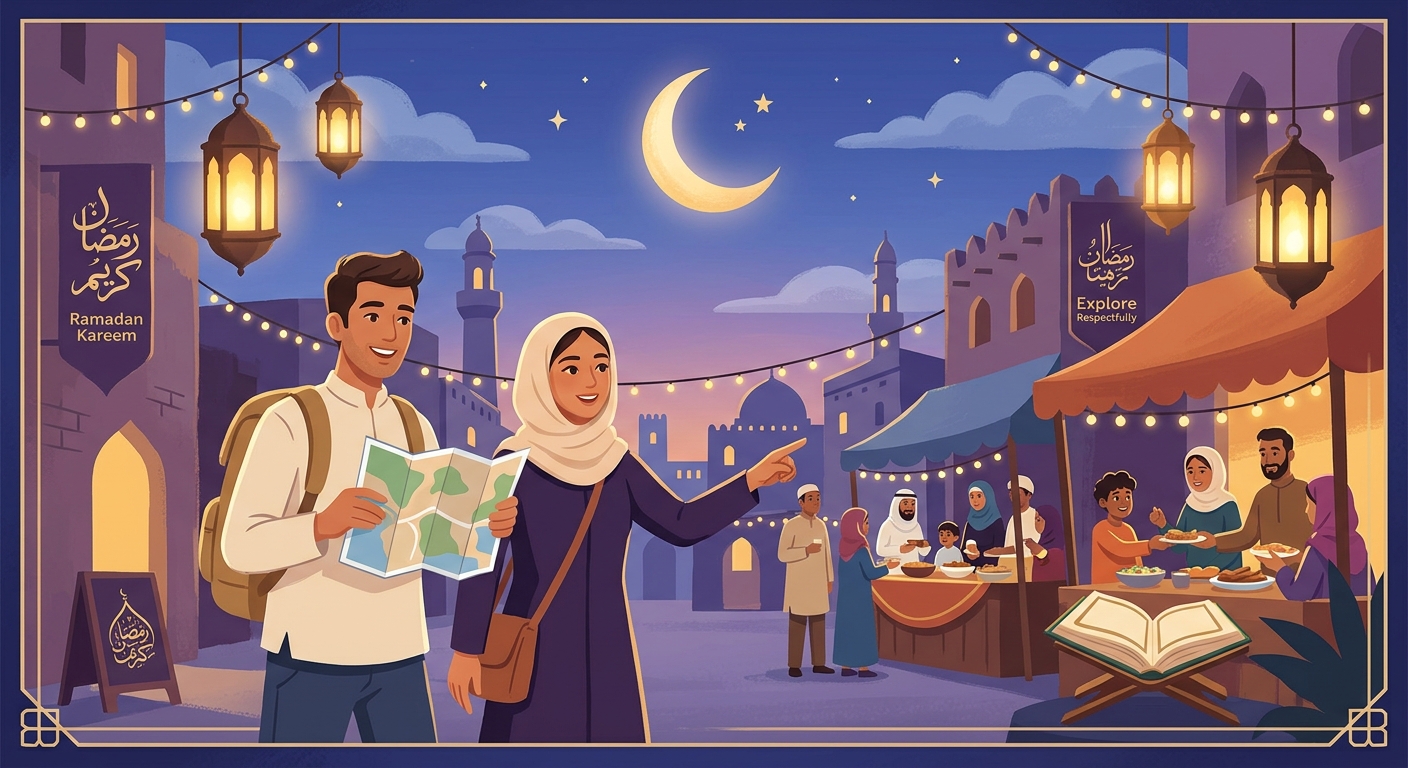
Finding meals during Ramadan daylight hours requires strategy. Your hotel is the safest bet. Most international chains and upscale properties serve non-Muslim guests throughout the day in private dining rooms.
Some hospitals and airports have cafeterias that remain open, though these cater primarily to travelers and medical staff. Shopping mall food courts typically close during the day and reopen after sunset.
In Jeddah, certain areas like the historic Al-Balad district have small eateries that discreetly serve non-Muslims behind curtains or in back rooms. Ask your hotel concierge for recommendations.
If you’re on a road trip, pack a cooler with bottled water, fruit, and ready-to-eat snacks. Gas stations along highways sometimes have small shops that will sell you items, but eating must happen inside your vehicle, not at outdoor seating areas.
Room service becomes your friend. Stock your hotel room with fruit, nuts, and other non-perishable snacks from a supermarket before Ramadan starts or during evening hours when stores are open.
Cultural etiquette and dress code during Ramadan
Modesty matters year-round in Saudi Arabia, but expectations tighten during Ramadan. Women should cover shoulders and knees at minimum. Loose-fitting clothing is preferred. A headscarf is not required for non-Muslim women, but carrying one for visits to mosques or conservative areas shows respect.
Men should avoid shorts and sleeveless shirts in public. Long pants and a collared shirt work well for most situations. For detailed guidance, check out what to wear in Saudi Arabia for a complete breakdown.
Public displays of affection are always frowned upon in Saudi culture, but during Ramadan, even holding hands can draw disapproving looks. Keep physical contact minimal in public spaces.
Music and entertainment venues tone down during the holy month. Concerts and loud events typically pause. Some cinemas remain open but with reduced schedules. Nightclubs and bars (which are limited in Saudi Arabia anyway) do not operate.
If a local invites you to iftar, accept graciously. It’s a generous gesture. Arrive on time, as the meal starts precisely at sunset. Eat with your right hand, try a bit of everything offered, and thank your host warmly.
“Ramadan is not a barrier to tourism. It’s an opportunity to witness Saudi culture at its most authentic. The generosity, the communal spirit, the night markets—you won’t see this energy any other time of year.” — Hospitality manager in Riyadh
Comparing Ramadan travel to other times of year
| Aspect | During Ramadan | Other months |
|---|---|---|
| Restaurant availability | Limited during day, abundant after sunset | Open normal hours |
| Business hours | Shortened, often 10 AM to 3 PM | Standard 9 AM to 5 PM or later |
| Tourist crowds | Fewer international tourists | Higher tourist traffic |
| Hotel rates | Often discounted | Standard or peak pricing |
| Cultural events | Night markets, special prayers, iftar tents | Concerts, festivals, sports events |
| Dress code enforcement | Stricter | Moderate |
Attractions and activities that work well during Ramadan
Not everything shuts down. Many experiences actually improve during Ramadan because of the festive atmosphere and reduced daytime crowds.
Historical sites like AlUla, Diriyah, and ancient rock art locations remain accessible. Visiting in the early morning or late afternoon avoids both heat and fasting sensitivity. Consider combining Riyadh, AlUla, and the Edge of the World in a week-long itinerary adjusted for Ramadan hours.
Desert adventures work surprisingly well. Camps set up for overnight stays can provide meals discreetly, and the cooler evening temperatures make activities like dune bashing and stargazing more comfortable. Operators running multi-day desert safaris in the Empty Quarter often adjust schedules to accommodate Ramadan.
Diving and water sports along the Red Sea continue. Dive shops and resorts cater to international tourists and usually maintain services, though you might find smaller group sizes. The Red Sea diving in Saudi Arabia remains world-class regardless of the month.
Shopping becomes a nighttime activity. Souqs and malls stay open late, and the post-iftar shopping rush creates a lively atmosphere. Bargaining in traditional markets like those covered in the art of haggling in Saudi souqs can be especially fun when vendors are in good spirits after breaking their fast.
Mountain regions like the Asir region offer cooler temperatures and beautiful landscapes. Local restaurants in tourist areas often serve visitors during the day, and the highland scenery provides a refreshing contrast to the desert heat.
Common mistakes tourists make during Ramadan
Travelers often underestimate how much Ramadan affects logistics. Here are pitfalls to avoid:
- Assuming all restaurants will serve you. Always have a backup plan, especially outside major cities.
- Booking early morning domestic flights. Airport restaurants may be closed, and you’ll struggle to find coffee or breakfast before your flight. Check Saudi Arabia’s domestic flights for tips on navigating travel during Ramadan.
- Ignoring hydration. Even if you’re not fasting, the heat can dehydrate you. Drink plenty of water in private spaces.
- Expecting nightlife to be quiet. The opposite is true. Cities come alive after dark, and noise levels rise significantly.
- Forgetting about Eid al-Fitr. The holiday marking the end of Ramadan brings three to four days of closures, family gatherings, and travel chaos. Flights and hotels book up fast.
Making the most of Ramadan’s unique experiences
Ramadan offers cultural moments you can’t access any other time. Iftar tents pop up across cities, serving traditional Saudi dishes like kabsa, sambusa, and dates. Hotels host lavish buffets with live cooking stations and regional specialties.
Night markets (often called Ramadan souqs) sell everything from spices to handicrafts. The atmosphere is festive, with families strolling, children playing, and vendors calling out deals. These markets usually run from after iftar until well past midnight.
Taraweeh prayers happen every night during Ramadan. Non-Muslims are welcome to observe (quietly and respectfully) at many mosques. The experience of hearing Quranic recitation echo through a beautifully lit mosque offers a powerful sense of the spiritual significance of the month.
Charity and generosity peak during Ramadan. You might see free iftar meals distributed to workers, drivers, and anyone in need. Participating in or witnessing this communal care reveals a side of Saudi culture that’s deeply rooted in Islamic values.
If you’re extending your trip beyond the holy cities, consider hidden gems in Saudi Arabia that offer quieter, off-the-beaten-path experiences even during Ramadan.
Practical tips for business travelers
If you’re in Saudi Arabia for work during Ramadan, expect meetings to shift later in the day. Many companies schedule important discussions after 4 PM or even post-iftar in the evening.
Productivity slows during fasting hours. Colleagues may be tired, less focused, or simply unavailable. Plan critical tasks for early morning or late evening when energy levels are higher.
Offering to meet over iftar can be a smart networking move. Sharing a meal builds rapport, and the relaxed post-sunset atmosphere often leads to more open, productive conversations.
Dress even more conservatively than usual. Business attire should be formal and modest. Avoid scheduling lunch meetings, as they won’t happen. Coffee meetings work better in the late afternoon or evening.
If you’re renting a car, note that traffic patterns change dramatically. Roads are nearly empty mid-afternoon but jam-packed right before iftar as everyone rushes home. For detailed advice, see renting a car in Saudi Arabia.
Visa and entry considerations during Ramadan
Your visa process doesn’t change during Ramadan, but processing times might slow slightly due to reduced government office hours. Apply well in advance. The Saudi Arabia e-visa application typically takes a few days, but add extra buffer time if your travel dates fall during the holy month.
Immigration at airports remains efficient, though you might encounter longer lines if your flight arrives near iftar time when staff shifts change. Have all your required documents at Saudi immigration ready to speed up the process.
Avoid common visa mistakes that could get you denied entry, especially during Ramadan when patience and flexibility are already being tested.
Budgeting for Ramadan travel
Traveling during Ramadan can actually save you money. Hotels often discount rates because international tourist numbers drop. Airfare to Saudi Arabia tends to be cheaper, except during the final week leading up to Eid when prices spike.
Food costs vary. Hotel iftar buffets can be expensive (200 to 400 SAR per person), but they offer unlimited traditional dishes and a festive experience. Eating at local restaurants after sunset is far cheaper, with meals costing 30 to 60 SAR.
Transportation costs stay relatively stable, though ride-hailing prices surge right before iftar when everyone is rushing home. Plan your movements to avoid the 30 minutes before sunset.
Tour operators sometimes offer Ramadan specials on multi-day packages. If you’re planning an extended trip, check out budget-friendly ways to extend your pilgrimage and explore Saudi Arabia for cost-saving strategies that apply during Ramadan too.
For a complete cost breakdown, see how much does a week in Saudi Arabia really cost, and adjust expectations for the unique rhythm of Ramadan.
When Ramadan ends and what comes next
Eid al-Fitr marks the end of Ramadan. The exact date depends on moon sighting, so it’s confirmed only a day or two in advance. This three to four day holiday brings massive celebrations, family gatherings, and a nationwide festive mood.
Everything closes for Eid. Government offices, banks, many restaurants, and even some tourist sites shut down. Families travel to visit relatives, so domestic flights and hotels book solid. If your trip overlaps with Eid, book accommodations and transportation well ahead.
The upside? Eid celebrations are spectacular. Fireworks, special prayers, traditional sweets, and public festivals fill the cities. Children receive gifts and new clothes. The atmosphere is joyful and welcoming.
After Eid, life returns to normal schedules. Restaurants reopen for regular hours, businesses resume standard operations, and the tourist season picks up again. If you time your visit to experience the tail end of Ramadan and the beginning of Eid, you’ll witness two distinct cultural moments in one trip.
Bringing respect and curiosity to your Ramadan journey
Traveling during Ramadan is not about restrictions. It’s about rhythm, respect, and a willingness to adapt. Yes, you’ll face closed restaurants at lunch and adjusted schedules. But you’ll also witness generosity, community, and a spiritual devotion that shapes the identity of Saudi Arabia and the wider Muslim world.
Pack patience, stay flexible, and approach the month with curiosity. Eat your hotel breakfast, carry water for private moments, dress modestly, and plan your sightseeing around the sun. When sunset arrives, join the iftar energy, taste the traditional foods, and let the night markets show you a side of Saudi culture that only appears during these sacred weeks.
Ramadan transforms the Kingdom. Let it transform your trip too.