
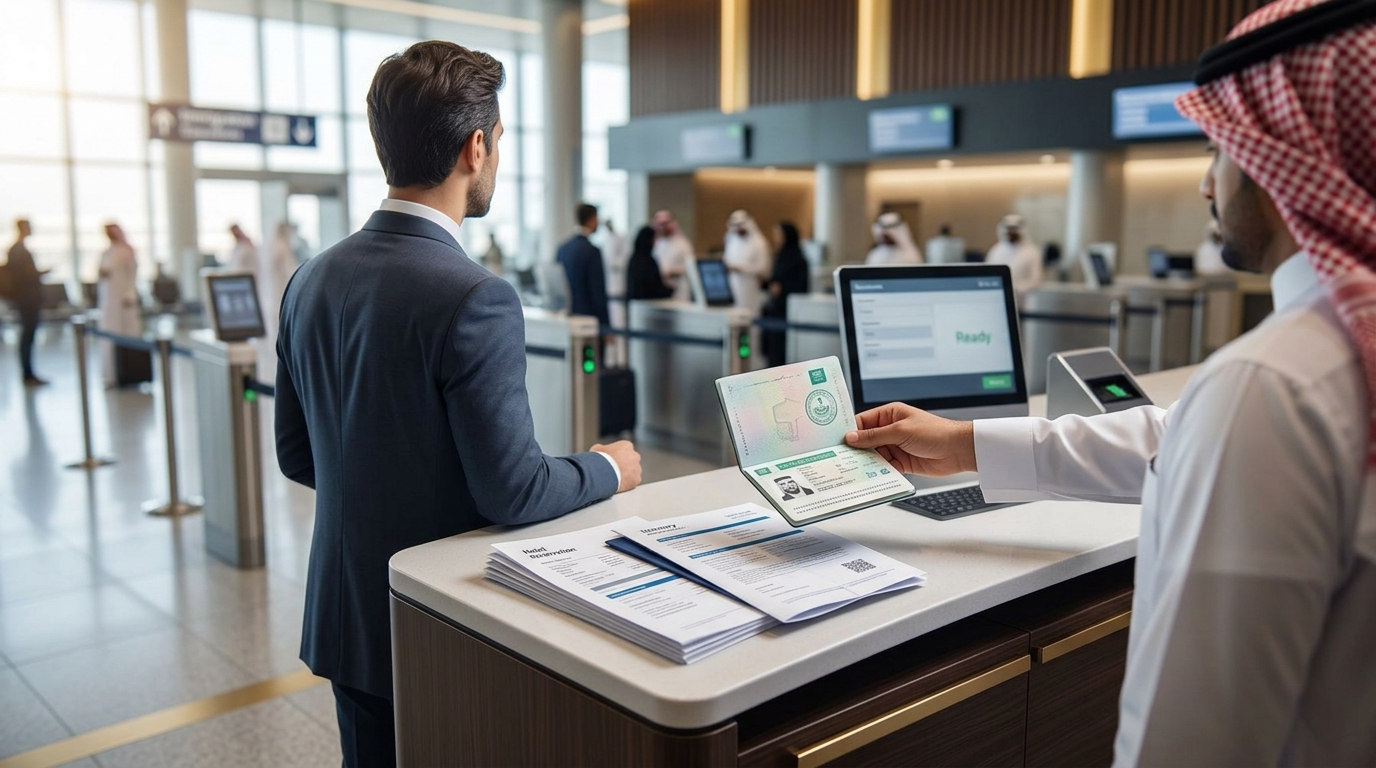
Standing in line at King Abdulaziz International Airport in Jeddah, you watch travelers ahead of you get pulled aside. Some are missing documents. Others have the wrong paperwork. You don’t want that to be you. Getting through Saudi immigration smoothly comes down to having the right documents in hand before you reach the checkpoint.
Saudi Arabia immigration documents required include a valid passport (six months validity), approved visa, completed health declaration, proof of accommodation, and return ticket. Tourist visa holders need travel insurance. Keep digital and physical copies of everything. Immigration officers check these at airport arrival, land borders, and sometimes at internal checkpoints near sensitive areas.
What every traveler must bring to Saudi immigration
Your passport needs at least six months of validity from your planned entry date. This isn’t negotiable. Officers will turn you away if your passport expires in five months, even if your trip only lasts two weeks.
The visa comes next. Most tourists arrive with an e-visa you can apply for online before departure. Print two copies. One stays with immigration. One stays in your carry-on as backup.
Travel insurance is mandatory for tourist visa holders. Your policy must cover medical emergencies and repatriation. Immigration officers sometimes ask to see proof, especially at smaller entry points like the Bahrain causeway.
A confirmed hotel reservation or proof of accommodation shows where you’ll stay. A booking confirmation email on your phone works. If you’re staying with family or friends, bring an invitation letter with their Saudi ID number and contact details.
Your return or onward ticket proves you plan to leave. A screenshot of your flight confirmation works fine. Officers want to see you have a way out of the country.
Documents you need at the checkpoint
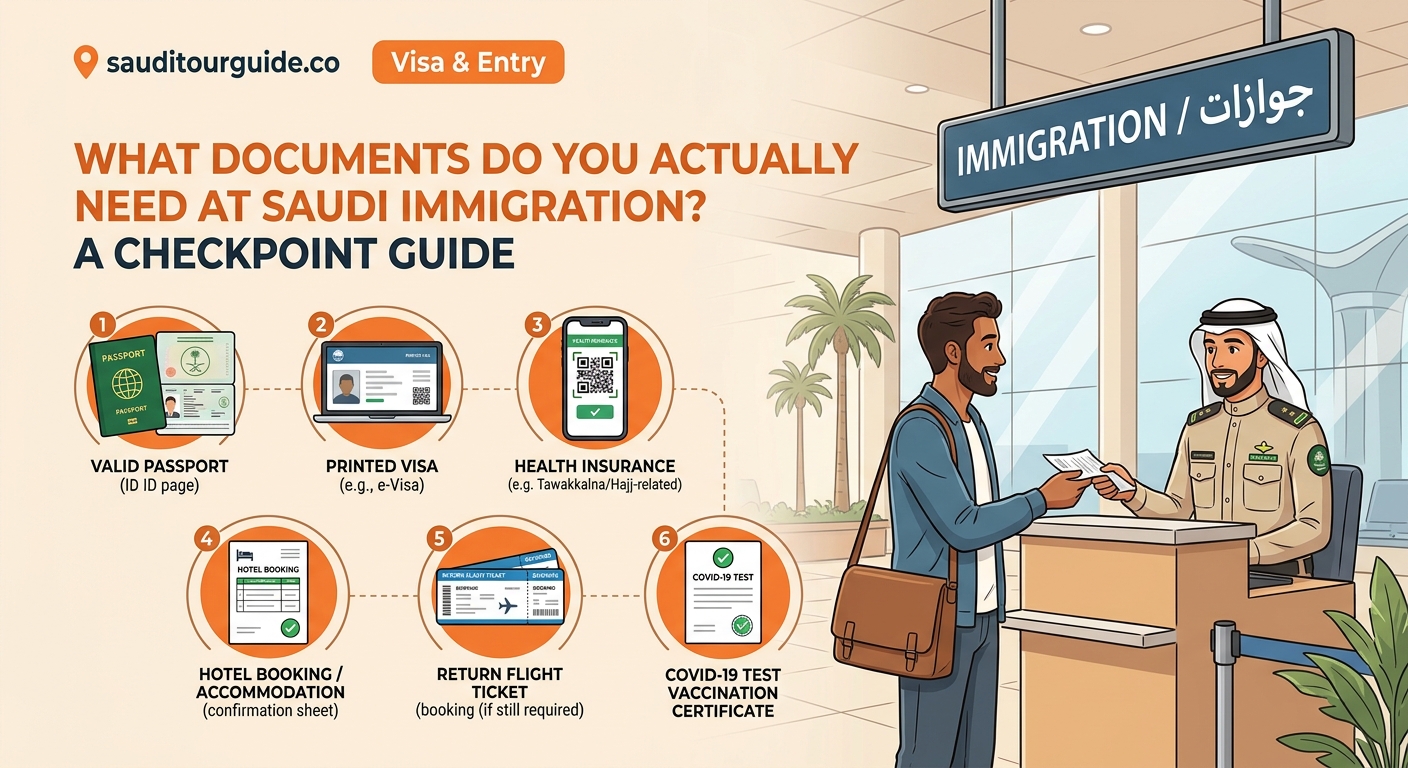
Here’s what to have ready when you reach the immigration desk:
- Valid passport (minimum six months validity)
- Approved Saudi visa (printed copy)
- Travel insurance certificate
- Hotel booking confirmation or invitation letter
- Return flight ticket or onward travel proof
- Completed health declaration (usually digital now)
- Customs declaration form (if carrying restricted items)
Keep these in a folder or envelope. Don’t dig through your entire bag while people wait behind you.
The step-by-step immigration process
Understanding what happens at each stage helps you prepare the right documents.
-
Queue selection: Look for signs directing tourists, business travelers, or GCC nationals. Join the tourist line if you hold a tourist visa. Some airports have dedicated e-visa lanes that move faster.
-
Document submission: Hand over your passport and visa. The officer scans both and checks your photo against their system. They may ask about your trip purpose, length of stay, or accommodation. Answer briefly and honestly.
-
Biometric capture: Most entry points now photograph your face and scan your fingerprints. This takes about 30 seconds. Look at the camera and place your fingers flat on the scanner when instructed.
-
Final approval: The officer stamps your passport and returns it with your visa copy. Check that the entry stamp shows the correct date and visa type before walking away.
-
Baggage and customs: Collect your luggage and proceed through customs. Declare any restricted items like medications, drones, or large amounts of currency. Most travelers walk through the green “nothing to declare” lane without issues.
Common document mistakes that cause delays
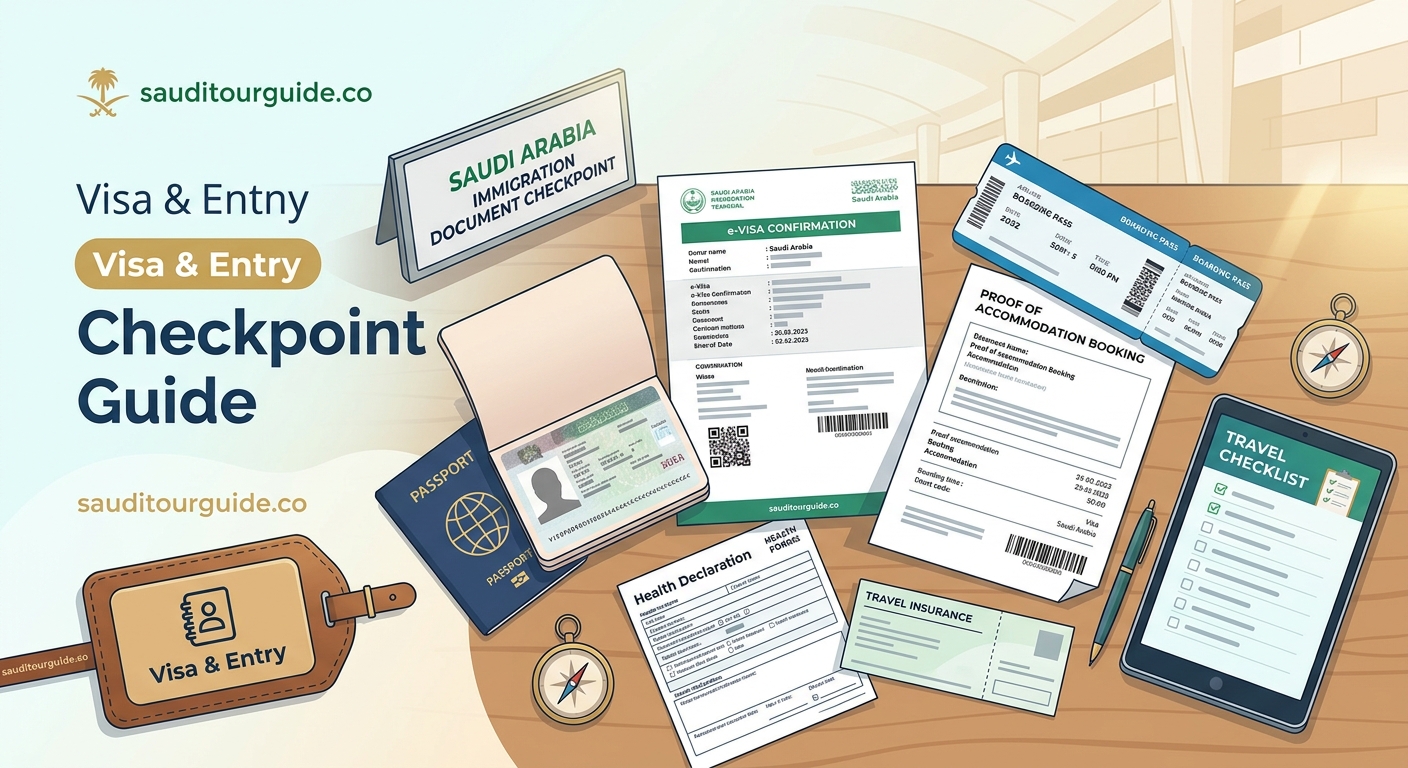
| Mistake | Why it causes problems | How to fix it |
|---|---|---|
| Expired passport | Automatic entry denial | Renew passport before booking flights |
| No printed visa | Digital copies sometimes fail to load | Print two copies before departure |
| Missing insurance | Required for tourist visas | Purchase before travel, save PDF to phone |
| Vague accommodation proof | Officers need verifiable addresses | Book refundable hotel or get detailed invitation |
| No return ticket | Suggests overstay risk | Book flexible return flight |
| Incomplete health forms | Delays processing | Fill out online forms before landing |
The insurance issue trips up many first-time visitors. Your policy needs to specifically cover Saudi Arabia. Generic travel insurance for “Middle East” might not count. Read the fine print.
Special documents for specific travelers
Business visitors need an invitation letter from their Saudi sponsor or company. This letter should include the company’s commercial registration number and the purpose of your visit.
Pilgrims traveling for Umrah need a different visa type entirely. Your Umrah visa serves as your entry document, but you still need the standard passport validity and health requirements.
Families traveling with children under 18 need extra paperwork. If one parent travels alone with kids, bring a notarized consent letter from the other parent. Divorced parents should carry custody documents.
Students entering on study visas need their university acceptance letter and proof of enrollment. Keep your student ID accessible.
“The most common issue I see is travelers assuming their visa alone gets them in. You need the full package: valid passport, insurance, accommodation proof, and return ticket. Missing even one document can mean hours of delay or denial of entry.” — Immigration consultant at King Khalid International Airport
Digital versus physical documents
Saudi immigration is modernizing, but don’t rely entirely on digital copies. Officers at major airports like Riyadh and Jeddah accept documents on phones. Smaller entry points prefer paper.
The safest approach: carry both. Print your visa, insurance certificate, and hotel booking. Save PDFs to your phone as backup. Email copies to yourself so you can access them from any device.
Take photos of your passport photo page and visa. Store these in a separate app or cloud service. If you lose your physical passport, having digital copies speeds up the replacement process at your embassy.
What happens at land border crossings
Entering Saudi Arabia by land through Jordan, Kuwait, Bahrain, or the UAE follows similar document requirements. The process takes longer because fewer lanes operate and officers conduct more thorough checks.
At the King Fahd Causeway from Bahrain, expect vehicle inspections alongside document checks. Have your paperwork ready before you reach the booth. Weekend traffic can create two-hour waits.
The Halat Ammar border with Jordan sees fewer tourists. Officers there may ask more questions about your itinerary. Mentioning specific destinations like Jeddah’s historic Al-Balad district or the Red Sea coast helps establish your tourism purpose.
Documents you might need after entry
Some regions require additional permits or checkpoints. If you plan to visit remote areas like the Empty Quarter, tour operators handle these permits. Keep copies of tour confirmations with you.
Certain archaeological sites and nature reserves need advance registration. Your tour company or hotel can arrange this. Bring confirmation emails when visiting these locations.
Renting a car requires your passport, visa, home country driver’s license, and an International Driving Permit. Some rental companies accept licenses from specific countries without an IDP, but bringing one avoids complications.
How to handle document issues at immigration
If something goes wrong with your paperwork, stay calm. Immigration offices at major airports have problem resolution desks.
Missing insurance? Some airports have insurance kiosks where you can purchase coverage immediately. It costs more than buying online beforehand, but it solves the problem.
Accommodation proof unclear? Call your hotel and ask them to email a fresh confirmation letter. Airport wifi is free at most Saudi terminals.
Visa issues are harder to fix on the spot. If your visa was denied or has errors, you might need to return to your departure city. This is why checking visa details before you fly matters so much.
Keeping your documents safe during your trip
Once you clear immigration, protect your documents. Hotels offer safes for passports and important papers. Keep copies separate from originals.
When moving between cities on domestic flights, you’ll show your passport and visa at security. These checks are routine and fast.
Some tourist attractions ask for ID. Carry a photocopy of your passport photo page instead of the original. This protects against loss or damage while still providing identification.
If you plan to extend your stay, start the extension process at least a week before your visa expires. You’ll need many of the same documents you presented at entry.
Understanding Saudi customs regulations
Beyond immigration documents, customs forms matter if you bring certain items. Declare prescription medications with a doctor’s letter. Drones require permits arranged before arrival. Photography equipment for professional use needs a media permit.
Cash amounts over $15,000 USD must be declared. Jewelry, electronics, and luxury goods might face questions if quantities suggest commercial import.
Prohibited items include alcohol, pork products, religious materials not related to Islam, and anything deemed morally inappropriate. Officers check bags randomly. Don’t risk bringing restricted items.
Regional differences in document checks
Riyadh’s King Khalid International Airport processes the most tourist arrivals. Immigration there moves efficiently with clear signage in English and Arabic. Officers expect standard documents and rarely ask detailed questions.
Jeddah’s airport serves both tourists and pilgrims. Lines can be long during Umrah seasons. The process is identical, but patience helps.
Smaller airports like those serving the Asir region or Tabuk see fewer international arrivals. Officers may be more curious about your plans. Mentioning specific tourist sites you’ll visit establishes credibility.
Getting through immigration faster
Arriving on early morning flights often means shorter lines. Midday and evening arrivals coincide with multiple international flights landing simultaneously.
Have documents organized before you land. Don’t wait until you reach the counter to search for your visa or hotel booking.
Answer questions directly without over-explaining. “Tourism” is a sufficient answer to “purpose of visit.” Listing every site you plan to see wastes time.
Dress modestly. While dress codes for tourists are more relaxed than they used to be, appropriate clothing creates a positive first impression.
What to do if you’re denied entry
Entry denial is rare for tourists with proper documents, but it happens. Common reasons include insufficient passport validity, visa irregularities, or inability to prove accommodation and return travel.
If denied, you’ll be held in a transit area while arrangements are made for your return flight. Airlines that brought you are responsible for taking you back.
You can appeal the decision, but this takes time and rarely succeeds without resolving the underlying document issue. Better to ensure everything is correct before you fly.
Contact your country’s embassy or consulate if you believe the denial was unjust. They can’t override immigration decisions but may help clarify requirements or facilitate communication.
Your path through Saudi immigration starts before you leave home
The key to smooth entry is preparation. Check your passport expiration date six months before you book anything. Apply for your visa early. Purchase comprehensive travel insurance. Confirm your accommodation. Book your return flight.
Print everything. Save digital backups. Organize documents in one folder. Review the checklist one final time at the airport before your flight to Saudi Arabia.
Thousands of tourists pass through Saudi immigration checkpoints every day without issues. You’ll be one of them when you bring the right saudi arabia immigration documents required and know what to expect at each step. The Kingdom’s hidden gems and modern attractions await on the other side of that immigration desk.