
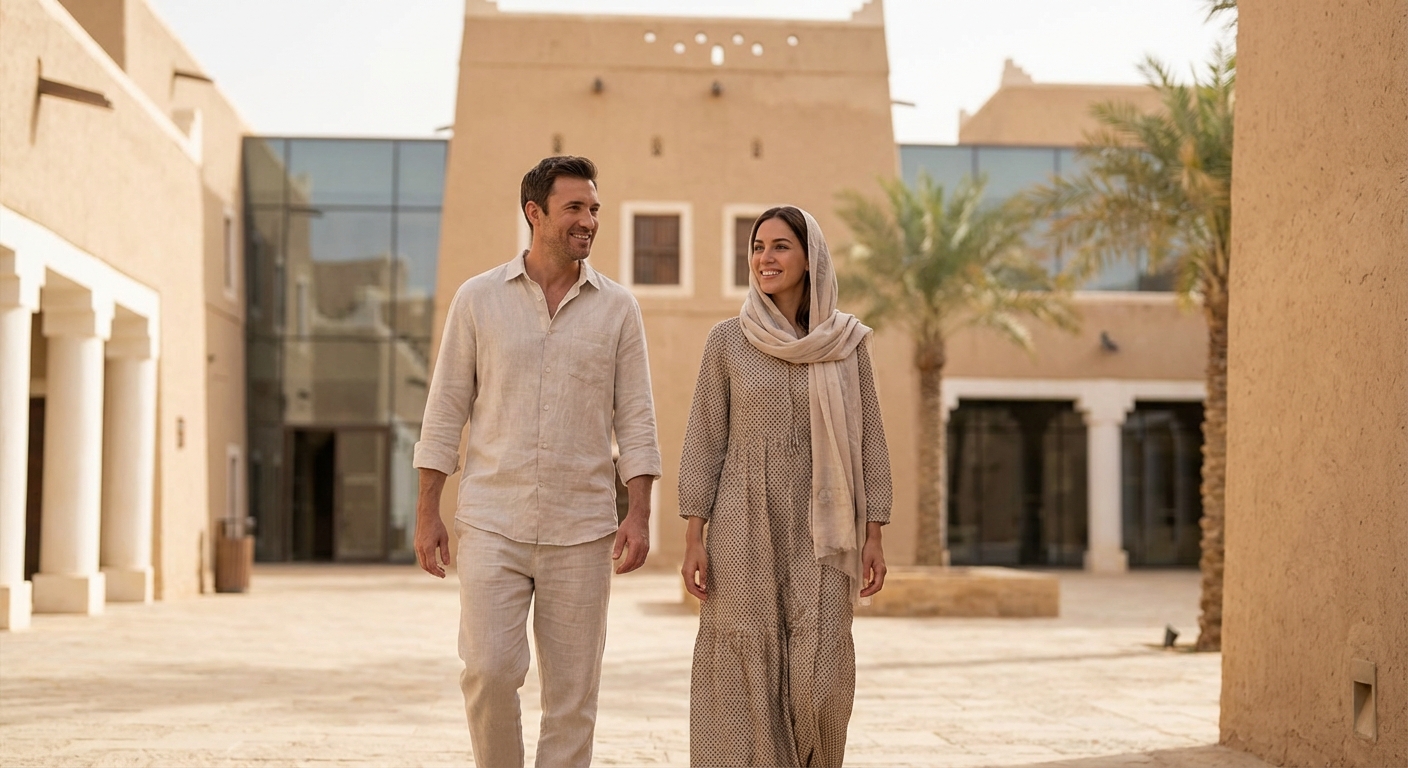
Planning your first trip to Saudi Arabia brings up one big question: what should you actually pack? The Kingdom has opened its doors to international tourists, but the dress code still confuses many visitors. You want to respect local customs without melting in the desert heat or packing your entire closet.
Saudi Arabia requires modest clothing for both men and women, but tourists are not legally required to wear abayas or thobes. Women should cover shoulders and knees, avoid tight or sheer fabrics, and carry a scarf for religious sites. Men should skip shorts and sleeveless shirts in public. The dress code is more relaxed in tourist areas, hotels, and private beaches. Pack breathable, loose-fitting clothes in light colors to stay comfortable in the heat.
Understanding Saudi dress expectations for tourists
Saudi Arabia has changed dramatically since opening to tourism in 2019. The rules around clothing have relaxed, especially for visitors. But understanding what locals expect will make your trip smoother and more enjoyable.
Women are no longer required to wear the traditional black abaya. That said, you still need to dress modestly. Think of it like visiting a nice restaurant with a dress code. You wouldn’t show up in a tank top and gym shorts.
Men face fewer restrictions but still need to keep it modest. The goal is simple: blend in enough that you’re not drawing unwanted attention.
The climate plays a huge role too. Summer temperatures can hit 45°C (113°F). You need clothes that keep you cool while meeting cultural standards.
What women should pack and wear
Your wardrobe needs to balance coverage with comfort. Here’s what works best:
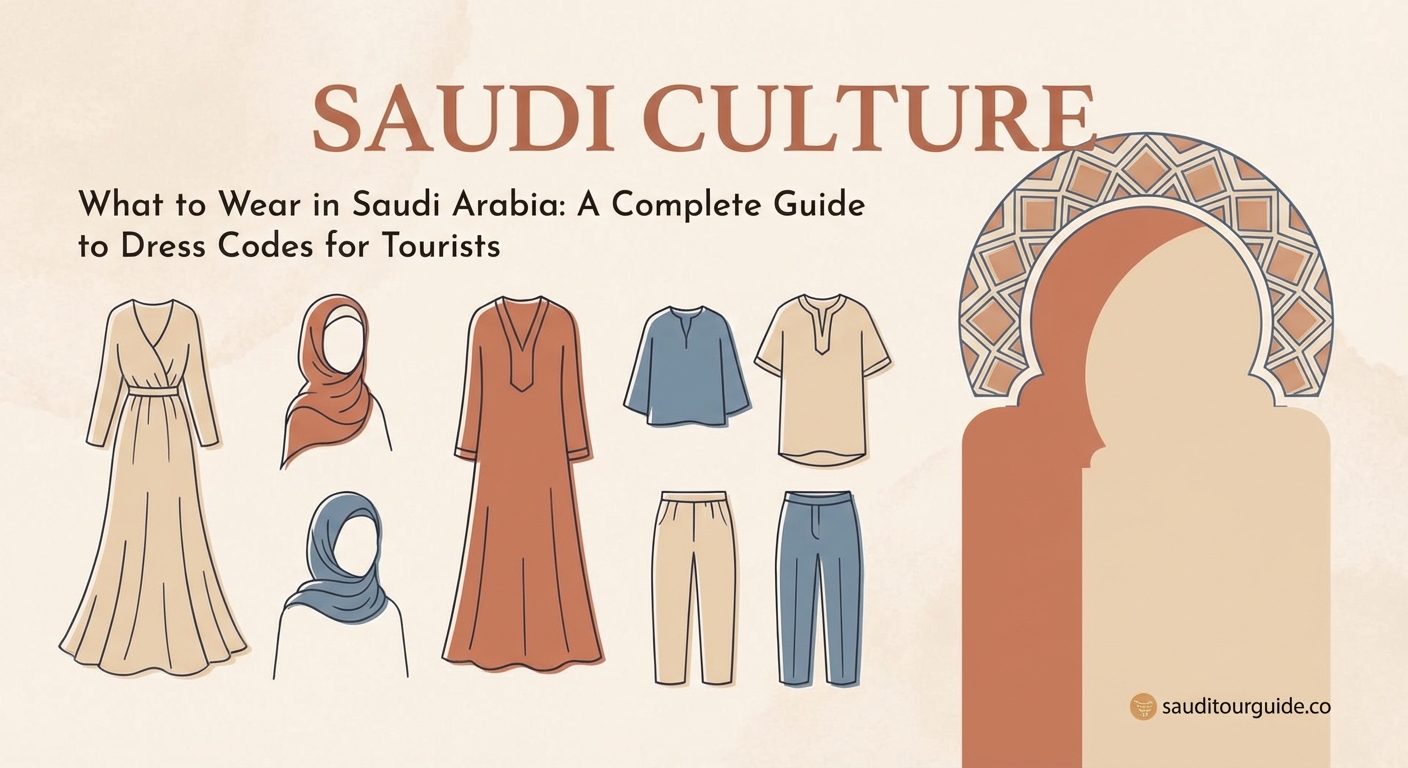
Long, loose pants or maxi skirts form your foundation. Linen and cotton breathe better than synthetic fabrics. Palazzo pants work perfectly. So do wide leg trousers.
For tops, choose shirts that cover your shoulders and reach your hips. Three quarter sleeves or long sleeves protect you from the sun anyway. Tunic style tops give you extra coverage without feeling restrictive.
A maxi dress becomes your best friend. Pick ones with sleeves or wear a light cardigan over sleeveless styles. Wrap dresses work well because you can adjust the fit.
Bring at least two scarves. You’ll need one for religious sites like mosques. The other serves as backup or extra sun protection. Lightweight cotton or chiffon scarves won’t make you overheat.
Your footwear can be casual. Sandals, sneakers, and flats all work. Save the flip flops for the hotel pool.
For swimwear, hotels and private beaches allow regular bikinis and one pieces. Public beaches require more coverage. A rash guard and swim leggings solve this problem.
Pack clothes in light colors like white, beige, and pastels. They reflect heat better than dark fabrics. Black might be traditional, but it absorbs every ray of desert sun.
What men should pack and wear
Men have it easier, but you still need to think about your choices.
Long pants are your standard. Jeans work fine. So do chinos and lightweight travel pants. Shorts are technically allowed now in some tourist areas, but they’re not common. Stick to pants for most situations.
Collared shirts and t-shirts both work. Just make sure your shirts have sleeves. Tank tops and muscle shirts don’t fly in public spaces.
Your shoes can be casual. Sneakers, loafers, and sandals all work. Closed toe shoes make sense for walking around historical sites.
At the beach or pool, regular swim trunks are fine. Just throw on a shirt when you leave the water area.
A light jacket helps in overly air conditioned malls and restaurants. It also works for cooler desert evenings.
Dressing for different locations and activities
Where you’re going matters as much as what you’re wearing.
Religious and historical sites
Mosques require the strictest dress code. Women must cover their hair, arms, and legs completely. Many mosques provide abayas at the entrance if you need one. Men need long pants and shirts with sleeves.
Historical sites like Diriyah and Al Ula are more relaxed but still expect modest coverage. Long pants and covered shoulders work for everyone.
Shopping malls and restaurants
Malls have become more lenient. You’ll see a mix of traditional dress and modern clothing. Stick to your modest basics and you’ll be fine.
High end restaurants expect smart casual attire. Think of it like dining out in any major city.
Hotels and resorts
Hotel properties are the most relaxed spaces. You can wear regular resort wear around the pool and beach areas. Shorts, swimsuits, and casual clothes all work here.
Some luxury hotels even have bars and lounges where dress codes match international standards.
Desert tours and outdoor activities
Loose, breathable clothes work best for desert adventures. Long sleeves actually protect you from sun exposure better than sunscreen alone.
Bring a hat, sunglasses, and closed toe shoes for desert activities. Sand gets everywhere, and you’ll want foot protection.
Seasonal clothing considerations
Saudi Arabia has two main seasons: hot and hotter.
Winter months (November to February)
Temperatures drop to 15-25°C (59-77°F). This is the comfortable season. You can still wear your modest basics, but you might want:
- A light jacket for evenings
- Long sleeve shirts without feeling like you’re melting
- Closed toe shoes without sweaty feet
Summer months (May to September)
Prepare for intense heat. Temperatures regularly exceed 40°C (104°F). Your strategy shifts to survival mode:
- Lightest fabrics possible
- Loose fits that allow air circulation
- Multiple outfit changes because you will sweat
- Extra scarves to wipe your face
Shoulder seasons (March, April, October)
These months offer the best weather. Warm but not unbearable. Pack your standard modest clothing without needing special heat management strategies.
Common clothing mistakes tourists make
Learning from others’ errors saves you hassle.
| Mistake | Why It’s a Problem | Better Choice |
|---|---|---|
| Packing only black clothes | Absorbs heat, makes you miserable | Light colors in breathable fabrics |
| Bringing just tight fitting clothes | Draws attention, uncomfortable in heat | Loose, flowy garments |
| Forgetting a scarf | Can’t enter mosques, miss important sites | Always pack 2-3 scarves |
| Wearing shorts everywhere | Culturally inappropriate in most places | Long pants or maxi skirts |
| Packing heavy fabrics | You’ll overheat within minutes | Linen, cotton, moisture wicking materials |
| Bringing only heels | Impractical for walking tours | Comfortable flats or sneakers |
Shopping for clothes in Saudi Arabia
You don’t need to pack perfectly. Saudi malls stock international brands and local options.
Major cities have Zara, H&M, and Mango. You’ll find modest clothing options that work for tourists and locals alike.
Traditional souqs sell abayas, thobes, and scarves at good prices. Buying an abaya can be practical. They’re easy to throw on over any outfit when visiting conservative areas.
Sizes generally follow international standards. Most staff speak English in major shopping areas.
What kids should wear
Children face more relaxed expectations, but modest clothing still makes sense.
For girls, leggings with long tunics work perfectly. So do maxi dresses and loose pants. Young girls under puberty have more flexibility, but teaching modest dress habits helps them feel comfortable.
Boys can wear regular t-shirts and long pants. Shorts are more accepted for young boys, especially in tourist areas and hotels.
Comfortable shoes matter most for kids. You’ll be walking a lot. Sneakers beat sandals for active sightseeing.
Packing your Saudi Arabia wardrobe
Here’s a practical packing list for a one week trip:
For women:
- 3-4 pairs of long pants or maxi skirts
- 5-6 modest tops with sleeves
- 2 maxi dresses
- 2-3 scarves
- 1 light cardigan or jacket
- Comfortable walking shoes
- Sandals for casual wear
- Swimwear plus cover up
- Undergarments and sleepwear
For men:
- 4-5 pairs of long pants
- 5-6 shirts (mix of collared and casual)
- 1 light jacket
- Comfortable walking shoes
- Casual shoes or sandals
- Swim trunks
- Undergarments and sleepwear
For everyone:
- Sunglasses and hat
- Sunscreen
- Reusable water bottle
- Small day bag
Accessories and personal items
Jewelry and accessories follow no special restrictions. Wear what you normally would.
Makeup is completely fine. You’ll see local women wearing full makeup. Some wear more dramatic looks than you’d see in Western countries.
Perfume and cologne are popular in Saudi culture. Locals love fragrance. You won’t offend anyone by wearing your favorite scent.
Bags and purses can be any style. Crossbody bags work well for keeping your hands free while sightseeing.
Watches and tech accessories are normal. You’ll see smartphones everywhere.
Adapting your style while respecting culture
You can still express your personal style within modest guidelines.
Love bright colors? Go for it. Saudis appreciate color and pattern.
Prefer minimalist style? Neutral tones and clean lines work beautifully.
Into bohemian looks? Flowy fabrics and loose silhouettes fit perfectly with modest requirements.
The key is working within the framework rather than fighting it. Think of it as a creative challenge instead of a restriction.
Practical tips for staying comfortable
Comfort matters as much as cultural appropriateness.
Layer strategically. Indoor spaces blast air conditioning. You’ll go from 45°C outside to 18°C inside. A light cardigan or scarf helps with the temperature shock.
Choose moisture wicking fabrics. Modern athletic fabrics designed for modest wear work amazingly well. They keep you dry and comfortable.
Bring extra outfit options. You might change clothes twice a day in summer. Pack more than you think you need.
Test your clothes before the trip. Wear your planned outfits around your house. Make sure nothing rides up, gaps open, or feels restrictive when you sit, bend, or walk.
Break in your shoes. New shoes plus lots of walking equals blisters. Wear your travel shoes for a few weeks before your trip.
Special considerations for business travelers
Business dress codes in Saudi Arabia lean conservative but professional.
Women should wear business suits with long sleeves and pants or long skirts. A blazer over a modest dress works too. Closed toe shoes are standard.
Men should wear business suits for formal meetings. Long sleeve dress shirts with dress pants work for less formal business settings. Ties are common but not always required.
International business standards apply in most corporate environments. You’ll see a mix of traditional Saudi dress and Western business attire.
Your wardrobe sets the tone for your trip
Getting your clothing right from the start lets you focus on experiencing Saudi Arabia instead of worrying about your outfit choices. You’ll feel more confident approaching locals, entering religious sites, and moving through different environments.
The dress code isn’t meant to restrict you. It’s simply part of showing respect for a culture that values modesty. Once you’ve packed the right clothes, you can stop thinking about what you’re wearing and start enjoying everything this fascinating country offers. Your thoughtful preparation shows cultural awareness that Saudis genuinely appreciate.