
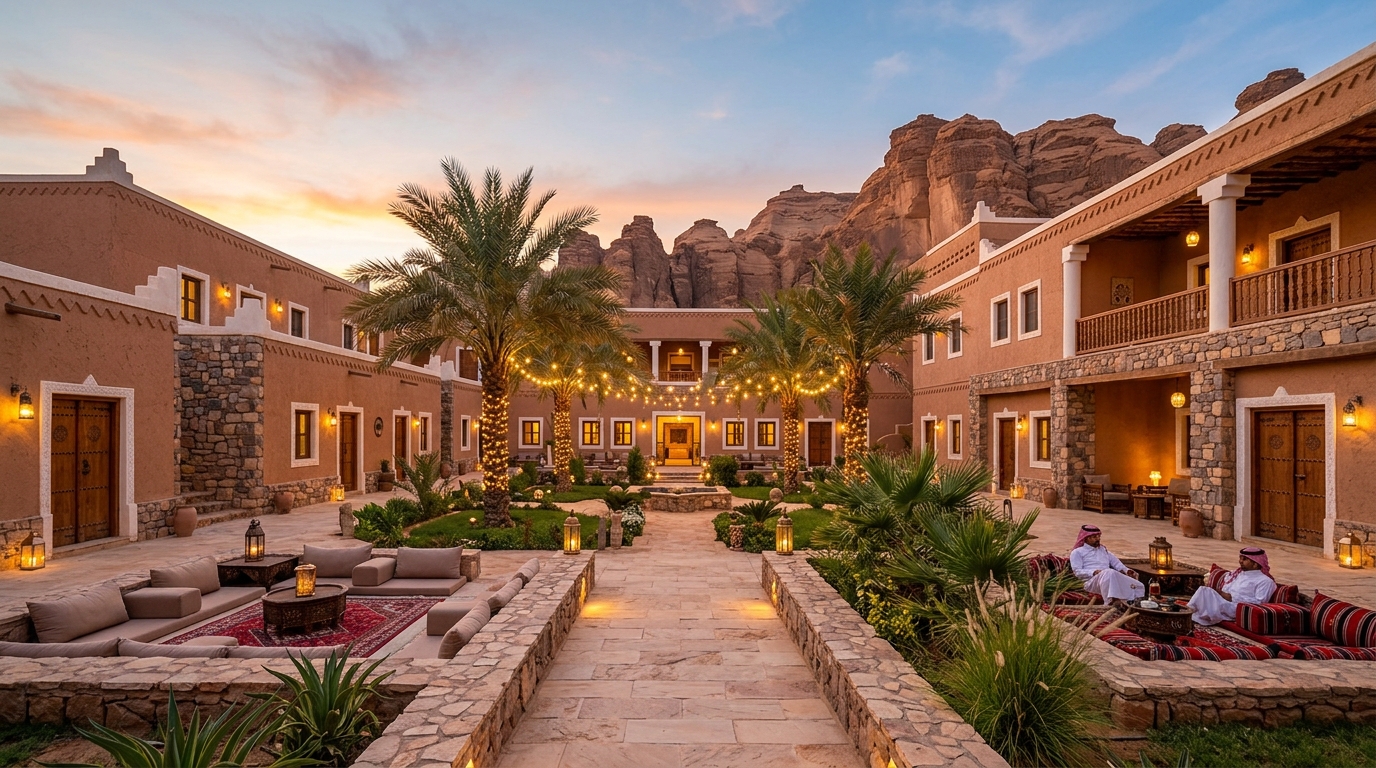
Saudi Arabia’s tourism scene has transformed dramatically in the past few years. The country now welcomes travelers from around the world, and with that shift comes a growing variety of places to stay. If you’re tired of the same international hotel lobbies and want something more memorable, you’re in the right place.
Saudi Arabia offers diverse accommodation beyond major hotel chains, including boutique properties in historic districts, heritage guesthouses in mountain villages, luxury desert camps, coastal resorts, and locally run apartments. Each region provides unique lodging experiences that connect travelers with authentic culture, landscapes, and local hospitality while supporting independent businesses and community tourism initiatives.
Boutique hotels in historic neighborhoods
Some of the most characterful places to stay sit inside restored buildings in old city centers. Jeddah’s Al-Balad district hosts several boutique properties that blend traditional Hijazi architecture with modern comfort. You’ll find carved wooden balconies, coral stone walls, and rooftop terraces overlooking the Red Sea.
These properties typically offer fewer than 20 rooms, which means personalized service and attention to detail. Staff members often live in the neighborhood and can point you toward family-run restaurants and artisan workshops that don’t appear in guidebooks.
Riyadh’s Diriyah area, the birthplace of the Saudi state, now features heritage-style guesthouses within walking distance of the restored mud-brick architecture at At-Turaif. Staying here puts you close to cultural sites while giving you a sense of how locals lived centuries ago.
If you’re planning to spend time in Jeddah’s historic Al-Balad district, booking a boutique hotel in the area saves you travel time and lets you experience the neighborhood after day-trippers leave.
Heritage guesthouses in mountain villages
The Asir region in southwestern Saudi Arabia looks nothing like the desert landscapes many travelers expect. Green terraces, stone villages, and cool mountain air define this area, and several families have converted traditional homes into guesthouses.
These properties range from simple rooms with shared facilities to more comfortable setups with private bathrooms and home-cooked meals. You’ll often eat with your hosts, learning about local farming practices and regional dishes that don’t appear in restaurants.
Staying in a heritage guesthouse supports local economies directly. Your payment goes to families who maintain these historic buildings and keep traditional crafts alive. Many hosts organize guided hikes, visits to weekly markets, or demonstrations of basket weaving and honey production.
The Asir region offers cooler temperatures year-round, making it a comfortable base for travelers who want to avoid extreme heat.
Desert camps for authentic Bedouin experiences
Sleeping under the stars in the Empty Quarter or near AlUla gives you a perspective on Saudi Arabia that no city hotel can match. Modern desert camps combine traditional Bedouin hospitality with comfortable bedding, private bathrooms, and quality meals.
These camps typically include guided activities like camel treks, sandboarding, stargazing sessions, and storytelling around evening fires. Some offer luxury tents with air conditioning and plush furnishings, while others keep things simpler with basic but clean accommodations.
Booking a desert camp usually includes transportation from nearby towns, all meals, and activities. This makes budgeting straightforward and removes the hassle of coordinating multiple services.
If you’re considering a multi-day desert safari in the Empty Quarter, choosing a reputable camp operator ensures you have experienced guides and proper safety equipment.
Coastal resorts along the Red Sea
Saudi Arabia’s Red Sea coastline stretches for more than 1,700 kilometers, and new resorts are opening regularly. These properties focus on diving, snorkeling, and beach relaxation, with many offering direct access to pristine coral reefs.
Smaller, independently run resorts provide a more intimate atmosphere than large international chains. You’ll find properties with 10 to 30 rooms, often managed by diving enthusiasts who know the best sites and can arrange boat trips to remote islands.
These resorts typically include dive centers with rental equipment, certified instructors, and daily boat departures. Some also offer kayaking, paddleboarding, and fishing trips.
The Red Sea diving scene rivals famous destinations like Egypt and Jordan, but with far fewer crowds and untouched reefs.
Serviced apartments for longer stays
If you’re spending more than a few days in one city, serviced apartments offer better value and more space than hotel rooms. These properties include kitchens, washing machines, and separate living areas, making them practical for families or business travelers.
Major cities like Riyadh, Jeddah, and Dammam have numerous apartment options, from budget studios to multi-bedroom units in residential towers. Many buildings include gyms, pools, and parking, with weekly or monthly rates significantly lower than daily hotel prices.
Booking platforms now list hundreds of apartments across Saudi Arabia, with detailed photos and verified reviews. You can filter by neighborhood, amenities, and price range to find exactly what you need.
Staying in an apartment puts you in residential areas where you’ll shop at local markets, eat at neighborhood cafes, and interact with Saudis going about their daily lives. This immersion helps you understand the culture better than staying in tourist zones.
Farm stays and eco-lodges
Agricultural tourism is growing in Saudi Arabia, particularly in regions with date palm plantations, organic farms, and livestock operations. Some farms now welcome guests for overnight stays, offering rooms in renovated farmhouses or purpose-built guesthouses.
These properties let you participate in farm activities like harvesting dates, feeding animals, or learning traditional irrigation methods. Meals feature ingredients grown on-site, and hosts often share knowledge about sustainable farming practices adapted to desert conditions.
Eco-lodges in areas like Tabuk and Asir focus on minimal environmental impact, using solar power, water conservation systems, and locally sourced building materials. These properties attract travelers interested in responsible tourism and outdoor activities.
Farm stays work well for families with children who enjoy hands-on experiences and learning about where food comes from. The pace is slower than city hotels, giving you time to relax and disconnect.
How to book accommodation beyond major chains
Finding and booking independent properties in Saudi Arabia requires a bit more research than clicking familiar hotel websites, but the process is straightforward.
- Start with specialized booking platforms that list boutique hotels, guesthouses, and unique stays alongside mainstream options.
- Read recent reviews carefully, paying attention to comments about cleanliness, location, and host responsiveness.
- Contact properties directly through messaging systems to ask specific questions about facilities, transportation, or meal options.
- Confirm booking details in writing, including check-in procedures, payment methods, and cancellation policies.
- Save contact information for your host or property manager in case you need directions or have questions during your trip.
Many independent properties don’t appear on international booking sites but maintain active social media accounts or simple websites. Searching in Arabic or using location-based tags can reveal options that English-language searches miss.
Comparing accommodation types
| Accommodation Type | Best For | Typical Price Range | Booking Difficulty |
|---|---|---|---|
| Boutique hotels | Culture seekers, couples | $$$ | Easy |
| Heritage guesthouses | Adventure travelers, families | $ to $$ | Moderate |
| Desert camps | Nature lovers, photographers | $$ to $$$$ | Easy |
| Coastal resorts | Divers, beach enthusiasts | $$ to $$$ | Easy |
| Serviced apartments | Long stays, business travelers | $ to $$ | Easy |
| Farm stays | Families, eco-tourists | $ to $$ | Moderate |
What to expect from local hospitality
Saudi hospitality traditions run deep. Even in commercial accommodations, you’ll likely experience generosity that goes beyond standard service. Hosts often offer Arabic coffee and dates upon arrival, share local knowledge freely, and treat guests with genuine warmth.
“The difference between staying at an international hotel and a local guesthouse in Saudi Arabia isn’t just about the building. It’s about the people you meet and the stories you hear. Our guests often tell us that conversations with our family were the highlight of their trip.” – Owner of a heritage guesthouse in Asir
This personal connection makes independent accommodations memorable. You’re not just renting a room; you’re entering someone’s community and learning about their way of life.
Regional accommodation highlights
Different parts of Saudi Arabia offer distinct lodging experiences based on geography and culture.
In the northwest, near AlUla and Tabuk, you’ll find properties designed for exploring ancient Nabataean sites and dramatic rock formations. Many include guided tours to archaeological areas and arrange permits for restricted sites.
The Eastern Province, along the Arabian Gulf coast, has business-focused serviced apartments and beach chalets popular with weekend visitors from Riyadh and Dammam. These properties cater to domestic tourists and offer good value.
Central Arabia around Riyadh features modern boutique hotels in historic districts and farm stays in surrounding agricultural areas. The capital’s rapid growth means new independent properties open regularly.
The south, including Asir and Najran, specializes in mountain guesthouses and cultural experiences. Cooler weather makes this region comfortable year-round, and accommodations often include access to hiking trails and traditional villages.
Practical considerations for independent stays
Booking outside major chains requires attention to a few practical details that international hotels handle automatically.
- Confirm whether the property offers airport transfers or can arrange transportation, as many independent accommodations sit in areas with limited taxi service
- Ask about meal options, especially for breakfast, since smaller properties may not have on-site restaurants
- Check internet quality if you need reliable connectivity for work or staying in touch with family
- Verify payment methods, as some local guesthouses prefer cash or specific local payment apps
- Understand check-in procedures, particularly if you’re arriving late or the property doesn’t have 24-hour reception
These small preparations prevent confusion and ensure smooth arrivals, especially after long flights.
Supporting local tourism economies
Choosing independent accommodations puts your money directly into local hands. Family-run guesthouses, small resorts, and heritage properties employ local staff, purchase supplies from nearby businesses, and reinvest profits in their communities.
This economic impact matters in regions where tourism is just beginning to develop. Your stay helps preserve traditional buildings, supports cultural heritage, and creates incentives for young Saudis to remain in their home villages rather than moving to cities.
Many independent properties also participate in cultural preservation projects, documenting traditional architecture, collecting oral histories, or teaching traditional crafts to younger generations. Your booking fee often contributes to these efforts.
Combining different accommodation types
You don’t need to commit to one lodging style for your entire trip. Many travelers mix boutique hotels in cities with desert camps for a few nights and heritage guesthouses in mountain areas.
This variety keeps your trip interesting and lets you experience different aspects of Saudi culture. You might spend three nights in a Jeddah boutique hotel exploring the old city, then move to a Red Sea resort for diving, followed by a desert camp near AlUla.
Planning this kind of itinerary takes more coordination than staying in one place, but the diverse experiences make it worthwhile. Leave buffer days between locations for travel and rest.
If you’re planning a road trip along Saudi Arabia’s Red Sea coast, you can book different types of coastal accommodation in each town, from fishing village guesthouses to small beach resorts.
Understanding Saudi hospitality customs
Staying in locally run accommodations means encountering Saudi social customs more directly than in international hotels. A few cultural points help you navigate these interactions smoothly.
Saudi hosts often insist on serving coffee and dates. Accepting this hospitality, even if you’re not hungry, shows respect. You can learn about Saudi coffee traditions to appreciate the ritual better.
Dress modestly in common areas and when interacting with hosts, particularly in smaller towns and rural properties. This doesn’t mean you need to cover completely, but conservative clothing shows cultural awareness. Our guide on what to wear in Saudi Arabia covers appropriate clothing choices.
Understanding basic Saudi social etiquette helps you interact comfortably with hosts and other guests.
Seasonal considerations for booking
Where you stay in Saudi Arabia often depends on when you visit. Summer temperatures in most regions exceed 40°C (104°F), making mountain guesthouses and coastal properties more comfortable than desert camps or inland cities.
Winter months (November through February) offer pleasant weather nearly everywhere, creating high demand for popular properties. Book well in advance if you’re traveling during this peak season or during major events like Saudi National Day.
Spring (March and April) brings moderate temperatures and blooming wildflowers in northern regions, making it ideal for farm stays and outdoor-focused accommodations.
Fall (September and October) sees fewer tourists but still-warm weather. You’ll find better availability and sometimes lower prices at independent properties during this shoulder season.
Finding your perfect Saudi accommodation
The best place to stay depends entirely on what you want from your trip. Culture enthusiasts gravitate toward heritage properties in historic districts. Adventure seekers choose desert camps and mountain guesthouses. Beach lovers head to Red Sea resorts. Long-term visitors prefer serviced apartments.
Start by identifying your priorities: budget, location, activities, cultural immersion, or comfort level. Then research properties that match those criteria, reading reviews from travelers with similar interests.
Don’t hesitate to contact property owners with questions. Most are happy to provide detailed information and recommendations. This direct communication often reveals whether a property suits your needs better than any review or photo can show.
Your accommodation choice shapes your entire Saudi experience. A well-chosen guesthouse, boutique hotel, or desert camp becomes more than just a place to sleep. It becomes your gateway to understanding this rapidly changing country and connecting with the people who call it home.