
Most travelers imagine Saudi Arabia as endless dunes and scorching heat. The Asir region flips that script completely. Tucked into the southwestern corner of the kingdom, this mountainous paradise serves up green terraced farms, misty peaks reaching over 3,000 meters, and temperatures that drop to single digits in winter. You’ll find baboons in the wild, villages clinging to cliffsides, and a culture distinct from anywhere else in the country.
The Asir region Saudi Arabia transforms expectations with its cool mountain climate, lush valleys, and unique culture. Located in the southwest, it features peaks above 3,000 meters, traditional stone villages, cable car rides with spectacular views, and outdoor activities from hiking to paragliding. The region offers a completely different side of Saudi Arabia that few international travelers have discovered yet.
Why the Asir region stands apart from the rest of Saudi Arabia
The Asir mountains create their own weather system. Monsoon winds from the Indian Ocean collide with these peaks, dropping rain that nourishes juniper forests and agricultural terraces. Summer temperatures hover around 25°C while the rest of the kingdom bakes at 45°C.
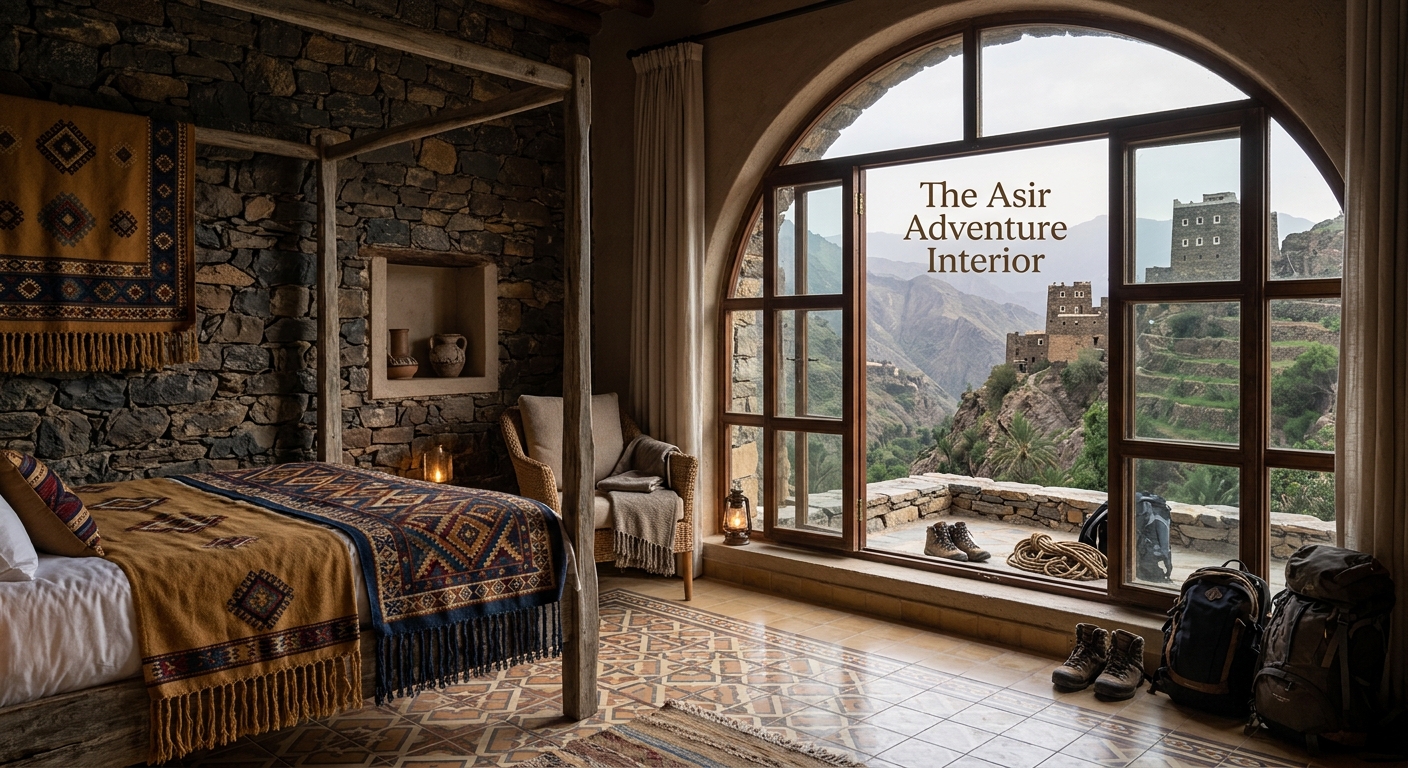
This climate shaped a distinct culture. Asiri architecture uses flat stones stacked without mortar, painted with geometric patterns in white and indigo. Women traditionally wore flower crowns, and men still sport the distinctive ankle-length thobe with colorful embroidery.
The region remained relatively isolated until recent decades. That isolation preserved traditions that disappeared elsewhere. You’ll still see farmers using ancient terracing methods and craftspeople making traditional daggers by hand.
Getting to Asir and moving around
Abha Regional Airport connects the region to Riyadh, Jeddah, and Dammam with daily flights. The drive from Jeddah takes about eight hours through changing landscapes, from coastal plains to mountain switchbacks.
Most visitors base themselves in Abha, the regional capital at 2,200 meters elevation. The city offers the widest range of hotels and restaurants. From there, day trips reach most major sites within two hours.
Renting a car gives you the freedom to stop at viewpoints and small villages. Roads are well maintained but expect hairpin turns and steep grades. Local drivers know these routes intimately, so don’t feel pressured to match their speed.
Public transportation exists but runs infrequently outside Abha. Taxis and ride-sharing apps work in the main cities. For remote trailheads and villages, your own wheels make the difference between seeing three sites or just one.
Before you travel, sort out your entry requirements through how to apply for your Saudi Arabia e-visa in under 10 minutes. The process has become remarkably simple for citizens of eligible countries.
Must-see destinations in the Asir region
Habala Village
This stone village clings to a cliff face 300 meters above the valley floor. Residents once accessed it only by rope ladders, earning the nickname “Hanging Village.” Today, a cable car drops you down in minutes.
The village itself feels frozen in time. Stone houses with slate roofs cluster together on the narrow ledge. Walking paths connect the buildings, offering views straight down into the valley.
The cable car ride alone justifies the visit. You descend through layers of mist, watching the cliff face change from bare rock to vegetation-covered stone. Early morning offers the best light and fewer crowds.
Rijal Almaa
This fortified village showcases traditional Asiri architecture at its finest. Four and five-story stone towers stand packed together, their facades decorated with white quartz and slate arranged in geometric patterns.
The village now functions as an open-air museum. You can enter many buildings to see traditional furnishings, agricultural tools, and weapons. The narrow alleys between towers create a maze worth getting lost in.
Local guides offer tours that bring the history alive. They explain how families defended against raiders, stored grain through winter, and maintained the intricate facade decorations. The site sits about 45 minutes from Abha.
Al Soudah Park
At 3,015 meters, Al Soudah claims the title of Saudi Arabia’s highest point. The park surrounding the peak offers hiking trails through juniper forests, viewpoints over terraced valleys, and Arabia’s only ski resort (though snow remains unpredictable).
The cable car here ranks among the longest in the Middle East. It carries you from the valley floor to the peak in about 20 minutes, passing through distinct climate zones. You might start in sunshine and arrive in fog.
Summer brings Saudi families escaping the heat. The park gets crowded on weekends and holidays. Visit on weekdays if possible, or arrive early to claim parking spots near the best trailheads.
Abha’s Green Mountain
This peak in the center of Abha city gets its name from the LED lights that illuminate it at night. The summit offers 360-degree views of the city and surrounding mountains.
A cable car runs from the base to the summit, though the walk up takes only 30 minutes if you’re reasonably fit. The top features restaurants, cafes, and viewing platforms.
The real draw comes after sunset when the city lights up below and the mountain itself glows green. The light show changes colors throughout the evening, creating photo opportunities that don’t exist anywhere else in Saudi Arabia.
Outdoor activities that make Asir special
The mountains create opportunities you won’t find in the rest of the kingdom. Here’s what draws adventure travelers:
- Paragliding from Al Soudah peak with views stretching to the Red Sea on clear days
- Multi-day hiking through the Sarawat Mountains on trails connecting traditional villages
- Rock climbing on granite faces near Tanomah
- Mountain biking down terraced valleys with 1,000-meter descents
- Wildlife watching for Arabian leopards (extremely rare), baboons, and endemic bird species
- Canyoning through wadis that flow year-round unlike most of Arabia
Local tour operators have emerged in the past few years. They provide equipment, guides, and transportation to remote starting points. Safety standards have improved dramatically as tourism infrastructure develops.
The hiking season runs from October through April. Summer brings afternoon thunderstorms that can turn trails dangerous. Winter occasionally drops snow on the highest peaks, closing some routes but creating unique photo opportunities.
Planning your Asir adventure step by step
Getting the timing and logistics right makes the difference between a good trip and a great one. Follow these steps:
-
Choose your season carefully. October through March offers the most reliable weather. April and May bring wildflowers but also unpredictable storms. June through September sees afternoon rain and the most Saudi domestic tourists.
-
Book accommodations in advance during peak periods. Saudi school holidays and long weekends fill hotels in Abha and Al Soudah. The Eid holidays require reservations months ahead. Outside these periods, you can often find same-day availability.
-
Plan a minimum of four full days. This allows time for Habala, Rijal Almaa, Al Soudah, and one day for hiking or exploring smaller villages. A week lets you slow down and really absorb the culture. Many visitors wish they’d allocated more time once they arrive.
-
Pack layers regardless of season. Morning temperatures in the mountains can sit 20 degrees below afternoon highs. A light jacket proves essential even in summer. Rain gear makes sense from April through September.
-
Download offline maps before leaving the city. Cell coverage exists on main roads but disappears in valleys and remote areas. Google Maps offline mode works well. Some hiking trails appear on apps like Maps.me.
What to pack for mountain conditions
| Essential items | Why you need them | Common mistakes |
|---|---|---|
| Broken-in hiking boots | Rocky trails and steep terrain | Bringing new boots that cause blisters |
| Sun protection (SPF 50+) | Altitude intensifies UV exposure | Assuming clouds mean no sun risk |
| Insulated water bottle | Keeps drinks cold in heat, warm in cold | Carrying plastic bottles that crack |
| Power bank | Limited charging options on trails | Draining phone battery on photos |
| Modest clothing | Respects local culture in villages | Wearing shorts in traditional areas |
| First aid basics | Nearest hospital may be hours away | Relying only on tour operator supplies |
The dress code in Asir follows the same guidelines as the rest of Saudi Arabia. Women don’t need to wear abayas, but modest clothing (covered shoulders and knees) shows respect. Men should avoid shorts in villages and religious sites. Check what to wear in Saudi Arabia for detailed guidance.
Food and dining in the region
Asiri cuisine reflects the agricultural abundance. You’ll find dishes that don’t appear on menus elsewhere in the kingdom.
Areeka tops the list of local specialties. This grain-based dish combines wheat, meat, and a blend of spices unique to the region. Restaurants serve it in a communal bowl, eaten with your right hand.
The region produces excellent honey. Roadside stands sell it directly from beekeepers, often with the honeycomb still attached. The flavor varies by season and which flowers the bees visited.
Fresh produce appears year-round thanks to the terraced farms. Markets in Abha overflow with pomegranates, figs, apricots, and vegetables. Many restaurants source ingredients locally, giving dishes a freshness you’ll notice.
Coffee culture here predates the modern cafe trend by centuries. Traditional Asiri coffee uses lightly roasted beans spiced with ginger and cardamom. It’s served in small cups, and refusing a refill can seem rude. Accept at least two cups before politely declining more.
Understanding Asiri culture and traditions
The Asir region maintained its distinct identity partly through geography and partly through choice. The mountains created natural barriers that limited outside influence.
Traditional Asiri society organized around agriculture and trade. Villages perched on defensible positions, with terraced farms below. Extended families lived in multi-story towers, with animals on the ground floor and living quarters above.
Flower men of Asir became famous for wearing crowns of herbs and flowers. This tradition continues at festivals and special occasions. The practice started as a practical way to carry medicinal plants, then evolved into a cultural marker.
Women’s traditional dress featured elaborate embroidery and silver jewelry. While daily wear has modernized, you’ll still see traditional outfits at weddings and cultural events.
The region has opened to tourism while trying to preserve authenticity. Some villages have established cultural centers where visitors can watch traditional crafts, taste local foods, and learn about history. These provide income to communities while maintaining heritage.
“The Asir mountains taught us to work with nature, not against it. Our terraces follow the contours of the land. Our houses use stones from nearby. Our festivals celebrate the rain and harvest. Tourism brings change, but we choose what to keep and what to adapt.” – Local guide in Rijal Almaa
Practical tips for a smooth visit
Currency and payments: Most hotels and restaurants in Abha accept credit cards. Smaller villages and roadside vendors deal in cash only. ATMs exist in all major towns.
Language: Arabic dominates, but English speakers have increased with tourism development. Hotel staff and tour guides typically speak English. Learning basic Arabic phrases helps in villages.
Internet connectivity: 4G coverage reaches main roads and cities. Remote areas and valleys lose signal. Hotels offer WiFi, though speeds vary.
Safety: The region ranks as very safe for travelers. Petty crime remains rare. The main risks come from mountain driving and hiking without proper preparation. Stick to marked trails and don’t hike alone in remote areas.
Photography: Most locals don’t mind photos of landscapes and architecture. Always ask permission before photographing people, especially women. Some may decline, and that’s fine.
Shopping: Traditional daggers, honey, woven baskets, and embroidered textiles make authentic souvenirs. Bargaining is expected in markets but not in established shops. Start at about 60% of the asking price.
Combining Asir with other Saudi destinations
The Asir region pairs well with other parts of the kingdom for travelers with more time. The Red Sea coast lies just a few hours west, offering diving and beach time as a contrast to mountain adventures.
Jeddah makes a logical starting or ending point. The historic Al-Balad district and modern waterfront provide urban experiences before or after mountain time. The city also serves as a hub for flights and car rentals.
For those interested in seeing more of the country’s diversity, check out these hidden gems in Saudi Arabia that most tourists miss. The kingdom contains surprising variety beyond the famous sites.
Budget-conscious travelers should review realistic costs before planning. Understanding expenses helps avoid surprises and allows better planning. See how much a week in Saudi Arabia really costs for detailed breakdowns.
When to visit for the best experience
Timing affects everything from weather to crowds to prices. Here’s what each season brings:
October through November: Perfect weather with clear skies and comfortable temperatures. Hotels fill on weekends but remain available midweek. This period offers the best hiking conditions.
December through February: Cool to cold, especially at higher elevations. Some years bring snow to Al Soudah. Fewer tourists mean better deals on accommodations. Pack warm layers.
March through April: Wildflowers bloom across the mountains. Temperatures rise but remain pleasant. Spring break brings Saudi families, so book ahead.
May: Shoulder season with unpredictable weather. You might catch perfect conditions or afternoon storms. Hotels offer low-season rates.
June through September: The rainy season brings afternoon thunderstorms and the most domestic tourists escaping heat elsewhere. Mornings often stay clear. This period sees the highest hotel prices and most crowded attractions.
Why Asir deserves a spot on your Saudi itinerary
Most international visitors to Saudi Arabia stick to Riyadh, Jeddah, and AlUla. That leaves the Asir region refreshingly uncrowded despite its spectacular scenery and unique culture.
The mountains offer experiences that contradict every stereotype about the Arabian Peninsula. You’ll need jackets instead of sun hats. You’ll see green valleys instead of sand dunes. You’ll experience a regional culture that feels distinct from the rest of the kingdom.
The infrastructure has improved dramatically in recent years. New hotels, better roads, and professional tour operators make visiting easier than ever. Yet the region hasn’t lost its authentic character. Villages still function as communities, not just tourist sites.
For adventure travelers, the combination of hiking, paragliding, rock climbing, and mountain biking creates a playground that rivals better-known destinations. For culture seekers, the traditional architecture and living heritage offer insights you won’t find in museums.
The Asir region Saudi Arabia represents the kingdom’s diversity in one dramatic package. It challenges assumptions and rewards curiosity. Whether you spend three days or three weeks, you’ll leave with stories that surprise people back home.
Start planning your mountain adventure now. The Asir region won’t stay undiscovered forever.