
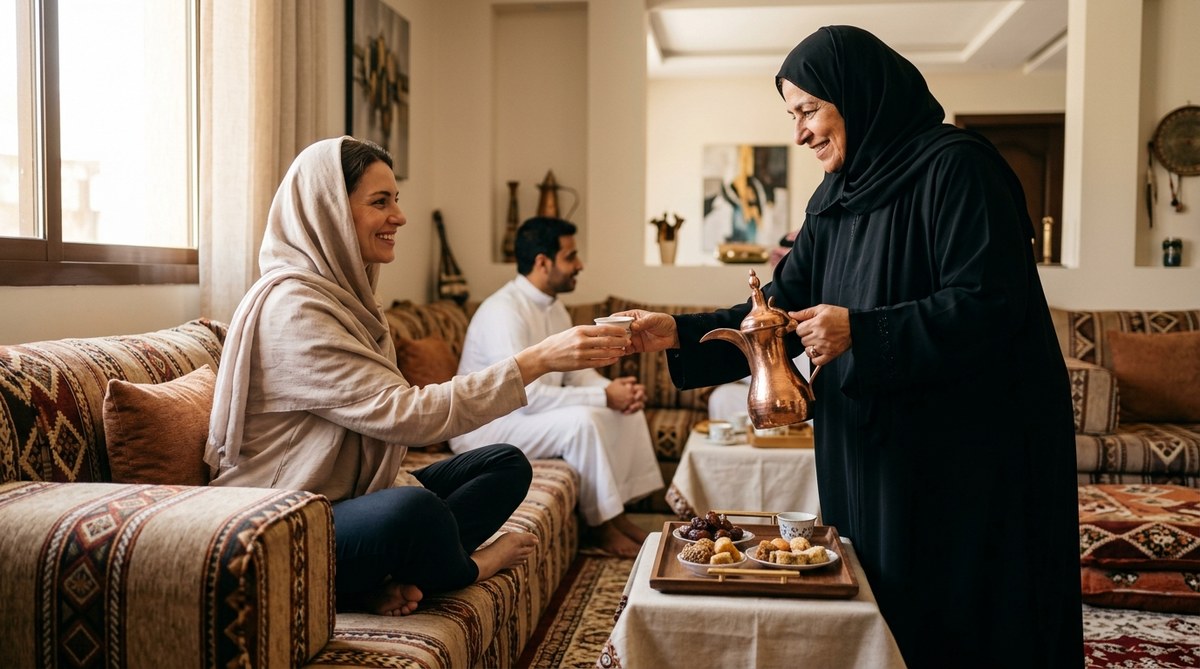
A Saudi home is where hospitality becomes an art form. The moment you step through the door, you enter a world rooted in generosity, respect, and tradition. Getting the etiquette right makes your visit unforgettable for all the right reasons. Whether you are a business traveler, an expatriate, or a tourist exploring the Kingdom, understanding Saudi home customs helps you connect with your hosts on a deeper level.
Saudi hospitality is legendary. As a guest, you are expected to accept refreshments, eat with your right hand, and avoid sensitive topics like religion or politics. Greetings matter: men usually shake hands, while women may offer cheek kisses. Removing your shoes at the door and dressing modestly shows deep respect. A small gift, such as dates or sweets, is always appreciated.
Arriving at the Door: First Impressions Matter
When you arrive at a Saudi home, your host will likely meet you at the entrance. This is the moment to set the tone for the entire visit. Be on time, but understand that Saudis operate on a looser schedule than what you might be used to in the United States. Arriving five to ten minutes late is perfectly acceptable.
Dress for the occasion. Modest clothing is a must. For men, long trousers and a collared shirt work well. Women should wear loose fitting clothes that cover the arms and legs. A headscarf is not always required for non Muslim visitors, but having one handy shows thoughtfulness. If you are unsure, check our guide on what to wear in Saudi Arabia.
Shoes off or on? In many Saudi homes, you are expected to remove your shoes at the door. Watch what your host does, and follow their lead. If the entryway is lined with slippers, slip into a pair.
The Art of Greeting: Handshakes, Cheek Kisses, and Hospitality
Greetings in Saudi Arabia are warm and layered. The standard phrase is Assalamu Alaikum (peace be upon you), and the reply is Wa Alaikum Assalam. When meeting someone of the same gender, a handshake is common. Men often place their left hand on the other person’s shoulder or chest as a sign of respect.
Between genders, the rules are different. A man should never offer his hand to a Saudi woman unless she extends hers first. For female visitors, the same applies in reverse. When in doubt, simply place your right hand over your heart and nod with a smile. That gesture is understood universally.
If you are invited to a family gathering, your host may introduce you to relatives. Use formal titles like Ustaz (Mr.) or Ustaza (Mrs.) unless invited to use first names. For more on the nuances of social interaction, read our article on how to greet and interact with locals.
Expert Tip: When greeting an elder, it is customary to kiss the top of their hand or their forehead. If you are not comfortable, a respectful handshake paired with a slight bow of the head is perfectly fine.
Inside the Majlis: Seating, Refreshments, and Conversation Flow
The majlis (sitting room) is the heart of any Saudi home. Floors are often covered with plush carpets and cushions, and the seating is arranged along the walls. Guests sit in order of importance or age, with the oldest or most senior guest taking the seat closest to the host.
Never sit with your feet pointing at anyone. That is considered disrespectful. Keep your feet tucked under you or to the side. If the room is segregated by gender, follow your host’s guidance without question. Many modern homes have mixed gathering spaces, but traditional homes still separate men and women.
Your host will immediately offer refreshments. Always accept something, even if you only take a sip. Refusing outright can be seen as rejecting hospitality. Drinks typically include tea, coffee, or water. The coffee ritual is a cornerstone of Saudi culture, and we will cover it next.
The Coffee Ritual: When to Accept and When to Decline
Saudi coffee (qahwa) is a symbol of generosity. It is light, spiced with cardamom and saffron, and served in small, handleless cups called finjan. The ritual follows a specific sequence:
- A server or host holds the coffee pot (dallah) in their left hand and pours with their right.
- They offer the cup to you. Take it with your right hand.
- Sip slowly. The coffee is meant to be savored, not gulped.
- When you have had enough, gently shake the cup from side to side as you hand it back. That signals “no more.”
- If you do not shake the cup, they will refill it. It is polite to accept at least one cup, but three is traditional.
Dates are usually served alongside the coffee. Eat one date to balance the bitterness. For a deeper look at this tradition, see our guide on 10 Saudi coffee traditions every visitor should experience.
Dining Etiquette: Eating With the Right Hand and Leaving a Little
If your visit includes a meal, you are in for a treat. Saudi hosts often serve generous portions of dishes like kabsa (spiced rice with meat) or mandi. Meals are usually shared from a large platter. Use your right hand only when eating from the communal dish. The left hand is reserved for personal hygiene.
Do not eat everything on your plate. Leaving a small amount of food signals that the host provided more than enough. Finishing everything could imply you are still hungry. It is a subtle but important difference from Western dining customs.
If you are given a spoon or fork, use it. But if the host eats with their hand, feel free to join in. Scoop rice with your thumb and three fingers, using the palm as a base. It takes practice, but showing effort is appreciated.
Pacing yourself matters. Meals can last a long time. Conversation flows between courses. Avoid discussing business at the table unless your host brings it up. This is a time for connection, not deals.
Gifts and Gratitude: What to Bring and What to Avoid
Bringing a small gift is a kind gesture. The best choices are neutral and universally appreciated.
- Dates or Middle Eastern sweets
- High quality nuts or dried fruit
- A small plant or flowers (but check for allergies)
- Perfume or oud, if you know the host’s preferences
Avoid alcohol in any form, even if it is a bottle you would normally bring to a dinner party in the US. Also avoid anything made of pigskin or containing pork gelatin. Gifts that are too personal, like clothing or jewelry, can feel awkward.
How to present a gift. Offer it with your right hand or both hands. Minimize wrapping paper that features religious symbols or animals. A simple box or pouch works best. Your host will likely open it later, not in front of you.
| Do This | Avoid This |
|---|---|
| Accept all offered refreshments | Refuse food or drink outright |
| Use your right hand for eating and handing things | Point your feet at anyone |
| Shake hands with the same gender only | Offer a hand to the opposite gender first |
| Compliment the home and hospitality | Overly praise specific items (host may feel obligated to give them) |
| Leave a little food on your plate | Clean your plate entirely |
Common Mistakes to Avoid When Visiting a Saudi Home
Even well meaning guests can slip up. Here are pitfalls to steer clear of:
- Talking about politics or religion. These topics are deeply personal and can create tension. Stick to family, travel, food, and culture.
- Walking into private areas. Bedrooms or kitchens are off limits unless invited. Stay in the majlis or living areas.
- Refusing tea or coffee too many times. Two polite refusals are okay. A third can seem rude. Accept a small cup even if you just hold it.
- Asking about female family members. Unless you are a close friend, do not inquire about the host’s wife or daughters. Say “How is the family?” instead.
- Taking photos without permission. Saudi homes are private spaces. Always ask before pulling out your camera. Learn more in our guide on can you take photos in Saudi Arabia.
When the Visit Ends: Departure and Follow Up
The end of the visit is just as important as the beginning. Typically, the host will not rush you out. You might notice subtle cues like the host standing up or thanking you repeatedly for coming. That is your signal to start wrapping up.
Thank your host warmly. Use phrases like Shukran jazeelan (thank you very much) or Allah yatik al afia (God give you health). If you enjoyed the food, say Sahtain (double health). Your host will likely insist you stay longer. Protest gently, then accept with a smile.
Follow up with a text or phone call the next day. A simple message saying “Thank you for your generous hospitality, I had a wonderful time” goes a long way in Saudi culture. It strengthens the relationship and opens the door for future invitations.
For a broader overview of Saudi social norms, read our complete guide to Saudi hospitality. And if you are planning a longer trip, check out our 7 day itinerary combining Riyadh, AlUla, and the Edge of the World to experience the best of Saudi Arabia beyond the home.
Putting It All Into Practice
Visiting a Saudi home is not just about following rules. It is about honoring a tradition of generosity that has been passed down for centuries. When you arrive with an open mind, accept the coffee, eat with your right hand, and share stories with genuine curiosity, you become part of that tradition. Your host will remember your respect long after you leave. So take these tips to heart. Prepare a smile, learn a few Arabic phrases, and let the experience unfold naturally. You will leave with a full stomach and a fuller heart.