
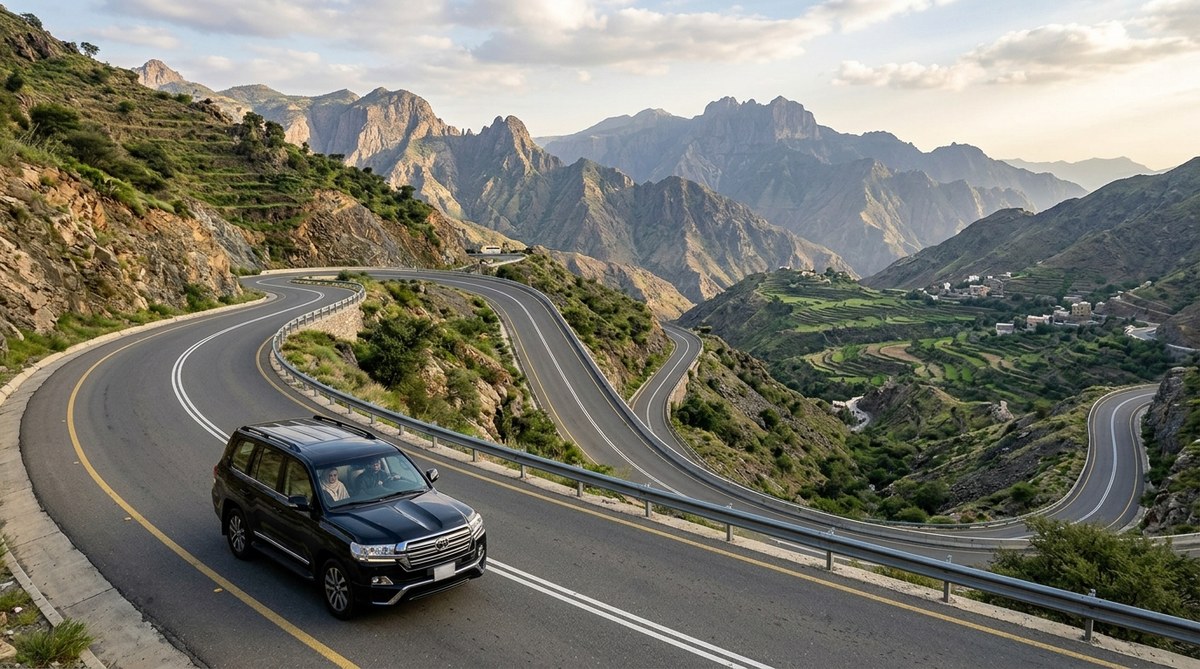
You have completed your Umrah. Your heart feels full, your spirit feels light, and you still have a few days left in Saudi Arabia. Instead of heading straight to the airport, consider pointing your car south toward the mountains of Asir. The drive from Jeddah to Abha is one of the most beautiful road trips in the kingdom, and it offers a completely different side of Saudi Arabia from the desert landscapes most visitors expect.
A Jeddah to Abha road trip after Umrah gives you cool mountain air, terraced farms, and a relaxed pace that feels worlds away from the holy cities. The drive takes about five to six hours one way, but the real magic lies in the stops along the route. You can break it into two days, visit a UNESCO-listed village, hike through foggy highlands, and return to Jeddah feeling like you visited a whole different country.
Why Abha Deserves a Spot on Your Post-Umrah Itinerary
Most pilgrims stick to the well worn path between Makkah, Madinah, and Jeddah. That makes sense when you are focused on worship. But once your Umrah is complete, you have an opportunity to see a side of Saudi Arabia that surprises nearly every first time visitor. Abha sits more than 2,200 meters above sea level. The temperature rarely climbs above 80 degrees Fahrenheit even in summer. In winter, you might need a jacket. The landscape is green, misty, and covered in juniper forests. It feels more like the mountains of Switzerland than the Arabian Peninsula. If you want to learn more about what sets this city apart, read our guide on what makes Abha different from every other Saudi Arabian city.
The Asir region has its own culture, its own architecture, and its own food traditions. The people here are known for their warmth and hospitality. For families traveling together, Abha offers a safe, clean, and relaxing environment where kids can run around in open spaces and everyone can breathe mountain air.
Route Overview: Jeddah to Abha by Car
The most direct route follows Highway 15 south from Jeddah through the coastal plain, then climbs into the Asir escarpment. The total distance is about 340 miles. With normal traffic and a few stops, plan for five to six hours of driving time. The road is well paved and well maintained. You do not need a four wheel drive for this trip. A standard sedan works perfectly fine.
Here is a look at the major segments of the journey:
| Segment | Distance | Driving Time | What to Expect |
|---|---|---|---|
| Jeddah to Al Qunfudhah | 120 miles | 2 hours | Flat coastal highway, desert scenery, few rest stops |
| Al Qunfudhah to Al Namas | 110 miles | 2 hours | Gradual climb, winding mountain roads, cooler air |
| Al Namas to Abha | 110 miles | 1.5 to 2 hours | High altitude, fog pockets, stunning overlooks |
The most scenic part of the drive begins after you pass Al Qunfudhah. The road starts to twist and climb. You will see terraced farms carved into steep hillsides. The air gets cooler. The sky often turns gray with clouds. It is a dramatic shift from the dry heat of the coastal plain.
Step-by-Step: Planning Your Jeddah to Abha Road Trip
Here is a simple process to set up your trip without stress.
-
Check your visa type. If you entered Saudi Arabia on an Umrah visa, confirm that it allows travel within the country. As of 2026, most Umrah visas permit domestic movement, but you should verify. For detailed guidance, see our article on converting your Umrah visa to a tourist visa.
-
Rent a car from Jeddah. Major rental agencies operate at King Abdulaziz International Airport and throughout the city. Book in advance, especially during peak pilgrimage seasons. Standard rental includes insurance and unlimited mileage. If you are new to driving in the kingdom, our guide on renting a car in Saudi Arabia covers everything from international driving permits to fuel station etiquette.
-
Pack layers and snacks. The temperature in Abha can be 20 to 30 degrees cooler than Jeddah. Bring a light jacket or sweater. Stock up on water, dates, and snacks for the drive because rest stop options thin out once you leave the coast.
-
Plan your overnight stops. You can drive the whole route in one day, but splitting it makes the trip more enjoyable. Many families stop in Al Namas or Baljurashi for the night. These small mountain towns have basic hotels and guesthouses.
-
Download offline maps. Cell reception is reliable along most of Highway 15, but some mountain valleys have dead zones. Google Maps or a similar app with offline functionality saves headaches.
Top Stops Along the Highway
The Jeddah to Abha road trip is not about the destination alone. The best moments happen between the two cities.
-
Al Qunfudhah market: A classic local souq where you can buy fresh produce, honey, and traditional pottery. It is a good place to stretch your legs and practice your haggling skills.
-
Al Namas viewpoint: Pull over at one of the designated scenic overlooks near Al Namas. On a clear day, you can see all the way to the Red Sea. The contrast between the blue water and the green mountains is unforgettable.
-
Baljurashi old town: This historic village features traditional stone houses built into the hillside. It is less touristy than Abha and gives you a sense of how people lived in this region for centuries.
-
Rijal Almaa: A UNESCO listed heritage village about 30 minutes off the main highway. The stone buildings with their distinctive white quartz trim are worth the detour. If you are interested in hidden gems, check out our list of 15 hidden gems in Saudi Arabia that most tourists never discover.
“The drive from Jeddah to Abha changes everything you think you know about Saudi Arabia. One hour you are in the desert. The next you are surrounded by green mountains and fog. It feels like entering another world. Do not rush it. Stop at every viewpoint.” — Local guide from Abha
What to Expect in Abha’s Mountain Climate
Abha’s weather is one of its biggest draws. Summer highs rarely exceed 85 degrees Fahrenheit. Winter lows can drop into the 40s at night. Rain is common from June to September, which is why the region stays so green. If you visit during winter, expect chilly mornings and evenings with mild afternoons.
This climate means you need to pack differently than you did for Makkah and Jeddah. Our guide on what to wear in Saudi Arabia includes specific advice for the Asir highlands. The short version is to bring long pants, closed shoes, and a jacket. Modest dress is still expected, but the cooler weather makes layering easy and comfortable.
Cultural Experiences to Enjoy in Abha
Abha offers experiences you cannot find anywhere else in Saudi Arabia.
-
Asir National Park: This sprawling park covers more than 1,600 square miles. It includes hiking trails, picnic areas, and viewpoints that overlook the Tihama plain. The park is family friendly and entry fees are minimal.
-
Abha Palace: Not actually a palace, but a hotel built in traditional Asiri style. You can walk through the grounds and admire the colorful geometric patterns that decorate the exterior walls.
-
The Muftaha district: This arts and culture neighborhood features galleries, cafes, and shops selling local crafts. It is a great place to buy souvenirs that actually come from the region instead of mass produced items from a factory.
-
Cable car ride: The cable car from Abha to the nearby resort of Habala offers panoramic views of the mountains and valleys. The ride takes about 15 minutes each way and costs around 50 SAR per person.
If you are interested in more active pursuits, our guide to mountain adventures in Asir covers hiking trails, camping spots, and guided treks throughout the region.
Family-Friendly Activities in and Around Abha
Traveling with children after Umrah can be challenging. Everyone is tired. Everyone has a different energy level. Abha solves this by offering activities that work for all ages.
The Green Mountain area has a park with playground equipment, walking paths, and food stalls. Kids can run around while adults sit on benches and enjoy the cool breeze. The Abha Dam lake offers paddle boat rentals. The nearby Waterfall Park has a manmade waterfall that kids love to see at night when it is lit up with colored lights.
For older children and teenagers, the Abha Adventure Park includes ziplines, rock climbing walls, and obstacle courses. It is safe, supervised, and reasonably priced.
Where to Eat in Abha
Asiri cuisine deserves attention. The food here uses local ingredients like lamb, honey, and mountain herbs. Some dishes you should try include:
- Aseed: A dough made from wheat flour and cooked with meat broth. It is served with lamb or chicken and a spicy tomato sauce.
- Mogalgal: A dried meat dish that is similar to beef jerky but softer and more flavorful. It is often eaten with bread and yogurt.
- Fresh mountain honey: The Asir region produces some of the best honey in Saudi Arabia. You can buy jars directly from beekeepers at roadside stalls.
Most restaurants in Abha serve a mix of Saudi and international food. Family sections are available everywhere. For a local experience, visit the Al Dera restaurant in the Muftaha district. It serves traditional Asiri dishes in a setting that feels like a mountain lodge.
If you are interested in food culture beyond Abha, our guide to halal food tours and cultural experiences after Umrah covers options across the country.
Budget Breakdown for the Trip
One of the best things about this road trip is that it does not cost much. Here is a rough estimate for a family of four:
- Car rental for 3 days: 600 to 900 SAR
- Fuel for 700 miles of driving: 200 to 250 SAR
- Hotel for 2 nights: 400 to 800 SAR total
- Food and snacks: 300 to 500 SAR
- Activities and entrance fees: 150 to 300 SAR
- Total estimated cost: 1,650 to 2,750 SAR
That works out to about 440 to 730 US dollars for a family of four. Compare that to the cost of flying to another country for a post pilgrimage vacation, and you can see why this road trip is such a good deal. For more money saving tips, check out our guide to budget-friendly ways to extend your pilgrimage and explore Saudi Arabia.
Making the Most of Your Time
The biggest mistake travelers make on this route is trying to do everything in one day. You end up spending most of your time in the car, rushing past viewpoints, and arriving in Abha too tired to enjoy it. A much better approach is to plan for at least two nights. Drive from Jeddah to Al Namas on day one. Stop at Rijal Almaa on the way. Spend the morning exploring. Reach Abha by late afternoon on day two. That gives you a full third day to explore Abha before driving back to Jeddah.
If you have a full week after your Umrah, you can add even more. The Asir region has other towns worth visiting, including Khamis Mushait and Tanomah. Our article on why the Asir region should be your next Saudi adventure destination offers a longer itinerary that covers the whole area.
Your Post-Umrah Adventure Awaits
Finishing your Umrah does not mean your time in Saudi Arabia has to end quietly. The Jeddah to Abha road trip gives you a chance to decompress, breathe fresh mountain air, and see a part of the kingdom that most international visitors miss entirely. The roads are safe. The people are welcoming. The scenery is unlike anything else in the Middle East.
Pack a jacket, fill up the gas tank, and head south. Your post Umrah adventure starts as soon as you leave the city lights behind.