
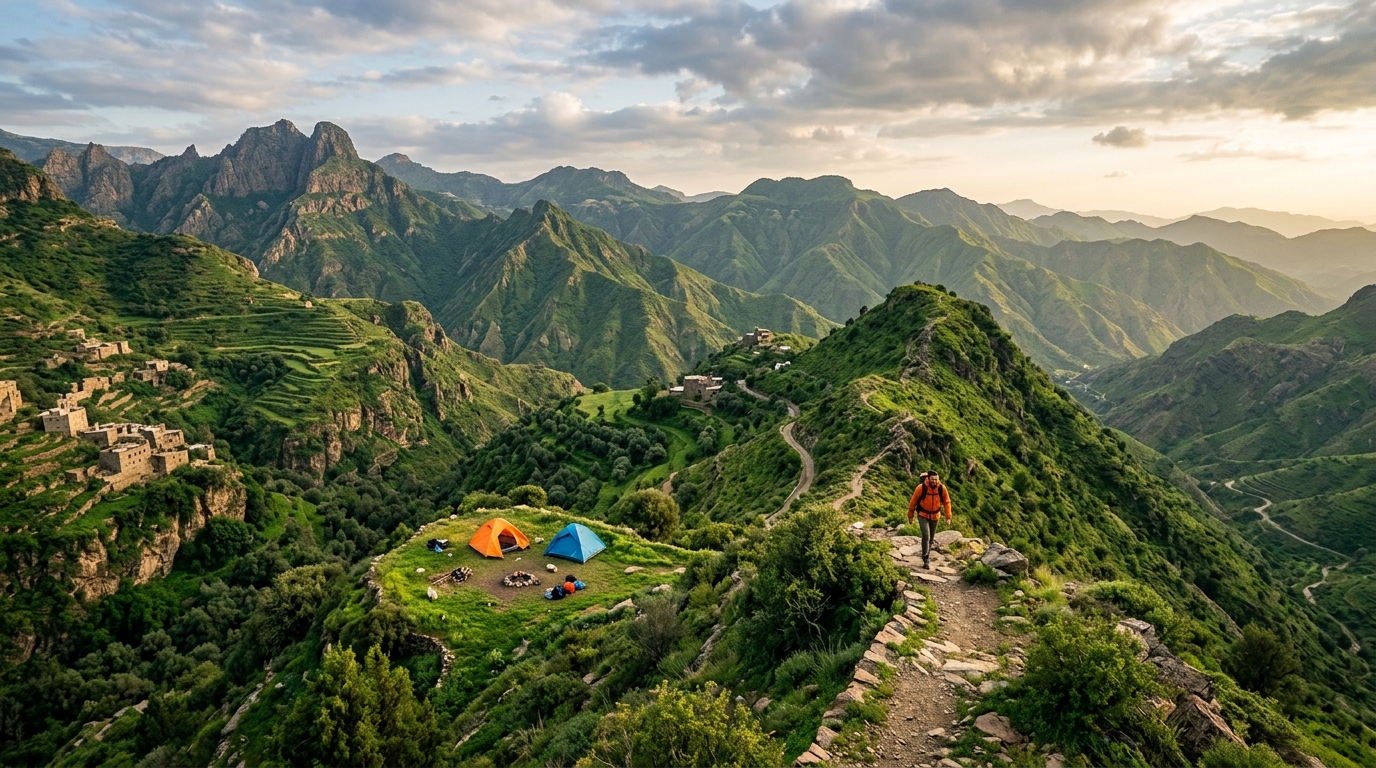
Most travelers think Saudi Arabia is all sand and desert. Then they arrive in Asir and find themselves standing in cloud forests, surrounded by juniper trees and terraced farmland that looks more like the Swiss Alps than the Arabian Peninsula.
The Asir region in southwestern Saudi Arabia is the country’s best kept secret for outdoor enthusiasts. With peaks reaching over 3,000 meters, temperatures that drop to comfortable levels even in summer, and trails that wind through villages unchanged for centuries, hiking in Asir Saudi Arabia offers something completely different from the rest of the Kingdom.
Asir’s highlands offer year-round hiking with trails ranging from easy village walks to challenging mountain ascents. The region features unique ecosystems, traditional stone villages, and camping opportunities across multiple national parks. Best visited between March and October, Asir provides a refreshing alternative to typical Saudi tourism with cooler temperatures and lush landscapes rarely associated with the Arabian Peninsula.
Why Asir’s mountains are different from anywhere else in Saudi Arabia
The Asir Mountains form part of the Sarawat Range, creating a natural barrier that catches monsoon moisture from the Indian Ocean. This creates microclimates that support vegetation you won’t find anywhere else in the country.
Temperatures here stay 10 to 15 degrees cooler than coastal areas. During summer, when Jeddah swelters at 40°C, Asir’s highlands hover around a pleasant 25°C. Winter brings occasional frost and even rare snowfall on the highest peaks.
The landscape shifts dramatically with elevation. Lower slopes feature acacia and desert scrub. Mid-elevation zones burst with juniper forests and wildflowers. The highest ridges offer bare rock formations with panoramic views stretching to the Red Sea on clear days.
Local Bedouin and farming communities have maintained terraced agriculture for generations. These stepped fields create striking patterns across mountainsides, especially beautiful during the green season after rains.
Top hiking trails that showcase Asir’s best landscapes
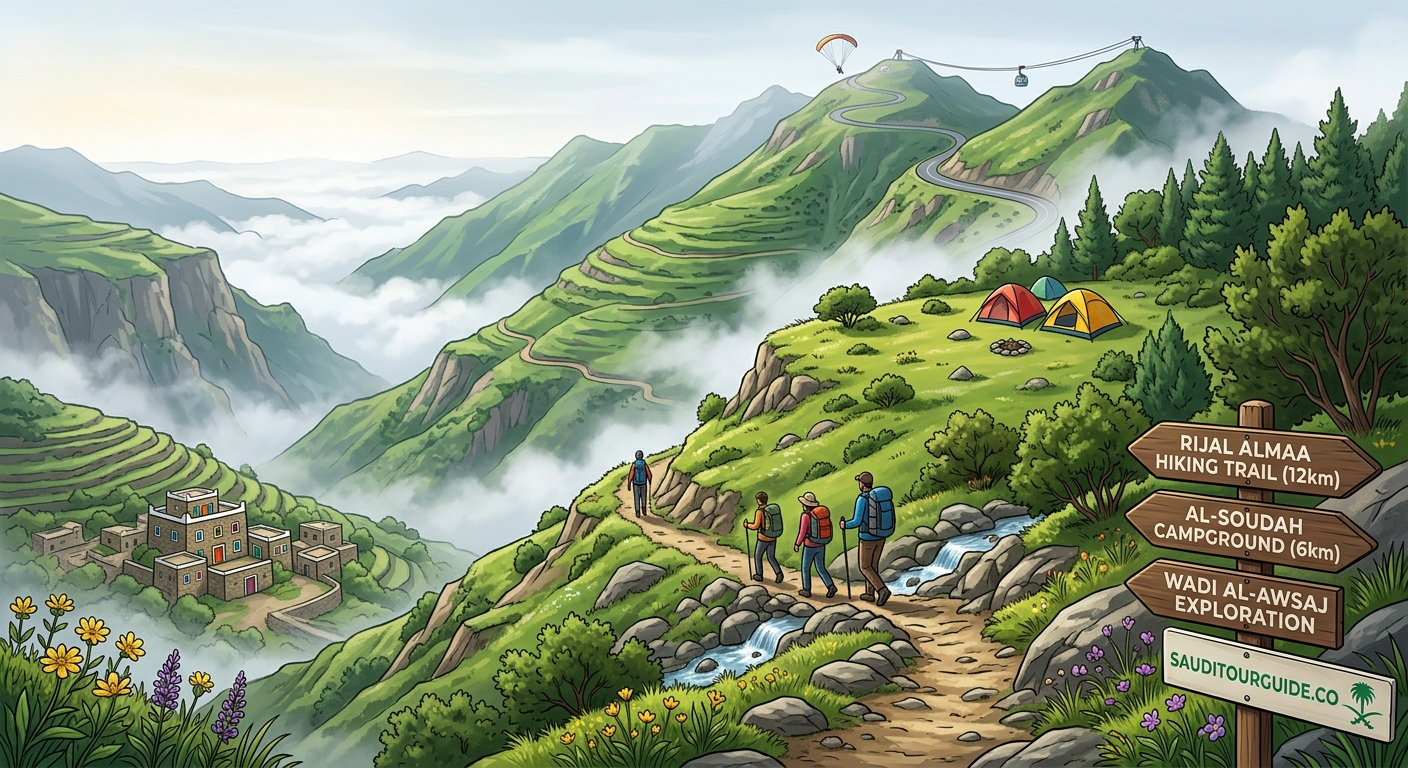
Al Soudah Park trails
Al Soudah sits at Saudi Arabia’s highest point, reaching 3,015 meters above sea level. The park offers several marked trails with varying difficulty levels.
The Ridge Walk follows the mountain crest for about 5 kilometers. It takes roughly 2 hours and provides constant views over valleys on both sides. The path stays relatively flat, making it suitable for families.
Forest Loop descends into juniper groves where temperatures drop noticeably. This 3-kilometer trail takes about 90 minutes and includes some steep sections. Watch for Hamadryas baboons that inhabit these forests.
Sunset Point Trail is a short 1.5-kilometer walk perfect for late afternoon. The viewpoint looks west toward the Tihama coastal plain, offering spectacular sunset photography opportunities.
“The air quality in Al Soudah’s forests is exceptional. The combination of altitude and dense vegetation creates an atmosphere that feels completely different from the rest of Saudi Arabia. Bring layers, even in summer, as temperatures can shift quickly when clouds roll in.” – Abdullah Al-Ghamdi, Asir Mountain Guide
Habala Village hanging trail
Habala Village clings to a cliff face 300 meters above the valley floor. Historically, residents accessed it only by rope ladders, earning it the nickname “Hanging Village.”
Modern visitors take a cable car down, but the real adventure is hiking back up. The trail zigzags through 400 vertical meters of elevation gain over 2 kilometers. Expect to spend 60 to 90 minutes climbing, depending on fitness level.
The path passes abandoned stone houses built directly into the rock face. Many structures date back several centuries, constructed without mortar using precisely fitted stones.
Photography enthusiasts should time visits for morning light, which illuminates the cliff face beautifully. The cable car operates from 8 AM to 6 PM daily.
Rijal Almaa heritage trail
This 7-kilometer loop connects the historic village of Rijal Almaa with surrounding farmland and watchtowers. The trail takes 3 to 4 hours at a leisurely pace.
Start at the village museum, housed in a restored fortress. The path follows ancient irrigation channels called “falaj” that still water terraced fields. Local farmers grow coffee, wheat, and fruit trees using traditional methods.
Several stone watchtowers dot the hillsides. These defensive structures offer excellent vantage points and rest stops. The highest tower provides 360-degree views of the valley.
The village itself deserves exploration. Multi-story stone buildings feature distinctive decorative patterns created with white quartz embedded in walls. Many structures are over 400 years old.
Green Mountain (Jabal Al Akhdar) circuit
Not to be confused with Oman’s mountain of the same name, Asir’s Green Mountain lives up to its name during the rainy season. This moderate 8-kilometer circuit takes 4 to 5 hours.
The trail climbs through agricultural terraces where farmers grow aromatic herbs and vegetables. Mint, basil, and coriander thrive in the cool climate.
Mid-route, the path enters cloud forest where fog often obscures views. Trees here grow draped in moss and lichens, creating an almost mystical atmosphere.
The descent follows a different ridge, offering new perspectives on the valley below. Spring wildflowers (March through May) transform meadows into colorful displays.
Planning your Asir hiking adventure
Best times to visit
March through May offers ideal conditions. Temperatures range from 15°C to 25°C, wildflowers bloom, and rain is infrequent. This is peak season, so expect more visitors at popular sites.
June through August brings monsoon influence. Afternoon clouds and occasional rain keep temperatures comfortable but can limit visibility. Trails get muddy, requiring appropriate footwear.
September and October provide another excellent window. Post-monsoon greenery remains vibrant, crowds thin out, and weather stabilizes.
November through February turns cold, especially at higher elevations. Temperatures can drop below freezing at night. Some trails may close temporarily after rare snowfall.
Essential gear and preparation
| Item Category | What to Bring | Why It Matters |
|---|---|---|
| Footwear | Hiking boots with ankle support | Rocky terrain and steep sections require stability |
| Clothing | Layered system with waterproof jacket | Temperature varies significantly with elevation and time of day |
| Navigation | Offline maps and GPS device | Cell coverage is spotty in mountain areas |
| Water | 2-3 liters per person | Limited water sources on most trails |
| Sun protection | Hat, sunglasses, SPF 50+ sunscreen | High altitude increases UV exposure |
| First aid | Basic kit plus blister treatment | Medical facilities are far from most trailheads |
Download trail maps before leaving major cities. The Maps.me app works well offline and includes many Asir trails.
Inform someone of your hiking plans and expected return time. Mountain rescue services exist but response times can be lengthy in remote areas.
Getting to trailheads
Abha serves as the main base for Asir hiking. The city has an airport with daily flights from Riyadh and Jeddah. Renting a car in Saudi Arabia provides the most flexibility for reaching trailheads.
Most trails lie within 30 to 90 minutes drive from Abha. Roads are generally good, though some final approaches use unpaved tracks suitable for 2WD vehicles in dry conditions.
Taxi services and ride-sharing apps operate in Abha but drivers may be unfamiliar with remote trailheads. Hiring a local guide solves navigation challenges and provides cultural context.
Tour operators in Abha offer guided day hikes and multi-day camping trips. This option works well for first-time visitors or those without vehicles.
Where to camp in Asir’s wilderness
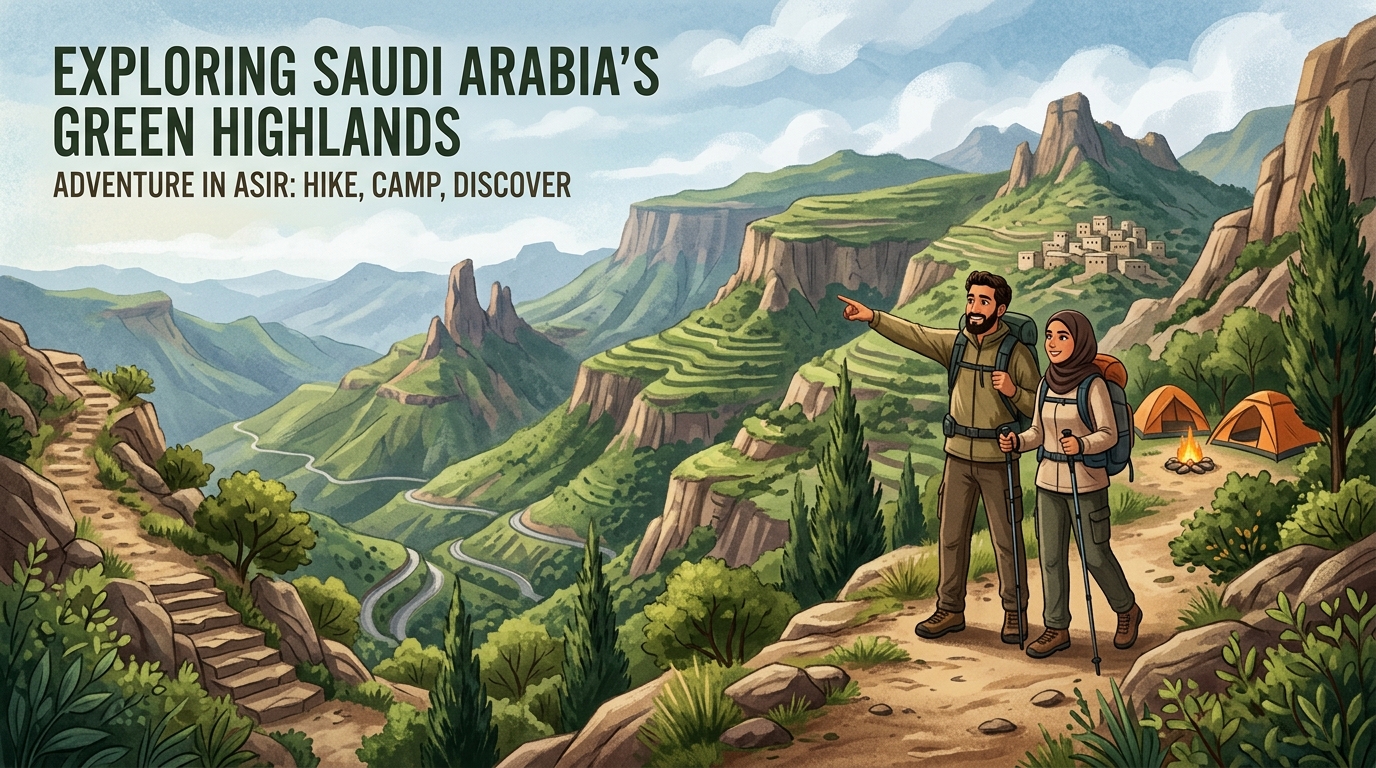
Designated camping areas
Asir National Park maintains several developed campgrounds with basic facilities. Al Soudah Park Campground offers the most amenities, including restrooms, water taps, and designated fire pits. Sites cost 50 SAR per night and can be reserved through the park website.
Tamniah Campground sits at lower elevation near Abha. It provides shade structures and picnic tables. This location works well as a base for day hikes to nearby trails.
Both campgrounds fill up on weekends and holidays, especially during spring. Weekday visits guarantee more space and solitude.
Wild camping opportunities
Dispersed camping is permitted in most mountain areas outside village boundaries and protected zones. Finding suitable spots requires some exploration.
Look for level ground away from drainage channels. Flash floods can occur during rainy season, even if skies appear clear. Set up at least 50 meters from water sources to minimize environmental impact.
Respect agricultural land and private property. Many terraced fields that appear abandoned are still used seasonally. Ask permission if camping near villages.
Leave no trace principles apply strictly. Pack out all waste, including organic materials. Fires are generally prohibited due to dry vegetation, so bring a camping stove for cooking.
Camping safety considerations
- Check weather forecasts before heading out. Mountain weather changes rapidly.
- Carry warm sleeping gear. Temperatures drop significantly after sunset, even in summer.
- Store food securely. Baboons and other wildlife will investigate campsites.
- Bring adequate lighting. Mountain nights are extremely dark with no ambient light.
- Know the location of nearest medical facilities. Cell coverage may not exist at your campsite.
Wildlife encounters are rare but possible. Asir hosts Arabian leopards, though sightings are extremely uncommon. Snakes prefer rocky areas and are generally not aggressive if given space.
Cultural considerations for hiking in Asir
The Asir region maintains traditional customs despite growing tourism. Understanding local etiquette enhances your experience and shows respect for communities.
Dress modestly when hiking through or near villages. Long pants and shirts with sleeves are appropriate for both men and women. What to wear in Saudi Arabia provides detailed guidance on appropriate clothing choices.
Greet locals you encounter on trails. A simple “As-salamu alaykum” (peace be upon you) goes a long way. How to greet and interact with locals covers proper social interactions.
Photography of people requires permission. Always ask before taking photos of individuals, especially women and children. Landscape and architecture photography is generally fine.
Friday is the holy day. Many shops and services close or operate on reduced hours. Plan accordingly if hiking on Fridays.
Combining Asir hiking with other Saudi experiences
Asir’s location makes it easy to combine mountain adventures with other attractions. The Red Sea coast lies just 100 kilometers west, offering completely different landscapes and activities.
How to plan the perfect road trip along Saudi Arabia’s Red Sea coast details coastal routes that connect well with Asir visits. Many travelers split time between mountains and beaches.
Why the Asir region should be your next Saudi adventure destination explores additional activities beyond hiking, including cultural sites and local festivals.
The region qualifies as one of 15 hidden gems in Saudi Arabia that most tourists never discover, offering experiences that contrast sharply with typical Saudi tourism.
Common mistakes to avoid
| Mistake | Why It’s a Problem | Better Approach |
|---|---|---|
| Underestimating altitude effects | Thin air causes faster fatigue and dehydration | Acclimatize gradually, increase water intake |
| Hiking in sandals or sneakers | Rocky terrain causes ankle injuries | Wear proper hiking boots with good tread |
| Starting hikes after 10 AM | Afternoon clouds obscure views and bring rain | Begin early morning for best conditions |
| Ignoring local advice | Residents know current trail conditions and hazards | Ask villagers about recent weather and trail status |
| Relying solely on phone navigation | Batteries drain fast in cold, coverage is unreliable | Carry paper maps and backup power bank |
Food and water on the trail
Most trails lack water sources. Carry all drinking water needed for your hike, plus extra for emergencies. Calculate 1 liter per hour of hiking as a baseline.
Village shops near popular trailheads sell snacks and drinks. Stock up before heading out. Selection is limited compared to city stores.
Traditional Asiri cuisine features hearty dishes suited to mountain climate. Try “areekah” (a wheat and honey dish) or “margoug” (vegetable stew with flatbread). These provide good energy for hiking.
Coffee culture thrives in Asir. 10 Saudi coffee traditions every visitor should experience explains the social importance of coffee in Saudi culture. Many villages have small cafes where hikers can rest and refuel.
Visa and entry requirements
Saudi Arabia’s tourist visa makes visiting Asir straightforward for citizens of eligible countries. How to apply for your Saudi Arabia e-visa in under 10 minutes walks through the online application process.
The e-visa allows stays up to 90 days and permits multiple entries. This gives plenty of time for extended hiking trips. Can you extend your tourist visa while in Saudi Arabia covers extension procedures if you want to stay longer.
Keep passport and visa documents accessible. Some remote areas have checkpoints where officials may request identification. What documents do you actually need at Saudi immigration lists required paperwork.
Budget planning for Asir hiking trips
Asir offers excellent value compared to other mountain destinations worldwide. Accommodation in Abha ranges from budget hotels at 150 SAR per night to mid-range options around 400 SAR.
Camping dramatically reduces costs. A week of camping with rented gear costs less than two nights in a hotel.
Food expenses stay low. Local restaurants serve filling meals for 20 to 40 SAR. Grocery stores stock supplies for self-catering at reasonable prices.
Transportation forms the biggest expense. Rental cars start around 150 SAR per day. Fuel is inexpensive, making road trips economical.
Guided tours cost 300 to 800 SAR per person for day trips, depending on group size and services included. Multi-day expeditions with camping run 1,500 to 3,000 SAR.
How much does a week in Saudi Arabia really cost provides detailed budget breakdowns for different travel styles.
Wildlife and nature you’ll encounter
Asir’s biodiversity surprises most visitors. The region hosts species found nowhere else in Saudi Arabia.
Hamadryas baboons live in troops throughout the mountains. They’re habituated to humans near popular sites but remain wild animals. Never feed them or leave food accessible.
Arabian leopards inhabit the most remote areas. With fewer than 200 individuals remaining, sightings are extremely rare. If you’re incredibly fortunate to spot one, maintain distance and report the sighting to park authorities.
Bird diversity peaks during spring and fall migration. Raptors including eagles and falcons ride thermal currents along ridges. The endemic Asir magpie, with its distinctive blue plumage, inhabits juniper forests.
Juniper trees dominate higher elevations. These ancient specimens can live over 1,000 years. Their twisted trunks and aromatic wood create distinctive forest character.
Wild olive trees grow on mid-elevation slopes. During spring, their small white flowers perfume the air. Local beekeepers produce honey from these blossoms, considered among Saudi Arabia’s finest.
Making the most of your mountain experience
Photography opportunities abound throughout Asir. Golden hour (first hour after sunrise and last hour before sunset) provides the best light for landscape shots.
Bring a zoom lens for wildlife photography. Baboons and birds allow closer approach than other animals but still require telephoto reach for quality images.
Sunrise from high viewpoints offers spectacular opportunities. The interplay of light, clouds, and valleys creates constantly changing scenes.
Village architecture photographs best in soft morning light. The white quartz decorations in stone walls catch light beautifully without harsh shadows.
Consider timing visits around cultural events. Saudi National Day and Founding Day bring special celebrations to Asir villages.
Your path through Asir’s green highlands
The mountains of Asir offer a side of Saudi Arabia that challenges every preconception about the Kingdom. Cool forests replace endless sand. Terraced farms cascade down slopes instead of flat desert plains. Traditional stone villages cling to cliffsides where you’d expect only rock and sky.
Whether you spend a weekend hiking Al Soudah’s trails or commit to a week exploring remote valleys, Asir delivers experiences that will reshape your understanding of Arabian landscapes. The trails are waiting. The mountains are calling. And the green highlands of southwestern Saudi Arabia are ready to show you something completely unexpected.
Start with a single day hike. Test your gear on familiar trails near Abha. Then venture further into valleys where villages operate much as they have for centuries. Each trail reveals new perspectives, each summit offers different views, and each encounter with local communities adds depth to your adventure.
The best time to start planning is now. The best time to go is soon. Asir’s mountains don’t change much season to season, but your window to experience them as a relatively undiscovered destination won’t last forever.