
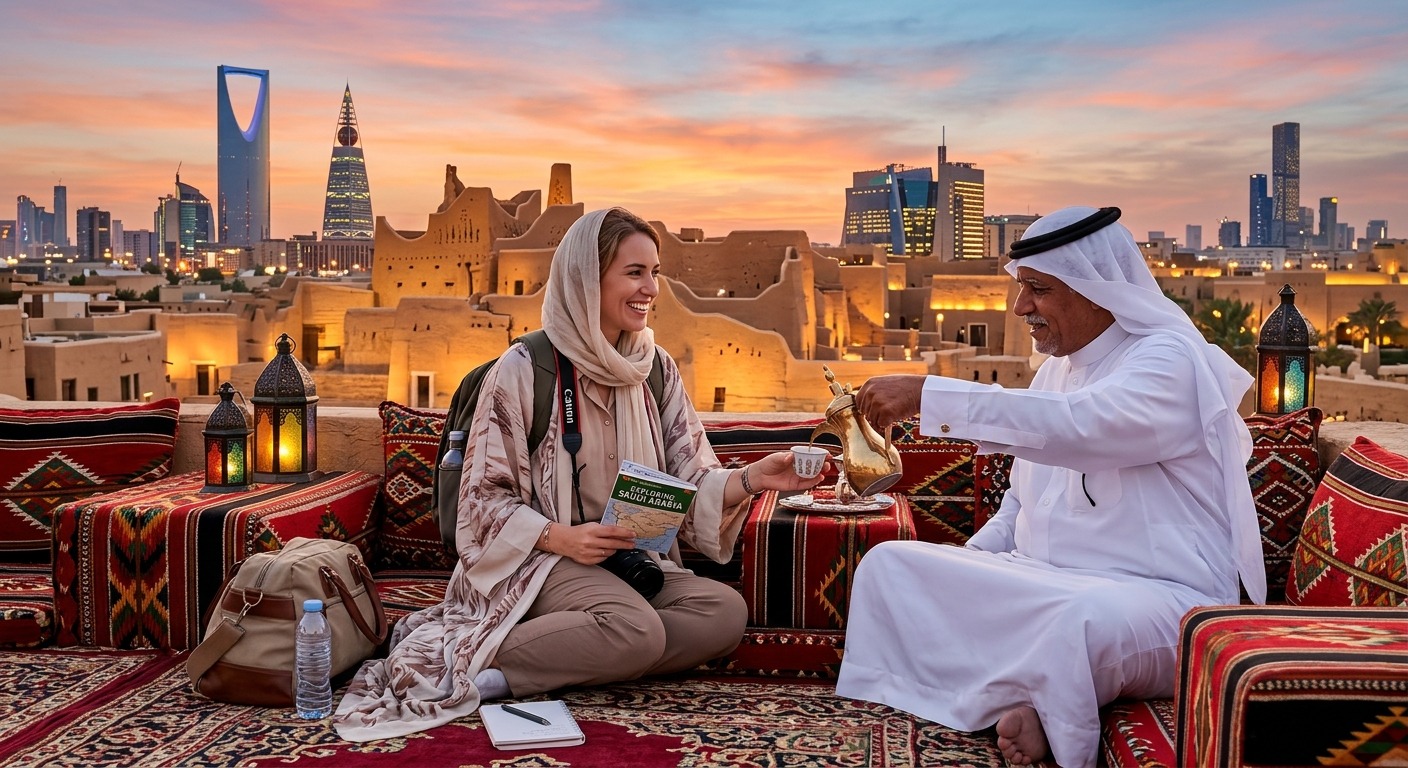
Saudi Arabia has spent decades sitting just outside the frame of most international travel plans. That is finally changing in a real and lasting way. The Kingdom opened its doors to leisure tourism in 2019, and what followed has been one of the most rapid transformations in modern travel history. The country you land in today feels genuinely eager to welcome visitors, with ancient ruins that rival anything in Jordan or Egypt, landscapes that shift from red sand dunes to cool mountain highlands, and a culture that is far warmer and more hospitable than most first-timers expect.
If you have been curious but unsure where to start, this guide walks you through everything you need before you board that flight.
Before You Pack Your Bag: Five Things to Know
- Nationals from 49+ countries qualify for a Saudi tourist e-visa, approved online in minutes
- Dress modestly in public spaces, particularly outside major hotel zones and tourist sites
- Alcohol is not available nationwide, but the food, coffee, and date culture more than fills the gap
- Vision 2030 has reshaped tourism infrastructure, social freedoms, and visitor accessibility across the Kingdom
- Saudi Arabia’s size rivals Western Europe, making regional planning far smarter than a city-hopping mindset
Why Saudi Arabia Gets Skipped and Why That Is Worth Questioning
Travelers building a Middle East itinerary tend to gravitate toward Jordan, the UAE, or Oman. Saudi Arabia often disappears from the conversation entirely. Part of that comes from decades of restrictions on leisure tourism. Part of it is plain unfamiliarity. Many travelers browsing Middle East travel guides will find the Kingdom given a paragraph or two at most, even in otherwise thorough regional resources.
That absence tells you nothing useful about what the country actually is. Saudi Arabia is the largest nation in the Middle East by land area. Its recorded history stretches back millennia. Its coastlines border both the Red Sea and the Arabian Gulf. And its ancient sites, from the carved Nabataean tombs of AlUla to the vast archaeological plains of Tayma, hold their own against anything the wider region has to offer.
The tourism opening in September 2019 was not a slow trickle. The government moved aggressively, investing in airport infrastructure, heritage site development, hospitality training, and international marketing. The result is a destination that feels genuinely ready for visitors rather than grudgingly tolerating them.
Getting Your Visa Sorted Before You Fly
The Saudi tourist visa is one of the most straightforward in the region. Eligible travelers apply entirely online and typically receive approval within minutes. The visa is valid for one year from the date of issue, allows multiple entries, and permits cumulative stays of up to 90 days.
The fee (approximately USD 135) includes mandatory basic travel insurance. That coverage is thin, so pairing it with a dedicated travel insurance policy is worth the extra cost, particularly for adventure activities.
Here is how the application process works from start to finish:
- Confirm your nationality is on the eligible countries list, currently covering 49+ nationalities
- Create an account on Saudi Arabia’s official tourism platform and locate the visa application section
- Upload your passport (minimum six months validity remaining) and a clear digital photograph
- Complete the application form and pay the visa fee by card
- Receive your e-visa by email, usually within minutes to a few hours
- Save both a digital and printed copy to present on arrival at immigration
One practical note: immigration in Riyadh and Jeddah airports moves efficiently. Having your e-visa, accommodation details, and onward travel confirmation ready on your phone speeds things up considerably.
Cultural Etiquette That Will Make You a Welcome Guest
Saudi hospitality is not a cliché. It is something visitors encounter within the first few hours of arrival and rarely forget. Locals are genuinely curious about international visitors and tend to be patient and generous with people who approach the culture respectfully. A handful of practical habits will carry you a long way.
- Dress with modesty in mind. Women no longer need to wear an abaya by law, but covering shoulders and knees is expected in public spaces outside hotels and dedicated tourist areas. Men should dress conservatively at religious sites and traditional markets.
- Use your right hand for greetings and passing items. A firm right-hand handshake or a hand placed over the heart works across most social situations.
- Ask before photographing people. This applies especially to women and in more conservative areas. Photographing government buildings, military installations, or airports is not permitted.
- Adjust your expectations during Ramadan. Eating, drinking, and smoking in public during daylight hours is restricted even for non-Muslim visitors. Many restaurants close until sunset. Traveling during Ramadan is a genuinely interesting cultural experience, though it requires flexibility around meals and opening hours.
- Skip public displays of affection. This is standard across the region and applies to couples regardless of gender.
Small gestures matter here. Accepting a cup of Arabic coffee when it is offered, greeting shopkeepers with a simple “As-salamu alaykum,” and showing genuine interest in the culture signals respect in a way that tends to open doors and conversations.
What Vision 2030 Has Actually Changed for International Visitors
Vision 2030 is Saudi Arabia’s ambitious national development plan, announced in 2016 under Crown Prince Mohammed bin Salman. Its stated objectives include reducing oil dependency and building a diversified economy, with tourism as one of the core pillars. For people visiting the country today, the changes are tangible and ongoing.
Women can now drive, travel independently without a male guardian, and attend concerts, sporting events, and entertainment venues freely. Cinemas reopened after a 35-year ban. Mixed-gender public spaces are now standard in cities. The social atmosphere in Riyadh and Jeddah feels noticeably different from even five years ago.
The flagship tourism projects have also reshaped the map of what is worth seeing. Diriyah, the historic birthplace of the Saudi state on the outskirts of Riyadh, has been developed into a major cultural district with museums, restaurants, and heritage walks. AlUla has transformed from a remote archaeological site into a world-class destination complete with high-end lodges, hot air balloon rides, and a full events calendar. NEOM, the futuristic development in the northwest, is still taking shape but is already drawing curious visitors to the Tabuk region.
Saudi Arabia’s Key Regions at a Glance
The country’s sheer scale means no single trip can cover everything. Planning around one or two regions gives you enough depth to actually absorb a place rather than just pass through it. The table below breaks down what each major region does best, helping you match your travel style to the right part of the Kingdom.
Saudi Arabia’s Major Regions Compared by Traveler Type and Season
| Region | Best For | Standout Experience | Ideal Travel Window |
|---|---|---|---|
| Riyadh | History, museums, urban culture | Diriyah, Edge of the World | October to April |
| Jeddah | Heritage, Red Sea coast, cuisine | Al-Balad Historic District | November to March |
| AlUla | Ancient ruins, dramatic canyon landscapes | Hegra (Mada’in Salih), dawn balloon flights | October to March |
| Abha | Mountains, cool air, waterfalls | Asir National Park, cable car rides | May to September |
| Tabuk and the Northwest | Desert canyons, Gulf of Aqaba coastline | Wadi Disah, Tabuk Castle | October to April |
AlUla earns a special mention for first-timers who have any interest in ancient history. The Nabataean tombs of Hegra date back more than 2,000 years and stand carved directly into golden sandstone cliffs. The site carries UNESCO World Heritage status and sees a fraction of the crowds that similar sites in Jordan attract. The sheer stillness of the place at dawn, before tour groups arrive, is the kind of thing that stays with you long after the trip ends.
On-the-Ground Practicalities That Make Everything Smoother
Currency is the Saudi Riyal (SAR). Card payments work in the vast majority of urban establishments, but carrying cash is worth doing for traditional markets, rural stops, and smaller family-run restaurants where card machines may not be available. ATMs are common in every city and most smaller towns.
Getting between regions is fastest by domestic flight. Saudi Airlines and the budget carrier flynas run frequent routes connecting Riyadh, Jeddah, AlUla, Abha, and Tabuk at prices that often undercut the time cost of driving. Road trips are entirely viable if you have the days to spare. Saudi highways are well-maintained, English signage appears throughout the country, and the driving itself, particularly through mountain passes in Asir and canyon roads near Tabuk, is genuinely rewarding.
A local SIM card is worth picking up at the airport on arrival. The three main carriers (stc, Mobily, and Zain) offer affordable data plans with reliable coverage across major tourist routes. This makes maps, translation apps, and Uber all significantly easier to manage. Uber operates in Riyadh and Jeddah and is the most predictable way to move around both cities.
The Country That Has Been Waiting for You to Show Up
Saudi Arabia is not a finished product. It is a country mid-transformation, which makes visiting it right now particularly interesting. You are seeing a place in motion, simultaneously proud of its deep history and genuinely excited about where it is heading.
The logistics are more approachable than reputation suggests. The visa is simple. The infrastructure in tourist areas is strong. The food is excellent, rooted in traditions that vary meaningfully from region to region. And the welcome you receive from locals, whether you are in a Riyadh coffee shop, a Jeddah spice market, or a hillside village outside Abha, tends to be the part of the trip that travelers describe first when they get home.
Start with one region. Give yourself room to slow down. Let the place do its work. Saudi Arabia has a way of surprising people, and that surprise is best experienced without too tight a schedule pinning you down.