
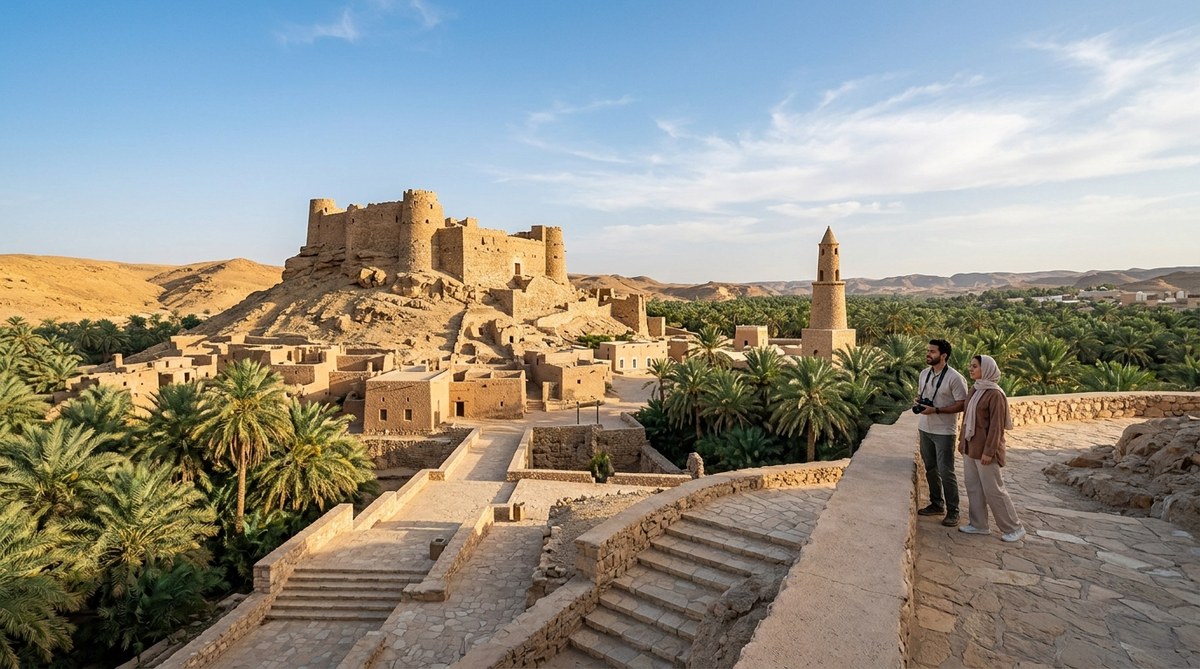
When you picture Saudi Arabia, your mind probably jumps to the soaring towers of Riyadh, the ancient Nabatean tombs of AlUla, or the coral reefs of the Red Sea. The northern province of Al Jouf rarely makes the shortlist. That might be a mistake. Sitting near the border with Jordan, this agricultural heartland is quiet, green in surprising ways, and packed with ruins that predate Islam. I spent a week driving through its date palms and olive groves, visiting castles carved from desert stone, and asking locals if they think their home is ready for tourists. The honest answer? It depends on what you are looking for.
Jouf Province is a genuine off-the-beaten-path destination for travelers who want ancient history without crowds. You will find 4,000-year-old standing stones, well preserved mudbrick castles, and endless olive farms. Infrastructure is basic but improving fast. Visit between November and February for cool weather, and rent a car to reach the scattered sites. It is not for luxury seekers but perfect for cultural explorers.
Why Al Jouf Feels Different from the Rest of Saudi Arabia
The landscape here is not what most people expect. Instead of endless sand dunes, you get vast agricultural fields stretching to the horizon. Al Jouf is often called the breadbasket of Saudi Arabia. Olive trees, date palms, wheat, and even citrus fruits grow in abundance thanks to underground aquifers that have sustained settlements here for thousands of years.
The vibe is slower, too. Sakaka, the provincial capital, moves at a pace that feels closer to a small American farming town than a Middle Eastern metropolis. People wave. Shopkeepers offer tea before they talk prices. And the sky at night, far from city light pollution, is absolutely packed with stars.
For travelers who want to see a side of Saudi Arabia that has not been polished into a glossy tourism campaign, Al Jouf delivers something rare: authenticity.
What to See and Do in Jouf Province
The region’s attractions are spread out, which means you need a plan. Here is a rundown of the sites that make Jouf Province travel worthwhile.
Qasr Marid: A Castle That Demands Your Attention
This fortress in Sakaka dates back to the first century AD, though much of the standing structure was built during the Islamic era. The mudbrick walls rise dramatically from a rocky hilltop, and you can climb to the top for panoramic views of the city. Unlike some restored sites in Saudi Arabia, Qasr Marid still feels raw. There are no ticket booths or gift shops. Just you, the wind, and centuries of history.
Rajajil Standing Stones: Saudi Arabia’s Own Stonehenge
About 20 minutes south of Sakaka, you will find a cluster of more than 50 standing stones arranged in groups. Archaeologists believe they date back to the fourth millennium BC, making them roughly 6,000 years old. Nobody knows exactly why they were erected. Grave markers? Astronomical calendar? No one can say for sure. What is certain is that standing among them at sunset is a deeply quiet experience. You will likely have the site completely to yourself.
Dumat Al Jandal: An Ancient City Still Breathing
This historic town is one of the oldest continuously inhabited places in the Arabian Peninsula. The highlight here is the old mosque, built partially with stones from an earlier Roman structure. The minaret is one of the oldest surviving in Islam. Right next to it sits the ruins of Qasr al Amara, a palace that once belonged to the al Kaydar dynasty. Walking through the narrow alleyways of Dumat Al Jandal feels like stepping into a living museum. Locals still live in the newer parts of the town, and children will wave as you pass.
Lake Dumat: An Accidental Oasis
A large body of water formed by agricultural runoff, Lake Dumat has become an unlikely attraction. You will see families picnicking along the shore, and birdwatchers will spot flamingos, herons, and ducks depending on the season. It is not a swimming destination, but it offers a peaceful break from driving.
The Olive Farms and Local Produce
Al Jouf produces a huge percentage of Saudi Arabia’s olive oil. Several farms welcome visitors for tastings and tours. The olive harvest runs from October to December, which is the best time to visit if you want to see the process in action.
How to Get to Al Jouf
Reaching the province is easier than you might think. Here is a breakdown of your options:
- Fly into Jouf Airport (AJF) located just outside Sakaka. Saudi Arabian Airlines and Flynas operate daily flights from Riyadh and Jeddah. Flight time from Riyadh is about one hour and 45 minutes.
- Drive from Tabuk if you are already exploring the northwest. The 500-kilometer drive takes roughly five hours on a well maintained highway. This is a great option to combine with a trip to the is-tabuk-worth-visiting-everything-you-need-to-know-about-saudi-s-northern-gateway region.
- Take a bus from Riyadh or Ha’il operated by SAPTCO. The ride from Riyadh takes about eight hours, so it is better suited for budget travelers with time to spare.
Once you arrive, you absolutely need a rental car. Public transit inside the province is very limited. The major sites are spread across a 60-kilometer radius, and ride sharing apps are not reliable outside Sakaka.
When to Visit: Timing Your Trip Right
Al Jouf experiences true seasons, which is rare in Saudi Arabia. Summers are brutally hot, with July and August averaging over 40 degrees Celsius (104 Fahrenheit). Winter is the sweet spot.
| Season | Weather | Tourist Traffic | Best For |
|---|---|---|---|
| November to February | Cool, 10-20 C (50-68 F), occasional rain | Very low | Castle visits, olive farm tours, sunset photography |
| March to May | Warm, 20-30 C (68-86 F) | Low | Lake picnics, hiking around ruins |
| June to September | Extreme heat, 35-45 C (95-113 F) | Almost none | Not recommended for most visitors |
| October | Mild, 25-30 C (77-86 F) | Low | Harvest season, olive oil tastings |
Local tip from a Sakaka tour guide: “Come in late November. The weather is perfect, the olives are being pressed, and the golden light on the mudbrick castles makes every photo look like a painting.”
Where to Stay in Jouf Province
Accommodation options are limited compared to Riyadh or Jeddah, but they are improving. Here are the main categories:
- Mid range hotels in Sakaka like the Al Jouf Hotel and Maskan Hotel offer clean rooms with air conditioning, WiFi, and basic breakfast. Expect to pay around 80 to 120 USD per night.
- Traditional guesthouses in Dumat Al Jandal provide a more local experience. Some are run by families who cook dinner for guests. Book through word of mouth or ask at the tourist information office in Sakaka.
- Camping near Lake Dumat is allowed and increasingly popular among Saudi domestic tourists. Bring your own gear, water, and food. Do not camp near the Rajajil stones, as the area is protected.
What to Eat: Local Flavors You Should Not Miss
Al Jouf’s cuisine leans heavily on its agricultural bounty. Here are dishes worth seeking out:
- Jareesh a crushed wheat dish cooked with meat and tomatoes, slow simmered until creamy.
- Olive oil fresh from the press drizzled over hot flatbread. This sounds simple, but it is unforgettable.
- Margoog a hearty stew of meat, vegetables, and thin flatbread strips.
- Fresh dates stuffed with almonds sold by roadside vendors near the farms.
Dining out options are mostly small family run restaurants in Sakaka and Dumat Al Jandal. Do not expect fine dining. Do expect generous portions and prices that rarely exceed 10 USD per person.
Practical Tips for Jouf Province Travel
Before you book, here are some things to know that will make your trip smoother.
Getting Around
You will drive. A lot. The roads between sites are in good condition, but you need to plan for fuel stops. Gas stations are plentiful on the main highway between Sakaka and Dumat Al Jandal but scarce on smaller roads. Always fill up when you get below half a tank.
For more detailed advice on renting a car in the Kingdom, check out our guide on renting-a-car-in-saudi-arabia-everything-foreign-tourists-need-to-know-before-hitting-the-road.
Staying Connected
Cellular coverage is strong in Sakaka and most towns. It drops off in the open desert between sites, especially near Rajajil. Download offline maps on your phone before you head out.
Dress Code and Etiquette
Al Jouf is more conservative than Riyadh or Jeddah. Men and women should dress modestly. Women are not required to wear an abaya by law, but covering shoulders and knees is expected. Covering your head is not mandatory but is appreciated in smaller villages.
Budget Expectations
Al Jouf is cheaper than most of Saudi Arabia. Here is a realistic daily budget for one person:
- Accommodation: 80 to 120 USD
- Meals: 15 to 25 USD
- Fuel: 10 to 15 USD
- Attractions: mostly free, some sites ask for a small donation (1 to 3 USD)
Total daily cost runs around 110 to 165 USD per person for a comfortable midrange trip.
Who Should Visit Al Jouf (and Who Should Skip It)
This is not a destination for everyone. Let me be direct.
Visit Al Jouf if you:
– Enjoy archaeology and ancient ruins without barriers or crowds
– Prefer slow travel with plenty of open space
– Want to taste local food in family run restaurants
– Are interested in agriculture and olive oil production
– Have already seen AlUla, Tabuk, and the Edge of the World
Skip Al Jouf if you:
– Expect luxury hotels, spas, or fine dining
– Need constant entertainment or nightlife
– Have limited time and want to hit major sights only
– Struggle with long drives between attractions
– Are visiting Saudi Arabia for the first time and want the greatest hits
If you fall into the first group, Al Jouf will surprise you. If you fall into the second group, that is okay too. Come back when the planned resorts and tourism infrastructure arrive, which could be within the next three to five years.
Can You Combine Jouf with Other Northern Destinations?
Yes, and it is one of the best ways to approach the region. A northern circuit that includes Tabuk, Ha’il, and Al Jouf makes for an excellent 10 to 14 day road trip.
Consider this route:
1. Fly into Tabuk and spend two days exploring the area
2. Drive east to Al Jouf and spend three days visiting the sites above
3. Head south to Ha’il for another two days of history and desert scenery
4. Either loop back to Tabuk or continue to Riyadh
For more ideas on how to structure a longer trip, read our how-to-plan-the-perfect-road-trip-along-saudi-arabia-s-red-sea-coast guide, which covers some of the same logistics.
The Honest Verdict on Jouf Province Travel
Al Jouf is not the next AlUla. It does not have a billion dollar tourism project behind it. What it does have is quiet, unpolished history and a pace of life that feels increasingly rare. The standing stones of Rajajil are older than the pyramids, and you can visit them alone. The castles are not restored to perfection, which makes them feel more real.
If you approach Jouf Province travel with the right expectations, you will leave with stories that most travelers to Saudi Arabia simply do not have. That alone makes it worth the drive.