
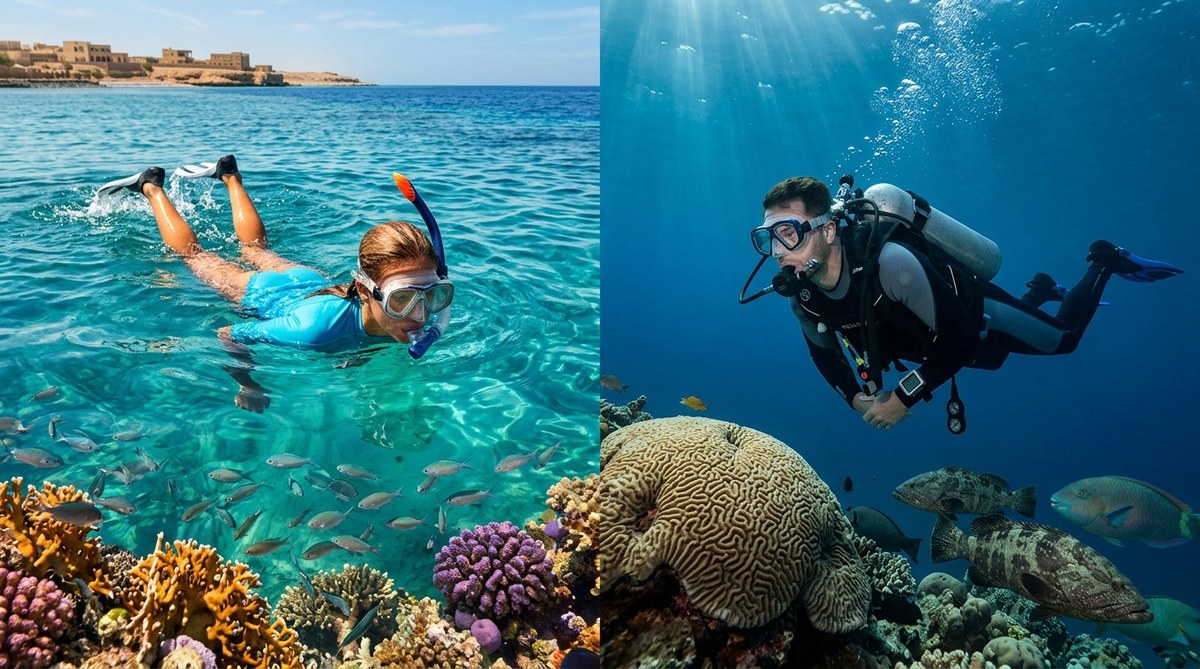
Thinking about heading to the Red Sea for your next adventure? Whether you are new to underwater activities or a seasoned diver, understanding the differences between snorkeling and scuba diving can help you choose the right experience for your trip. Saudi Arabia’s Red Sea coast offers stunning coral reefs, vibrant marine life, and pristine waters that make both activities unforgettable. This guide will walk you through the key aspects of snorkeling versus scuba diving, so you can plan your perfect aquatic adventure with confidence.
Snorkeling offers a relaxing, beginner-friendly way to see the Red Sea’s vibrant marine life close to the surface, while scuba diving allows for deeper exploration and more immersive underwater experiences. Your choice depends on your comfort level, fitness, and the adventure you seek. Both activities showcase Saudi Arabia’s underwater beauty, but knowing their differences helps you make the best decision for your trip.
Understanding the Fundamentals of Snorkeling and Scuba Diving
Snorkeling and scuba diving are both popular ways to observe marine life, but they differ significantly in technique, equipment, and experience level. Snorkeling involves floating on the water surface with a mask, snorkel, and fins, allowing you to watch underwater scenery without the need for extensive training. Scuba diving, on the other hand, requires specialized training, a tank of compressed air, and the ability to breathe underwater for extended periods.
Knowing what each entails helps you align your expectations with your skills and interests, ensuring a safer and more enjoyable journey into the Red Sea’s underwater worlds.
Comparing Snorkeling and Scuba Diving in Practical Terms
Below are some key points to consider when choosing between snorkeling and scuba diving for your Red Sea adventure:
1. Access and Ease
- Snorkeling: Requires minimal equipment and training. You can start immediately with basic instructions and a mask, snorkel, and fins. Many beaches and resorts offer guided snorkeling trips suitable for all ages.
- Scuba diving: Involves a certification process, usually a PADI or SSI course. It necessitates passing a medical check and learning safety procedures. Diving centers provide comprehensive training before actual dives.
2. Depth and Range of Exploration
- Snorkeling: Limited to the surface and shallow waters, typically up to 3 meters deep. It’s perfect for observing coral reefs, colorful fish, and sea turtles from above.
- Scuba diving: Allows you to go much deeper, often exceeding 30 meters. You can explore shipwrecks, underwater caves, and vibrant reefs that extend far below the surface.
3. Duration and Commitment
- Snorkeling: Usually a short activity lasting one to two hours, ideal for a relaxed day at the beach.
- Scuba diving: Can be a half-day or full-day activity, especially if you participate in multiple dives or liveaboard trips. It requires more planning and preparation.
4. Equipment and Costs
| Technique | Equipment Needed | Cost Range | Mistakes to Avoid |
|---|---|---|---|
| Snorkeling | Mask, snorkel, fins | $20–$100 | Forgetting to rinse equipment after use |
| Scuba diving | Wetsuit, tank, regulator, BCD, weights | $200–$600 for certification + dives | Not checking equipment before diving |
5. Safety and Skill Level
- Snorkeling: Generally safe for most, especially in calm waters. Still, swimmers should be comfortable in open water and aware of their surroundings.
- Scuba diving: Requires training and adherence to safety protocols. Proper certification and guidance from experienced instructors are essential to prevent risks like decompression sickness or panic.
“Always dive within your capabilities and listen to your instructor or guide. The Red Sea’s clarity and calm waters make it a forgiving environment for beginners, but safety should always come first,” advises dive expert Sarah Johnson.
How to Decide Which Activity Is Right for You
Choosing between snorkeling and scuba diving depends on your personal preferences, fitness level, and the type of experience you desire. Here are some practical steps to help you determine what suits you best:
- Assess your comfort with water: If you’re not comfortable swimming or being submerged, snorkeling might be better.
- Consider your time and budget: Snorkeling is quicker and less expensive, perfect for a single-day outing.
- Think about your curiosity: If you’re eager to explore deeper reefs or underwater features like wrecks, scuba diving provides that opportunity.
- Evaluate your physical condition: Scuba diving demands more physical effort and training.
- Check your travel plans: Many resorts offer both activities, making it easy to try both during your trip.
1. Try a snorkeling tour first
If you’re new to underwater activities, starting with snorkeling can build your confidence. Many resorts along the Saudi coast offer guided trips to the most beautiful reefs, often with equipment included.
2. Take a beginner scuba diving course
For those wanting to go beyond surface observation, a short certification course introduces you to underwater breathing and safety procedures. This opens up a world of exploration that snorkeling cannot match.
3. Combine both activities
If your schedule and budget allow, experiencing both can give you a well-rounded view of the Red Sea’s underwater splendors.
Techniques and Mistakes to Watch Out For
| Technique | Mistake to Avoid |
|---|---|
| Proper buoyancy control in scuba | Forgetting to equalize pressure regularly during dives |
| Clearing your mask properly | Ignoring weather conditions and sea currents |
| Using fins efficiently | Overexerting and tiring yourself early |
| Staying within your limits | Attempting advanced dives without proper training |
Tips from the Experts
“Patience and respect for the ocean are key. Whether snorkeling or scuba diving, always follow safety instructions and listen to your guides. The Red Sea’s biodiversity is breathtaking but fragile, so take care to protect it,” shares marine biologist Ahmed Al-Harbi.
Navigating Saudi Arabia’s Underwater Attractions
The Red Sea coast offers a variety of sites for both snorkeling and diving. Popular spots include the reefs near Jeddah, Umluj, and Al Wajh, each showcasing coral gardens, schools of colorful fish, and even occasional dolphins. Many resorts and dive centers coordinate trips to these destinations, often with options tailored for beginners or advanced divers.
If you plan to dive beyond the typical tourist areas, make sure to obtain necessary permits and check local regulations. Diving in protected marine areas helps preserve the vibrant ecosystems that make the Red Sea a world-class destination.
Making Your Choice and Booking Your Adventure
Once you understand the basics and evaluate your preferences, booking your activities becomes straightforward. Numerous resorts and dive operators across the Saudi coast offer packages for snorkeling and scuba diving. Look for certifications, reviews, and safety records before making arrangements.
Consider combining your underwater activities with land excursions, cultural visits, or relaxing beach days. Saudi Arabia’s evolving tourism scene offers a blend of adventure and cultural richness, making the Red Sea a versatile destination.
Experience the Underwater World Your Way
No matter what you choose, the Red Sea promises spectacular sights that will leave you with lifelong memories. Snorkeling and scuba diving each open a window to Saudi Arabia’s vibrant marine life, but understanding their differences helps you select the adventure that matches your spirit. Take the time to prepare, listen to local guides, and enjoy every moment beneath the waves.
Get ready to see the Red Sea in a whole new light. Your underwater journey awaits—dive in with confidence and curiosity!