
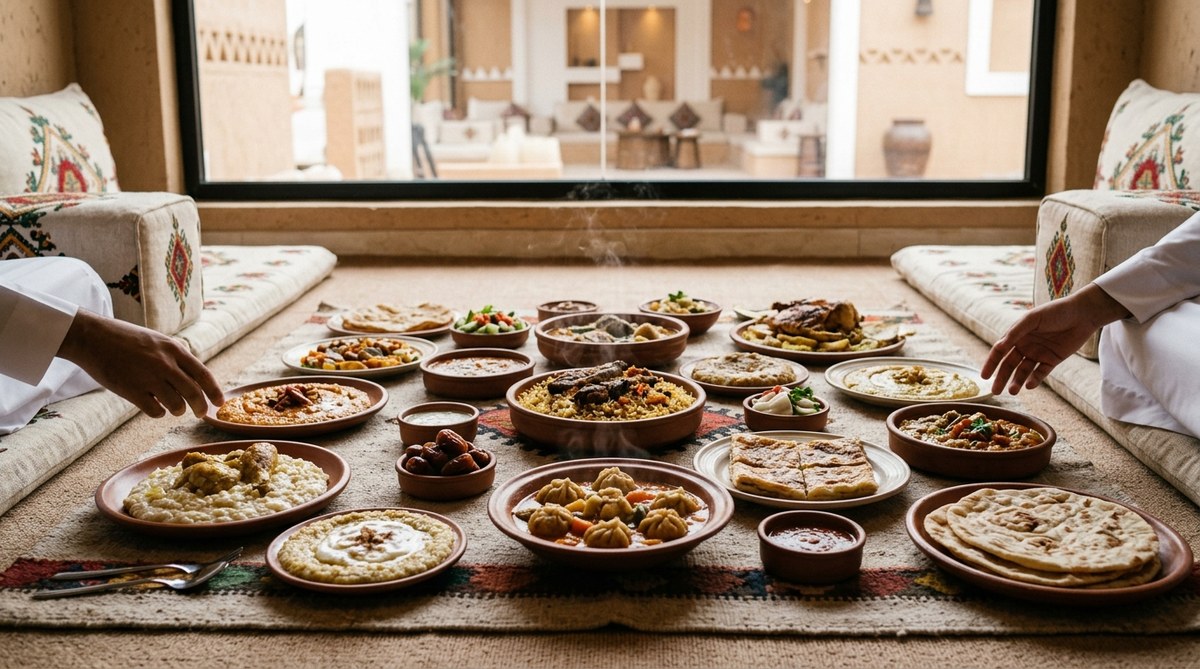
Saudi Arabia is renowned for its striking landscapes, historic sites, and vibrant culture. But beneath its modern veneer lies a rich culinary tradition that offers far more than the famous Kabsa. While Kabsa might be the national dish, the country’s regional dishes, ancient recipes, and unique food customs reveal a deeper, flavorful story. Exploring these authentic foods provides insight into Saudi heritage and a chance to indulge in a diverse culinary palette.
Saudi Arabia’s traditional cuisine extends well beyond Kabsa, showcasing regional flavors, ancient recipes, and [cultural food customs](https://www.who.int/news-room/fact-sheets/detail/healthy-diet). Tasting these dishes enriches your understanding of the kingdom’s heritage and offers a genuine culinary experience for food lovers and travelers alike.
The Variety of Saudi Traditional Dishes
Saudi cuisine is a reflection of its diverse geography and history. From the pearl-diving coasts to the arid desert interiors, each region contributes its own flavors and cooking techniques. While many visitors are familiar with Kabsa, a fragrant rice dish often served at gatherings, the real culinary treasure lies in the lesser-known dishes that have been passed down through generations.
Let’s journey beyond the familiar and uncover some authentic Saudi dishes that every food enthusiast should try.
Classic Dishes That Define Saudi Culinary Heritage
1. Jareesh: A Traditional Wheat Dish
Jareesh is a hearty dish made from crushed wheat mixed with meat or chicken and cooked slowly until it reaches a porridge-like consistency. Its origins trace back to Bedouin traditions, where it was a staple for nomadic tribes. The texture is smooth yet slightly chewy, offering a comforting meal especially during cold weather or religious festivities.
How it’s made:
- Soak crushed wheat in water for several hours.
- Cook with tender meat, onions, and spices.
- Stir continuously until it thickens and develops a creamy texture.
2. Mutabbaq: Savory Stuffed Pastry
Mutabbaq is a popular street food that originated from the Arabian Peninsula. It is a flaky pastry filled with a mixture of vegetables, meat, and sometimes cheese or herbs. It is fried until golden and crispy, making it perfect for snacking or breakfast.
Cooking tips:
- Use thin layers of dough for crispiness.
- Fill with finely chopped ingredients for even cooking.
- Serve with a side of yogurt or a spicy sauce.
3. Saleeg: Creamy Rice and Chicken
Hailing from the northern regions, Saleeg is a comforting dish made of rice cooked with broth and topped with roasted chicken. Its creamy texture is achieved by adding milk or yogurt during cooking, giving it a rich flavor profile.
Preparation steps:
- Cook rice in chicken broth with spices.
- Mix in milk or yogurt for creaminess.
- Roast chicken separately and serve on top.
4. Harees: A Festive Wheat and Meat Dish
Harees is a dish often served during Ramadan and Eid. It combines ground wheat with meat, typically chicken or lamb, and is slow-cooked for several hours. The result is a smooth, porridge-like dish that is both filling and nourishing.
Expert advice:
“Harees is considered a symbol of hospitality in Saudi Arabia. Its preparation is labor-intensive, but the flavor and cultural significance make it worth trying.”
5. Kleeja: Saudi-style Sweet Pastry
Kleeja is a traditional sweet pastry filled with dates, nuts, or honey. It is often enjoyed during Ramadan and festive occasions. Its flaky layers and sweet filling make it a delightful treat.
6. Haneeth: Slow-Roasted Lamb
Haneeth is a slow-cooked lamb dish seasoned with regional spices, often cooked in a tandoor or underground oven. The meat becomes tender and falls off the bone, served with rice or bread.
7. Kabsah: The Crown Jewel
Although known for being the national dish, Kabsah deserves mention as a culinary tradition. It combines rice, meat, and a blend of aromatic spices, cooked together in a single pot. Variations include adding vegetables or dried fruit.
Techniques and Tips for Cooking Saudi Dishes
| Technique | Description | Common Mistakes |
|---|---|---|
| Slow cooking | Many dishes like Harees and Jareesh rely on long, gentle heat to develop flavors. | Rushing the process can result in tough meat or grainy textures. |
| Using regional spices | Cardamom, cinnamon, cloves, and turmeric are staples. | Over-spicing can overpower subtle flavors. Balance is key. |
| Proper soaking | Grain and wheat-based dishes need adequate soaking to soften ingredients. | Skipping soaking can lead to uneven cooking and texture issues. |
Expert advice:
“Patience is the secret to authentic Saudi cuisine. Slow cooking and respecting traditional techniques bring out the depth of flavors and authenticity.”
How To Experience Saudi Culinary Traditions
- Visit local markets to find fresh spices, grains, and traditional ingredients.
- Attend cooking classes led by Saudi chefs who can teach regional recipes firsthand.
- Sample dishes at authentic restaurants or street vendors for a genuine taste.
- Participate in food festivals that showcase the kingdom’s diverse culinary heritage.
- Learn about food customs such as the Arabic coffee ritual and communal dining practices.
Navigating the Food Scene During Your Visit
When traveling through Saudi Arabia, try to embrace the regional diversity. In the central areas, dishes like Jareesh and Mutabbaq are common. Along the coast, seafood-based dishes and fresh salads are popular. In the southern highlands, you’ll find rich, spicy stews and traditional bread.
It is also worth noting that social customs influence dining. Sharing food is a sign of hospitality, and meals are often served with generous portions. Respect local etiquette, such as waiting for the host to start eating and using the right hand.
A Cultural Feast That Goes Beyond the Plate
Saudi cuisine is a window into the country’s history, geography, and social customs. Sampling a variety of traditional dishes beyond Kabsa allows you to appreciate the depth and richness of Saudi culinary culture.
By understanding the techniques and ingredients that define these dishes, you gain more than just a meal. You gain insight into a society that values community, hospitality, and tradition.
Savor the Journey of Saudi Flavors
Traveling through Saudi Arabia offers an opportunity to taste authentic dishes rooted in centuries-old traditions. Take time to visit local markets, engage with chefs, and try regional specialties. Each dish tells a story of the land and its people.
Remember, food is a universal language that connects us to different cultures and histories. So, don’t hesitate to ask locals for their favorite recipes or where to find the best version of a traditional dish.
Embracing the Richness of Saudi Culinary Traditions
As you plan your visit or culinary adventure, keep in mind that Saudi cuisine is a tapestry woven from regional ingredients, ancient recipes, and cultural rituals. Your taste buds will thank you for venturing beyond the well-known to uncover these hidden gems.
Enjoy the process of learning and tasting. Every dish offers a new way to connect with the heart of Saudi Arabia. The next time you encounter a dish like Harees or Kleeja, remember the centuries of tradition behind it and savor each bite.
Happy eating and exploring!