
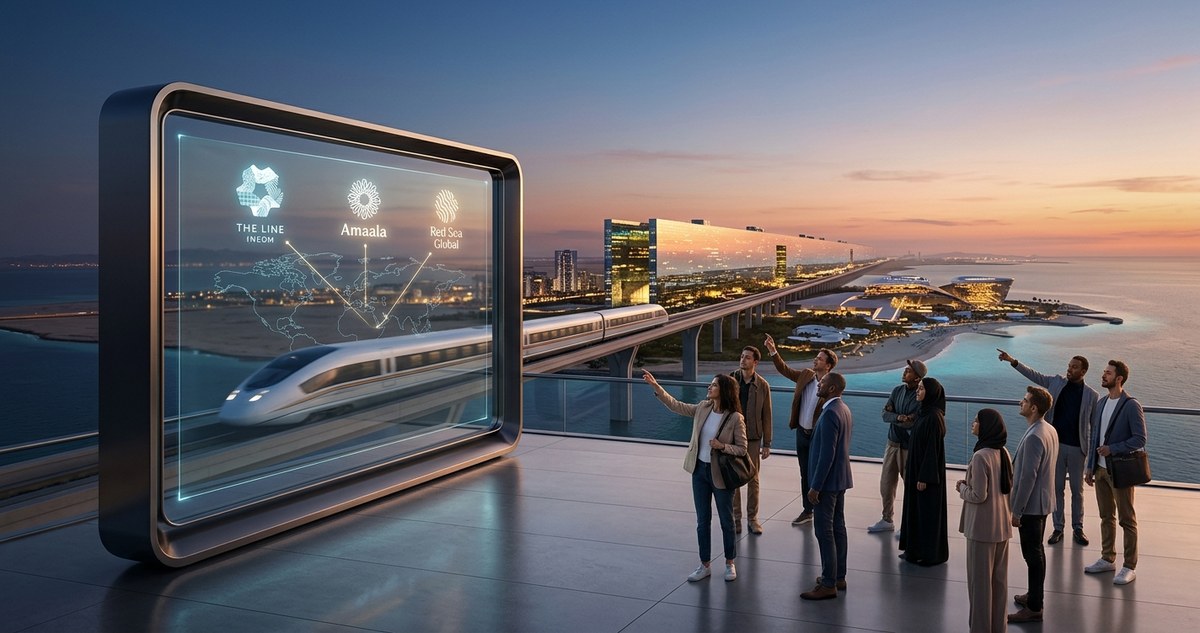
The skyline of Riyadh is no longer just a silhouette of glass towers and golden sunsets. It is a canvas for something bigger. Across Saudi Arabia, cranes and concrete are giving way to something more ambitious: entire cities, resorts, and ecosystems that did not exist five years ago. These are not just real estate plays. They are the building blocks of a new global tourism paradigm. In 2026, the conversation around luxury travel, sustainability, and destination infrastructure has a new epicenter. And it is not in Dubai, Singapore, or the Maldives. It is in the Kingdom of Saudi Arabia, where gigaprojects are redefining what a vacation, a business trip, or an adventure can actually mean.
Saudi Arabia’s gigaprojects in 2026 are not just building hotels. They are creating self-contained travel ecosystems that blend luxury, sustainability, and culture. From the Red Sea’s regenerative resorts to NEOM’s futuristic cities, these developments are setting new global standards for tourism infrastructure and investor confidence.
The Scale of Ambition: More Than Just Big Buildings
When people hear “gigaproject,” they often think of size. Tallest building. Biggest mall. Longest bridge. Saudi Arabia’s gigaprojects in 2026 are different. They are not just large. They are integrated. Each project functions like a small country, with its own energy grid, transportation network, conservation zones, and hospitality offerings. This is not about adding a few thousand hotel keys. It is about creating destinations that did not exist before.
Consider the Red Sea Project. It is not a single resort. It is a 28,000 square kilometer stretch of coastline with 90 islands, dormant volcanoes, and the world’s fourth largest barrier reef. The goal is not to pack people into high rises. It is to offer low-density, high-value tourism that protects the environment. The first resorts opened recently, but the full vision stretches into the next decade. For travel industry analysts, the key metric is not room count. It is revenue per available kilometer.
How Gigaprojects Are Changing the Traveler Experience
For the high-net-worth traveler, 2026 offers something that was impossible just a few years ago: a completely new geography of luxury. You can stay in an overwater villa on the Red Sea that is powered entirely by solar energy. You can take a helicopter from a private terminal in Riyadh to a mountain lodge in the Asir region, where the temperature is 20 degrees cooler. You can visit a UNESCO World Heritage site in Diriyah in the morning and attend a global concert in a purpose-built entertainment venue at night.
This is not a collection of random attractions. It is a planned ecosystem. The Saudi Tourism Authority has designed these projects to connect with each other. A visitor can spend three days in AlUla exploring Nabataean tombs, then fly to Jeddah for a weekend of diving, then take a train to Riyadh for a Formula 1 event. The infrastructure is being built to support a seamless, multi-destination itinerary.
A Practical Look at the Major Projects
To understand the full picture, it helps to look at the main pillars of this transformation. Each project targets a different type of traveler and a different segment of the market.
| Project | Focus | Target Traveler | Key Feature in 2026 |
|---|---|---|---|
| The Red Sea Project | Regenerative luxury | Eco-conscious high spenders | First resorts open, solar powered |
| NEOM | Futuristic urbanism | Tech investors, innovators | The Line vertical city construction |
| Diriyah Gate | Cultural heritage | History and luxury shoppers | UNESCO site, fine dining, retail |
| Qiddiya | Entertainment and sports | Families, thrill seekers | Theme parks, esports arena |
| Aseer Development | Mountain adventure | Hikers, nature lovers | Soudah Peaks resort, cable cars |
| AlUla | Archaeology and wellness | Cultural travelers | Dark Sky Park, luxury camps |
Each of these projects has a distinct identity. Together, they create a portfolio of destinations that can compete with any global tourism market. For investors, this diversification reduces risk. For travelers, it offers variety within a single trip.
The Investor Perspective: Why 2026 Matters
For investors looking at Saudi Arabia gigaprojects tourism in 2026, the numbers are compelling. The Kingdom is spending over $800 billion on tourism and entertainment infrastructure. That is not a stimulus package. It is a long term strategy backed by the Public Investment Fund. The goal is to increase tourism’s contribution to GDP from around 3 percent to over 10 percent by 2030.
But the opportunity is not just in building hotels. It is in filling the gaps. As one industry expert put it:
“The biggest returns will not come from the anchor projects themselves. They will come from the mid tier market. There is a massive need for three and four star accommodations, local tour operators, and authentic cultural experiences. The gigaprojects bring the visitors. The surrounding ecosystem keeps them there.”
This is where smart operators can step in. If you are looking at the Saudi market, do not just look at the headline projects. Look at the supply chain. Look at the demand for transportation, dining, and guided experiences.
Three Steps to Understanding the Opportunity
If you are an analyst or an investor trying to make sense of this landscape, here is a simple framework to follow.
-
Map the visitor flow. Each gigaproject has a target audience. The Red Sea Project draws European and American luxury travelers. Diriyah attracts cultural tourists from East Asia. Qiddiya targets regional families. Understand who is coming and where they are coming from. This tells you where the demand will be.
-
Identify the infrastructure gaps. The gigaprojects are building the big pieces. But they are not building every hotel, every restaurant, or every transfer service. Look for underserved segments. For example, there is a shortage of mid range accommodations near AlUla. That is an opportunity.
-
Watch the visa and regulatory changes. Saudi Arabia has made it easier than ever to enter the country. The e-visa system, visa on arrival for 49 countries, and relaxed dress codes have lowered the barrier to entry. Stay updated on these policies. They directly affect traveler volume.
What This Means for the Future of Global Tourism
The ripple effects of Saudi Arabia’s gigaprojects extend far beyond the Kingdom. They are forcing other destinations to rethink their own offerings. When a country can build a luxury eco resort from scratch on a pristine island, it raises the bar for what “sustainable luxury” means. When a city like NEOM promises a car free, carbon neutral urban environment, it challenges every other metropolis to innovate.
For travelers, this means more choice. For industry analysts, it means a new benchmark. For investors, it means a market that is still in its early stages. The infrastructure is being built now. The visitor numbers are growing. The question is not whether Saudi Arabia will become a major tourism destination. It is how fast the rest of the world will adapt to this new reality.
Building Your Own Saudi Arabia Itinerary
If you are a high net worth traveler looking to experience this transformation firsthand, 2026 is the perfect year to visit. You can start in Riyadh, where the entertainment district is buzzing with new restaurants and shows. Then head to the Red Sea for a few days of diving and relaxation. Finish in AlUla, where the ancient tombs and desert landscapes offer a completely different pace.
For practical tips on getting there, check out our guide on how to apply for your Saudi Arabia e-visa in under 10 minutes. If you are planning a longer trip, our ultimate 7-day itinerary combining Riyadh, AlUla, and the Edge of the World can help you structure your time.
A New Chapter for Travel
Saudi Arabia’s gigaprojects in 2026 are not a trend. They are a structural shift in how the world thinks about tourism infrastructure. They combine scale with sustainability, luxury with authenticity, and heritage with innovation. For anyone who follows global travel, this is the story to watch. For anyone who plans to visit, this is the moment to book. The Kingdom is open, the projects are coming online, and the experience is unlike anything else on the planet. Pack your bags, bring an open mind, and get ready to see what the future of travel actually looks like.