
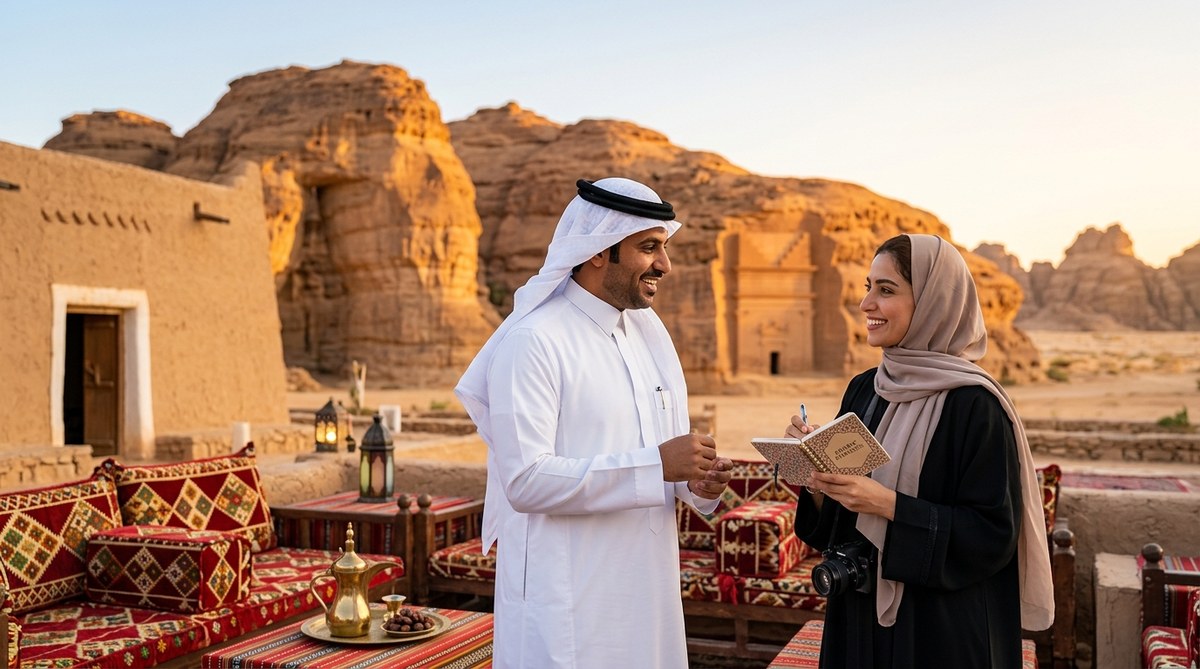
Walking into a traditional Saudi restaurant without knowing a word of Arabic can feel intimidating. But the moment you greet the waiter with a genuine “As-salamu alaykum,” you’ll see his face light up. That simple phrase transforms you from just another tourist into someone who respects the culture. Learning Arabic phrases for Saudi Arabia travel isn’t about becoming fluent. It’s about showing respect, building bridges, and unlocking experiences that English alone can’t access.
Mastering 15 essential Arabic phrases dramatically improves your Saudi Arabia experience. These expressions help you navigate markets, restaurants, and cultural situations with confidence. You’ll earn genuine smiles, better service, and deeper connections. Most Saudis speak some English, but your effort to use their language shows respect and opens doors to authentic interactions that transform ordinary trips into memorable adventures.
Why learning Arabic phrases matters more than you think
English works in major Saudi cities. Hotels, airports, and tourist sites usually have English-speaking staff. But step into a neighborhood café in Riyadh or a spice market in Jeddah, and you’ll need more than hand gestures.
Arabic phrases bridge cultural gaps. They signal that you’ve done your homework and care about local customs. A taxi driver who might otherwise stay silent will share restaurant recommendations. A shopkeeper might offer you tea and better prices.
The Kingdom opened to tourists only recently. Many locals still view international visitors with curiosity. Speaking even basic Arabic breaks down barriers faster than anything else.
Essential greetings that open every door
Start every interaction with “As-salamu alaykum” (peace be upon you). This greeting works everywhere, from five-star hotels to desert camps. The response you’ll hear is “Wa alaykumu as-salam” (and upon you be peace).
“Sabah al-khayr” means good morning. Use it until early afternoon. “Masaa al-khayr” works for evening greetings. These phrases work better than generic “hello” because they align with Saudi daily rhythms.
When someone asks “Kayf halak?” (how are you, to a man) or “Kayf halik?” (how are you, to a woman), respond with “Alhamdulillah” (praise be to God) or “Tamam, shukran” (fine, thank you). This exchange happens constantly and shows cultural awareness.
Understanding how to greet and interact with locals goes beyond memorizing phrases. It includes knowing when to shake hands and appropriate personal space.
Navigation phrases that get you where you need to go
“Ayna” means where. Combine it with key words to ask directions. “Ayna al-hammam?” asks where the bathroom is. “Ayna al-masjid?” finds the nearest mosque.
“Yameen” means right. “Yasar” means left. “Ala tool” means straight ahead. Point while saying these words to confirm understanding.
“Kam kilo?” asks how many kilometers. Useful when discussing distances with taxi drivers or planning road trips along Saudi Arabia’s Red Sea Coast.
“Mumkin khareetah?” requests a map. Most people will pull out their phones to show you directions instead.
Restaurant and food phrases that enhance every meal
“Mumkin qaemat al-taam?” asks for the menu. “Ma howa haadha?” means what is this, perfect for pointing at dishes you can’t identify.
“Ana la akul lahm” tells servers you don’t eat meat. Replace “lahm” with “samak” for fish or “dajaj” for chicken. Dietary restrictions matter, especially during Ramadan.
“Mumkin bidoon harr?” requests no spice. Saudi cuisine can surprise visitors with heat levels.
“Al-hisab, min fadlak” asks for the check. “Min fadlak” (to a man) or “min fadlik” (to a woman) means please and softens any request.
Traditional Saudi coffee traditions involve specific phrases and gestures. Knowing when to shake your cup signals you’ve had enough.
Shopping and market phrases for better deals
“Kam howa al-thaman?” asks the price. Essential for any market or souq visit. Vendors expect negotiation, and knowing the art of haggling requires specific phrases.
“Ghali jiddan” means too expensive. Say it with a smile, not aggression. “Mumkin takhfeed?” asks if they can reduce the price.
“Hal taqbal bitaqat al-itiman?” asks if they accept credit cards. Many small shops still prefer cash.
“Mumkin shanta?” requests a bag. Plastic bags aren’t always automatic in Saudi shops.
Emergency and help phrases you hope not to need
“Musaadah!” means help. Shout it if you’re in trouble. “Ana mareeth” tells people you’re sick. “Ana taeih” means you’re lost.
“Ayna al-mustashfa?” asks where the hospital is. “Ayna shurtah?” finds the police station.
“La atakallam arabi” admits you don’t speak Arabic. Most Saudis will switch to English or find someone who speaks it. Having proper travel insurance and safety knowledge matters more than phrases in real emergencies.
“Mumkin musa’adati?” asks can you help me. People respond well to polite requests.
Cultural and religious phrases that show respect
“Inshallah” means God willing. Saudis use it constantly when discussing future plans. If someone says they’ll meet you tomorrow, expect to hear “inshallah” at the end.
“Mashallah” expresses appreciation without envy. Say it when admiring someone’s car, children, or home. It acknowledges God’s blessing.
“Bismillah” means in the name of God. Say it before eating, entering a car, or starting any activity.
“Jazak Allahu khayran” is a formal thank you meaning may God reward you with goodness. More powerful than simple “shukran” in meaningful interactions.
How to practice these phrases before your trip
- Download a language app focused on Gulf Arabic, not Modern Standard Arabic. The dialects differ significantly.
- Watch Saudi YouTube channels with subtitles. Listen to pronunciation patterns and rhythm.
- Practice with native speakers through language exchange apps. Thirty minutes weekly builds confidence.
- Record yourself speaking phrases. Compare your pronunciation to native speakers.
- Learn the Arabic script for common words. Signs in Saudi Arabia use both Arabic and English, but knowing the script helps.
- Focus on listening comprehension. Understanding responses matters as much as speaking phrases.
Before applying for your Saudi Arabia e-visa, start your language practice. Three weeks of daily practice makes a noticeable difference.
Common mistakes tourists make with Arabic phrases
Speaking too fast ruins pronunciation. Arabic has sounds that don’t exist in English. The “kh” sound (like clearing your throat) and the “ayn” (a guttural sound from deep in the throat) need practice.
Using masculine phrases when addressing women causes confusion. Arabic changes word endings based on gender. “Shukran” works for everyone, but “min fadlak” (to a man) differs from “min fadlik” (to a woman).
Mixing Modern Standard Arabic with Gulf dialect creates odd combinations. Stick to Gulf Arabic phrases for street-level communication.
Forgetting to return greetings shows poor manners. If someone says “As-salamu alaykum,” always respond with “Wa alaykumu as-salam.”
| Phrase Type | Common Mistake | Correct Approach |
|---|---|---|
| Greetings | Using “hello” instead of Arabic | Always start with “As-salamu alaykum” |
| Requests | Demanding tone without “please” | Add “min fadlak/fadlik” to every request |
| Prices | Accepting first price without asking | Use “kam howa al-thaman?” to start negotiation |
| Directions | Assuming everyone speaks English | Try Arabic first, then switch to English |
| Thanks | Generic “thanks” in all situations | Use “Jazak Allahu khayran” for meaningful help |
Regional variations you’ll encounter across Saudi Arabia
Riyadh speaks Najdi Arabic. Jeddah and the western coast use Hejazi Arabic. The differences aren’t huge, but locals notice. The phrases listed here work across all regions.
In Al-Balad district, older shopkeepers might use more traditional Hejazi expressions. Younger Saudis code-switch between Arabic and English easily.
The Asir region has mountain dialects influenced by Yemen. Basic phrases still work, but expect different accents.
Tabuk and northern areas show Levantine Arabic influences. Again, standard phrases function fine.
Body language and non-verbal communication that accompanies phrases
Place your right hand over your heart after shaking hands. This gesture shows sincerity and respect.
Never use your left hand for eating, passing items, or gesturing. The left hand is considered unclean in Saudi culture.
Maintain appropriate eye contact. Too much seems aggressive. Too little appears dishonest. Find the middle ground.
Personal space differs from Western norms. Same-gender friends stand closer than you might expect. Opposite-gender interactions maintain more distance.
“Learning Arabic phrases before visiting Saudi Arabia changed everything for me. What started as awkward attempts at ‘shukran’ turned into genuine conversations with locals who appreciated the effort. I got invited to family dinners, received insider tips about hidden spots, and made friendships that lasted beyond my trip. The language became a bridge, not a barrier.” — Sarah Chen, travel blogger who spent three months touring the Kingdom
Phrases for specific situations and locations
At hotels, “Mumkin miftah al-ghurfah?” requests your room key. “Mumkin mandeel?” asks for towels.
In mosques (non-Muslims can visit certain areas), “Ayna mahal al-wudhu?” asks where the ablution area is. Respect prayer times by staying quiet.
At gas stations, “Mumkin timla al-khazzan?” asks them to fill the tank. Useful when renting a car.
In traditional souqs, “Hal indak…” means do you have, followed by what you’re looking for. Point to similar items if you don’t know the Arabic word.
Technology tools that supplement your Arabic learning
Google Translate works offline if you download Arabic beforehand. The camera function translates signs instantly.
Pronunciation apps like Forvo let you hear native speakers say specific words. Better than robotic text-to-speech.
WhatsApp dominates Saudi communication. Learn to type basic Arabic phrases for messaging drivers or tour guides.
Staying connected with a local SIM card gives you constant access to translation apps.
The cultural impact of making an effort
Saudis notice when tourists try speaking Arabic. It signals respect for their culture and traditions. This effort matters more in Saudi Arabia than in countries with longer tourism histories.
The Kingdom’s tourism sector is new. Many locals still feel protective of their culture and curious about foreign visitors. Your Arabic phrases break down walls of uncertainty.
Younger Saudis especially appreciate the effort. They’re proud of their heritage but also globally connected. Speaking Arabic creates common ground.
During National Day celebrations, using Arabic phrases deepens your connection to the festivities. You’re not just observing but participating.
Building on basic phrases for deeper conversations
Once you master essentials, add conversational phrases. “Min ayna anta?” asks where someone is from. “Kam umruk?” asks their age (use carefully, as it can be personal).
“Ma howa shughluk?” asks what they do for work. “Hal anta mutazawwij?” asks if they’re married (common small talk in Saudi culture).
“Ajabani al-mamlakah katheeran” tells them you really like the Kingdom. This phrase earns genuine smiles.
“Ayna tansahuni an azoor?” asks where they recommend you visit. Locals love sharing hidden gems.
When English works better than Arabic
Formal situations like immigration checkpoints require English. Officials expect it and your documents are in English.
Medical emergencies need precision. Use English with doctors and hospital staff unless you’re fluent in Arabic.
Complex negotiations for tour bookings or visa extensions work better in English. Misunderstandings cost money.
Business meetings default to English in most companies. Arabic phrases work for greetings, but switch to English for substance.
Your Arabic phrases create ripple effects
Every phrase you use correctly encourages locals to engage more deeply. That engagement leads to recommendations, invitations, and experiences money can’t buy.
A simple “shukran” at a café might lead to the owner explaining the history of Saudi coffee culture. “Mashallah” when admiring someone’s traditional dress could spark a conversation about regional clothing variations.
These moments transform trips from surface-level tourism into cultural immersion. You’ll remember the conversations long after you forget the monuments.
Words that open the Kingdom
Learning Arabic phrases for Saudi Arabia travel takes effort. But that effort pays dividends from your first interaction. You’ll navigate markets with confidence, order meals without confusion, and connect with locals authentically. The Kingdom rewards visitors who respect its language and culture. Start with these 15 phrases, practice daily, and watch how a few Arabic words transform your entire Saudi experience. Your willingness to speak their language, even imperfectly, shows the kind of traveler you are: one who values connection over convenience, and culture over comfort.