
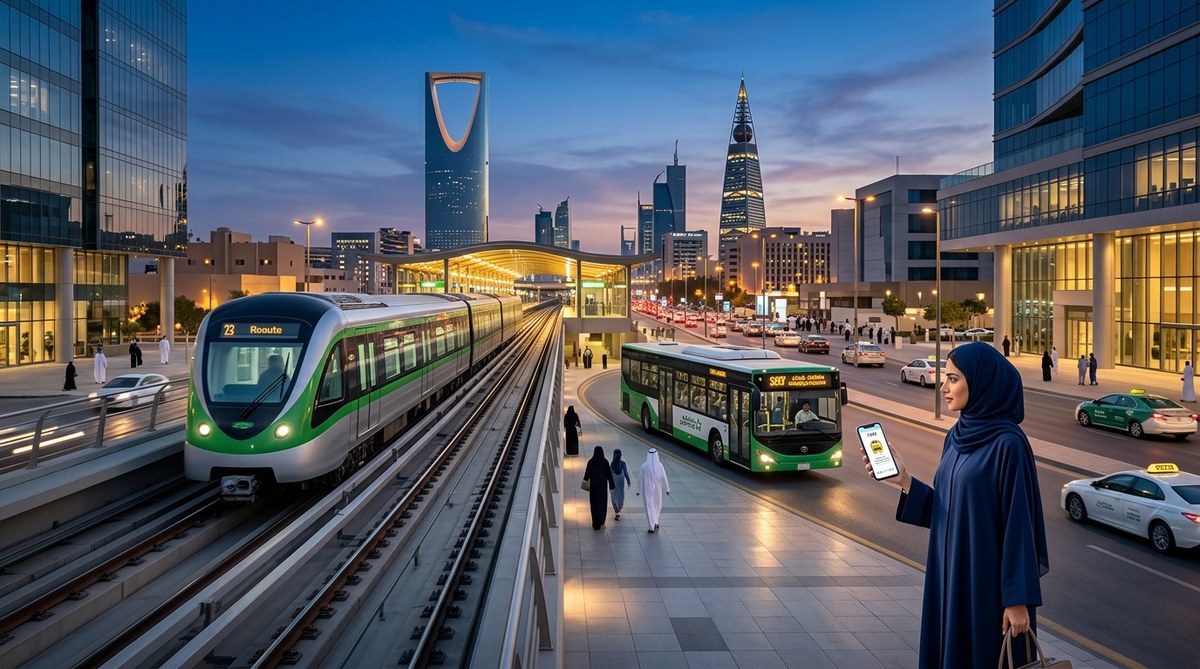
Getting around Saudi Arabia without a car used to be nearly impossible. Not anymore. The Kingdom has invested billions in modern metro systems, expanded bus networks, and welcomed international ride-sharing apps that make car-free travel not just possible, but surprisingly convenient.
Public transportation in Saudi Arabia has transformed dramatically since 2019. Riyadh’s metro, Jeddah’s bus network, and apps like Uber and Careem now connect major cities and attractions. While coverage remains limited outside urban centers, tourists can navigate Riyadh, Jeddah, and Dammam affordably using a combination of metro lines, SAPTCO buses, and ride-sharing services. Understanding payment methods, gender-segregated sections, and route planning tools will make your car-free journey smooth and budget-friendly.
Understanding Saudi Arabia’s metro systems
Riyadh Metro launched in 2019 as one of the world’s newest and most advanced metro networks. Six color-coded lines span 176 kilometers across the capital, connecting the airport, government districts, shopping areas, and residential neighborhoods.
Each station features air-conditioned platforms, digital displays in Arabic and English, and clear signage. Trains arrive every 3 to 6 minutes during peak hours and every 8 to 12 minutes off-peak.
The metro uses a zone-based fare system. A single journey costs between 3 and 6 SAR depending on distance. Day passes run 15 SAR, while weekly passes cost 60 SAR. You can purchase tickets at automated machines using cash or credit cards.
Lines 1 (Blue) and 3 (Orange) are particularly useful for tourists. Line 1 connects King Khalid International Airport to the city center and continues south to Olaya District. Line 3 runs east-west through the financial district and connects to major hotels and shopping centers.
Jeddah does not have a metro yet, but construction began in 2023 on a three-line system expected to open in phases starting 2027. Until then, buses and ride-sharing apps remain your primary options in the coastal city.
How to use SAPTCO buses for intercity travel
Saudi Public Transport Company (SAPTCO) operates the national bus network connecting cities across the Kingdom. These air-conditioned coaches offer a comfortable and affordable alternative to domestic flights or renting a car.
Book tickets online through the SAPTCO website or mobile app. Prices vary by distance, but expect to pay around 50 to 150 SAR for popular routes like Riyadh to Dammam or Jeddah to Madinah.
Here’s how to book and board:
- Download the SAPTCO app or visit their website at least 24 hours before travel
- Select your departure city, destination, and preferred travel date
- Choose your seat from the interactive seating chart (families can request adjacent seats)
- Pay using credit card or Apple Pay
- Receive your e-ticket via email and SMS
- Arrive at the bus station 30 minutes before departure with your passport and e-ticket
SAPTCO buses feature separate family sections and single sections. Women traveling alone or with children should sit in family sections. Single men use the designated singles area.
Buses depart from central stations in each city. Riyadh’s main terminal sits near the old airport. Jeddah’s station operates from the southern district near King Abdulaziz University.
Most routes include a rest stop with prayer rooms and refreshments. Longer journeys like Riyadh to Abha include multiple stops.
Navigating city buses in Riyadh and Jeddah
Riyadh Bus operates over 60 routes covering neighborhoods the metro doesn’t reach. Buses run from 5:00 AM to midnight daily. Single fares cost 4 SAR, while day passes run 12 SAR.
The network uses the same payment cards as the metro. Purchase a reloadable card at any metro station or bus depot for 5 SAR, then add credit as needed.
Buses display route numbers and major stops on LED screens. Google Maps integration shows real-time arrivals and suggested routes. Type your destination, select the bus icon, and follow the step-by-step directions.
Jeddah’s bus network covers fewer routes but connects key areas like Al-Balad historic district, the Corniche, and Red Sea Mall. Fares match Riyadh’s pricing at 4 SAR per journey.
Family sections occupy the rear of each bus. Single women may sit in family sections. Men traveling alone must use front sections unless traveling with family members.
“The bus system surprised me. Clean, punctual, and the AC works perfectly even in summer. I used it daily for three weeks and never waited more than 15 minutes.” – Transit user in Riyadh
Ride-sharing apps that actually work
Uber and Careem dominate Saudi Arabia’s ride-sharing market. Both apps function similarly to their international versions with a few local adaptations.
Careem, owned by Uber since 2020, often offers better coverage in smaller cities and residential areas. The app includes Arabic and English interfaces and accepts international credit cards.
Uber operates primarily in Riyadh, Jeddah, and Dammam. Pricing typically runs 20% lower than traditional taxis for equivalent distances.
Both apps offer several service tiers:
- Economy: Standard sedans, lowest rates
- Comfort: Newer vehicles with higher-rated drivers
- Premium: Luxury vehicles like Lexus or BMW
- Family: Larger vehicles for groups up to 6 passengers
Women traveling alone can request female drivers through Careem’s “For Women” option. This feature guarantees a female driver for added comfort and cultural sensitivity.
Payment works through the app using credit cards, Apple Pay, or prepaid Careem credit. Cash payment remains available but requires selection before requesting the ride.
Expect to pay 15 to 25 SAR for short trips within city centers. Longer journeys like Riyadh airport to downtown run 60 to 80 SAR depending on traffic.
Surge pricing applies during peak hours (7:00 to 9:00 AM and 4:00 to 7:00 PM) and can increase fares by 1.5 to 2 times normal rates.
Comparing transportation costs and travel times
Different options suit different budgets and schedules. This comparison helps you choose the right method for your journey.
| Route | Metro/Bus | Ride-Share | SAPTCO Bus | Travel Time |
|---|---|---|---|---|
| Riyadh Airport to City Center | 6 SAR | 70 SAR | N/A | 45 min / 35 min |
| Riyadh to Dammam | N/A | 450+ SAR | 85 SAR | N/A / 5 hours |
| Jeddah Corniche to Al-Balad | 4 SAR | 25 SAR | N/A | 35 min / 20 min |
| Riyadh King Fahd District to Olaya | 4 SAR | 18 SAR | N/A | 25 min / 15 min |
| Jeddah to Madinah | N/A | 500+ SAR | 120 SAR | N/A / 4.5 hours |
Metro and buses win for budget travelers. Ride-sharing suits tight schedules or late-night travel when public transit stops running. SAPTCO buses make sense for intercity journeys where domestic flights feel excessive.
Getting around without Arabic language skills
Most metro stations display bilingual signage. Announcements play in Arabic first, then English. Station names appear in both scripts on platform screens and train displays.
Google Maps works reliably for route planning in Riyadh, Jeddah, and Dammam. The app shows metro lines, bus routes, and walking directions in English. Download offline maps before traveling to areas with spotty coverage.
Ride-sharing apps include English interfaces and map-based pickup points. You don’t need to speak Arabic to request rides. Drivers receive your exact location and destination through the app.
Bus route numbers remain consistent across Arabic and English signage. Even if you can’t read Arabic station names, matching the route number gets you to the right bus.
Keep your hotel address saved in Arabic on your phone. Show it to drivers or station staff if you get lost. Most Saudis in urban areas speak basic English, but having written Arabic addresses eliminates confusion.
Translation apps like Google Translate work offline if you download the Arabic language pack. The camera feature translates signs in real-time by pointing your phone at Arabic text.
Common mistakes tourists make with public transport
Assuming taxis work like ride-sharing apps leads to frustration. Traditional taxis lack meters in many areas. Drivers quote prices that often exceed Uber or Careem rates by 50% or more. Stick with apps for transparent, consistent pricing.
Forgetting prayer times causes unnecessary delays. Public transportation reduces frequency or pauses briefly during the five daily prayer times. Metro trains continue running, but stations may close entrances temporarily. Buses might pause at stops near mosques. Plan for 10 to 15-minute delays during Maghrib (sunset) and Isha (evening) prayers.
Not carrying small bills creates problems when buying bus tickets from drivers who accept cash. Machines at metro stations accept cards, but some smaller bus depots require exact change. Keep 20 and 50 SAR notes handy.
Ignoring gender-segregated sections causes awkward situations. Men sitting in family sections on buses will be asked to move. Women can choose either section, but family areas offer more space and comfort.
Traveling during rush hour without checking traffic apps wastes time. Riyadh and Jeddah traffic between 7:00 and 9:00 AM rivals any major city. The metro avoids this entirely. Ride-sharing during these hours costs more and takes longer than off-peak trips.
Expecting metro coverage everywhere disappoints tourists heading to attractions like the Edge of the World. Public transit serves urban cores well. Day trips to desert areas, mountains, or coastal sites outside city limits require rental cars or private tours.
Essential apps and tools for navigation
Download these before your trip:
- Riyadh Metro: Official app showing real-time arrivals, route planning, and station facilities
- Riyadh Bus: Route maps, schedules, and nearest stop locator
- Google Maps: Works for all Saudi cities with public transit integration
- Careem: Better coverage than Uber in smaller cities
- Uber: Competitive pricing in major cities
- SAPTCO: Book intercity buses and check schedules
- Haramain Train: High-speed rail between Makkah, Jeddah, and Madinah
Enable location services for accurate real-time information. Maps apps need GPS to show your position relative to stops and stations.
Save common destinations as favorites in your maps app. Hotels, popular restaurants, and attractions become one-tap destinations when requesting rides or planning routes.
Check app reviews before downloading alternatives. Several unofficial apps claim to show bus times but provide outdated information. Stick with official transit apps or Google Maps for reliable data.
Payment methods and transit cards
The Riyadh Metro and bus network use a unified card system called “Masaar.” Purchase cards at any metro station from automated kiosks or customer service counters.
Card types include:
- Standard reloadable card: 5 SAR deposit, add credit in increments of 10 SAR or more
- Day pass: 15 SAR for unlimited metro and bus travel for 24 hours
- Weekly pass: 60 SAR for seven consecutive days
- Monthly pass: 180 SAR for 30 days
Cards work by tapping on entry gates and again when exiting. The system calculates fares based on distance traveled.
Jeddah’s bus system accepts cash payment directly to drivers or prepaid cards purchased at major bus stations. Cards cost 10 SAR with 20 SAR minimum initial load.
Ride-sharing apps accept international credit cards, debit cards, Apple Pay, and Google Pay. Some users report occasional payment processing issues with American Express. Visa and Mastercard work reliably.
SAPTCO accepts online payment through their website and app using major credit cards. You can also pay cash at bus station ticket counters, though online booking guarantees seats during busy travel periods.
Keep receipts from transit card purchases. If your card malfunctions, customer service can transfer remaining credit to a replacement card using your original receipt.
Safety and security on public transport
Saudi Arabia maintains one of the world’s lowest crime rates. Violent crime on public transportation remains extremely rare. Pickpocketing occurs occasionally in crowded metro stations during peak hours.
Keep valuables in front pockets or secure bags. Don’t leave phones or wallets in back pockets on crowded trains.
CCTV cameras cover all metro stations, platforms, and train cars. Security personnel patrol stations regularly. Emergency call buttons appear every 50 meters along platforms and inside each train car.
Women traveling alone face minimal safety concerns. Family sections on buses and designated women’s cars on some metro lines provide additional comfort. Female-only sections occupy the front car of each metro train.
Report suspicious behavior to security staff wearing distinctive uniforms at every station. They speak English and respond immediately to safety concerns.
Late-night travel after midnight requires ride-sharing apps since most public transit stops running. Uber and Careem operate 24/7 in major cities with consistent driver availability.
Understanding local customs helps avoid uncomfortable situations. Dress modestly, respect gender-segregated spaces, and avoid public displays of affection.
Planning routes to major tourist destinations
Metro and bus coverage reaches many popular sites in Riyadh:
- National Museum: Blue Line (Line 1) to King Abdulaziz Historical Center Station
- Kingdom Centre: Purple Line (Line 2) to Al Olaya Station
- Masmak Fortress: Green Line (Line 4) to Al Dirah Station
- Riyadh Park Mall: Orange Line (Line 3) to Riyadh Park Station
Jeddah’s bus network connects to:
- Al-Balad Historic District: Route 7 or 12 from King Abdulaziz University area
- Jeddah Corniche: Multiple routes including 3, 5, and 8
- Red Sea Mall: Route 11 from downtown areas
Attractions outside metro and bus coverage require alternative transport:
- Edge of the World: 90-minute drive from Riyadh, requires rental car or tour
- AlUla: 1,100 km from Riyadh, best reached by domestic flight
- Asir Mountains: Fly to Abha, then rent car for mountain exploration
Combine public transit with ride-sharing for maximum flexibility. Take the metro to general areas, then use Careem for the final kilometer to specific addresses. This approach saves money compared to ride-sharing entire journeys while avoiding long walks in summer heat.
What to expect during Ramadan and holidays
Public transportation schedules shift during Ramadan. Metro and bus services reduce frequency during daylight hours when most Saudis fast. Evening services after Iftar (breaking fast) extend later than usual.
Expect crowded trains and buses between 6:00 PM and 9:00 PM as people travel to family gatherings and restaurants. Plan your travel around these peak times or allow extra time for delays.
National holidays like Saudi National Day (September 23) and Founding Day (February 22) bring reduced service on some routes. Major intercity buses operate normally, but local bus frequency may decrease.
Eid al-Fitr and Eid al-Adha create the year’s busiest travel periods. Book SAPTCO buses at least one week in advance. Ride-sharing prices surge significantly. Metro services run extended hours but fill quickly.
Friday, the Muslim holy day, sees reduced morning service until afternoon prayers complete around 1:00 PM. Saturday through Thursday schedules run normally.
Accessibility features for travelers with disabilities
Riyadh Metro stations include elevators, tactile paving for visually impaired travelers, and wheelchair-accessible platforms. Each train has designated spaces for wheelchair users near doors.
Automated announcements and visual displays accommodate hearing-impaired passengers. Station staff receive training in assisting passengers with various disabilities.
Buses feature low-floor designs with ramps at front doors. Priority seating near entrances includes space for wheelchairs and mobility aids. Not all buses in Jeddah’s older fleet include these features yet.
Ride-sharing apps allow you to request accessible vehicles through Uber WAV (wheelchair accessible vehicles) or Careem’s accessibility options. Availability varies by city and time of day. Request these vehicles 15 to 30 minutes before needed.
SAPTCO intercity buses accommodate wheelchair users with advance notice. Call their customer service at least 48 hours before travel to arrange assistance at boarding.
Making public transport work for your trip
Public transportation in Saudi Arabia works best when you combine multiple options strategically. Use metros for fast cross-city travel. Take buses for neighborhood connections. Book ride-sharing when carrying luggage or traveling late at night. Reserve SAPTCO coaches for intercity journeys.
Download essential apps before arriving. Load transit cards with enough credit for several days. Save common destinations in maps apps. Keep small bills for occasional cash payments.
The system continues expanding. New metro lines open regularly in Riyadh. Jeddah’s metro construction progresses toward its 2027 launch. Bus routes add coverage to growing neighborhoods.
Your car-free Saudi adventure becomes not just possible, but enjoyable with proper planning. The infrastructure exists. The apps work reliably. The costs remain reasonable. You just need to understand how the pieces fit together, then step confidently onto that first metro train.