
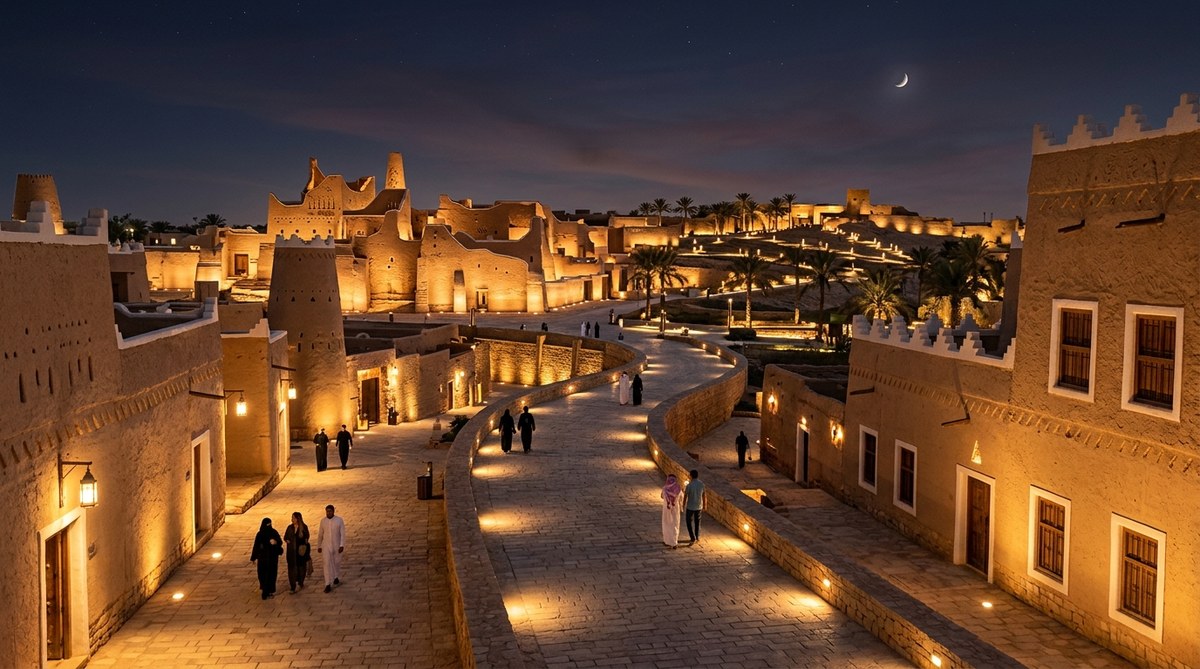
Diriyah transforms after sunset into something most daytime visitors never witness. The mud-brick walls of At-Turaif glow under carefully placed lights, the crowds thin out, and the temperature drops to comfortable levels. This is when the birthplace of the Saudi state reveals its most atmospheric side.
Diriyah evening tours offer a cooler, less crowded way to experience Saudi Arabia’s [UNESCO World Heritage site](https://whc.unesco.org/en/list/1329/). Evening access runs from 4 PM to midnight, with guided tours available in multiple languages. Tickets start at 50 SAR for general admission, while specialized tours range from 150 to 400 SAR. The site features illuminated heritage buildings, cultural performances, dining options, and seasonal events that make nighttime visits particularly memorable.
Why Evening Visits Work Better Than Daytime
Diriyah sits northwest of Riyadh in the open desert. Daytime temperatures regularly hit 40°C (104°F) from May through September. Walking through narrow alleyways and climbing stairs becomes exhausting under direct sun.
Evening visits solve this problem completely. Temperatures drop 10 to 15 degrees after sunset. The cooler air makes exploring the entire At-Turaif district comfortable, even during summer months.
The lighting design deserves its own mention. Specialists positioned hundreds of fixtures to highlight architectural details invisible during the day. Palm frond ceilings, carved wooden doors, and intricate mud-brick patterns all stand out under warm LED illumination.
Crowd levels drop significantly after 7 PM on weekdays. You’ll have entire sections of the heritage site to yourself, perfect for photography without strangers in every frame.
Booking Your Diriyah Evening Tour
The Diriyah Gate Development Authority manages all official tours. Their website and mobile app handle bookings in English and Arabic.
Here’s how to secure your spot:
- Visit the official Diriyah Gate website or download their app at least 48 hours before your planned visit
- Select “Evening Heritage Tours” from the experiences menu
- Choose your preferred date, time slot, and tour type (general admission, guided tour, or specialty experience)
- Complete payment using international credit cards, Apple Pay, or local payment methods
- Receive your QR code ticket via email and SMS within 15 minutes
- Arrive 20 minutes early at the main visitor center for check-in
Tours fill up fast during weekends and holidays, especially during Saudi National Day and Founding Day. Book at least one week ahead for Friday and Saturday slots.
Walk-up tickets are available but not guaranteed. The site caps daily visitors to preserve the heritage structures.
Tour Options and What They Include
Diriyah evening tours come in several formats. Each serves different interests and fitness levels.
| Tour Type | Duration | Price Range | Best For |
|---|---|---|---|
| General Admission | Self-paced | 50 SAR | Independent travelers who prefer exploring alone |
| Guided Heritage Walk | 90 minutes | 150 SAR | First-time visitors wanting historical context |
| Cultural Experience Tour | 2 hours | 250 SAR | Travelers interested in traditional crafts and performances |
| Premium Sunset Tour | 3 hours | 400 SAR | Photography enthusiasts and those wanting dinner included |
| Family Adventure Tour | 2 hours | 200 SAR per adult, 100 SAR per child | Families with children aged 6-12 |
The guided heritage walk covers the main palaces, mosques, and defensive structures. Your guide explains the first Saudi state’s history, architectural techniques, and daily life in the 18th century.
Cultural experience tours add hands-on elements. You might watch traditional pottery making, try Arabic calligraphy, or observe craftspeople weaving palm fronds using centuries-old techniques.
Premium sunset tours include reserved seating at Bujairi Terrace restaurants. You’ll watch the sun set over Wadi Hanifah while guides share stories about specific families who lived in each palace.
What to Expect During Your Evening Visit
Evening access begins at 4 PM when the site opens its gates. Most guided tours start between 5 PM and 7 PM to catch the transition from daylight to illumination.
The main entrance sits at the visitor center, where you’ll pass through security screening. Bags get checked, but the process moves faster than airport security.
Your first view comes from the elevated walkway overlooking At-Turaif. The entire mud-brick city spreads below, with Wadi Hanifah cutting through the landscape beyond.
Guides typically follow this route:
- Salwa Palace, the largest structure and former royal residence
- The Great Mosque, still used for prayer during special occasions
- Saad bin Saud Palace, notable for its defensive architecture
- The restored souq area with traditional shops
- Defensive towers offering panoramic views
Each stop includes 10 to 15 minutes for photos and questions. Guides speak English, Arabic, French, or Mandarin depending on tour selection.
The walking distance totals roughly 2 kilometers, mostly on flat surfaces with occasional stairs. Wear comfortable shoes. Sandals work fine, but avoid heels or flip-flops.
“Evening visits let you experience Diriyah the way residents would have in the 1700s, when the heat of the day passed and community life began. The temperature, the lighting, even the sounds feel more authentic after sunset.” — Heritage guide with 8 years at the site
Seasonal Events and Special Programming
Diriyah hosts rotating events throughout the year. These add extra value to evening visits beyond the standard heritage tour.
Winter months (November through February) bring the most programming. The Diriyah Season runs annually with concerts, art installations, and cultural festivals. International musicians perform at custom-built venues within sight of the heritage site.
Spring sees traditional crafts festivals. Artisans from across Saudi Arabia demonstrate pottery, weaving, metalwork, and other skills. Many offer short workshops where you can try techniques yourself.
Summer programming focuses on indoor exhibitions due to heat. The museum spaces stay open late with rotating displays about Saudi history, archaeology, and culture.
Fall brings food festivals celebrating Najdi cuisine. Local restaurants set up stalls serving kabsa, jareesh, and other regional specialties.
Check the events calendar when booking. Combining a heritage tour with a special event maximizes your visit.
Dining and Refreshment Options
Bujairi Terrace runs parallel to the heritage site across Wadi Hanifah. This dining district houses over 20 restaurants, cafes, and lounges.
Options range from traditional Saudi restaurants to international chains. Most stay open until midnight or later on weekends.
Popular choices include:
- Najd Village for authentic Najdi cuisine in a heritage setting
- Takya for modern Saudi fusion dishes
- Multiple Saudi coffee traditions cafes serving traditional preparation methods
- International options like Italian, Japanese, and American restaurants
Reservations help during peak times, especially Friday and Saturday evenings. Walk-ins usually work on weeknights.
Inside the heritage site itself, small refreshment kiosks sell bottled water, soft drinks, and packaged snacks. No full meals are available within At-Turaif boundaries.
Budget 150 to 300 SAR per person for dinner at mid-range restaurants. Coffee and light snacks run 30 to 60 SAR.
Photography Tips for Evening Shots
The lighting at Diriyah creates excellent photography conditions, but you’ll need to adjust your approach from daytime shooting.
Bring a camera or phone that handles low light well. Most modern smartphones work fine with night mode enabled. DSLR users should pack a tripod for longer exposures.
Best photo locations:
- The elevated walkway at the main entrance captures the entire At-Turaif complex
- Inside Salwa Palace courtyard, where uplighting creates dramatic shadows
- The defensive towers offer 360-degree views of the site and Riyadh skyline
- Narrow alleyways between buildings show architectural details under focused lighting
- Bujairi Terrace looking back toward the heritage site across the wadi
Golden hour (the 30 minutes before sunset) provides the warmest natural light. Arrive early enough to catch this if you’re on a sunset tour.
Full darkness brings out the artificial lighting design. Wait until at least 45 minutes after sunset for the best illuminated shots.
Tripods are allowed but must stay out of walkways. Selfie sticks work fine. Commercial photography requires advance permits from the development authority.
Getting to Diriyah from Riyadh
Diriyah sits 20 kilometers northwest of central Riyadh. The drive takes 25 to 40 minutes depending on traffic and your starting point.
Taxi and ride-sharing apps (Uber, Careem) operate throughout Riyadh. Expect to pay 40 to 80 SAR one-way from downtown hotels. Return trips cost similar amounts.
If you’re renting a car in Saudi Arabia, follow King Salman Road north to the Diriyah exits. Free parking lots surround the visitor center with spaces for over 1,000 vehicles.
Public buses serve Diriyah, but routes require transfers and take 60+ minutes. Taxis or ride-shares make more sense for evening visits when you’ll want direct transport back to your hotel.
Some tour operators offer round-trip transportation from major Riyadh hotels. These typically cost 100 to 150 SAR per person and include pickup and drop-off.
Plan your return transport before arriving. Cell service works well throughout the site, so booking a ride back takes just minutes.
Dress Code and Cultural Considerations
Saudi Arabia has relaxed many tourist restrictions, but what to wear in Saudi Arabia still matters at heritage sites.
Women don’t need to wear abayas or cover their hair. Modest clothing works fine. This means:
- Tops covering shoulders and upper arms
- Pants, skirts, or dresses reaching below the knee
- Avoiding see-through or extremely tight clothing
Men should wear long pants and shirts with sleeves. Shorts are technically allowed but draw attention.
Comfortable walking shoes matter more than formal dress. You’ll be on your feet for 90 minutes to 3 hours.
Evening temperatures stay warm (25-35°C) most of the year, so light, breathable fabrics work best. Bring a light jacket for winter months (December through February) when temperatures can drop to 15°C after sunset.
Prayer times affect some areas of the site. The mosque remains active, and visitors should stay quiet when passing nearby during prayer calls.
Combining Diriyah with Other Riyadh Experiences
Diriyah works well as part of a larger Riyadh itinerary. The evening timing lets you visit other attractions during the day.
Morning options include:
- The National Museum for Saudi history and culture (opens at 8 AM)
- Masmak Fortress in downtown Riyadh
- Kingdom Centre Tower for skyline views
- Traditional souqs for shopping and local atmosphere
Afternoon activities before your evening tour:
- Edge of the World day trip (requires full day, but worth considering for a separate visit if you’re interested in hiking the Edge of the World)
- Diplomatic Quarter parks and museums
- Shopping at Riyadh Park or other modern malls
- Rest at your hotel before the evening tour
After your Diriyah visit, Bujairi Terrace stays lively until midnight or later. Many visitors end their evening with coffee or dessert while watching the illuminated heritage site across the wadi.
Accessibility and Family-Friendly Features
The Diriyah development prioritized accessibility during restoration. Most areas accommodate wheelchairs and strollers.
Paved pathways connect major buildings. Ramps provide alternatives to stairs at most locations. A few upper-level areas remain accessible only by stairs, but guides point out these limitations at the start of tours.
Wheelchair rentals are available at the visitor center for 50 SAR deposit (fully refunded on return).
Families with young children should consider the family adventure tour. These include:
- Shorter walking distances with more frequent breaks
- Interactive activities like traditional games and crafts
- Storytelling sessions about life in historical Diriyah
- Child-friendly guides trained to engage younger visitors
Stroller parking areas exist at buildings where interior access requires climbing. Staff watch these areas, but bring a lock if you’re concerned.
Bathrooms appear every 200 to 300 meters throughout the site. All include baby changing facilities.
Children under 6 enter free with paying adults. Kids aged 6 to 12 receive 50% discounts on most tour types.
Common Mistakes to Avoid
First-time visitors often make preventable errors that diminish their experience.
| Mistake | Why It’s a Problem | Better Approach |
|---|---|---|
| Arriving without tickets | Walk-up availability isn’t guaranteed | Book online 2-7 days ahead |
| Wearing uncomfortable shoes | 2+ kilometers of walking causes blisters | Choose broken-in sneakers or walking sandals |
| Skipping the guided tour | You’ll miss historical context and stories | Invest in at least the basic guided option |
| Visiting only the heritage site | You’ll miss the full Diriyah experience | Allow time for Bujairi Terrace dining |
| Forgetting water | Kiosks charge premium prices | Bring your own bottle (refill stations available) |
| Rushing through in 60 minutes | You’ll miss architectural details and atmosphere | Budget 2-3 hours minimum |
The biggest mistake is treating Diriyah as a checkbox on a Riyadh itinerary. This UNESCO site deserves focused attention, especially during the atmospheric evening hours.
Practical Details Worth Knowing
A few additional details help you plan better.
The site stays open during Ramadan, with adjusted hours. Tours typically start after iftar (sunset meal) around 7:30 to 8 PM.
Cell phone coverage works throughout the site. Free WiFi connects at the visitor center and major buildings.
ATMs are available at the visitor center and Bujairi Terrace. Most vendors accept credit cards, but small kiosks prefer cash.
Restrooms meet international standards with western-style toilets. All include handwashing facilities and are cleaned hourly.
Lost and found operates from the visitor center. Staff speak English and can help with most issues.
Emergency medical services station near the main entrance. Staff handle minor injuries and can call ambulances if needed.
The entire site is non-smoking except in designated areas at Bujairi Terrace.
Pets aren’t allowed except registered service animals.
When to Visit for the Best Experience
Timing affects your experience significantly beyond just booking an evening tour.
Best months overall: November through March. Temperatures stay comfortable (15-25°C), and special events run frequently.
Shoulder season (April, October): Still pleasant with fewer crowds and lower hotel rates in Riyadh.
Summer (May through September): Extremely hot during the day, but evening tours remain comfortable after 7 PM. This is actually when evening visits shine brightest compared to daytime alternatives.
Worst times: Major holidays when domestic tourism peaks. The site gets crowded, and tours book out weeks in advance.
Best days of the week: Tuesday through Thursday evenings see the smallest crowds. Friday and Saturday nights attract local families and can feel busy.
Best tour start times: The 5 PM slot catches sunset transition. The 7 PM slot offers full illumination with slightly cooler temperatures.
Making Diriyah Part of Your Saudi Journey
Diriyah evening tours represent just one piece of Saudi Arabia’s expanding tourism landscape. The site pairs naturally with other experiences across the kingdom.
If you’re building a longer itinerary, consider combining your Riyadh visit with the ultimate 7-day itinerary combining Riyadh, AlUla, and the Edge of the World for a comprehensive introduction to Saudi heritage and natural wonders.
How much does a week in Saudi Arabia really cost helps you budget for Diriyah alongside other destinations.
Before you travel, make sure you understand how to apply for your Saudi Arabia e-visa to ensure smooth entry.
Your Evening at the Birthplace of Saudi Arabia
Diriyah after dark offers something rare in heritage tourism: a historical site that actually improves after sunset. The cooler temperatures, dramatic lighting, and thinner crowds create ideal conditions for understanding Saudi Arabia’s origins.
Book your tour, wear comfortable shoes, and give yourself enough time to wander beyond the guided route. The narrow alleyways, restored courtyards, and elevated viewpoints reveal new details with every visit. Whether you’re spending one evening or returning multiple times, Diriyah’s nighttime atmosphere leaves impressions that daytime visits simply can’t match.