
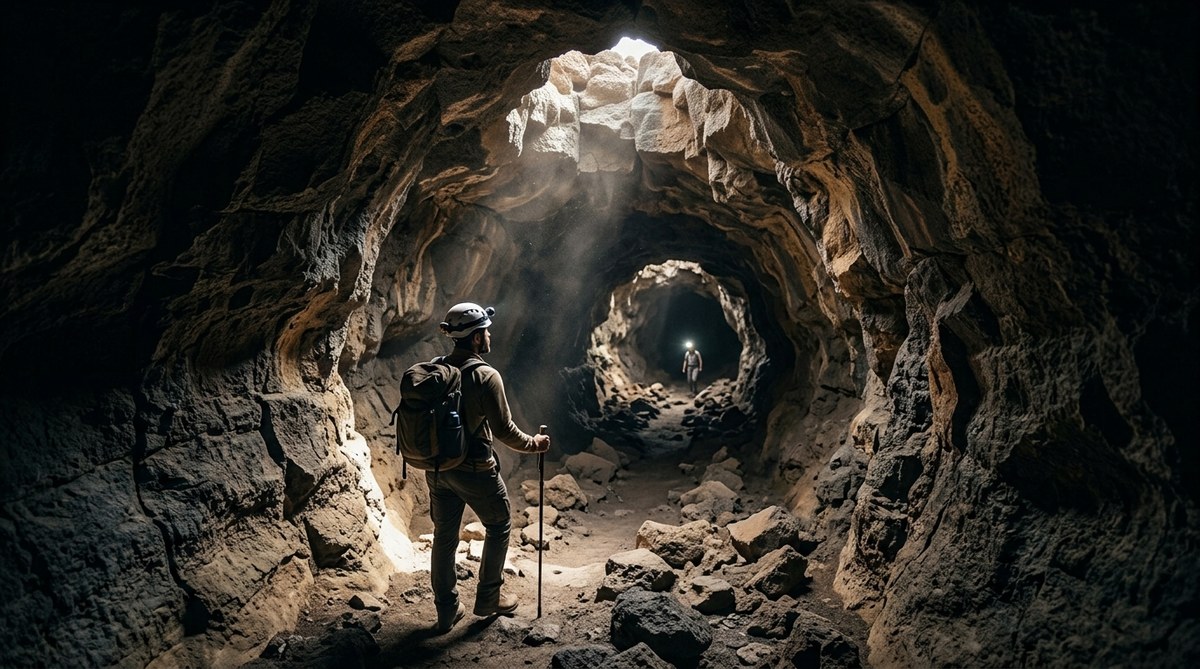
The Harrat Khaybar lava tubes, especially the 1.5 kilometer Umm Jirsan, offer a rare chance to walk through Saudi Arabia’s volcanic past. You can enter these natural tunnels with a 4×4 vehicle, proper lighting, and a guide. This guide covers permits, gear, safety, and the best times to visit so you can plan a safe and unforgettable underground adventure in 2026.
You are standing at the edge of a black volcanic field in western Saudi Arabia. The ground under your feet is rough, jagged basalt. A few meters ahead, a dark opening drops into the earth. This is the entrance to one of the longest lava tubes in Arabia. The air coming out of the hole is cool, much cooler than the desert heat above. Switch on your headlamp, check your footing, and step down into a world that formed thousands of years ago.
The Harrat Khaybar lava tubes are not your average tourist attraction. They are raw geology, ancient history, and one of the most unique adventures you can have in the Kingdom. In 2026, Saudi Arabia is opening up more of its natural wonders, but these volcanic tunnels remain off the beaten path. That is exactly why you want to go.
What Are the Harrat Khaybar Lava Tubes?
Harrat Khaybar is a volcanic field north of Medina, covering about 14,000 square kilometers. It is dotted with cinder cones, dark lava flows, and some of the most dramatic landscapes in the country. Beneath the surface, a network of lava tubes twists through the rock. These tubes formed when molten lava flowed across the land. The outer layer cooled and hardened while the hot lava inside continued to move. When the eruption stopped, the liquid rock drained away, leaving behind a hollow tunnel.
The most famous tube is Umm Jirsan. It stretches roughly 1.5 kilometers and reaches heights of up to 12 meters in some sections. Archaeologists have found evidence of human activity inside Umm Jirsan dating back thousands of years. Animal bones, stone tools, and even ancient rock art have been discovered there. Walking through it feels like stepping into a cathedral carved by fire.
How to Get to Harrat Khaybar
Getting to the lava tubes requires a bit of planning. Here is a step by step process to help you reach the entrance.
-
Fly into Medina or Yanbu. The closest major airport is Prince Mohammad bin Abdulaziz Airport in Medina. You can also fly into Yanbu and drive north. Both cities have rental car services.
-
Rent a high clearance 4×4 vehicle. The road to the lava field is not paved. A standard sedan will not make it. You need a vehicle with good ground clearance and off road capability. A Toyota Land Cruiser is the standard choice in Saudi Arabia.
-
Get a local guide or join a tour. The lava field is remote and GPS can be unreliable. Many visitors book a guided trip through operators based in Medina or AlUla. A guide knows the exact coordinates of the tube entrances and can handle any vehicle issues.
-
Drive to the Harrat Khaybar area. From Medina, drive northwest on Highway 15 toward AlUla. After about 90 minutes, turn off onto a gravel track that leads into the volcanic field. The exact turnoff depends on which tube you want to visit. Your guide will know.
-
Park and hike the final stretch. You cannot drive right up to every tube entrance. Park safely off the road and walk the last 100 to 200 meters over the rough lava rock. Wear sturdy boots.
What to Bring for a Lava Tube Expedition
Packing the right gear makes the difference between a great trip and a miserable one. Light levels inside the tubes are extremely low. The ground is uneven, often slick with fine dust. Temperatures inside stay cool year round, around 25 degrees Celsius (77 Fahrenheit), while the desert above can hit 45 degrees Celsius (113 Fahrenheit) in summer.
Here is a checklist of essentials:
- A reliable headlamp with spare batteries. Your phone flashlight is not enough.
- A backup flashlight in case your headlamp fails.
- Sturdy hiking boots with good grip on rock.
- Long pants and a long sleeved shirt to protect against sharp basalt.
- A helmet with a chin strap. Parts of the ceiling can be low and jagged.
- Two liters of water per person.
- Snacks that do not crumble easily.
- A small first aid kit.
- A fully charged power bank for your phone.
- A dust mask or bandana if you are sensitive to fine volcanic dust.
Do not bring anything you are afraid to get dirty. The dust inside the tube is fine, black, and gets everywhere.
Top 5 Lava Tubes to Visit in Harrat Khaybar
While Umm Jirsan is the most well known, there are several other tubes worth exploring. Each has its own character.
| Lava Tube | Approximate Length | Key Feature | Difficulty |
|---|---|---|---|
| Umm Jirsan | 1.5 km | Tallest sections, ancient rock art | Moderate |
| Al Dimnah | 0.8 km | Wide entrance, easy walking | Easy |
| Al Maqrah | 1.2 km | Narrow passages, skylight | Moderate |
| Al Sahbah | 0.5 km | Short but scenic, good for photos | Easy |
| Al Hafa | 1.0 km | Multiple chambers, cooler temps | Moderate |
All of these tubes are located within the Harrat Khaybar volcanic field. Your guide can help you decide which ones match your fitness level and interests.
Safety First: Mistakes to Avoid
Exploring lava tubes is not dangerous if you are prepared, but small mistakes can ruin the day. The table below shows common errors and how to avoid them.
| Mistake | Why It Is a Problem | How to Avoid It |
|---|---|---|
| Going in without a headlamp | Complete darkness inside. Your phone will die. | Always carry two independent light sources. |
| Wearing sandals or sneakers | Sharp basalt cuts shoes quickly. Ankle twists are common. | Wear high top boots with thick soles. |
| Touching the walls or ceiling | Lava rock is extremely abrasive. You can get cuts that get infected. | Keep your hands away from the rock. Use gloves if needed. |
| Ignoring the weather forecast | Flash floods can rush through tubes in minutes. | Check the forecast. Never enter if rain is expected. |
| Going alone | If you twist an ankle or get lost, help is far away. | Always go with at least one other person. Hire a guide. |
“The number one rule is never enter a lava tube without at least two sources of light. I have seen travelers panic when their single headlamp dies 200 meters in. The darkness is absolute. You cannot see your hand in front of your face.” — Ahmed Al Zayed, Saudi adventure guide based in AlUla.
When to Visit the Lava Tubes
The best time to visit is between November and March. Summer temperatures in the Harrat Khaybar region are brutally hot. The volcanic rock absorbs heat and radiates it back at night. Even though the tubes stay cooler, the hike across the lava field to reach them is miserable in July.
Winter and early spring offer pleasant daytime temperatures between 20 and 30 degrees Celsius (68 to 86 Fahrenheit). The skies are clear, and the light outside the tubes creates beautiful contrasts with the dark rock. Avoid the month of Ramadan for your trip if you want to eat and drink freely during the day, though many tour operators still run trips in the evenings.
What to Expect Inside the Tubes
The first thing you notice is the drop in temperature. One step past the entrance and the heat of the desert vanishes. The air feels damp and still. Your footsteps echo off the black walls. The floor is uneven, made of broken basalt and fine dust that puffs up with every step.
Look up. The ceiling shows the history of the lava flow. Ripples, drips, and cooled stalactites of rock hang overhead. Some sections are wide enough for a truck. Others require you to duck and squeeze through narrow gaps. In a few places, a skylight opens above, letting a beam of sunlight pierce the darkness. Those spots make for incredible photos.
As you walk deeper, you may notice small animal tracks in the dust. Bats, foxes, and even hyenas use these tubes as shelter. Archaeologists have found bones and tools from ancient humans who used the tubes for shade and water collection thousands of years ago.
Combining a Lava Tube Visit with Other Adventures
Harrat Khaybar is not the only reason to visit this region. The volcanic field sits between two major tourism hubs: Medina and AlUla. After your underground expedition, you can drive to AlUla and spend days exploring the Nabataean tombs of Hegra, the rock formations of the Ashar Valley, and the Maraya concert hall.
If you are coming from Medina, consider stopping at the Harrat Khaybar Visitor Center (opened in 2025) to see exhibits on volcanic geology and local wildlife. The center also provides updated information on which tubes are open for tourism.
For travelers looking for a similar off the grid experience, check out 15 Hidden Gems in Saudi Arabia That Most Tourists Never Discover. And if you plan to drive yourself, make sure you read Renting a Car in Saudi Arabia: Everything Foreign Tourists Need to Know Before Hitting the Road to avoid common rental issues.
Permits and Regulations in 2026
As of early 2026, you do not need a special permit to enter the Harrat Khaybar lava tubes. However, the Saudi Tourism Authority encourages all visitors to register their trip with the Harrat Khaybar Visitor Center. This helps rescue teams locate you if an emergency occurs.
Some tubes may have seasonal closures to protect bat colonies or archaeological sites. Always check with the visitor center or your tour operator before heading out. Unauthorized camping is not allowed inside the lava tubes, and removing any rock or artifact is strictly prohibited.
The Geology Behind the Beauty
Harrat Khaybar is part of the Harrat volcanic fields that stretch across western Saudi Arabia. These fields are the result of tectonic activity along the Red Sea rift. The most recent eruption in Khaybar happened only a few hundred years ago, which is fresh by geological standards. Lava tubes require a specific type of flow: low viscosity basalt that moves fast and stays hot long enough to form a crust. The Harrat Khaybar flows were perfect for tube formation.
The IUGS (International Union of Geological Sciences) designated Harrat Khaybar as a geological heritage site in 2022. That designation brought more scientific attention and helped fund the visitor center. For geology enthusiasts, walking through these tubes is like reading a textbook written in stone.
A Final Word on Your Underground Adventure
Harrat Khaybar lava tubes offer something most tourist attractions cannot: a genuine sense of exploration. You are not following a paved path with guardrails. You are stepping into a dark, raw space that has existed for millennia. The rock walls still carry the marks of the lava that flowed past them. The silence is deep and ancient.
Plan your visit carefully, respect the environment, and go with people who know the terrain. The effort it takes to get there is part of the reward. When you emerge back into the sunlight, blinking at the bright desert sky, you will feel like you have uncovered a secret that the rest of the world has yet to find.
If you are ready for more unusual destinations, take a look at 7 Adrenaline-Pumping Adventure Sports You Can Only Experience in Saudi Arabia. And if you want to extend your trip, How to Plan the Perfect Road Trip Along Saudi Arabia’s Red Sea Coast will help you build a complete itinerary.
Turn off your headlamp, stand still for a moment, and listen. The earth has stories to tell. You just have to go underground to hear them.