
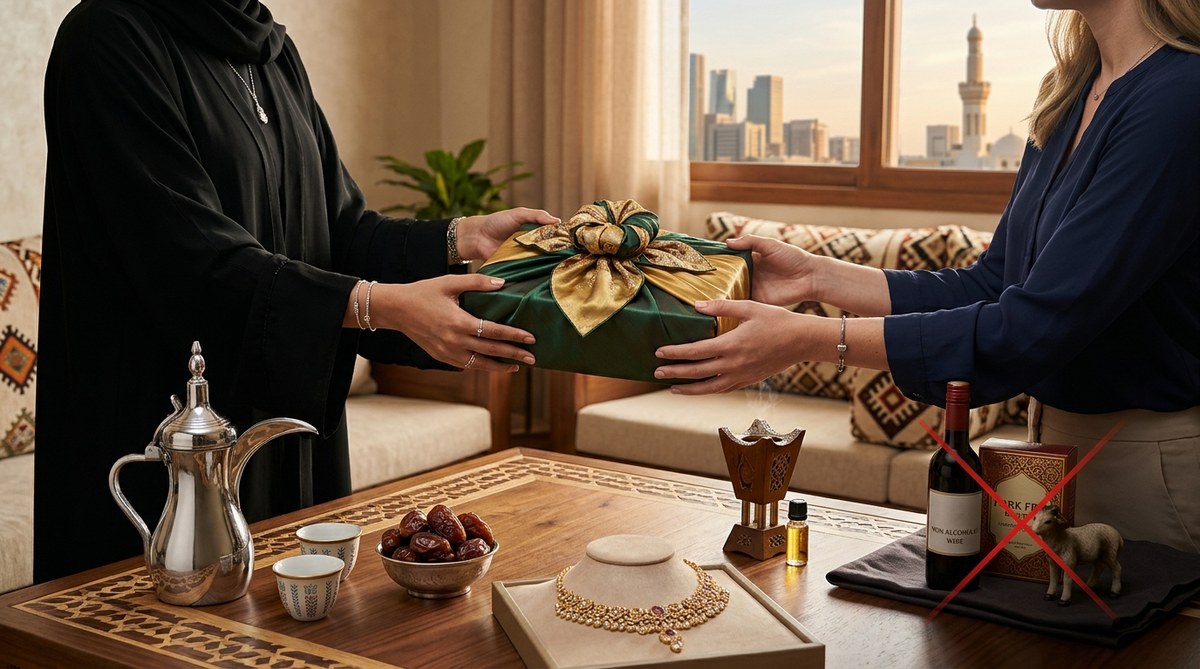
You land a business meeting in Riyadh, or you are invited to a Saudi colleague’s home for dinner. Your hand reaches for your suitcase, and you wonder: What should I bring? A bottle of wine is out. A tie feels too generic. A box of chocolates might seem thoughtless. In Saudi Arabia, a gift is not just a gesture. It is a message. It signals respect, understanding, and a genuine effort to connect across cultures. Choosing the wrong item can create awkward silence. Choosing the right one can open doors and build lasting trust. Let us decode the hidden language of Saudi gift giving so you arrive prepared, confident, and respected.
Saudi gift giving etiquette prioritizes respect over extravagance. Always offer gifts with the right hand only, and politely refuse three times before accepting to honor the tradition of modesty. Avoid alcohol, pork products, and anything with pigskin. Safe choices include high-quality dates, Arabic coffee sets, premium oud perfume, or a tasteful item linked to your home region. Gifts for the home are always appreciated, but never give a gift that implies a romantic interest.
The Golden Rules of Presentation
How you hand over a gift in Saudi Arabia matters as much as the gift itself. Follow these principles to show you understand local customs.
- Use the right hand only. The left hand is considered unclean. If you must use both hands, let the right hand do the work. Your host will notice.
- Offer and receive with two hands. This shows extra respect, especially when the gift is meaningful or the recipient is older.
- Do not open the gift immediately. In Saudi culture, gifts are opened later, in private. Opening it in front of the giver can be seen as greedy. Let your host set the pace.
- Expect polite refusal. Your host may say “No, no, you should not have” and push the gift away. This is normal. Insist gently once or twice, then let them accept gracefully.
- Wrap with care. Simple, elegant wrapping is best. Avoid flashy bows or loud patterns. Neutral colors like cream, gold, or deep red work well.
Gifts That Always Land Well
Some gifts are universally appreciated in Saudi Arabia. They connect directly to the culture’s love for hospitality, fragrance, and shared experiences.
- Premium dates. Dates are the ultimate Saudi gift. Choose high-quality varieties like Ajwa, Sukkari, or Medjool. They come in beautiful boxes and are deeply symbolic of hospitality.
- Arabic coffee sets. A traditional dallah (coffee pot) paired with small finjan cups is a gift that honors the ritual of serving guests. It shows you understand the heart of Saudi social life.
- Oud or bakhoor. These are traditional Arabian scents. Oud is a rich, woody perfume oil. Bakhoor is scented incense chips burned in a burner. Both are treasured and used in homes and gatherings.
- High-quality dates with a twist. Look for date gift boxes that include nuts, chocolate-covered dates, or stuffed varieties. They feel modern and thoughtful.
- A tasteful item from your home country. A small, high-quality souvenir that represents your region, such as a maple syrup gift set from Canada, a high-end wool scarf from Scotland, or a box of artisanal chocolates from Belgium. This shows you thought of them while traveling.
Gifts to Avoid Without Exception
Some items are culturally or religiously off limits. Bringing one of these can damage a relationship before it starts.
| Gift Category | Why It Is Problematic | Safe Alternative |
|---|---|---|
| Alcohol | Strictly forbidden by Islam. Even a small bottle is deeply offensive. | Premium dates or Arabic coffee set. |
| Pork or pigskin products | Haram (forbidden). This includes wallets, belts, or handbags made of pig leather. | Leather goods made from cow or camel hide. |
| Items with religious symbols | Crosses, statues of deities, or items with Hebrew or non-Islamic imagery can cause discomfort. | A beautiful calligraphy piece of an Arabic phrase like “Peace” or “Blessings”. |
| Personal items for a spouse | Gifts like perfume, jewelry, or clothing for a colleague’s spouse can be misconstrued. | A gift for the entire family, such as a high-quality food basket. |
| Dogs or dog-related items | Dogs are considered unclean in many traditional interpretations. | A plant or a decorative item for the home. |
| Knives or sharp objects | Symbolizes cutting ties or bad intentions. | A decorative pen set or a book. |
The Art of Giving in a Business Context
Business gift giving in Saudi Arabia follows a different rhythm than personal gifting. It is less about the object and more about the relationship.
- Wait for the right moment. Do not present a gift at the very first meeting. Let the business relationship develop. The second or third meeting is usually appropriate.
- Match the gift to the relationship. For a new contact, a modest gift like a nice pen or a small box of dates is fine. For a long-term partner, a more significant gift like a high-quality oud set is suitable.
- Group gifts are common. If you are meeting a team, present one gift to the senior person and mention it is for the whole group. Alternatively, bring small, identical gifts for everyone.
- Avoid overly expensive gifts. A gift that is too lavish can feel like a bribe. It puts the recipient in an uncomfortable position. Thoughtful and tasteful is better than expensive.
- Always include a card. A handwritten note expressing your appreciation is valued. Keep the message brief and professional.
What to Do When You Receive a Gift
You are likely to receive gifts from Saudi hosts or colleagues. Your response matters.
- Receive with the right hand. Accept the gift with your right hand, or both hands if it is large.
- Thank the giver warmly. Say “Shukran” (thank you) or “Allah yubarik feek” (May God bless you).
- Do not open it. Place it aside gracefully. You can say, “This is so kind of you. I will treasure it.”
- Reciprocate later. It is good practice to offer a gift in return at a future meeting, especially if the relationship continues. It does not need to be equal in value, just thoughtful.
“In Saudi culture, the gift is not about the price tag. It is about the intention behind it. A small, well-chosen gift that shows you have paid attention to the person’s interests or culture will always be remembered more than an expensive, generic one.”
Navigating Special Occasions and Holidays
Gift giving during holidays has its own set of expectations. Knowing these can help you participate respectfully.
- Eid al-Fitr and Eid al-Adha. These are the two major Islamic holidays. Gifts are common, especially for children. New clothes, toys, or money (Eidiya) are traditional. For adults, consider a gift basket with sweets, dates, and nuts.
- Ramadan. During the holy month, it is thoughtful to bring a gift of food to break the fast (iftar). Avoid giving gifts that are too festive. Focus on shared meals and generosity.
- Weddings. If you are invited to a Saudi wedding, a cash gift is the most common and appreciated gesture. It is usually given in an envelope. If you prefer a physical gift, consider a high-quality home decor item.
- National Day (September 23). Giving a gift with Saudi colors (green and white) is a nice touch. A small flag, a decorative item, or a donation to a Saudi charity in the person’s name works well.
Common Mistakes and How to Avoid Them
Even well-intentioned visitors can slip. Here are the most frequent errors.
- Giving a gift in front of others. If you are meeting a group, avoid singling out one person with a gift unless it is for everyone. Present the gift privately if possible.
- Forgetting to wrap. An unwrapped gift feels careless. Always wrap it, even if simply.
- Using the left hand. This is a major faux pas. Train yourself to use the right hand for all interactions involving gifts, food, or money.
- Giving flowers. Flowers are often associated with hospitals or funerals. They are not a standard gift for a social or business visit. Stick to dates or coffee.
- Assuming all Saudis are the same. Saudi Arabia is diverse. A gift that works in cosmopolitan Jeddah might not be ideal in a conservative village. When in doubt, ask a local contact for advice.
Building Bridges Through Thoughtful Gifts
Mastering Saudi gift giving etiquette is not about memorizing a list of rules. It is about showing respect for a culture that values relationships above transactions. When you choose a gift with care, present it with humility, and accept hospitality with grace, you are speaking the hidden language of Saudi generosity. That language builds bridges, opens doors, and turns a business trip into a meaningful human connection. The next time you pack your bag for the Kingdom, let your gifts reflect the respect you carry in your heart. Your hosts will notice, and they will remember.