
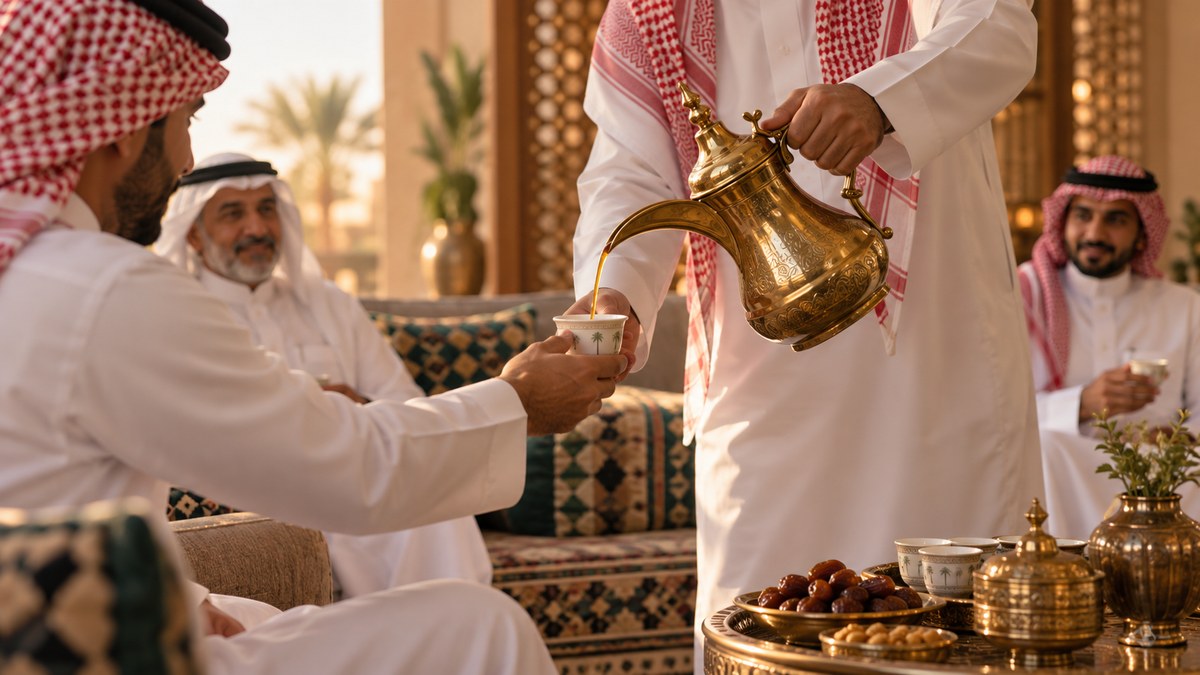
You walk into a Saudi home and before you can even say hello, a small, handleless cup of amber liquid is placed in your hand. The host smiles, the coffee pot is held high, and a thin stream of aromatic liquid arcs perfectly into the cup. This is not a random act. It is a deliberate, centuries-old ritual that forms the backbone of the Saudi coffee hospitality tradition.
The Saudi coffee tradition is a powerful symbol of welcome, respect, and generosity. The host pours first to put the guest at ease and demonstrate that no harm will come to them. Refusing coffee can offend, but a gentle wobble of the cup signals you are done. Understanding these hidden rules transforms a simple drink into a meaningful cultural exchange.
What Makes Saudi Coffee Different From Regular Coffee
Saudi coffee, known as qahwa or gahwa, is nothing like the dark roast you grab at a drive-through. It is a pale, golden-brown brew made from lightly roasted Arabic coffee beans. The beans are ground into a fine powder and boiled with water, then infused with a blend of spices. Cardamom is the star, but you will also taste hints of saffron, cloves, and sometimes a touch of rose water or cinnamon.
The result is a fragrant, slightly bitter drink that is served without sugar in most traditional settings. Dates, called tamr, are always offered alongside. The sweetness of the dates balances the bitterness of the coffee perfectly. This pairing is not accidental. It is a deliberate act of care. The host wants you to enjoy the experience, not just gulp down caffeine.
Why the Host Pours First: The Hidden Meaning
The question at the heart of this tradition is simple. Why does the host pour the coffee before the guest even sits down? The answer goes deep into Arabian values.
The act of pouring first is a gesture of safety and trust. In the harsh desert environment of the Arabian Peninsula, offering water or coffee to a stranger was a sign that they were under your protection. By serving the guest before themselves, the host says, “You are safe here. Your needs come before mine.”
There is also a practical layer. The host pours with their left hand holding the pot and their right hand offering the cup. This is not accidental. In Islamic culture, the right hand is used for eating, giving, and receiving. The left hand is reserved for hygiene. A host who pours with the left hand is showing that they are using their “clean” hand to serve, a subtle but important sign of respect.
“When you enter a Saudi home, the coffee is not a beverage. It is a welcome mat woven from centuries of tradition. To refuse it is to step over that mat without acknowledging the host.” – Dr. Noura Al-Saad, cultural historian based in Riyadh.
The Unspoken Rules of Receiving the Cup
Knowing how to receive the cup is just as important as knowing how it is poured. Here are the steps you need to follow.
- Accept with your right hand. Always use your right hand to take the cup. If you are sitting, you can use both hands as a sign of extra respect, but the right hand must be the one that actually takes the cup.
- Do not set it down. Once you take the cup, hold it until you finish drinking or signal that you are done. Placing a full cup on the floor or table can be seen as a rejection of the host’s generosity.
- Take small sips. The coffee is served hot and strong. Sipping slowly shows that you are savoring the flavor and appreciating the moment. Gulping it down is considered rude.
- Praise the coffee. A simple “Allah yatik al-afya” (May God give you strength) or “Masha’Allah” (God has willed it) after your first sip is a huge compliment to the host.
- Signal when you are done. This is the most important rule. When you have had enough, gently wobble the cup from side to side or shake it slightly. This tells the host to stop pouring. If you simply hand the cup back, they will refill it immediately.
How to Signal You Are Finished: A Practical Table
Many visitors accidentally drink three or four cups because they do not know how to say “no” politely. The table below shows the correct and incorrect ways to finish your coffee.
| Action | What It Means | What to Do Instead |
|---|---|---|
| Handing the empty cup back | “Please refill me.” | Wobble the cup before handing it back. |
| Placing the cup on the floor | “I reject your hospitality.” | Hold the cup until you signal you are done. |
| Saying “No, thank you” verbally | Acceptable but less traditional. | Use the wobble. It is the universal sign. |
| Covering the cup with your hand | “I am full, please stop.” | This is also a clear signal, but the wobble is more common. |
| Leaving a small amount of coffee in the cup | “I have had enough.” | This works, but the wobble is clearer and more polite. |
Common Mistakes Visitors Make (And How to Avoid Them)
The Saudi coffee hospitality tradition is forgiving to foreigners, but avoiding these errors will earn you genuine respect.
- Refusing the first cup. This is the biggest mistake. Even if you do not like coffee, accept the cup and take one small sip. The gesture matters more than the drink. You can then wobble the cup to signal you are done.
- Using your left hand. Never take the cup or offer anything with your left hand. It is considered unclean. If you are left-handed, make a conscious effort to use your right hand for this interaction.
- Adding sugar. Traditional Saudi coffee is served unsweetened. If you add sugar, you are essentially saying the host’s coffee is not good enough. The dates are there to provide sweetness.
- Drinking too fast. This ritual is about connection, not caffeine. Slow down. Engage in conversation. Let the coffee be a bridge between you and your host.
- Asking for milk. Do not do this. It is simply not part of the tradition. If you absolutely need milk, wait until a later cup and ask very politely.
The Deeper Purpose of the Ritual
The Saudi coffee hospitality tradition is not just about a drink. It is a complete social ritual that sets the tone for the entire visit. The coffee service accomplishes several things at once.
It breaks the ice. When a stranger enters a home, there is always a moment of tension. The host pouring coffee gives both parties something to focus on. It is a shared activity that immediately creates a bond.
It establishes hierarchy and respect. The host serves the eldest or most important guest first. This is a non-verbal way of acknowledging status and showing honor. If you are the guest, you should wait to be served in order of age or rank.
It slows everything down. In a world that moves at breakneck speed, the coffee ritual forces everyone to pause. You sit. You sip. You talk. You eat a date. The conversation flows naturally. This is a deliberate rejection of hurry.
When and Where You Will Encounter This Tradition
You will experience the Saudi coffee hospitality tradition in many settings beyond private homes.
- Business meetings. If you are a business professional visiting Saudi Arabia, expect coffee to be served within the first five minutes of a meeting. Do not try to skip it to get down to business. The coffee is part of the business.
- Government offices. Even in official settings, the coffee ritual is observed. It is a way of showing that the relationship matters more than the transaction.
- Souqs and shops. Some traditional shopkeepers will offer you a small cup of coffee while you browse. Accepting it builds rapport and can even lead to a better price.
- Weddings and festivals. At large celebrations, coffee is served continuously. The pot never stops moving. It is a symbol of the community’s generosity.
- Hotels and resorts. Many high-end hotels in Saudi Arabia now offer a traditional coffee welcome to guests. It is a beautiful introduction to the culture.
For a deeper look at how this fits into the bigger picture of Saudi manners, read our guide on how to greet and interact with locals.
The Art of the Pour: Why the Pot Is Held High
You may notice that the host pours the coffee from a surprising height. The stream of coffee falls from the pot into the cup without spilling a drop. This is not a show-off move. It serves a practical purpose.
Pouring from a height aerates the coffee. This releases the aromatic oils and spices, enhancing the flavor. It also cools the coffee slightly so the guest can drink it immediately without burning their mouth. A skilled pourer can fill a small cup from a foot above without splashing.
The pot itself, called a dallah, is a symbol of hospitality. Traditional dallahs are made of brass, copper, or silver, often with intricate engravings. The shape is distinctive: a bulbous body, a long spout, and a lid with a finial. Owning a beautiful dallah is a point of pride for many Saudi families.
How to Compliment the Coffee Properly
Words matter in Saudi culture. After your first sip, you should offer a compliment. Here are a few phrases that will make your host beam.
- “Allah yatik al-afya.” This means “May God give you strength.” It is the most common and appreciated compliment.
- “Qahwa mumtaza.” This means “Excellent coffee.” Simple and direct.
- “Bi al-saha wa al-shafa.” This is a general phrase said before drinking, meaning “To your health and wellness.”
Avoid saying “This is good coffee” in English. Even if your host speaks English, using an Arabic phrase shows that you have taken the time to understand the culture. For more useful phrases, check out our list of 15 Arabic phrases that will transform your travel experience.
What Happens If You Really Cannot Drink Coffee?
There are valid reasons to avoid coffee. Medical conditions, pregnancy, or personal preference are all understandable. The key is how you handle it.
Accept the cup anyway. Take the smallest sip possible. Then wobble the cup to signal you are done. The host will understand. If they ask if you want something else, you can politely ask for water or juice.
Do not launch into a long explanation about why you do not drink coffee. A simple “Shukran, bas ana tamam” (Thank you, but I am fine) after the wobble is sufficient. The host will appreciate that you participated in the ritual even if you did not finish the drink.
How the Tradition Is Evolving in Modern Saudi Arabia
Saudi Arabia in 2026 is a country of contrasts. Skyscrapers rise next to mud-brick forts. Electric cars share roads with camels. The Saudi coffee hospitality tradition is evolving along with the country.
Specialty coffee shops in Riyadh and Jeddah now serve modern interpretations of qahwa. You can find cold brew versions, coffee infused with chocolate, or qahwa lattes. But the core ritual remains the same in homes and traditional settings.
The Saudi government has even launched initiatives to promote Saudi coffee on the global stage. The Saudi Coffee Company, established under the Public Investment Fund, is working to brand Saudi coffee as a premium product worldwide. This is not just about economics. It is about preserving and sharing a cultural treasure.
If you are planning a trip to experience this tradition firsthand, you should start by securing your travel documents. Our guide on how to apply for your Saudi Arabia e-visa in under 10 minutes will help you get started.
Your First Coffee Experience: A Step-by-Step Checklist
Before you walk into a Saudi home or a business meeting, run through this mental checklist.
- Right hand ready. You will use it to accept the cup and to eat dates.
- No sugar. Accept the coffee as it comes.
- Small sips. Savor the flavor. Do not rush.
- Wobble to stop. When you are done, shake the cup gently.
- Compliment the host. Use one of the Arabic phrases above.
- Eat a date. Take one date from the tray. Do not take more than one unless offered.
- Wait for the next round. The host will pour for everyone in the room before pouring for themselves.
The Last Sip: Why This Tradition Matters for Travelers
Understanding the Saudi coffee hospitality tradition is not just about avoiding a social faux pas. It is about opening a door. When you participate in this ritual with respect and understanding, you are telling your Saudi host that you see them. You see their culture. You see their values.
In a world that often feels divided, a shared cup of coffee can be a powerful bridge. The act of pouring first, of serving the guest before oneself, is a lesson in humility and generosity that transcends borders.
The next time a Saudi host places that small cup in your hand, do not see it as just a drink. See it as an invitation. An invitation to slow down, to connect, and to understand a culture that has been perfecting the art of welcome for centuries. Accept it with both hands, literally and figuratively. You will leave with more than just a warm feeling. You will leave with a deeper understanding of what it means to be a guest in the Kingdom.
For a broader look at how Saudis welcome visitors, read our complete guide on the complete guide to Saudi hospitality. And if you are ready to plan your trip, our ultimate 7-day itinerary combining Riyadh, AlUla, and the Edge of the World is a great place to start.