
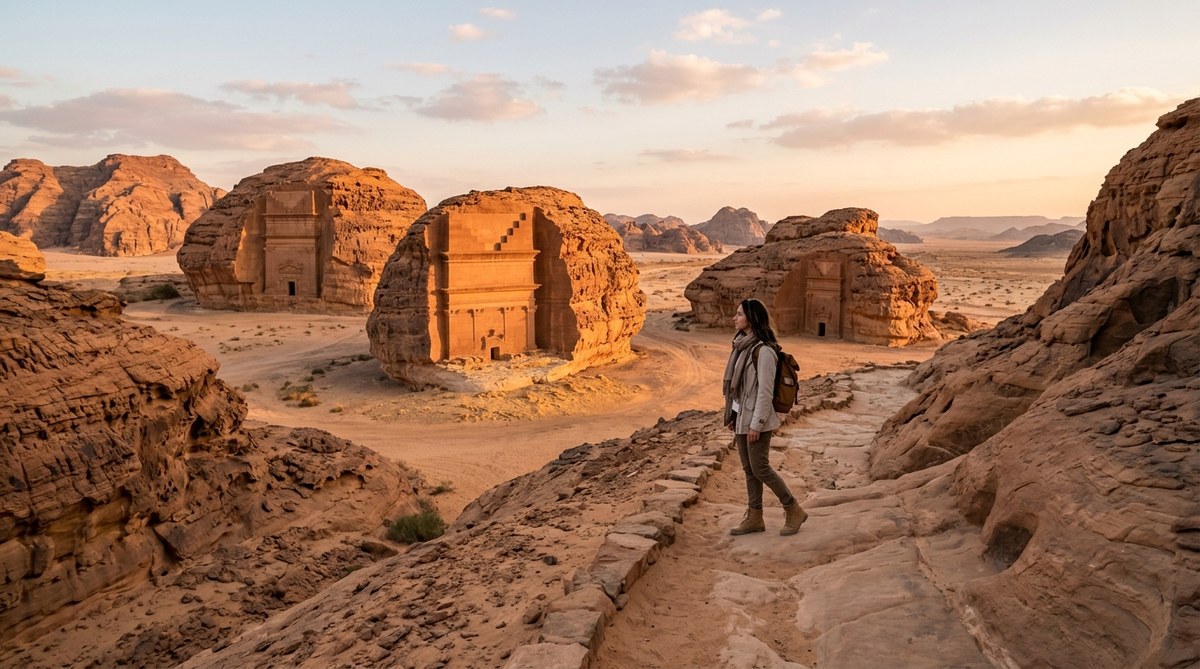
You have seen Petra. You have seen Machu Picchu. But have you seen AlUla? This ancient corner of northwest Saudi Arabia holds tombs carved into golden rock faces that rival anything in Jordan. It has a UNESCO World Heritage site that most travelers have never heard of. And right now, in 2026, it remains one of the most underrated ancient wonders on the planet. The crowds are thin. The infrastructure is brand new. And the sense of discovery is real.
AlUla is Saudi Arabia’s most underrated ancient wonder because it combines the grandeur of Petra with the solitude of an off-the-beaten-path destination. Home to Hegra (Madain Saleh), a 2,000-year-old Nabataean city, plus dramatic rock formations, open-air museums, and luxury desert camps, AlUla offers a world-class historical experience without the crowds found at other ancient sites. It is accessible via e-visa and domestic flights from Riyadh or Jeddah.
Why AlUla Deserves a Spot on Your Bucket List
AlUla is not just a single ruin. It is a sprawling valley, 22 kilometers long, filled with ancient tombs, inscriptions, and rock-cut facades. The main attraction is Hegra, also known as Madain Saleh. This was the southernmost outpost of the Nabataean kingdom, the same civilization that built Petra.
But here is the difference. At Petra, you share the Siq with hundreds of other tourists. At Hegra, you can stand before the Qasr al-Farid tomb, a 72-foot tall monolith carved from a single block of sandstone, and hear only the wind. That solitude is becoming rare in the world of ancient wonders.
The site was declared a UNESCO World Heritage site in 2008, making it Saudi Arabia’s first. Yet international visitor numbers remained low for years. That is changing now, but AlUla still sees a fraction of the visitors that Petra gets each year. For travelers who value authenticity over crowds, that is the whole point.
What Makes AlUla Different from Petra
Many people compare AlUla to Petra because both were built by the Nabataeans. But the experience is completely different.
| Feature | Petra (Jordan) | AlUla (Saudi Arabia) |
|---|---|---|
| Crowds | 1+ million visitors per year | Under 300,000 visitors per year |
| Access | 3-hour drive from Amman | 1-hour flight from Riyadh or Jeddah |
| Preservation | Heavily restored tourist zone | Largely original, less commercialized |
| Surroundings | Arid desert canyon | Lush palm oasis with canyon and desert |
| Activities | Hiking, donkey rides, horse carriage | Hot air balloon, stargazing, heritage rail tour |
The numbers tell the story. AlUla is quieter, more raw, and more immersive. You are not fighting for a photo spot. You are absorbing a landscape that has changed very little in two thousand years.
The Sites You Cannot Miss in AlUla
AlUla is a region, not a single attraction. To understand why it is so underrated, you need to see the full picture.
Hegra (Madain Saleh)
This is the crown jewel. Hegra contains 131 monumental tombs carved into rock outcrops. Many have elaborate facades with eagles, griffins, and geometric patterns. The most famous is Qasr al-Farid, which stands alone in the desert. You reach it by a guided tram ride, and the guides are knowledgeable Nabataean history experts.
Dadan and Jabal Ikmah
Before the Nabataeans, the kingdoms of Dadan and Lihyan ruled this valley. Dadan was a trading hub for frankincense and myrrh. Today you can walk among the ruins of their capital and see hundreds of ancient inscriptions on the cliffs of Jabal Ikmah. This open-air library has texts in Aramaic, Minaic, and Thamudic. It is one of the most important epigraphic sites in the world.
The Old Town of AlUla
This abandoned mud-brick village was inhabited until the 1980s. Walking through its narrow alleyways feels like stepping into a time capsule. The restoration has been sensitive. You can climb to the top of the old fort for a panoramic view of the palm oasis.
Maraya Concert Hall
This is the surprise. In the middle of the desert, a mirrored cube reflects the surrounding rock formations. Maraya is a concert hall that has hosted global artists like Andrea Bocelli. It is a striking example of how Saudi Arabia is blending ancient heritage with modern culture. For more on this architectural wonder, check out why AlUla’s Maraya Concert Hall is the most unexpected architectural marvel in the Middle East.
How to Plan Your Visit to AlUla
Getting to AlUla is easier than you think. Here is a step-by-step plan.
- Secure your visa. Most nationalities can get a Saudi tourist e-visa online. The process takes about 10 minutes. Read our guide on how to apply for your Saudi Arabia e-visa in under 10 minutes for the full steps.
- Book a flight to AlUla. Saudia and flyadeal operate direct flights from Riyadh and Jeddah to AlUla International Airport (ULH). The flight takes about 1.5 hours.
- Arrange accommodation. Options range from luxury resorts like Banyan Tree AlUla to boutique hotels like Sahari AlUla Resort. For a deeper look at where to rest your head, see our guide on where to stay in Saudi Arabia: accommodation options beyond international hotel chains.
- Book your tours. Access to Hegra and other main sites is by guided tour only. You must book in advance through the official Experience AlUla website or your hotel. Tours run at specific times, so plan around them.
- Plan for at least two full days. One day for Hegra and Dadan. One day for the old town, Jabal Ikmah, and a sunset hot air balloon ride over the tombs. If you only have one day, here is how to tackle Saudi Arabia’s AlUla in one day without regretting it.
What to Pack and Wear
AlUla has a desert climate. Winters (November to February) are mild and pleasant, with daytime temperatures around 65-75°F. Summers are very hot, often exceeding 100°F. The best time to visit is between October and April.
Here is a practical packing list.
- Lightweight, loose clothing. Long pants and long sleeves are respectful and protect you from the sun. Women are not required to wear an abaya, but modest dress is appreciated.
- Comfortable walking shoes. The terrain is sandy and rocky. You will walk a lot.
- Sun protection. Hat, sunglasses, and high-SPF sunscreen.
- A reusable water bottle. Staying hydrated is key. Many hotels provide filtered water.
- A scarf. Useful for sun protection, dust, or covering your head if you visit a mosque.
For a full list, read our what to pack for Saudi Arabia: essential items and cultural dress code considerations.
The Best Time to Visit AlUla
The weather in AlUla dictates the best travel windows.
- Peak season (October to March): Comfortable temperatures, clear skies, and the AlUla Arts Festival. This is the best time for hiking and outdoor activities.
- Shoulder season (April and September): Warmer but still manageable. Fewer crowds.
- Off season (May to August): Very hot. Most daytime tours are limited to early morning or late afternoon. However, hotel rates are lower.
If you want to combine AlUla with other destinations, consider our ultimate 7-day itinerary combining Riyadh, AlUla, and the Edge of the World.
How AlUla Compares to Other Underrated Saudi Destinations
Saudi Arabia has many hidden gems, but AlUla is unique. It offers something that no other site in the kingdom can match: a complete ancient city with monumental architecture. Other destinations like the Edge of the World offer dramatic geology, and the Asir region offers green highlands. But for pure ancient wonder, AlUla stands alone.
For travelers who want to go even further off the beaten path, consider exploring 15 hidden gems in Saudi Arabia that most tourists never discover. Or if you are looking for a different kind of adventure, the mountain adventures in Asir: where to hike, camp, and explore Saudi Arabia’s green highlands offer a completely different landscape.
Common Mistakes to Avoid
First-time visitors to AlUla often make a few predictable errors. Here is how to avoid them.
- Not booking tours in advance. You cannot enter Hegra without a pre-booked tour. Show up without a reservation, and you will be turned away.
- Underestimating the size of the valley. AlUla is spread out. Distances between sites are large. Renting a car or hiring a driver is essential. See our advice on renting a car in Saudi Arabia: everything foreign tourists need to know before hitting the road.
- Skipping the evening experience. The sound and light show at Hegra is spectacular. The tombs are illuminated, and a narrative tells the story of the Nabataeans. It is worth the ticket price.
- Forgetting to check the prayer times. Shops and some attractions close briefly during prayer times. Plan your schedule around them. Our guide on what happens during Saudi prayer times? a visitor’s guide to daily rhythms will help you navigate this.
“The best advice I can give to anyone visiting AlUla is to arrive with an open mind and a willingness to be patient. This is not a theme park. It is a living archaeological site. The guides are passionate and knowledgeable. Let them tell you the stories. That is where the magic happens.”
* Ahmed Al-Mutairi, licensed cultural guide in AlUla.
Why AlUla Is Still Underrated in 2026
The word “underrated” gets thrown around a lot in travel writing. But AlUla genuinely earns the label. Consider this. Machu Picchu receives over 1.5 million visitors annually. Petra receives over 1 million. Angkor Wat receives over 2 million. AlUla, with its UNESCO status, pristine tombs, and world-class visitor facilities, receives a fraction of that.
Why? Because Saudi Arabia has only been open to international tourism since 2019. The marketing machine is still catching up. Many travelers still associate the kingdom with oil and religious pilgrimage, not ancient wonders. That perception is slowly changing, but for now, you can visit AlUla and feel like you have discovered something special.
The infrastructure is also improving. The new airport, the luxury resorts, and the restored heritage sites are all world-class. The complete guide to Saudi Arabia’s domestic flights: routes, airlines, and booking hacks will show you how easy it is to get there.
Your AlUla Adventure Awaits
AlUla is not a destination you visit to check a box. It is a place you visit to feel the weight of history in a silent desert valley. The tombs of Hegra will make you wonder how ancient hands carved such perfect geometry into solid rock. The old town will make you imagine life in a caravanserai centuries ago. And the night sky, free from light pollution, will remind you why humans have always looked up and wondered.
If you are a curious traveler who has seen the famous wonders and wants something deeper, AlUla is waiting for you. Book your e-visa. Pack your bags. And go see why this is the most underrated ancient wonder on Earth.