
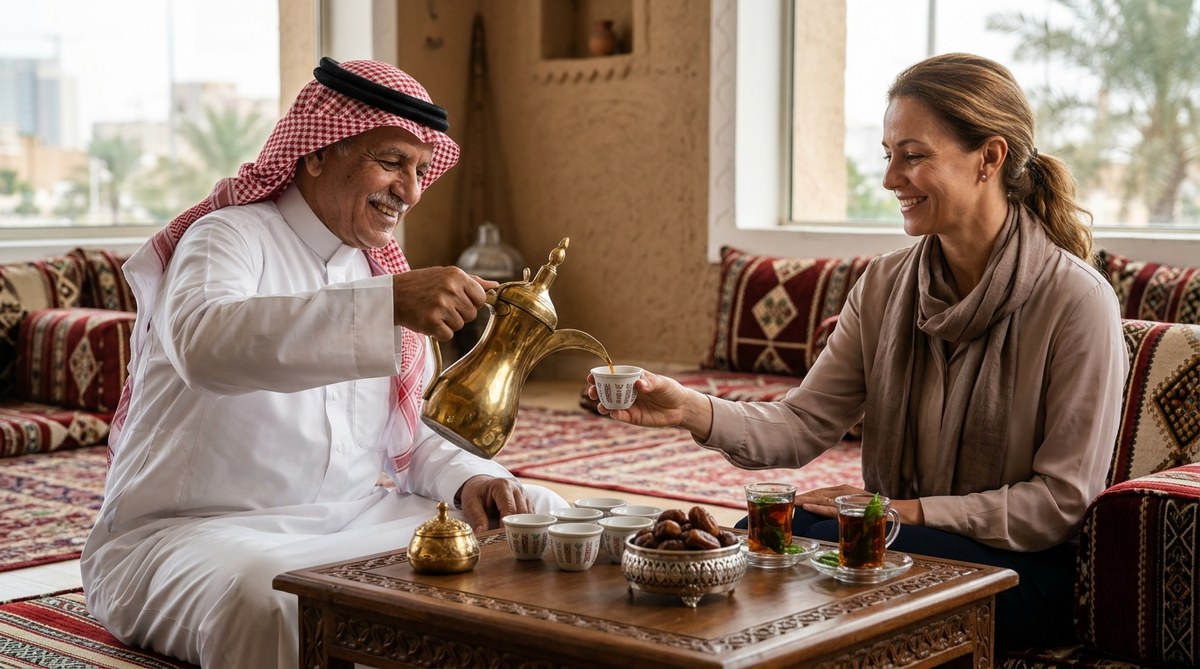
You are sitting on a comfortable floor cushion in a majlis. A server enters carrying a gleaming metal pot with a long curved spout. The aroma of cardamom and saffron fills the room. Your host gestures for you to receive the first cup. This is the moment when your knowledge of Saudi Arabia coffee etiquette becomes more important than any restaurant tip or hotel booking. Getting it right shows respect. Getting it wrong can create an awkward silence.
Saudi coffee, or gahwa, is a symbol of hospitality and generosity. Always accept the cup with your right hand, hold it without a handle, and give a gentle shake when you have had enough. Never refuse a first cup, and never leave your cup full. These small gestures will earn you lasting goodwill with your Saudi hosts.
What Makes Saudi Coffee Different
Saudi gahwa is not your morning drip coffee. It is a light brown brew made from lightly roasted Arabic coffee beans. The beans are ground fine, then boiled with water and a blend of spices. Cardamom is the star. Saffron adds color and aroma. Some families add a pinch of cloves or cinnamon. The result is a thin, aromatic drink that is served in a small handleless cup called a finjan.
The coffee is never served black like espresso. It has a golden hue. The taste is earthy and slightly floral. It is meant to be sipped slowly, not gulped down. You will usually receive three small servings, and each one is a gesture of welcome.
The Ritual of Serving and Receiving
The coffee server, often the youngest man in the family, moves around the room with the dallah, the traditional coffee pot. He pours a small amount into each finjan. The cup is only filled about a quarter of the way. This is intentional. It signals that more coffee is available and that the host wants you to stay.
When the server approaches you, extend your right hand. Take the cup with your thumb and index finger. Do not hold it by the base. The cup has no handle, so you cradle it lightly. Nod or say “shukran” (thank you) softly.
If you do not want more coffee after your first cup, you have a specific move. Gently shake the cup from side to side as you hand it back. This motion tells the server you are finished. If you simply hand it back without the shake, they will refill it. You can also say “bas, shukran” which means “enough, thank you.”
How Many Cups Should You Drink?
One cup is the minimum. Two is polite. Three is traditional. After three, you can shake the cup to stop. In some homes, the host will insist you have a fourth. Accept it gracefully. The ritual is about connection, not caffeine.
Here is a simple breakdown of the serving flow:
| Stage | What Happens | Your Move |
|---|---|---|
| First pour | Server fills finjan one quarter full | Accept with right hand, sip slowly |
| First refill | Server returns to your cup | Nod to accept, or shake cup to decline |
| Second refill | Server offers again | Same as above |
| Third refill | Final traditional serving | Shake cup firmly if done |
| After coffee | Dates or sweets may appear | Accept at least one date |
Common Mistakes Visitors Make
Avoid these errors to keep the experience smooth:
- Grabbing the cup with both hands. Use only your right hand. The left hand is considered unclean.
- Blowing on the coffee to cool it. Wait a moment. The coffee is served warm, not hot.
- Leaving the cup full. An untouched cup suggests you reject the host’s hospitality.
- Asking for milk or sugar. Gahwa is served pure. Adding sweeteners would be unusual.
- Rushing through the ritual. Sit back, relax, and engage in conversation. The coffee session is a social event.
The Role of Dates and Sweets
Coffee is almost always served with dates, especially during formal visits. The combination balances the bitterness of the coffee with natural sweetness. Take one date from the tray. Eat it before or after your first sip. In some homes, you might also be offered a small piece of baklava or a local sweet called maamoul.
If you have dietary restrictions, it is acceptable to politely decline sweets. Simply say “la, shukran” (no, thank you) with a smile.
A Step-by-Step Guide to the Gahwa Experience
- Wait to be invited. Do not sit until the host gestures to a seat.
- Accept the cup with your right hand. Keep your left hand resting on your lap or knee.
- Take a small sip. Do not rush. Savor the flavor.
- Compliment the coffee. A simple “zein” (good) or “tayeb” (delicious) is appreciated.
- When finished, shake the cup. A gentle side-to-side motion as you hand it back.
- Thank the host. Say “Allah yatik al afya” (may God give you health) or “shukran jazeelan” (thank you very much).
Expert Advice: “The shake of the finjan is the most important signal in the entire ritual. It is a silent language that every Saudi understands. If you forget to shake, the server will keep pouring until you either shake or say ‘bas’ clearly. Practice the motion before your trip. It feels unnatural at first, but it becomes second nature.” – Ahmed Al Ghamdi, Saudi hospitality consultant
When Coffee Etiquette Applies
You will encounter the gahwa ritual in many settings:
- Business meetings. A coffee service often opens negotiations.
- Home visits. Expect coffee within five minutes of arrival.
- Weddings and celebrations. Coffee is served throughout the event.
- Souqs and shops. Some merchants offer coffee to encourage browsing.
- Desert camps and tourist experiences. Many tour operators include a traditional coffee welcome.
If you are visiting during Ramadan, the timing changes. Coffee is served after sunset to break the fast, not during the day. Your host will guide you.
Coffee Etiquette for Women
Female visitors should follow the same basic rules. Use your right hand. Accept the cup. Shake it when done. In mixed gatherings, the server may serve men first. Do not take offense. This is traditional, not personal. If you are a woman traveling solo, you will be treated with equal respect and hospitality.
For more on navigating social situations as a female traveler, read our guide on solo female travel in Saudi Arabia.
What to Say During the Coffee Ritual
Learning a few phrases in Arabic will make a strong impression:
- “Shukran” – Thank you
- “Allah yatik al afya” – May God give you health (a common blessing after eating or drinking)
- “Zein” or “tayeb” – Good or delicious
- “Bas, shukran” – Enough, thank you
- “Bismillah” – In the name of God (said before the first sip)
Saudis appreciate any effort to speak their language. Even a simple “shukran” delivered with a smile will warm the interaction. For a full list of helpful phrases, check out our 15 Arabic phrases guide.
How the Ritual Varies Across Saudi Arabia
Coffee customs differ slightly by region:
- Najd (central region, including Riyadh). The coffee is stronger and spicier. More cardamom is used. The serving ritual is formal and deliberate.
- Hejaz (western region, including Jeddah and Makkah). The coffee is lighter. Saffron is more prominent. You may be offered a small piece of frankincense to smell between cups.
- Eastern Province. Influences from Gulf neighbors make the coffee slightly sweeter. The cups are sometimes smaller.
- Asir and the south. Coffee is often served with a side of qishr, a drink made from coffee husks. The ritual is more relaxed.
No matter where you are, the core rules remain the same. Accept with your right hand. Shake to stop. Thank your host.
Why Saudis Pour Coffee First
The order of serving is not random. The host pours coffee for guests before serving himself. This demonstrates that the guests come first. It is a sign of humility and generosity. If you are ever invited to pour coffee for others, serve the eldest or most senior person first. Then move clockwise around the room.
This tradition is so central to Saudi identity that it is recognized by UNESCO as an intangible cultural heritage. When you participate in the ritual, you are connecting with a practice that is centuries old.
Tying It All Together for Your Trip
Mastering Saudi Arabia coffee etiquette is one of the easiest ways to show cultural awareness. It costs nothing. It takes only a few minutes to learn. And it will be remembered long after you leave.
Before your trip, practice the finjan shake at home. Hold a small cup between your thumb and forefinger. Gently rotate your wrist side to side. The motion should be subtle, not aggressive. If you can do this without spilling, you are ready.
When you arrive, look for opportunities to experience the ritual. Stay at a traditional hotel that offers a welcome coffee. Visit a souq and accept the merchant’s offer. Attend a Saudi festival where coffee is served freely. Each encounter builds your confidence and deepens your connection to the culture.
The gahwa is more than a drink. It is an invitation. It says, “You are welcome here. You are safe. You are among friends.” Accept that invitation with an open hand and an open heart. The coffee will taste better for it.